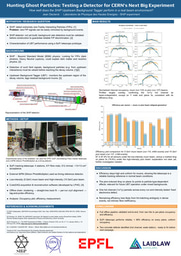
Research Poster : Can Brain Waves Redefine Schizophrenia? From Distinct Clusters to a Continuous Spectrum



Preview
Why does it matter? Schizophrenia affects approximately 1% of the global population, bringing profound alterations to reality perception, cognition, and behavior. Yet, in modern psychiatry, it is still primarily diagnosed through clinical observation using manuals like the DSM-5. Unlike many other medical conditions, it lacks objective, quantifiable biological markers.
For decades, the field has debated how to classify the disorder. Is it a set of distinct, rigid categories (clusters) that patients neatly fall into? Or is it a continuous clinical gradient (a spectrum) where symptoms vary seamlessly? Relying solely on observable symptoms can sometimes force patients into diagnostic "boxes" that their underlying biology doesn't actually support.
To explore this, we focused directly on neurological data. Using high-density 64-channel EEG datasets from a Georgian cohort, we analyzed both resting-state brain activity and specific visual processing deficits (Visual Backward Masking). Instead of manually categorizing the patients, we extracted 194 EEG features and applied unsupervised machine learning algorithms (like PCA and UMAP) for dimensionality reduction. The goal was simple: let the data speak for itself without human diagnostic bias.
The Findings : The models revealed a massive overlap between patients and healthy controls. Rather than separating into distinct, isolated subtypes (clusters), the EEG features form a single, continuous cloud. When we mapped clinical severity scores (SANS/SAPS) onto this space, it revealed a smooth clinical spectrum.
This strongly supports the spectrum hypothesis. Ultimately, redefining schizophrenia as a biological spectrum rather than a strict categorical illness could pave the way for precision psychiatry—moving away from "one-size-fits-all" labels toward highly personalized treatments based on a patient's unique neural signature and needs.

Life Sciences Engineering, EPFL Bachelor Student