Your dreams don't live in your comfort zone. You have to be comfortable with being uncomfortable
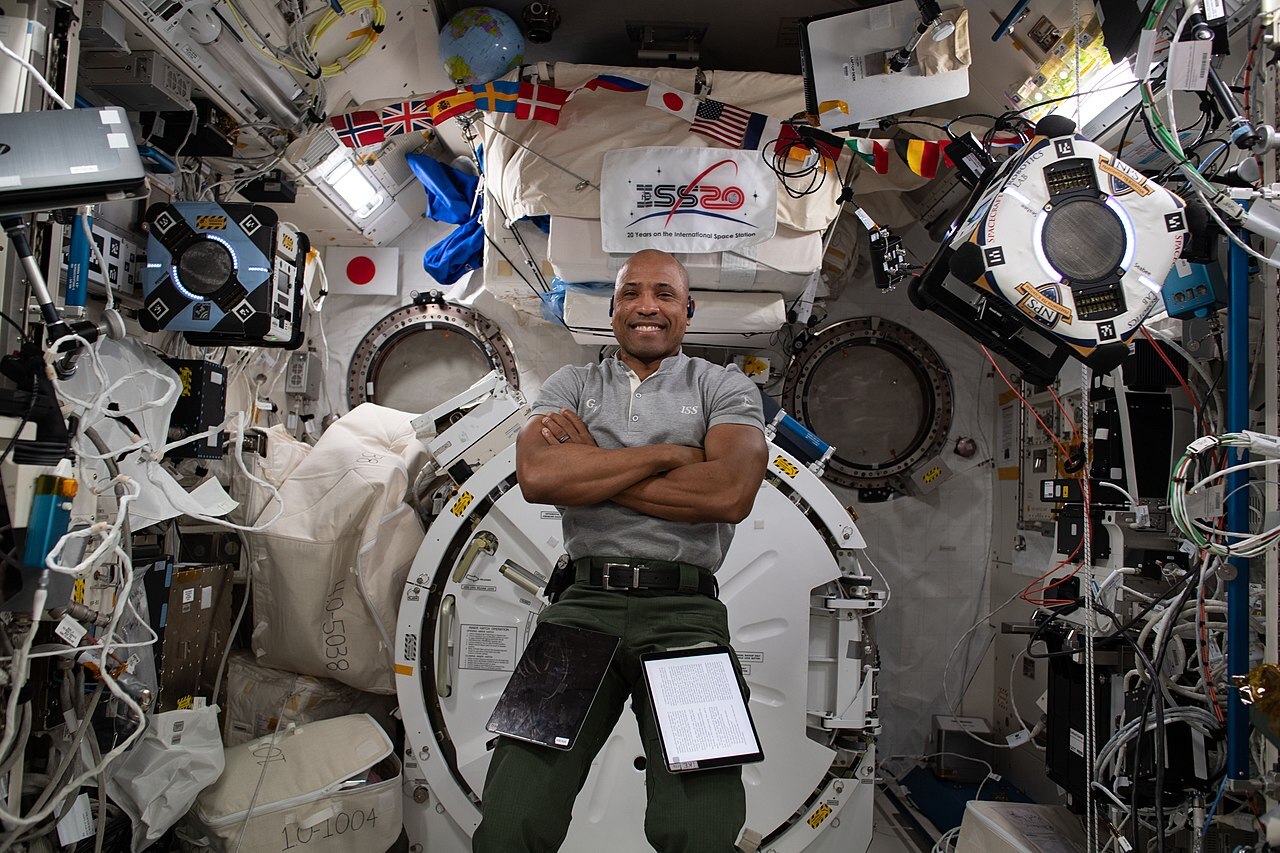
Victor Glover: Leaving the Comfort Zone Behind
On 1 April 2026, NASA's Artemis II mission launched into history. Over nearly ten days, astronauts Reid Wiseman, Victor Glover, Christina Koch, and Jeremy Hansen travelled 694,481 miles, completing the first crewed lunar flyby in more than half a century and setting a new record for the farthest human spaceflight. Glover served as the mission's pilot, and made history as the first person of colour on a lunar mission. This week, we reflect on what his words ask of us.
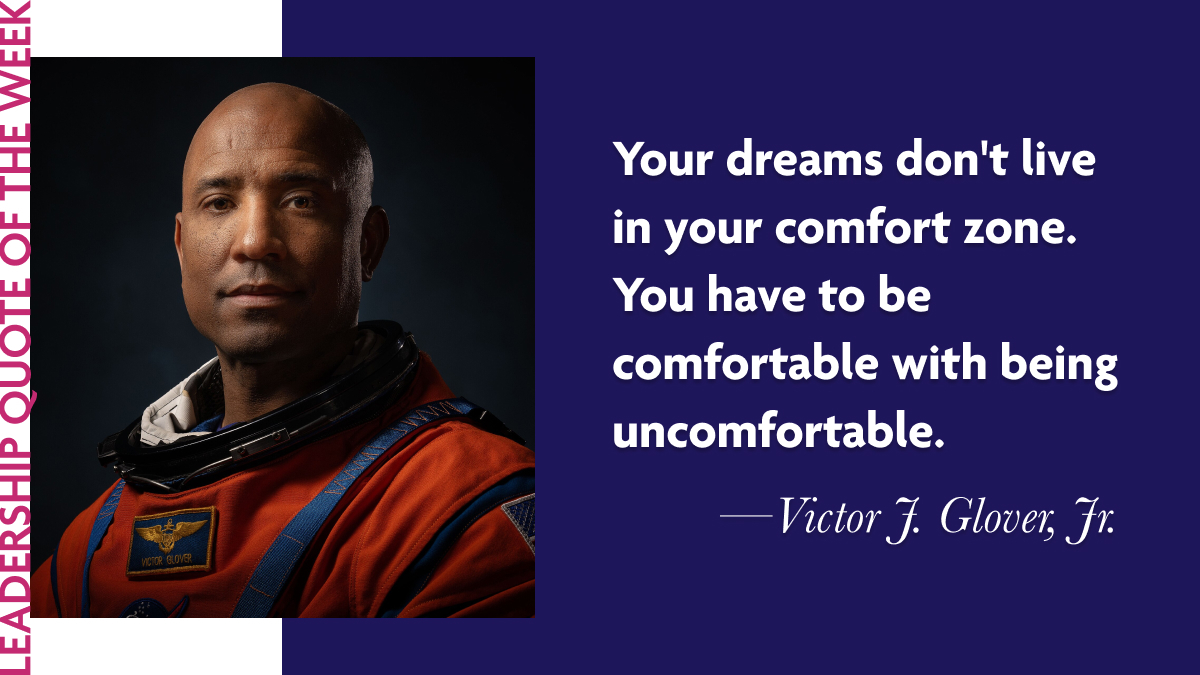
Victor Glover: "Your dreams don't live in your comfort zone. You have to be comfortable with being uncomfortable."
The shape of discomfort
Glover's path to Artemis II was built step by step, and none of those steps led somewhere familiar. From Navy aviator to test pilot, from ISS crew member to the first person of colour on a lunar mission, his career has been a sustained practice of moving into territory where little was guaranteed. Each threshold he crossed expanded what was considered possible, and who was understood to belong on the other side of it.
The Gravity of the Unknown
What Glover's quote asks of us is more demanding than simply tolerating difficulty. It suggests that discomfort is not something to push through on the way to easier ground, but a condition to inhabit, to work within, to become familiar with as a permanent feature of meaningful effort. The comfort zone is not always obviously constraining. It can look like careful preparation, or patience, or good judgement. His challenge is to notice when those things have quietly become a reason not to begin.
Glover’s challenge reflects the Laidlaw value of #Brave and the Oxford Character Project virtue of #Courage. Bravery is choosing to do hard things without any guarantee of success, and committing to them fully. Courage is continuing forward even when uncertainty, pressure, and discomfort remain.
A call to reflect
We invite you to carry Glover's challenge into your own work. In your research, your Leadership in Action project, or your wider studies, where might you push further, try something harder, or step into territory you have been circling from a distance?
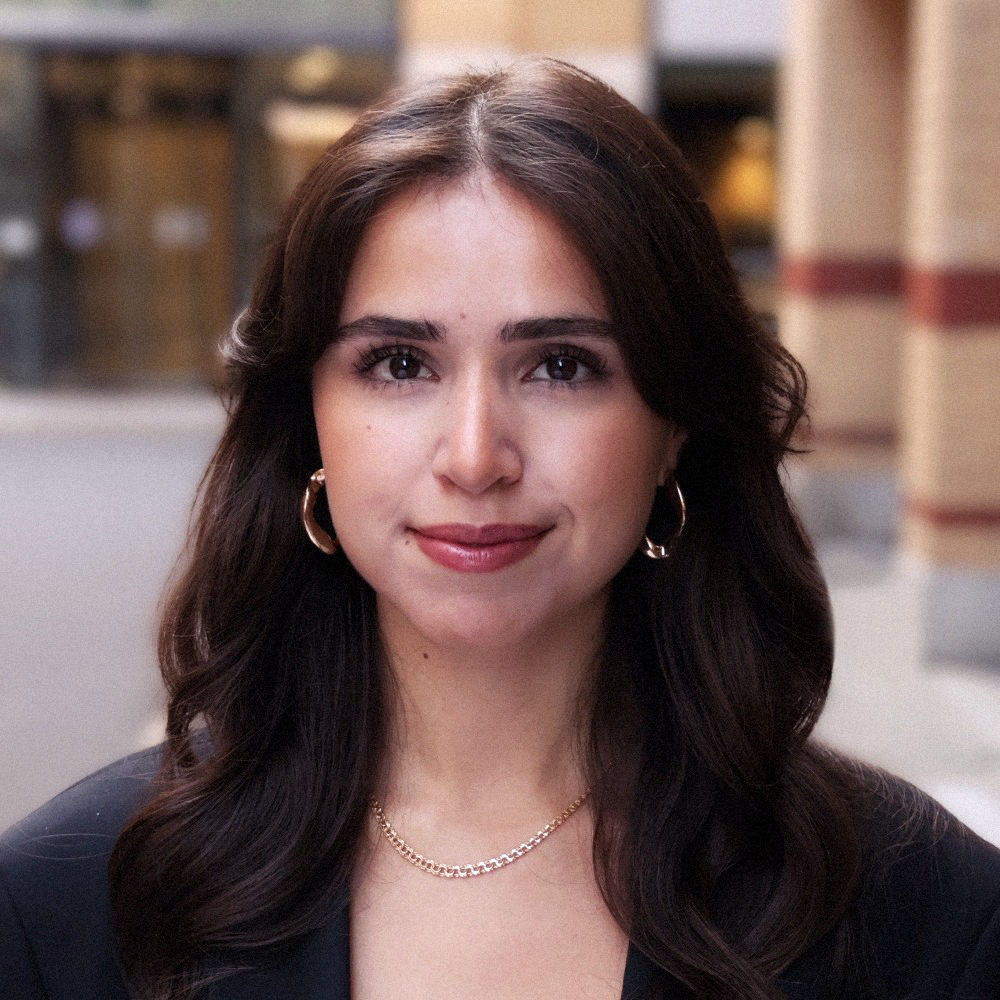
Hi! I'm Amanda, a third year Neuroscience student and Laidlaw alum from UCL. I'm Swedish-Persian and grew up in Sweden before moving to London for uni. These days, alongside my studies, I work for the Foundation as a Marketing Assistant.
For my first year research project, I worked on optimising alginate hydrogels for 3D astrocyte culture systems. In simpler terms, I was figuring out the best way to prepare a jelly-like scaffolds so that star-shaped brain cells called astrocytes could grow in three dimensions rather than flat on a dish. This matters because 3D environments mimic the brain more realistically, which could help researchers develop better treatments for neurological disorders!
For my Leadership-in-Action project, I co-created Beyond the Books, a resource designed to help students from underrepresented backgrounds navigate the unwritten rules of university life, from internships and networking to professional opportunities that aren't always obvious if you're the first in your family to go to uni.
Always happy to connect, whether you want to chat about neuroscience, widening access, the Laidlaw experience, or just say hello! One of my favourite things about this community is getting to meet people from different universities and backgrounds, so please do reach out! 🌟