Leadership is not defined by the exercise of power but by the capacity to increase the sense of power among those led. The most essential work of the leader is to create more leaders.
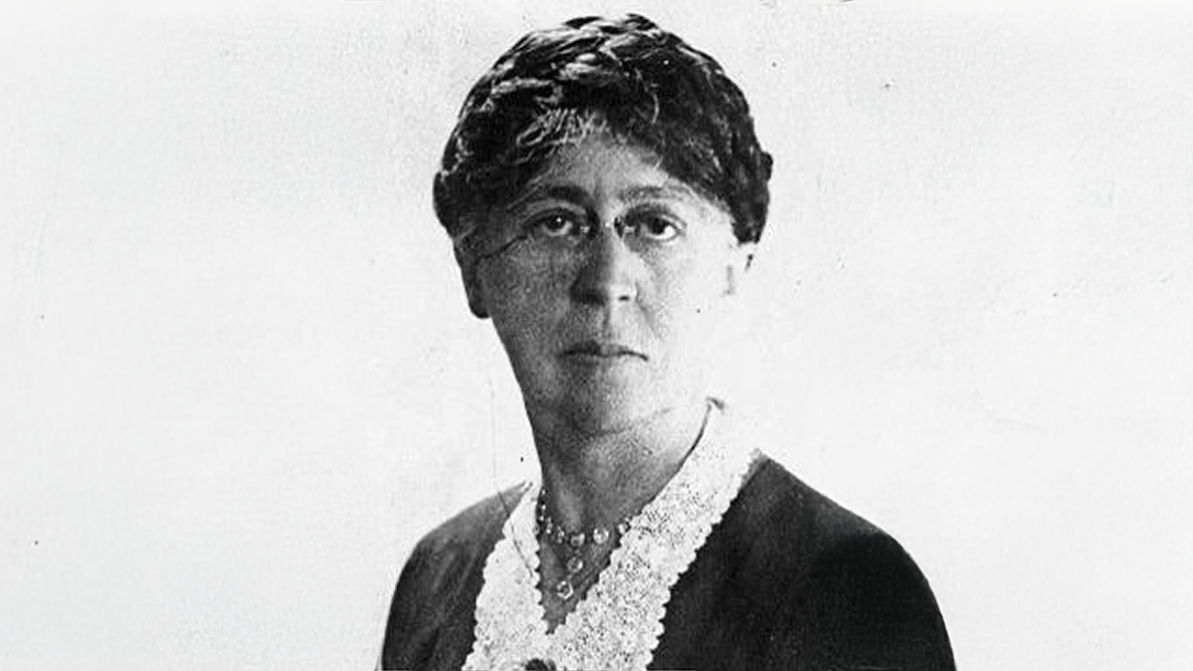


Mary Parker Follett: The Leader Who Saw Power Differently
In the early 1920s, Mary Parker Follett stood in front of business audiences across the United States and the United Kingdom and described a version of leadership that almost nobody in those rooms was practising. She spoke about shared authority, about the creative force of disagreement, about organisations as living systems rather than chains of command. She was received with interest, cited with admiration, and then, after her death in 1933, largely forgotten. Her ideas were too far from the prevailing logic to survive without her. It took decades for the rest of the field to catch up. This week, we reflect on what her words ask of us.
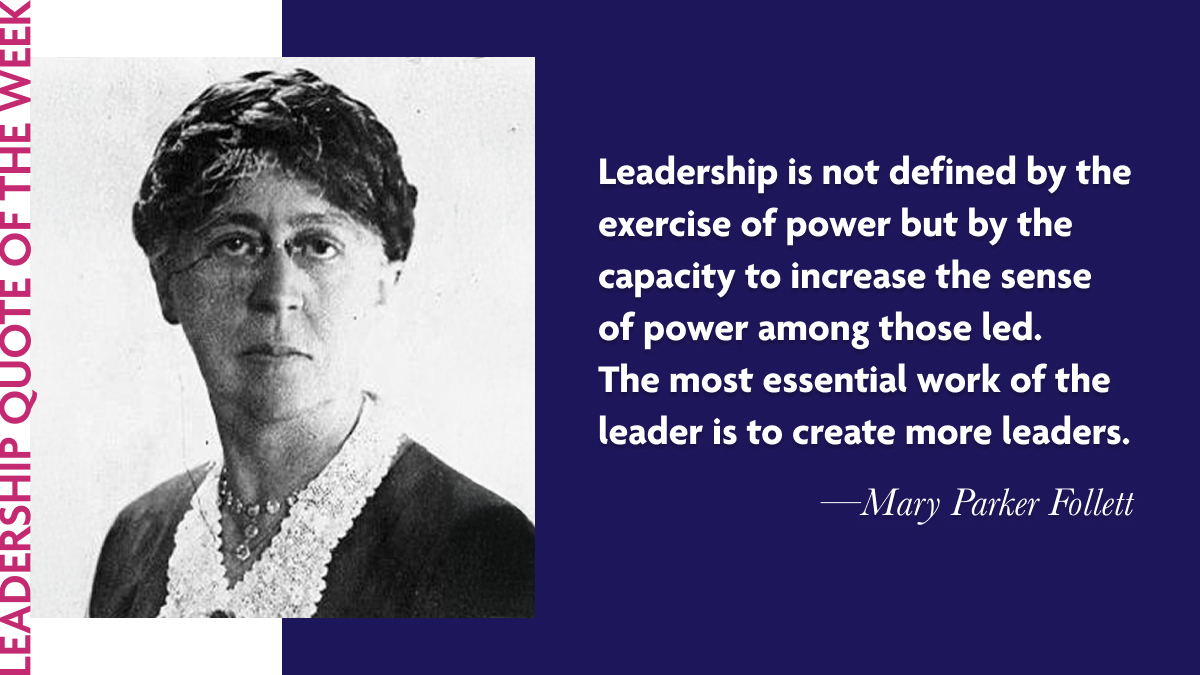
Mary Parker Follett: "Leadership is not defined by the exercise of power but by the capacity to increase the sense of power among those led. The most essential work of the leader is to create more leaders."
Power With, Not Power Over
Follett was born in Massachusetts in 1868 and educated at Radcliffe College, one of the few institutions of its era that offered women access to a rigorous intellectual education. She began her working life running community centres in some of Boston's most diverse neighbourhoods, and it was there that her thinking about leadership took shape. She watched what happened when people who had no formal authority were trusted to organise themselves: they collaborated, they created, they led. The insight she carried forward was that this was not an exception to how leadership functions but its clearest expression.
What makes Follett remarkable is not simply that she was ahead of her time, though she was, but that the particular direction in which she was ahead still challenges mainstream practice. She drew a distinction between what she called "power-over" and "power-with": the difference between leadership that consolidates authority at the top and leadership that distributes capacity throughout a group. In her view, the function of a leader was not to command but to release the intelligence and initiative already present in the people around them. The leader who hoards decision-making is not, in Follett's account, leading at all. The leader who grows the capability of others is doing the work that matters.
Creating Leaders, Not Followers
Follett's insistence that the most essential work of the leader is to create more leaders asks something specific of the person in a position of influence: measure your success not by what you produce or decide but by the capability you leave behind in others.
This sits close to the heart of the Laidlaw experience. You are not being prepared to follow a prescribed model. You are developing your own practice of leadership, shaped by your research, your values, your encounters with the communities you work alongside. The Leadership in Action projects, the collaborations across cohorts and universities, the investment in reflection as well as action: all of this is built on the principle that leadership is a capacity to be grown, shared, and passed on.
Follett's challenge aligns with the Laidlaw value of being #Good and the Oxford Character Project virtues of #Collaboration and #Humility. Being good, in Follett's sense, means building relationships grounded in mutual respect and shared purpose rather than hierarchy. Collaboration is the recognition that the best thinking emerges when leadership circulates through a group rather than residing in a single figure. Humility is the willingness to see one's own authority as something to be redistributed rather than defended.
A Call to Reflect
We invite you to sit with Mary Parker Follett's challenge. Where in your research, your Leadership in Action project, or your wider life have you experienced the difference between power exercised over others and power built with them? What would it look like to measure your own leadership not by what you have achieved individually but by the capacity you have helped to grow in the people around you?
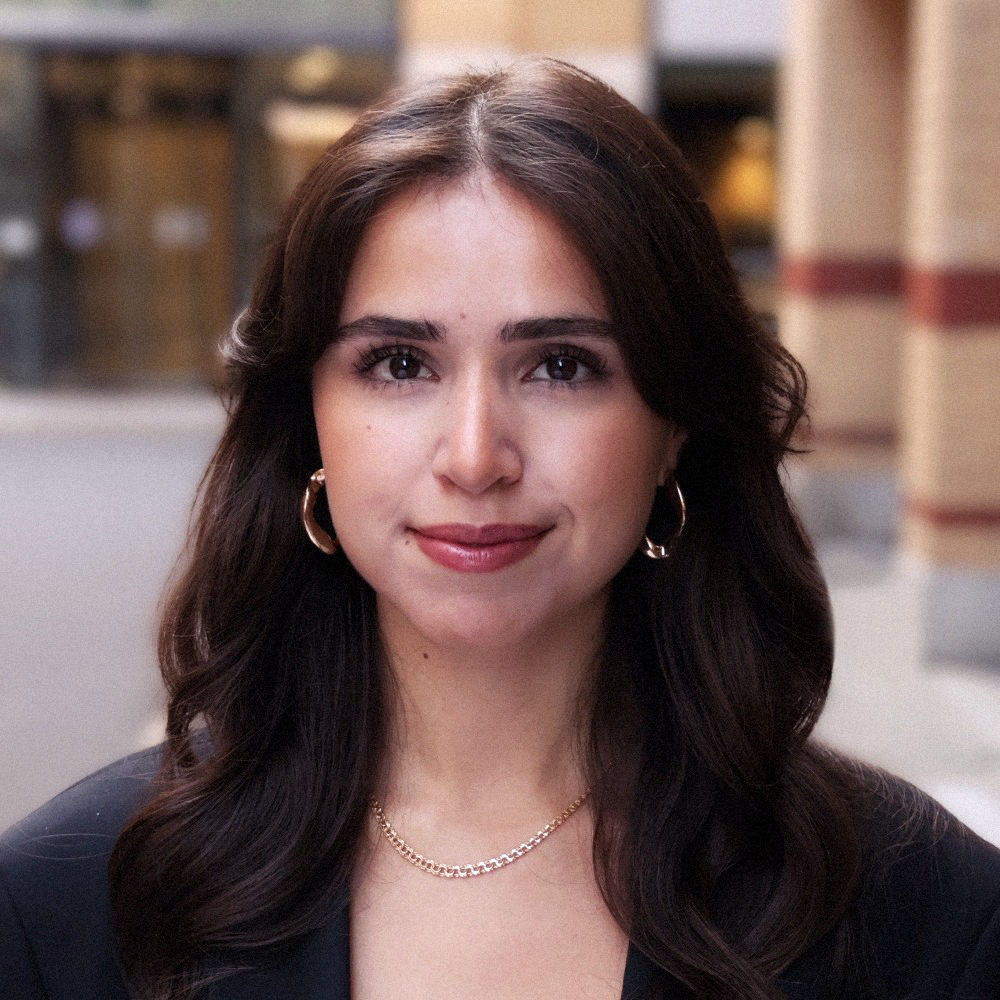
Hi! I'm Amanda, a third year Neuroscience student and Laidlaw alum from UCL. I'm Swedish-Persian and grew up in Sweden before moving to London for uni. These days, alongside my studies, I work for the Foundation as a Marketing Assistant.
For my first year research project, I worked on optimising alginate hydrogels for 3D astrocyte culture systems. In simpler terms, I was figuring out the best way to prepare a jelly-like scaffolds so that star-shaped brain cells called astrocytes could grow in three dimensions rather than flat on a dish. This matters because 3D environments mimic the brain more realistically, which could help researchers develop better treatments for neurological disorders!
For my Leadership-in-Action project, I co-created Beyond the Books, a resource designed to help students from underrepresented backgrounds navigate the unwritten rules of university life, from internships and networking to professional opportunities that aren't always obvious if you're the first in your family to go to uni.
Always happy to connect, whether you want to chat about neuroscience, widening access, the Laidlaw experience, or just say hello! One of my favourite things about this community is getting to meet people from different universities and backgrounds, so please do reach out! 🌟