Week 3 LiA Reflection

There are some organisations that leave you impressed by what they do. Then there are organisations that leave you questioning why everyone doesn’t do things the same way. For me, SEWA was the latter.
This week we had the privilege of living at SEWA’s Rural Centre, spending our days learning about the organisation and our evenings alongside many of the women who make it what it is. Sharing meals, conversations and everyday life meant we weren’t simply observing SEWA from the outside; we became immersed in its community. By the end of the week, it was impossible not to admire the philosophy that underpins everything the organisation does.
Founded in 1972, the Self Employed Women’s Association works with women in India’s informal economy. One statistic that particularly stood out to me was that over 94% of India’s workforce is employed informally. These women are already working, whether that means weaving reeds, preparing food, making handicrafts or selling products from their homes. They are entrepreneurs in every sense of the word, yet often without the recognition, protection or opportunities that come with formal employment.
Rather than creating jobs, SEWA strengthens the ones these women have already built for themselves.
By organising self-employed women into collectives, SEWA helps transform isolated workers into a recognised workforce. Collectively, women gain access to government schemes, legal protections, training opportunities and stronger bargaining power. It is such a simple idea, yet one with an enormous impact. Throughout the week I found myself realising that SEWA’s greatest strength isn’t that it gives women opportunities; it’s that it allows them to claim the opportunities they have always deserved.
Our first day introduced us to the scale of the organisation and the many initiatives it supports. We learned about domestic workers’ collectives, leadership programmes, government advocacy and the way SEWA acts as a bridge between women and services that many would never otherwise know existed. Leadership training, in particular, really resonated with me. The aim isn’t simply to teach practical skills but to give quieter women the confidence to speak up, advocate for themselves and become leaders within their own communities.
One of my favourite visits came on Tuesday when we met a local reed weaving cluster. It was fascinating to hear how SEWA had negotiated with the government to provide raw materials, allowing women to continue practising their traditional craft without the challenges they previously faced. Today, the women receive training, exhibit their products across India and sell through online platforms, turning a local skill into a sustainable livelihood. Watching them weave was incredible, but hearing the pride with which they spoke about their work was even more memorable.
Later in the week we visited several of SEWA’s food initiatives, including cafés and canteens run entirely by women. Rather than simply hearing statistics, we met the people behind them. One woman spoke about how she had spent years at home before joining the café, while another now manages multiple stores after beginning with a single opportunity through SEWA. Their stories weren’t just about income; they were about confidence, independence and believing in their own abilities.
We also learned about SEWA’s palliative care initiative, which perfectly captures the organisation’s approach. Where there is a need within a community, SEWA identifies women who are already working or seeking to expand their livelihoods and provides professional training. Importantly, the women themselves aren’t burdened with the cost. The training is funded by employers, removing one of the biggest barriers to entering a new profession and ensuring opportunities remain accessible.
Looking back on the week, what I admire most is that SEWA never tries to replace the women it works with. It doesn’t tell them what success should look like or ask them to abandon the livelihoods they’ve already created. Instead, it recognises their skills, values their work and builds the support systems that allow them to thrive.
In a world where development is often associated with large-scale interventions, SEWA reminded me that meaningful change can begin with something much simpler: bringing people together. By strengthening communities instead of individuals alone, SEWA is creating a model of empowerment that is not only sustainable, but deeply human. It has been a privilege to spend this week learning from an organisation whose greatest achievement isn’t the programmes it runs, but the confidence and independence it helps women discover within themselves.
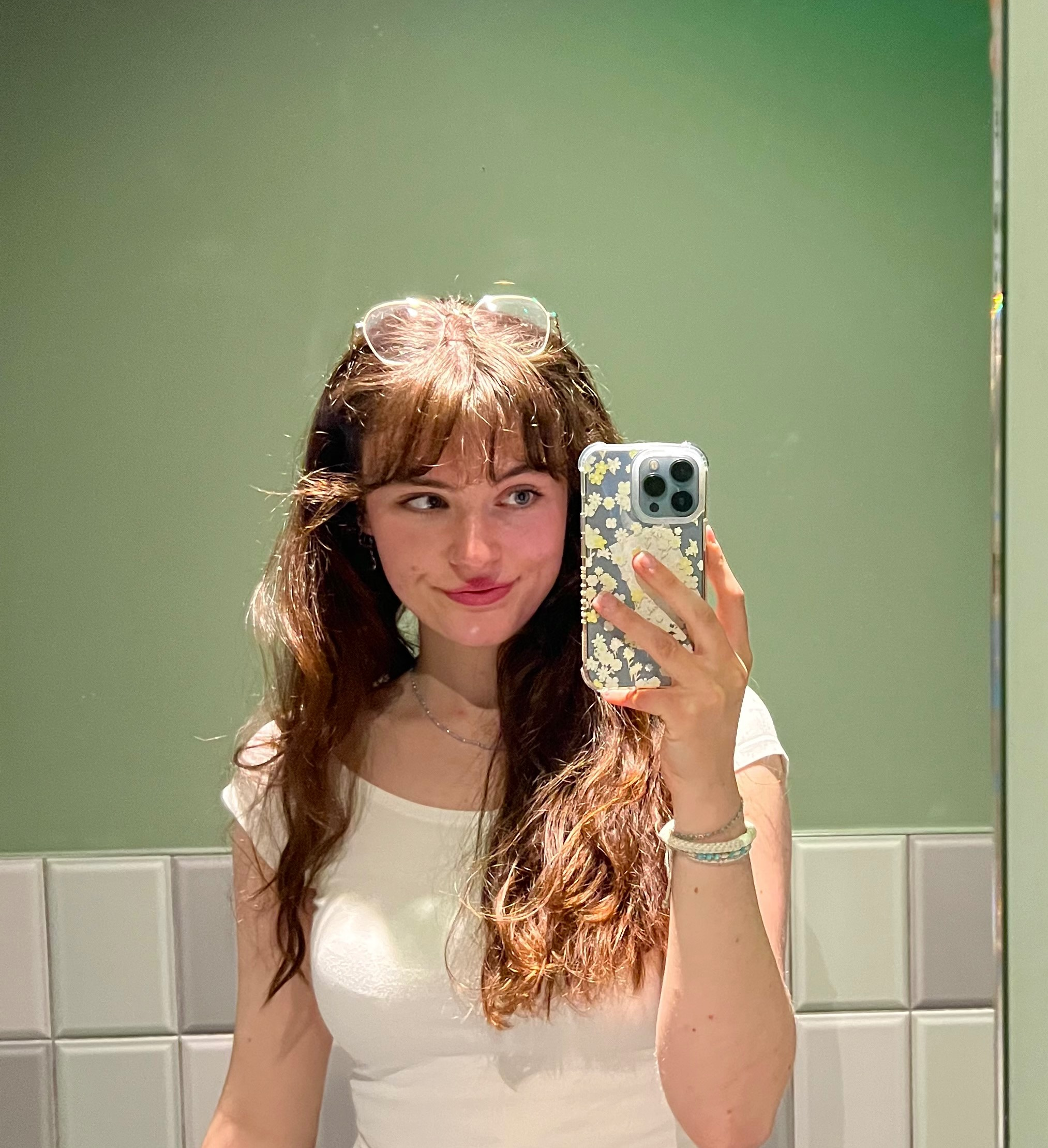
Hello everyone!
My name is Abi and I am a second year Geology student at Imperial College.
As someone who is passionate about sustainable energy and the preservation of our environment, my research project centres on how to make decarbonisation solutions economically viable - so that clean energy can be attained by all.
I believe that money should never be a restriction - especially towards climate action, so I aim for my research to make decarbonisation a feasible target for everyone!
My hobbies include all things outdoors - hiking, travelling and climbing to mention a few - as well as crafty activities such as crochet and knitting!
I would like my Leadership in Action project to focus on my hobbies - using craft activities to help rebuild and give independence to a local community abroad, with an emphasis on sustainability. Perhaps using locally sourced material to produce goods which can be sold to help with living costs?
If any of this sounds interesting, or if you’d simply like to chat, please feel free to reach out and connect! :)