Unfolding 6 Weeks of Growth: Rewinding and Reflecting on Research
Six weeks ago I was 35,000 feet in the air, eagerly awaiting the first descent into a program I'd been anticipating for months. Six weeks later, I sit 35,000 feet in the air once again, with new outlooks, new knowledge, and a proper reflection.
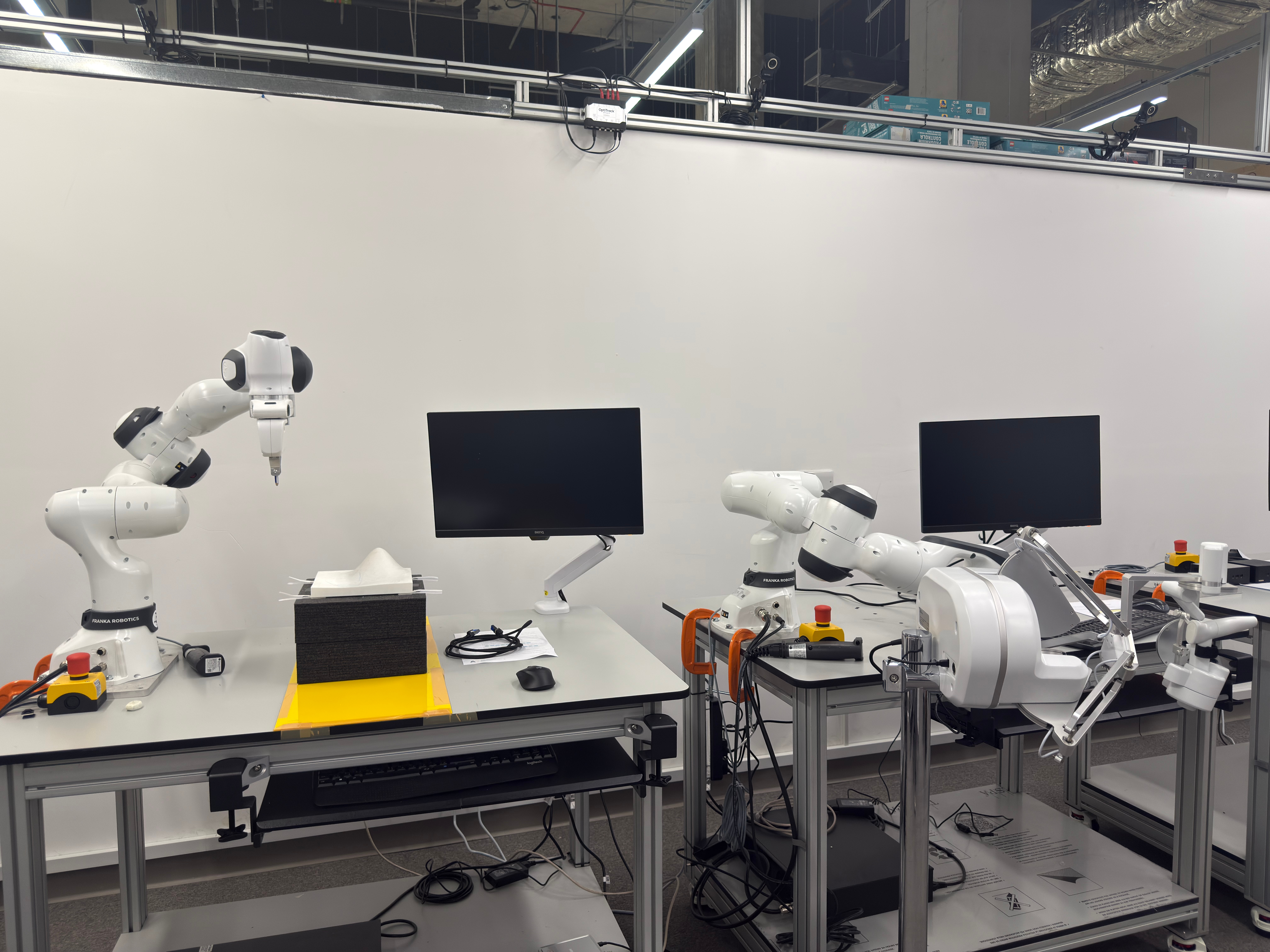
Coming into the research portion of this program was initially daunting; I hadn't known what to expect. My expectations were all over the place as I was not entirely sure how I would proceed with my research. However, as I landed and properly returned to my university dorm after the tumultuous events that had occurred over the past months, everything felt slightly clearer. Stepping into the REACH Lab, known for its research on robotic manipulation and movement, I was dipping into a new world I hadn't gotten the chance to properly explore in the past.
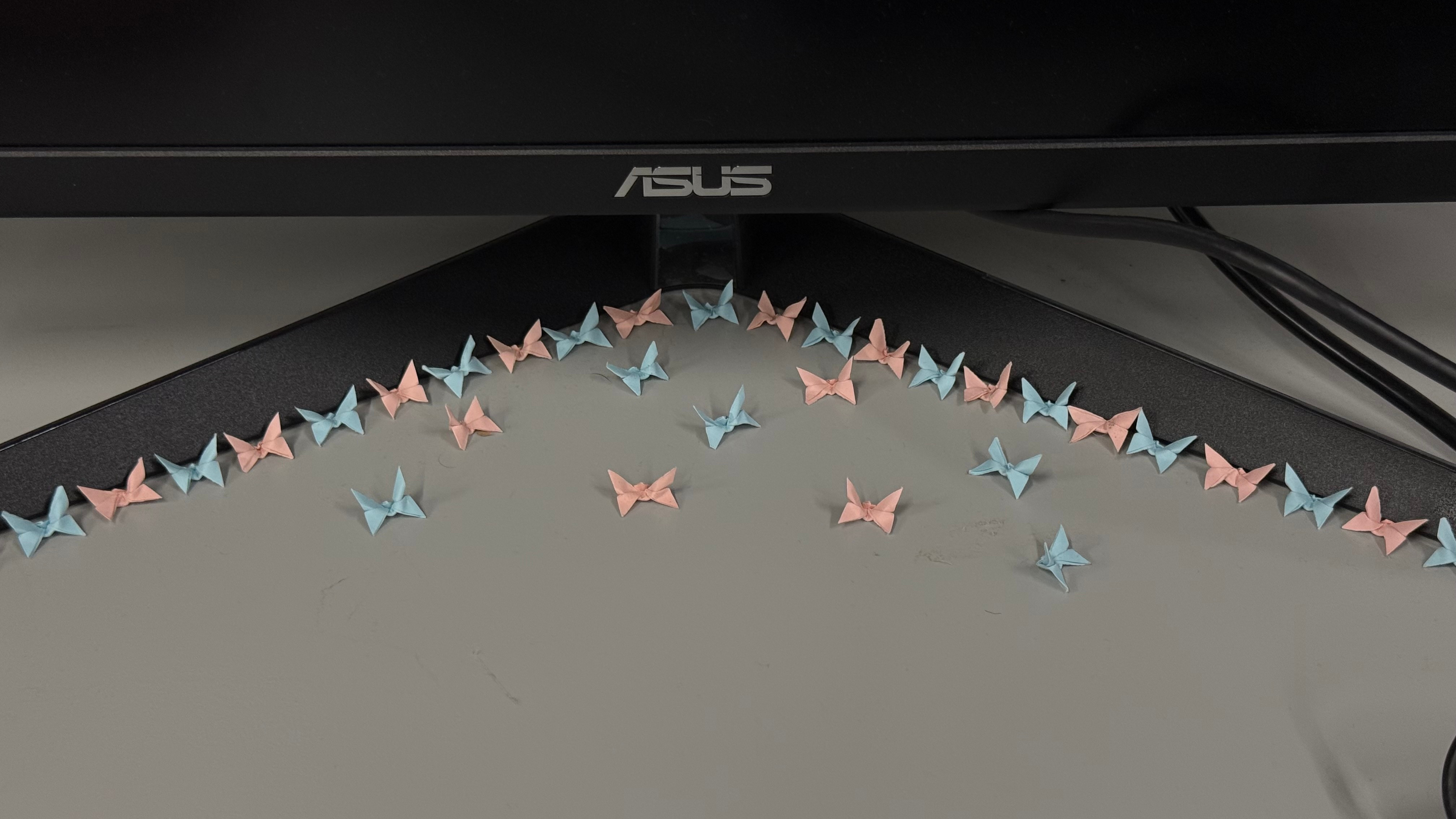
Honestly speaking, the initial week felt the most challenging. I deemed myself quite out of place and hadn't properly adjusted to the unfamiliar environment as I focused on key readings on robotic configuration, statics and kinematics, and robot learning. I had not felt fulfilled in taking notes and sifting through hundreds of pages of textbooks. For most of these papers, I turned to folding mini pink paper butterflies (as seen in this post's poster) to help me focus. However, I realized this was incredibly important to strengthen my foundational knowledge before I could even think of approaching a robot arm or mobile robot.
As the weeks progressed, I was finally provided the ability to translate my theoretical knowledge of robotic movement into physical movement by working with robots such as the Hiwonder ArmPi Pro mobile robot. Applying my knowledge of fundamental movement frameworks such as inverse kinematics and forward kinematics was thrilling. Nevertheless, it hadn't held a major significance within my mind. The reason I had shortlisted to work within this specific lab is due to their focus on specific movement frameworks, the main one being Dynamic Movement Primitives (DMPs). DMPs are essentially a specific movement framework within robots that utilize second-order differential equations and a mass-spring-damper system to allow robots to learn and mimic smooth human movement and manipulation using "muscle memory". The key difference between classical approaches such as inverse kinematics and DMPs lies in the way they update data. Classical approaches typically rely on linear algebraic calculations through matrices and are expected to force recalculations while DMPs learn one task and can adapt to it on the fly.
This was the research I sought to explore; however, I was not sure how I would possibly integrate this into my Laidlaw research project, considering I had not been ordered to go anywhere near this research. Essentially, by taking the risk to explore this research, I needed to plunge as far into the deep end as possible. By that point, I had nothing to lose by doing so.
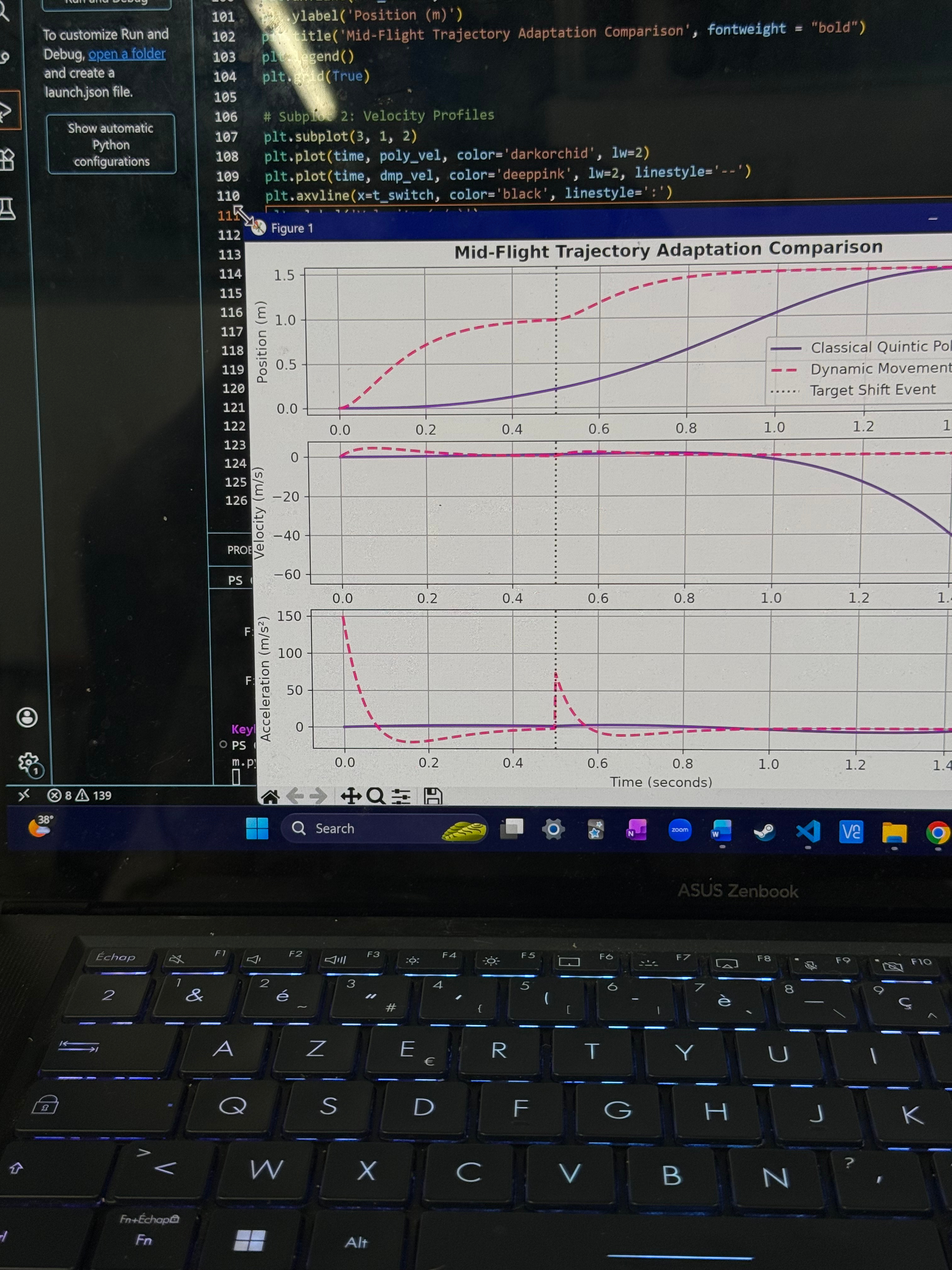
I had been once again sifting through hundreds of pages and scraped through every possible research paper on this niche that I discovered. I wanted to track my progress and set a reminder of how much I've come in such a short time, hence I returned to my old paper butterfly focus habits, opting for blue paper instead. As I continued reading through, I subconsciously kept making comparisons to classical frameworks found in traditional robots, which gave me my eureka moment. Up to this point, I was not entirely sure of what I would specifically be writing about with regards to DMPs. This realization of my thought process led me to the only logical answer: a comparative analysis! For me, most of the analysis had already been done in my head, therefore all that was left was to simulate it. To prevent any responsibilities attached to accidentally overloading and destroying a robot, I decided to utilize coded simulations for now to establish a comparison between classical kinematics and DMP frameworks, where I determined that in realistic motion scenarios where there is a sudden perturbation in trajectory, the DMP would recover must better, by being faster and smoother as opposed to the classical framework which failed to recover as smoothly, especially when looking at velocity errors.
Drafting up my research paper had now transitioned from being threatening and unapproachable to enjoyable and rewarding. Watching my efforts accumulate over the past 6 weeks was incredibly satisfying. I felt as though I had grown immensely as I learned that good research takes time and a level of patience. I was foolish to assume that results would appear immediately. Safe to say, this research did not flow as linearly as I wrote; if I had detailed all the mishaps and everything that went wrong, this post would be far too long for anyone to sit through and read. Therefore, I leave you with what I should've known six weeks ago: to succeed, you must fail and hold doubts, for those doubts turn into questions that you can answer, and those answers are the fruits of your labor and time.
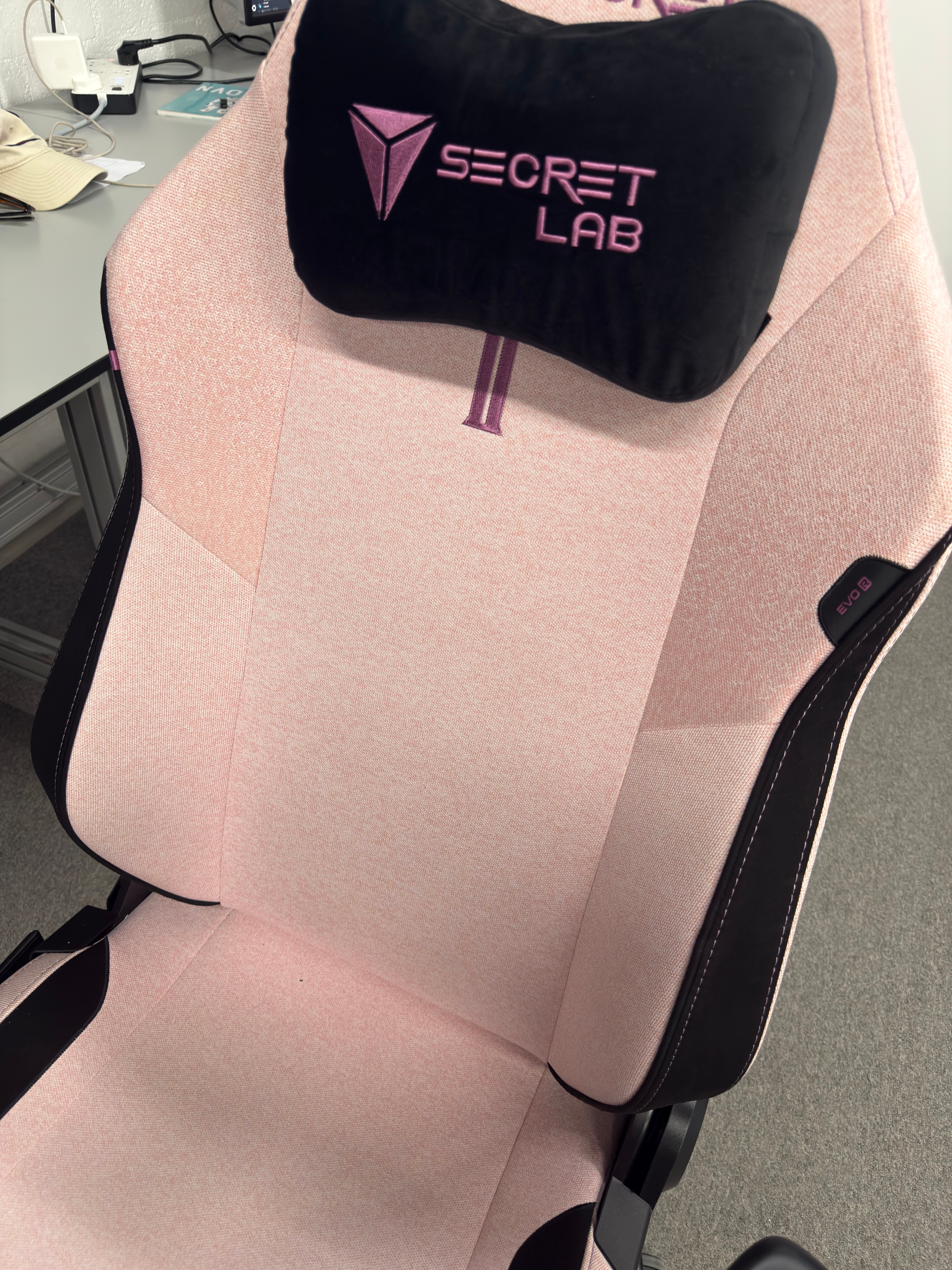
I would like to extend my gratitude towards a few people that made this research possible and unforgettable: Professor Fares Abu-Dakka, my supervisor for this research, and for his incredible patience he had dealing with me. All the postdocs in the lab that I spent a lot of time with in the lab for their guidance and support. My fellow Laidlaw scholars, who accompanied me on campus, alongside our other campus friends as we spent multiple late nights watching as many World Cup games together, and as they held an immense level of patience to endure my screaming during every game Morocco played (especially Morocco vs. Netherlands). The Laidlaw Foundation as well as the NYUAD Office of Undergraduate Research, who provided me with this incredible opportunity to contribute to research at such an early stage of my academic career. Finally, the iconic lab pink chair, which kept me comfortable throughout the entire six weeks and added a key pop of color where my current airplane seat dims in comparison.
Hey! I’m a Mechanical Engineering rising sophomore at NYU Abu Dhabi. Currently, I’m exploring robotic manipulation and navigation using Dynamic Movement Primitives (DMPs) to understand how robots how to adapt to real-world forces and perform precise tasks. My goal is to build a deep understanding and develop proper comparisons between traditional robots and upcoming paradigms within the robotic industry which can help us thrive in several fields and our daily lives. Outside the lab, you can find me making music, drawing, traveling, or spending a few too many hours playing video games. Feel free to reach out to discuss whatever comes to heart!