Slowly, Slowly (LiA Week 1)
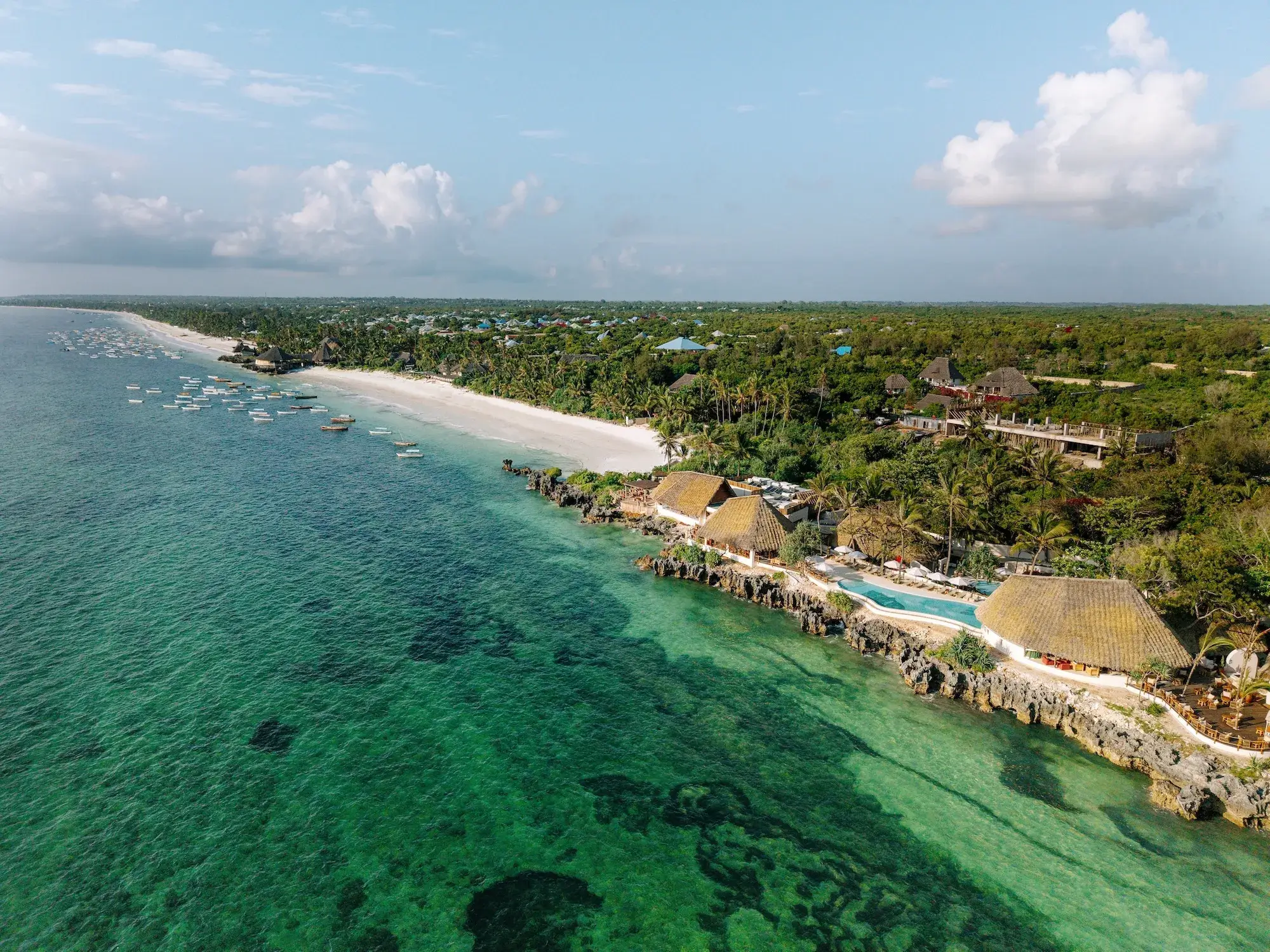


When beginning a brief six-week project to showcase the research experience, leadership style, and character values that have been developed for over a year, doing things slowly is the last instinct. However, the attitude of pole pole (slowly slowly) is the predominant throughout the Swahili coast, no more than in Zanzibar, where I am working with @Under the Wave Organisation (UTW) to complete my LiA.
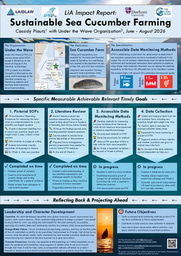
For my LiA, I will be producing different written materials to assist with the establishment of a sea cucumber farm, and doing practical tasks including farm maintenance and data monitoring. Alongside this, I will be helping with some other projects that the organization is running, including observing planted corals and dolphin behavior. I feel I made good progress on my goals this week, specifically finishing a pictorial instruction manual to teach Zanzibari women how to conduct data monitoring in the farm, as the goal is for them to ultimately run the farm completely independently. Additionally, I overall got a better grasp on what time management would be required to complete the other deliverables for my LiA, and what milestones I should aim for to complete them.
However, many factors meant that I could not hit the ground running (or the water swimming) as I had wanted to. Adjusting to the water here, I got ill at the end of the week which slowed my progress. Due to weather events, the sea cucumber data I was intending to lead analysis on has not been collected, and will instead be started later during my LiA. This required me to work with my supervisor to redesign the outputs I would be producing, and how I would best support the farm before the experiment. Additionally, the language barrier between me and the women working on the farm makes it sometimes difficult to communicate intention and challenging to develop a friendly relationship. A lot of the work is also more physically taxing than I expected, including my first time in the water – while the swimming aspect was okay, free diving to the seafloor to see the corals was difficult, and I will need practice equalizing my ears on the descent to be able to help out with the activities. My first week was also complicated by outstanding issues to resolve with my university as well as interpersonal conflicts. It is difficult for me to focus on settling in to life and work here in Zanzibar with the lingering thought of communicating with university staff, doctors, and others, especially with often unreliable internet and a time difference. Without any familiar faces nearby, it feels like I am facing these things alone. Overall, my ability to lead feels diminished, and at times it feels impossible to rely on character to press on.
Despite the differing environment, climate, and work life here, what struck me the most was the contrast between my internal pressure (to meet deadlines and quickly face my issues so they could be filed away) and the external atmosphere (of pole pole and caring for one's neighbors). Life in Zanzibar does not rush, and people never pass each other on the street without saying hello. The emphasis is on supporting people first and work second. I am attempting to reframe my issues through this lens, to understand that if I am slow in my work or fail to resolve a problem, it's not the end of the world because I have my health and people to rely on. The volunteers and staff at UTW are friendly, reflective of the general culture. At many times I have asked for help or clarifications to be met with open support, and I feel grateful that this environment will help me activate my existing leadership and character qualities and develop new ones, incorporating elements of the unfamiliar yet welcoming life here.
Considering the overarching goal of the LiA, this attitude of gradual change over quick action at the expense of relationships is essential for sustainable development. Literature has shown that sea cucumber farms fail when emphasis is on profit or personal gain, leading to lack of care for the animals and the environment. Ensuring that the women are supported and able to fit the work into their wider life will prevent habitat damage, unsustainable farming schedules, and stress on the women. While timely change is needed, jumping to the quickest solution to patch the problem will not prevent long-term damage, particularly in environments such as here where the natural world and society are closely intertwined.
In the coming weeks, I plan to work on learning Swahili phrases and using them in day-to-day life, build in time to my scheduling to accommodate activities which take more time or energy than expected, and completing tasks more independently to lead by example. At each step I will check in with myself and ensure that I am not stretching myself or reaching for the fastest solution, but prioritizing healthy long-term change.
I became a Laidlaw Scholar in 2025 during the first year of my BSc in Physics & Chemistry at @Durham University, with interest in researching interdisciplinary solutions to anthropogenic climate change and pollution.
In my first summer, I developed biosourced polymers for use in laundry detergents, producing a compound with promising performance compared to industry standards. For my Leadership in Action project, I partnered with @Under the Wave Organisation to assist data monitoring at a sea cucumber farm and support sustainable livelihoods in Zanzibar.