Scholar Spotlight - Krithik Ashokkumar


Discover more Scholar Spotlights.
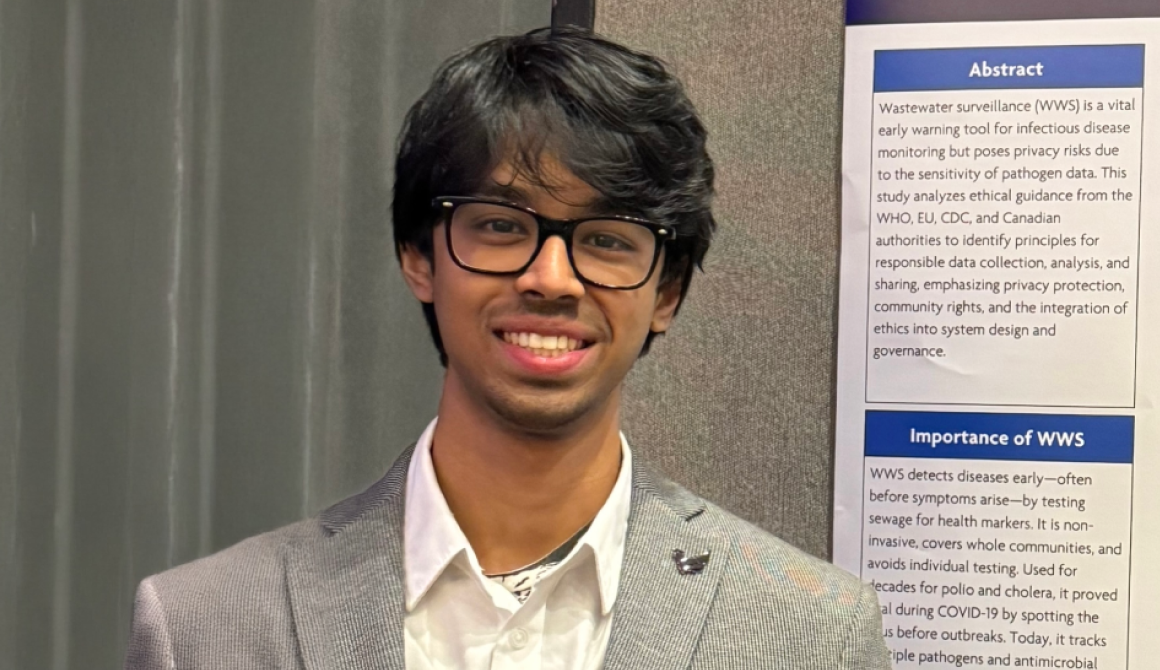
Krithik Ashokkumar, a Laidlaw Scholar at Georgetown University, is exploring how ethics, policy, and law can work together to govern wastewater pathogen surveillance as it evolves from pandemic breakthrough to routine public health tool.
Research title:
Harmonizing Ethics, Policy, and Law in Wastewater Pathogen Surveillance
Please briefly outline what your research is about, and its potential real world impact
My research explores how wastewater surveillance evolved from an emergency scientific breakthrough into a routine public health tool and why that transition matters for everyday communities.
Early in the COVID-19 pandemic, scientists detected SARS-CoV-2 RNA in sewage before individual clinical cases were reported, giving officials a critical head start to prepare hospitals, expand testing, and issue public guidance. Today, the same approach tracks influenza, emerging variants, and other infectious threats.
However, high-resolution monitoring can sometimes narrow signals to specific communities, raising concerns about privacy, stigma, and data governance. For example, during Hong Kong’s COVID-19 response, a wastewater-triggered lockdown in a predominantly South Asian neighborhood trigged increased racial discrimination against residents.
Public trust hinges on clear, transparent rules for how this data is collected, shared, and safeguarded. Drawing on guidance from global and national health authorities, my work outlines practical guardrails to ensure wastewater surveillance continues to protect communities while respecting their rights.
Where did your passion for this research originate? How does your personal story feed into it?
I’ve always been drawn to tempering complex systems with shared humanity. I’m especially fascinated by how culture, identity, and lived experience shape the way people navigate rigid public health structures.
The United States is a melting pot of diversity, and those differences are strengths. However, many current systems can unintentionally flatten that individuality. For example, public health surveillance tools, like wastewater data, can contribute to stigma if they are applied without guiding ethical principles.
As innovative AI becomes more embedded in daily life and public dialogue grows more polarized, I view my research as a clear step towards ensuring our commitment to one another remains stronger than the tools we create.
How have you applied your leadership skills in real life? What are some insights & lessons from your experience?
I focus my leadership on strengthening systems where they fall short.
Current licensure barriers in the U.S. unfortunately leave many communities without physicians who share their language, culture, and lived experience. Recognizing the lack of cultural diversity in medicine, I work with the Refugee Physician Advocacy Coalition to push for expanded licensure policies that integrate internationally trained physicians into American healthcare.
Additionally, at Georgetown, I observed classmates normalize stress and burnout as part of the pre-medical path. In response, I advocated for implementing a wellness program into our pre-medical curriculum. Modeled on established medical school programs, it equips undergraduates with the tools to sustain themselves in a demanding profession.
As a Laidlaw Advisory Board member, I look forward to learning how leadership shifts across global contexts and bringing those lessons back to strengthen the systems I serve.
Please provide a short list of bullet points of your top leadership tips
- Stay close to the people you are serving and keep their concerns at the center of your work.
- Don’t be afraid to name the hard things out loud! Progress begins when someone is willing to say what others feel.
- Take care of yourself. Endurance is a leadership skill, too!
What does it mean for you to be a Laidlaw Scholar?
For me, being a Laidlaw Scholar is a commitment to ethical leadership. It means leading with courage and being an active advocate when something needs to change.
It also means joining a lineage of scholars who have taken their passions seriously and transformed them into impact, either through their research or Leadership-in-Action projects.
The Laidlaw community is united by purpose. I am thrilled to stand alongside global changemakers who lead with integrity, curiosity, and conviction – and to carry those values forward wherever I go.
Which particular leaders inspire you the most and why?
I recently came across a TED Talk of neurosurgeon and influencer Dr. Rupa Juthani, who spoke about the small ways she preserves humanity in the operating room. Throughout her career, she has refined her operative techniques to be as minimally invasive as possible, limiting how much of a patient’s scalp must be shaved to access the skull.
After many grueling hours of surgery, she runs a makeshift “salon” in the hospital, shampooing and conditioning her patients’ hair so that they wake up feeling clean and confident.
Leaders like her inspire me deeply. The most powerful leaders are those who master their craft and still pause to understand the people they serve.
Briefly describe a scene from the future you are striving to create.
Public health systems are proactive and transparent. Diversity is celebrated and embraced. Communities are partners, not subjects of policy. Data serves people without stigmatizing them. Dignity is not an aspiration, but the standard.
Quick Fire Questions
📺 Currently Binging:

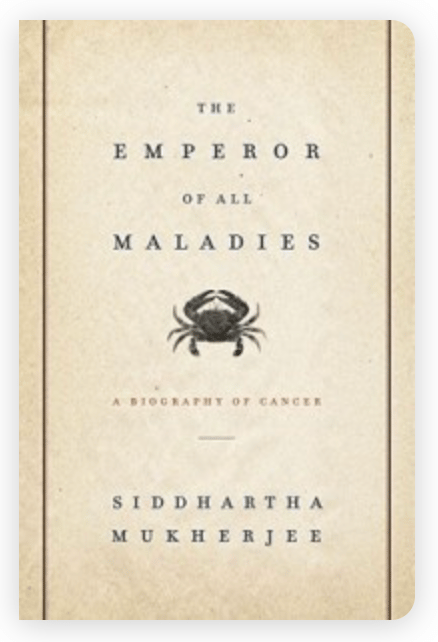
📚 My top book recommendation:
The Emperor of All Maladies by Siddhartha Mukherjee
🎶 My anthem:
🎶 Current Podcast Obsession:

🌈 Something that made me feel joy recently:
Solving the New York Times Connections in one clean sweep!
If you want to learn more about Krithik's work, explore his research here and follow him on LinkedIn. Krithik is a Laidlaw Undergraduate Leadership and Research Scholar at @Georgetown University . Become a Laidlaw Scholar to conduct a research project of your choice, develop your leadership skills, and join a global community of changemakers from world-leading universities.
Find out more about the Laidlaw Scholars Undergraduate Leadership and Research Programme.
🔦 Discover more Scholar Spotlights:
⚡️ Isabel Iino, a Laidlaw Scholar at Barnard College, on Magico-Religious Healing & The Campaign Against Medical Quackery In Harlem Between 1922-1936
⚡️ Sebastian Glasper, a Laidlaw Scholar at the University of Leeds, explores social media’s role in mitigating loneliness among older adults.
⚡️ Patrícia Gonçalves, a Laidlaw Scholar at Oxford University's Saïd Business School, on navigating the crossroads of public and private sectors and championing a sustainable, equitable future.