Scholar Spotlight - Brandon Julio Hadisaputro
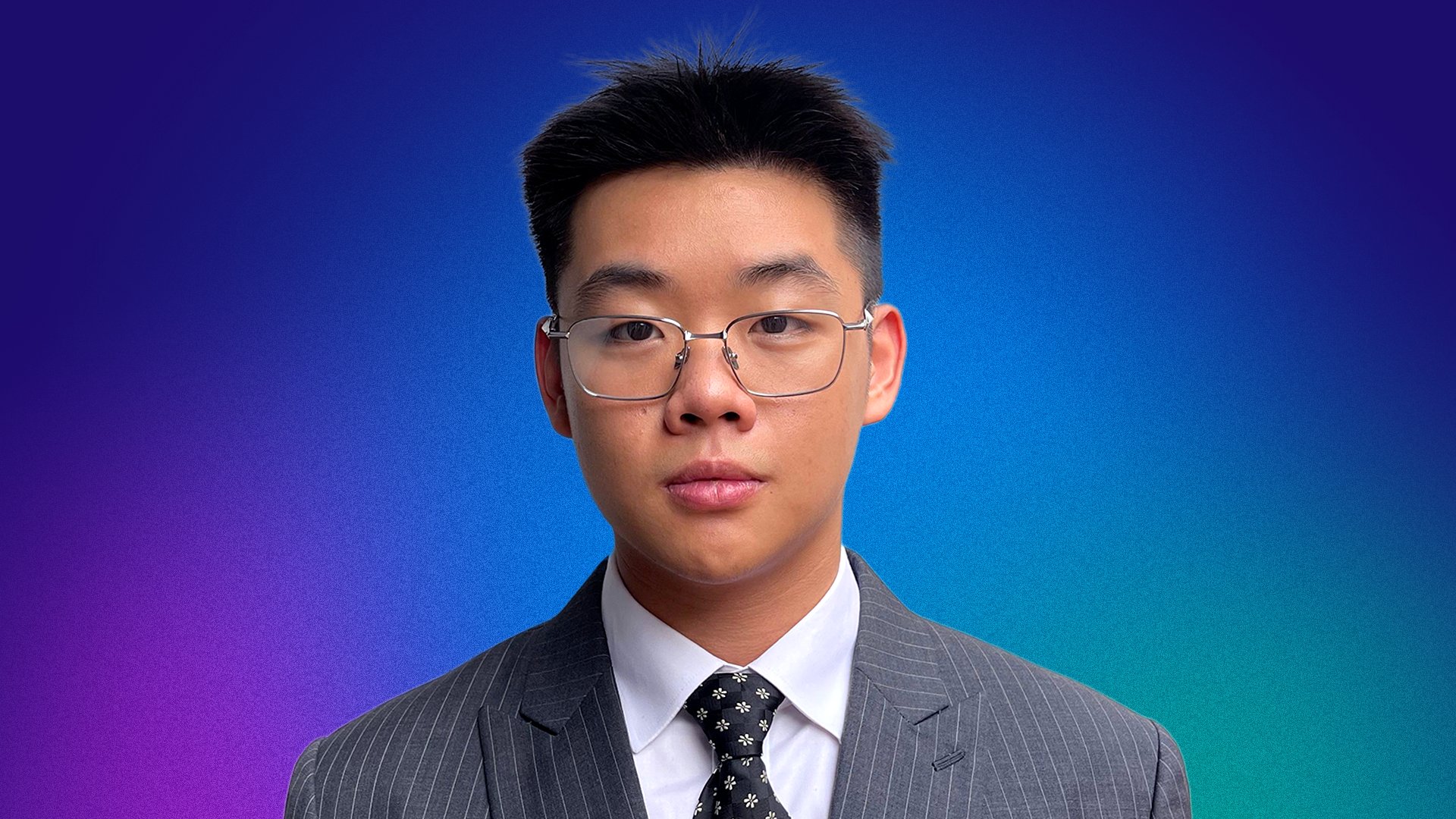
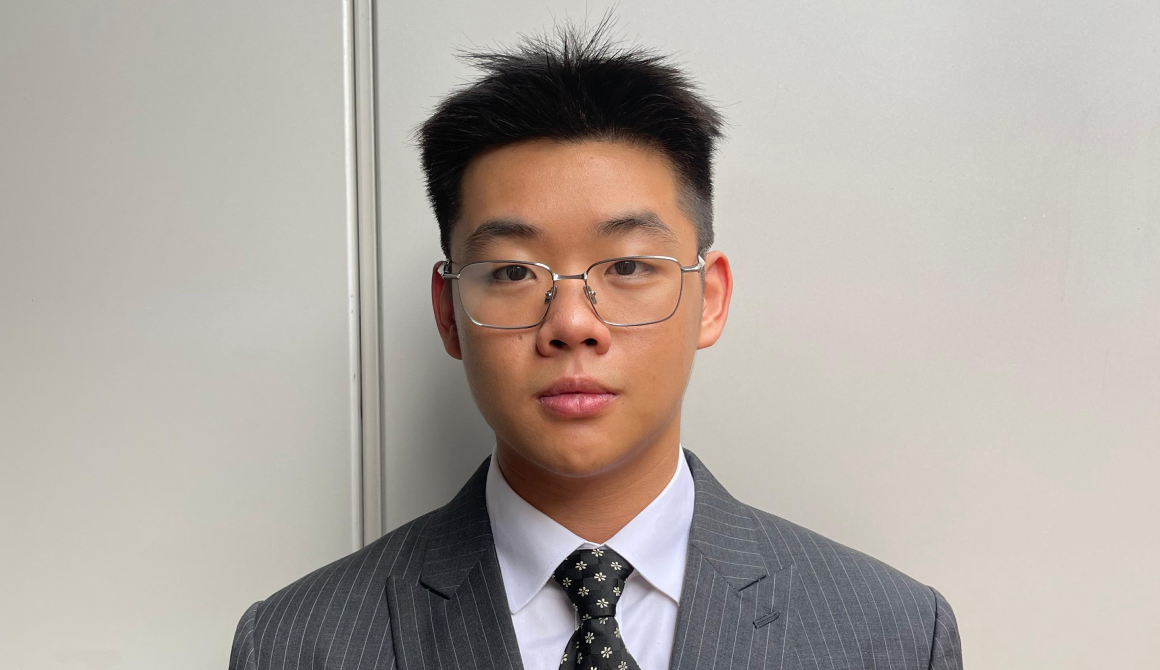
Brandon Julio Hadisaputro, a Laidlaw Scholar at The University of Hong Kong, on designing a low-carbon way to produce fertiliser from polluted water.
Research title
Turning Trash into Treasure: Nitrate Upcycling and Wastewater Treatment for Ammonia Production
Please briefly outline what your research is about, and its potential real world impact
Nitrogen pollution is one of the most overlooked environmental crises of our time. Agricultural runoff carries excess nitrate into waterways, triggering eutrophication and harming ecosystems, a problem estimated to cause billions of dollars in damages annually. Ironically, this same nitrogen is also the raw material for ammonia, an essential fertiliser that sustains global food production. Yet the industrial method used to make it, the Haber-Bosch process, is extraordinarily energy-intensive and carbon-heavy, contributing significantly to global CO2 emissions.
My research, conducted under Dr. Edmund Tse in HKU's Department of Chemistry, asks a simple question: what if we could turn this pollutant into a solution? I helped design and build a wastewater treatment prototype that combines reverse osmosis filtration with a novel CuCoAl layered-double-hydroxide electrocatalyst, developed in Dr. Tse's lab, to directly convert nitrate into ammonia with 99.6% Faradaic efficiency, no greenhouse gas emissions, and drinkable water as a byproduct.
Using hydroponics samples, I developed and validated colorimetric and ion chromatography methods to establish baseline nitrate and ammonia concentrations, then ran a techno-economic analysis comparing the prototype to the Haber-Bosch process. The results show that electrocatalysis alone already uses less energy than Haber-Bosch for ammonia synthesis, and produces a fraction of the carbon footprint, though the full water treatment system still needs efficiency improvements before it can outcompete industrial methods on total energy use.
The real-world potential is significant: this technology could one day offer a decentralised, low-carbon way to produce fertiliser while simultaneously treating polluted water and generating drinking water, a combination with real relevance for agriculturally intensive, water-scarce regions.
Where did your passion for this research originate? How does your personal story feed into it?
My connection to this research goes back further than my time at HKU. It started with something simple: a love of coffee and botany that grew into a genuine fascination with how plants are grown, harvested, and processed. That curiosity pulled me down a rabbit hole of learning about agriculture, and I kept chasing it, seeking out research opportunities and conversations with people in the industry, including coffee farmers and agricultural specialists back home in Indonesia.
Along the way, I was often nudged toward more conventional, “stable” paths, and I understood where that advice came from. But I kept coming back to the same conviction: that sustainability, food security, and agriculture are some of the defining challenges of our generation, and that chemistry and agriculture technologies could offer real tools to address them.
That conviction is what drew me to Dr. Tse's lab and this project. Turning a pollutant like nitrate into ammonia, a fertiliser that agriculture depends on, felt like a direct, tangible way to connect my scientific training to a cause I actually cared about. It's also the same passion that later shaped my Leadership in Action project, teaching agricultural technology to underrepresented students in Boston. Research and teaching became two sides of the same effort: using science to make food systems more sustainable and more accessible.
What is the most memorable moment from your Laidlaw scholarship experience so far?
The moment that will stay with me forever happened on the final presentation day of my Leadership in Action project with the Timothy Smith Network in Boston. I was teaching agriculture and food insecurity to a class of underrepresented high school students, a subject many of them found niche at first. Throughout the six weeks, I shared my own concerns about food insecurity, drawing on stories from Indonesian coffee farmers I had connected with through my own interest in agriculture. On the last day, one of my students stood on stage and explained that his agricultural technology prototype was directly inspired by the concerns I had shared with the class. Hearing that while I was operating his presentation slides, I froze. It was such a full-circle moment: years of quietly pursuing my own passion for agriculture had, without me fully realising it, inspired someone else to build something real. It is the moment I understood, concretely, what it means to lead by sharing what you genuinely care about.
What is the biggest challenge you came across in your research and leadership journeys so far, and what did you learn from it?
Speaking on my LiA experience, The biggest challenge came in two waves. Early on, I struggled to engage students in agriculture, a subject that felt distant and niche to many of them, made harder by jet lag and a curriculum that was not fully finalised before our arrival. I overcame it by leaning into personal storytelling, local food insecurity news and real accounts from farmers I knew, which turned a “niche” topic into something students could relate to.
The second wave hit in week five of LiA, when 3D printing failures threatened to derail every student's prototype with only days left before the final presentations. My co-instructors and I had to scramble, sourcing makeshift components from local hardware stores and rebuilding circuits by hand, some nights stretching to 14 hours.
Both moments taught me the same lesson: leadership is not about having a perfect plan, it is about staying resourceful, communicating honestly with your team, and being willing to do the unglamorous work when things go wrong.
What does it mean for you to be a Laidlaw Scholar?
Being a Laidlaw Scholar means holding research and leadership as equally serious commitments, not treating one as a stepping stone to the other. It gave me the chance to spend a summer doing hands-on electrochemistry research in Dr. Tse's lab, then another summer teaching agricultural technology to students half-way across the world in Boston, and to see how directly those two experiences could reinforce each other.
It also means being part of a community, my fellow scholars in Boston, my lab mentors, and the wider Laidlaw network, who pushed me to keep going through hectic schedules, disengaged classrooms, and last-minute technical crises. Most of all, it means learning that impact does not have to wait until after graduation. I found my calling as an undergraduate, on a small stage I was given, and that has changed how I think about the rest of my career.
Which particular leaders inspire you the most and why?
My focus has shifted to biology, and the figures who inspire me now are the ones who turn lab breakthroughs into medicine at scale. Jennifer Doudna and Emmanuelle Charpentier, who developed CRISPR-Cas9 gene editing, turned a bacterial immune mechanism into a technology now used to pursue therapies for once-untreatable genetic conditions like sickle cell disease, work that earned them the 2020 Nobel Prize in Chemistry.
I'm also drawn to James Allison and Tasuku Honjo, whose discovery of immune checkpoint inhibitors, the biology behind drugs like ipilimumab and pembrolizumab, turned the body's own immune system into a cancer treatment and earned them the 2018 Nobel Prize in Medicine. What strikes me is how directly that discovery reaches patients, pushing survival for once near-hopeless cancers like metastatic melanoma up dramatically within a single career.
Closer to home, I've been inspired by Vincent Cheung, founder of HKLSS. Trained in molecular and cell biology, he moved into business to help translate science into real therapies, founding Nan Fung Life Sciences and Pivotal bioVenture Partners, where I interned this summer. He also built HKLSS to mentor students like me, proof one person can fund new drugs and still show up for people just starting out.
Briefly describe a scene from the future you are striving to create.
My path has shifted since this project. Working on a cancer research on obesity and female cancers sparked a newfound passion for drug development and cancer biology, and I now want to build my career around finding therapeutics that can change outcomes for patients at scale. I picture a future where I am contributing to a drug pipeline, translating rigorous science into treatments that actually reummach the people who need them. Agriculture and sustainability have not disappeared from that picture, they have just moved to the side: personal projects like home gardening, and staying connected to conversations around food security, rather than the center of my career. In that future, I am someone who found a bigger stage to make a difference, while still tending, quite literally, to the smaller one that started it all.
Quick-fire Questions
📺 Currently Binging:
🎧Current Podcast Obsession:
The Pivot Podcast (Particularly the one with Greg Brooks Jr).
🌈 Something that made me feel joy recently:
Celebrating my birthday and graduation just 2 days apart from each other surrounded by friends and family.
💫 A message from Brandon
Going out and socialising with people more because I have more free time this semester from lectures.
If you're passionate about closing the digital divide, I'd love for you to check out the Timothy Smith Network, the wonderful Boston-based nonprofit I worked with during my LiA project. They do incredible work equipping underrepresented youth in Greater Roxbury with access to technology, education, and career pathways in STEM.
I'd also like to give a shoutout to the Hong Kong Life Sciences Society (HKLSS), which has given me immense support throughout my undergraduate career, from in-depth mentorship and career seminars to internship opportunities. It's also given me valuable leadership experience of my own, from guiding younger cohorts to MC-ing events.
If you want to learn more about Brandon's work, explore his research here and follow him on LinkedIn. Brandon is a Laidlaw Undergraduate Leadership and Research Scholar at @The University of Hong Kong . Become a Laidlaw Scholar to conduct a research project of your choice, develop your leadership skills, and join a global community of changemakers from world-leading universities.
Find out more about the Laidlaw Scholars Undergraduate Leadership and Research Programme.
🔦 Discover more Scholar Spotlights:
⚡️ Isabel Iino, a Laidlaw Scholar at Barnard College, on Magico-Religious Healing & The Campaign Against Medical Quackery In Harlem Between 1922-1936
⚡️ Sebastian Glasper, a Laidlaw Scholar at the University of Leeds, explores social media’s role in mitigating loneliness among older adults.
⚡️ Patrícia Gonçalves, a Laidlaw Scholar at Oxford University's Saïd Business School, on navigating the crossroads of public and private sectors and championing a sustainable, equitable future.