Scholars on Ambition - Eleanor


Eleanor, a Laidlaw Scholar at the University of Cambridge, on contributing from behind the scenes and learning when an ambitious goal needs to change shape.

After an energising weekend at Imperial College London, where Scholars from across the Laidlaw community came together to share their research, exchange ideas and explore this year’s theme of Ambition, we’re continuing the conversation with a reflection from one of the Scholars who joined us there.
Eleanor came away from the conference inspired by the people she met, the research being shared and the different ways Scholars were putting their ambitions into practice. Her own Leadership-in-Action experience in Cambridge had already prompted her to think differently about what ambition can look like, particularly when meaningful contribution happens behind the scenes or when an ambitious goal needs to change shape.
As we look ahead to the North American Laidlaw Scholars Conference in New York, this week’s Scholars on Ambition feature turns to Eleanor’s reflections on what she learned when the outcome mattered more than being at the front, and why adapting an ambition does not necessarily mean giving up on it!
Ambition often means setting clear goals and persisting through setbacks with a strong inner drive. Can you share a moment when you worked toward a specific goal and kept going despite the challenges you encountered? This could be from your experience as a scholar or as a leader more broadly.
One strand of my LiA was to organise the Women’s Rough Sleeping Census in Cambridge. I remember feeling both nervous and excited, since this was a big project I knew we needed to get right. This is the first year the target audience has been the ‘hidden homeless’, who might not fit a traditional stereotype.
Initially, I expected to be running everything from the front. However, the majority of my work ended up being admin, including drafting forms, chasing volunteers, scheduling meetings and building spreadsheets. It felt like a bit of a step back, since I wasn’t the expert and wasn’t the face of the programme.
What kept me going was knowing how much I cared about the outcome. I focused on ensuring everything worked, which taught me something essential about ambition: that it can mean driving from behind, not the front. Insisting on being seen would have been selfish when the goal mattered more than my role.
This lesson stuck with me. It’s why I applied to be a researcher for a podcast, and why I’m excited to spend the next year learning feminist theory. I know now that I want a career built around this kind of work.

Being able to visit various places in Cambridge for meetings – this image is from the University’s administration building, a place students rarely get access to!
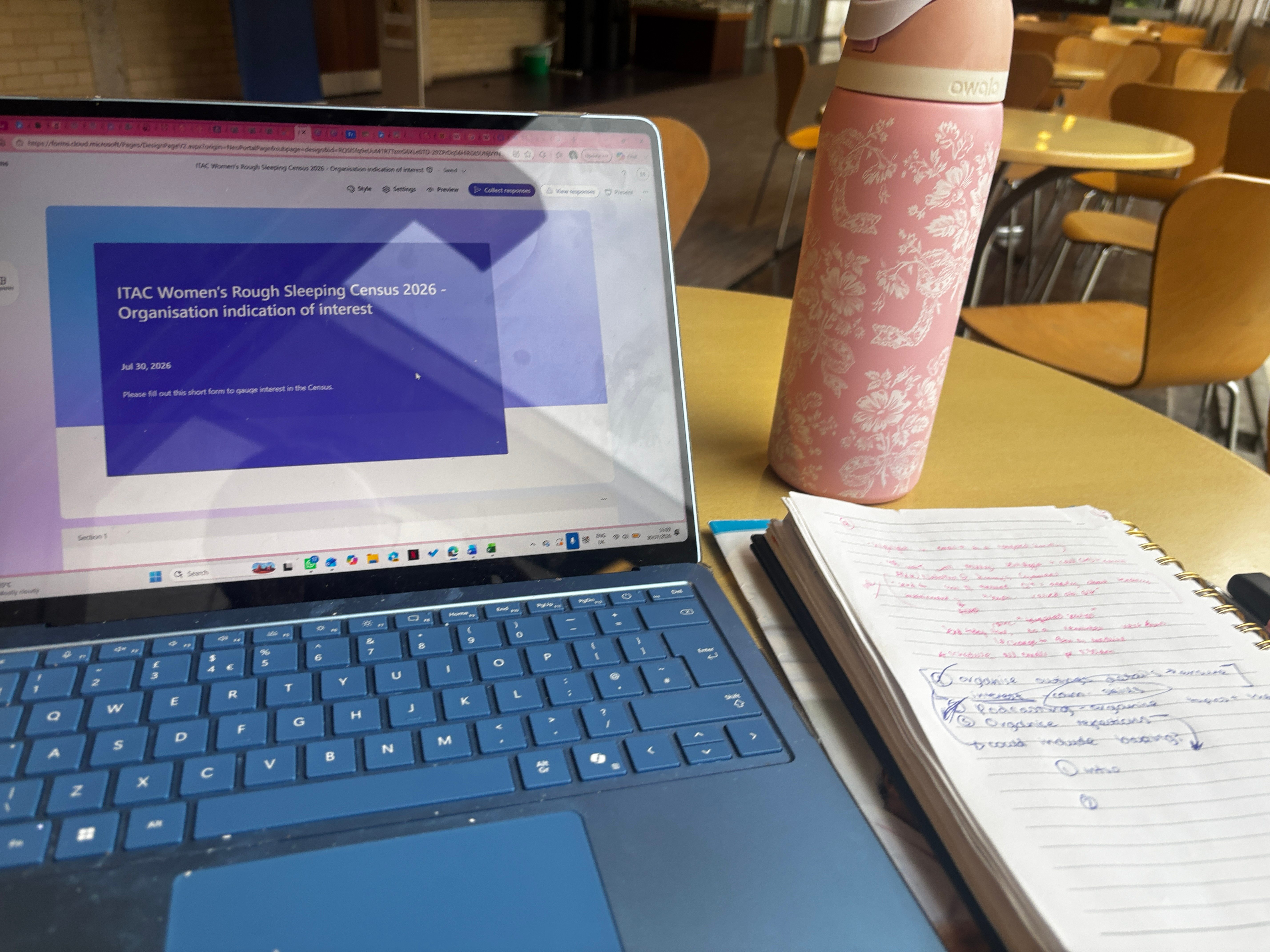
Working on surveys for the women’s census
If you have an ambitious goal, the journey isn’t always linear. What advice would you give someone who feels stuck along the way?
My LiA started out with an ambitious goal of mapping a roadmap of support available on the journey out of homelessness, from crisis to independent living. I pictured one comprehensive resource.
However, I underestimated how much this would depend on things outside of my control. The scope was too broad to build well in the time I had, and it was only one strand of my project, so I narrowed the plan into something achievable. This resulted in a focused tenancy sustainment report, using survey data from staff and lived-experience respondents to suggest concrete proposals.
Thinking back, this echoes something I learnt setting up Daricha, an NGO connecting girls in Afghanistan with tutors worldwide. We built our own curriculum, convinced we could be a real solution. It didn’t take long to realise that three teenagers can’t solve a problem that size alone, and we could only be part of a larger, collective effort.
Ambition can mean holding onto a larger goal, but it can also mean knowing when to make that goal more focused. The second kind of ambition can feel more difficult, but it remains equally valuable.
If homelessness policy is something you’re interested in, Eleanor encourages you to take a look at It Takes a City, the charity she worked with for her Leadership-in-Action experience. Its approach to care and community is centred on the goal of making homelessness rare, brief and non-recurring.
If you want to learn more about Eleanor's work, explore her research here and follow her on LinkedIn.
 Want to relive the weekend at Imperial?
Catch up on the research, conversations and highlights from the 2026 Laidlaw Scholars Conference in London.
Read the conference round-up →