Research Proposal: My Research into Sustainable Automotive Steel Manufacturing
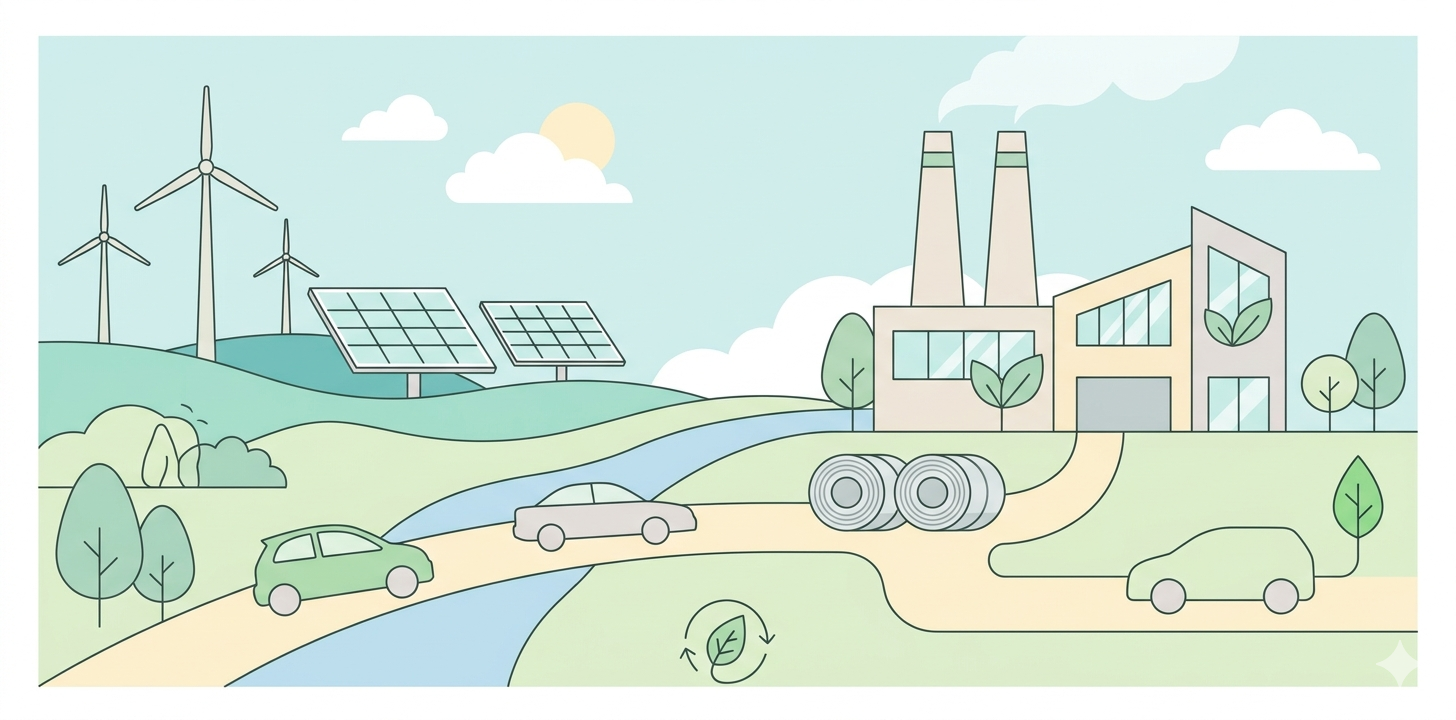


Why Automotive Steel?
Steel is the backbone of the automotive industry. It is strong, formable, and cost-effective but its production comes at a significant environmental cost. As the world accelerates towards net-zero targets, finding ways to manufacture steel of equivalent quality at a measurably lower CO₂ footprint is one of the most pressing engineering challenges of our time. My research this summer aims to directly address this challenge.
What Will I Be Investigating?
My project will investigate current practices in manufacturing steel for automotive use and explore how the quality of steel changes with varying processing parameters — such as temperature, forming speed, and pressing time. Understanding how these variables influence material properties (including defects like wrinkling, cracking, and thinning) is essential before we can begin to optimise for sustainability without sacrificing quality.
A key part of my work will involve learning and applying Finite Element Analysis (FEA) simulation software, including industry-standard tools such as AutoForm, to model real-world steel manufacturing processes. Where possible, I will collect real experimental data supported by Tata Steel and the MFG to feed into these models and ground my simulations in industrial reality.
Project Breakdown
The first phase of the project involves building a solid foundation. I'll be getting to grips with current automotive steel manufacturing practices and the FEA software used by the industry. With support from Tata Steel and the MFG, I'll also be arranging testing materials and laboratory setups for later data collection. From there, I'll deepen my understanding of how processing parameters — heat, pressing time, and forming speed, affect the final mechanical properties of formed steel components.
I will begin building predictive models of steel manufacturing quality at lower CO₂ emissions. I'll be applying my own test results to run FEA simulations and continuously refining my models with feedback from industrial professionals. The goal is to evaluate the trade-offs between steel quality, production efficiency, and carbon output, and identify where meaningful reductions can be achieved.
The final phase shifts from the lab to the world. I will be sharing my findings with industry stakeholders and meeting with supervisors from Tata Steel to receive expert feedback on my models and conclusions. Beyond this, I will act as a sustainability ambassador, engaging in sustainable manufacturing innovation challenges to promote greener steel practices to countries leading in steel production globally.
Research Impact
The core output of this project will be a validated FEA model capable of making reliable, quantitative predictions about CO₂ reductions achievable through modified manufacturing parameters. These predictions will be grounded in real-world data and will serve as a practical tool that industry partners can use to evaluate and adopt greener manufacturing pathways. The impact will be measurable, expressed as a numerical reduction in CO₂ emissions, giving the findings direct applicability beyond academia.
Looking Ahead
I'm incredibly excited to be working alongside Professor Li-Liang Wang and the wider MFG team this summer. This project represents a powerful opportunity to combine technical engineering skills with a genuine commitment to sustainability and to contribute, in a small but meaningful way, to the global effort to decarbonise heavy industry.

Please sign in
If you are a registered user on Laidlaw Scholars Network, please sign in