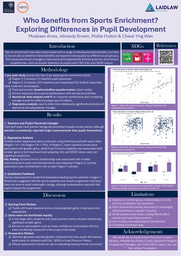
In the first week of the Laidlaw Research Summer, I was introduced to my group and our assigned research brief. Over the past few days, we have had a chance to get to know one another and each of us have worked on developing different parts of our research proposal - in particular, I took responsibility of writing our research rationale, an overview of the 'why' behind our project and methodology. A PowerPoint presentation was also created to accompany our research proposal presentation taking place at the end of the week.
Looking back, the way in which I contributed to the success of our group was through taking initiative in assigning roles, creating documents and sharing ideas in our meet-ups and groupchat. I was able to ask questions intended to seek clarity in the meeting with both our impact advisor and the lead data analyst for our project - this helped to elucidate what their expectations were for us and how best we could edit our methodology and research aims.
As part of the research summer, it is important for us to familiarise ourselves with different data organisation/analysis tools which may be of help over the course of the project - we attended skills workshops introducing us to both NVivo and Excel. As I had no prior experience with NVivo, I enjoyed navigating a new platform and learning about the different ways it could help to organise and collate qualitative data. The Excel session was helpful in refreshing my analysis skills developed as part of my degree course - I was also able to learn additional skills, including how to group and edit multiple sheets together!
Towards the beginning, there was some lack of clarity and misconceptions amongst the group regarding the direction we could take for our proposal and overall project - we were able to clarify things via a meeting with our impact advisor and by submitting our proposal for reviewing. In the future, I'd like to be quicker in asking questions when feeling unclear in order to save time and sustain a sense of direction. In particular, we aim to gather guidance on how best to develop our quantitative analysis skills.
Looking ahead to next week, we hope to continue refining our proposal and aims for the project and meet with advisors to work on analysis tasks using the data we will be given access to. In addition to this, I am looking forward to developing new IT skills and getting to meet stakeholders through school visits.