Two weeks into six, the questions I came to Yorkshire with have already started rearranging themselves. This, I believe, is characteristic of an LiA project, and the reason I am conducting a deep dive into the digital education landscape of North-East England for SHINE in-person, rather than from behind a screen.
Desk research, literature reviews and staying on top of the wider policy conversation matters enormously in my journey towards contributing informed recommendations, a useful toolkit and sustainable next steps for the charity I am working with, as global precedents around AI change so fast. However, it only took a few conversations to realize that the discourse around AI policy, regulation and implementation is focused almost entirely on: (1) higher education, (2) upper/middle income demographies (e.g. policy-makers sitting in London) and (3) well-resourced institutional actors like universities, governments and firms rather than community organizations or frontline practitioners.
The voices disproportionately left out of the conversation (K-12 students, especially those facing poverty or socioeconomic inequality) are also the least likely to have access to premium tools, critical literacy education and guardrails around their use of technology. This is why I wanted to ensure this project is as place-based as possible, rooted in community conversations and real-world interactions with children, teachers and staff from varying backgrounds growing up in the North-East. What are their hopes, worries and concerns about new technologies like AI being used in the classroom? Do they notice a difference in the way they experience learning? Is this positive or negative? How proactive are different schools in the region - based on the levels of support they receive - in integrating and teaching about these tools? Do kids use, or have access to, personal devices and AI tools at home? These are just some of the many questions that come to mind when considering how artificial intelligence affects education and how existing socioeconomic divides intersect with rapid changes. So, my 6 weeks here in Yorkshire are like an in-person intensive component to the overall project - and intensive it certainly is.
Re-evaluating my methods
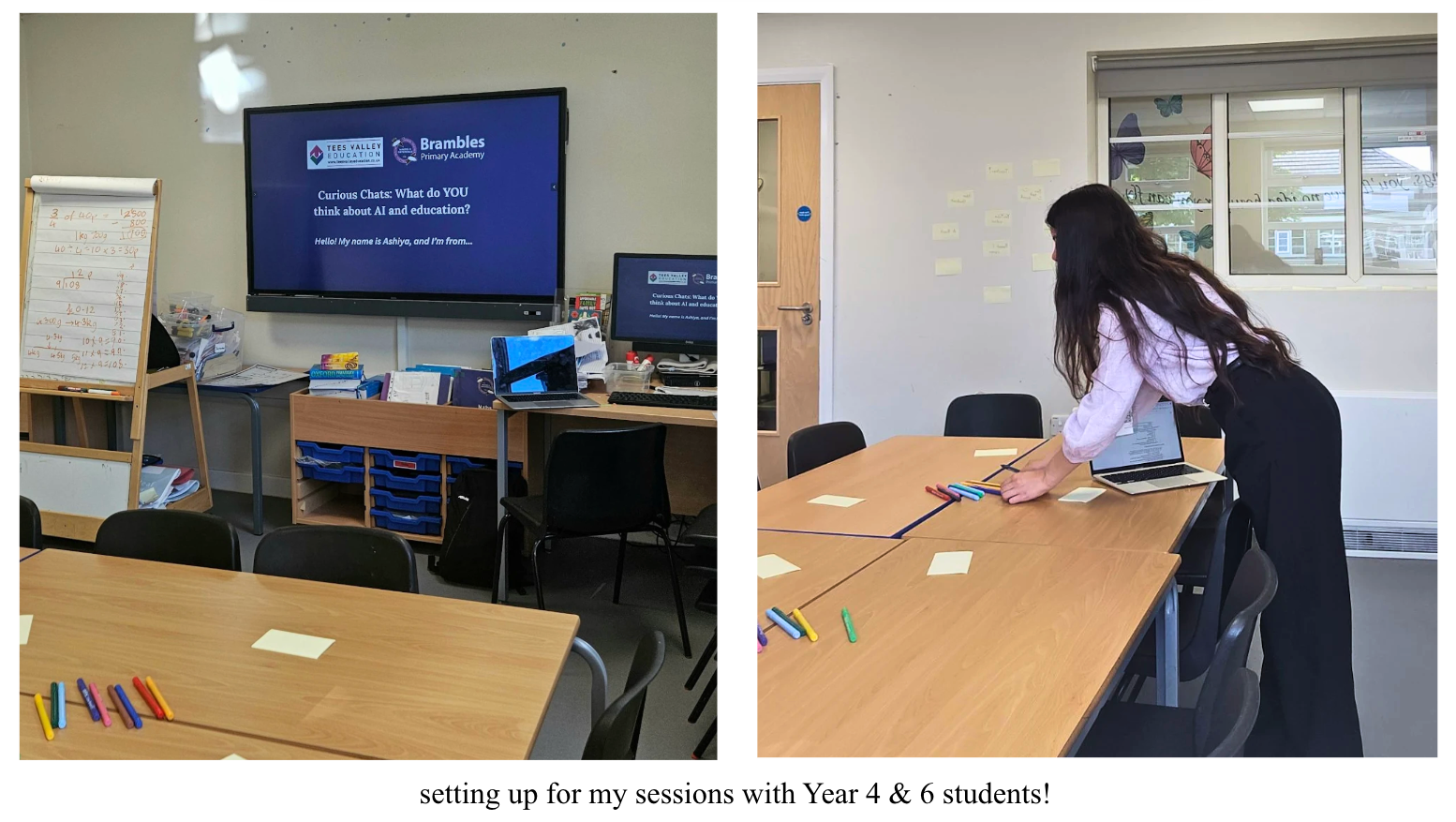
I spent my first few school visits at Brambles Primary Academy in Middlesbrough, a school with a 97% pupil deprivation rate. Through conversations with Year 4 and 6 teachers, the headteacher, the computing lead, and over 20 students aged 8–12, it quickly became clear that these children are far more intelligent, digitally literate, and technologically fluent than my colleagues and I had assumed as I designed our focus group questions and activities. The majority of them have personal devices at home, use social media despite age restrictions, and have already experimented with AI tools—often in a structured way, as part of school assignments, thanks to Brambles' forward-thinking approach to embedding EdTech into the curriculum from an early age. As a result, they are already well aware of both the risks and benefits of these technologies, and understand how AI can complement their creativity and learning rather than undermine it, when used thoughtfully.
This really pushed me to sit back and think: what can we learn from these kids? What would actually be useful for us to know, given that most of them already have a base of foundational knowledge and access to technology regardless of whatever circumstances they're facing at home? How can I make the most of this rare opportunity—access to educators and bright, resilient young people—to inform a better way forward for implementing these tools in classrooms across the region? How can I use this chance to understand the landscape here more deeply, by asking more meaningful, challenging, and insightful questions?
Remembering the goal: Why I'm here
These first two weeks have opened my eyes immensely. I've learned so much about inequality in the region, what students face here and the many roles teachers have to assume to support them, as well as about SHINE's fascinating ongoing projects from my colleagues—yet I have more questions than answers for what we set out to do. With my head swimming with insights from my first interviews, buzzing with purpose and a bit of cuteness overload from getting to know the children, as well as plenty of puzzling ideas about how to make the most of these interactions—I'm going back to the roots of where this project started, to remember what I'm here for.
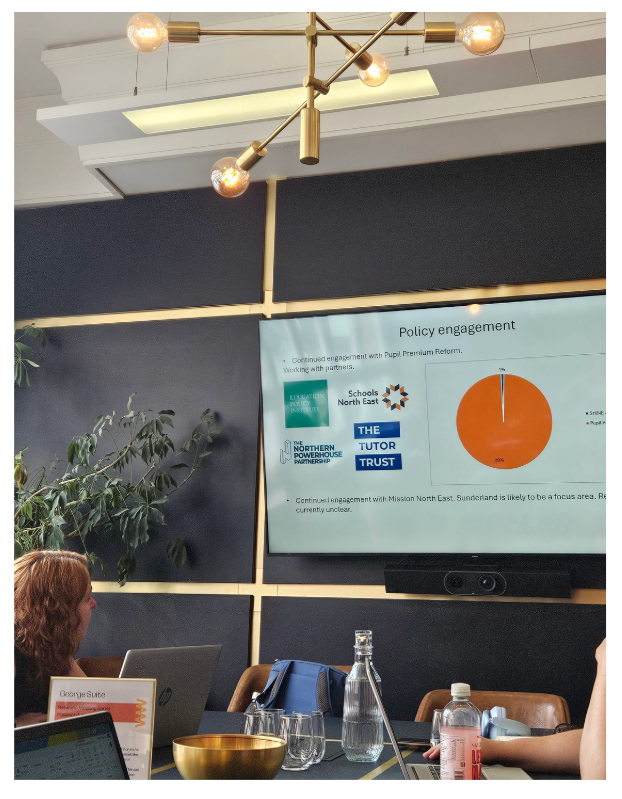
As a colleague expressed during our team meeting this week, some necessary, ongoing obligations are currently getting sidelined by "a conveyer belt of urgent, important work"—for me, this conveyor belt encompasses things like events, school visits, focus groups, commuting, and other daily expectations. Since arriving in England, every day has looked so different that I haven't yet developed any routine. This has made it challenging to carve out time to really read, iterate, research, and process everything I'm taking. When each day brings new demands, there is often little room left for that kind of reflection. I recently experienced a wake-up call through a bad cold I caught, by result of a lack of consistent sleep and exercise. One of my biggest goals for the upcoming weeks is to build a healthy routine that allows me to manage several competing priorities at once.
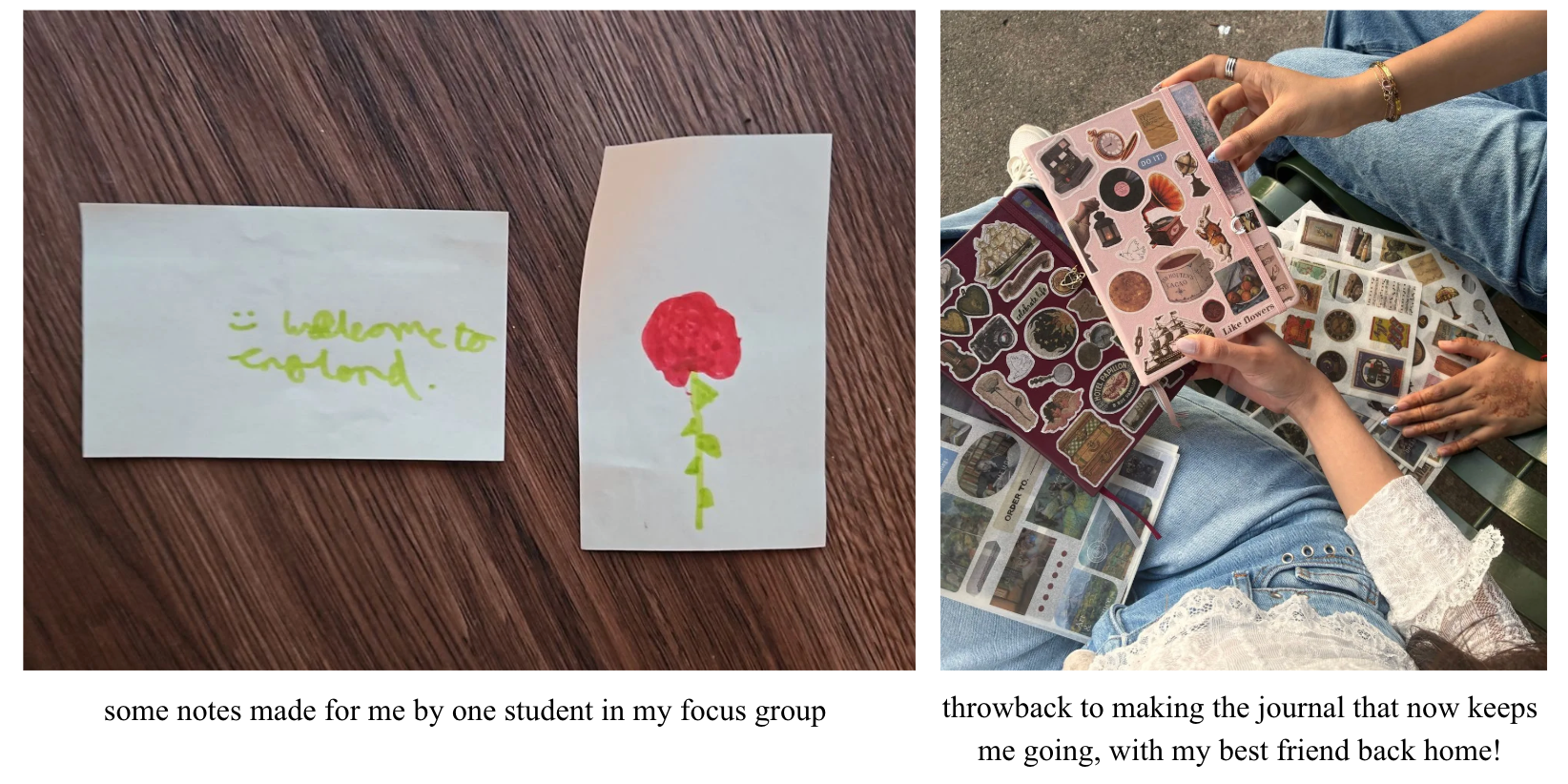
One habit I am grateful for, that has truly kept me grounded, has been journaling at the end of every day. Back home in Canada, before making the trip for this project, my best friend and I made travel journals together. Carrying it with me has felt like carrying a piece of home that can experience this new world alongside me. After my first set of focus groups with the children at Brambles Primary, I sat down that night to write down everything I could remember about them—many fond memories, and a few challenging ones—crystallizing them for my own sake, so they don't slip away. These include how one girl expressed her strong distaste for her older sister using AI to write stories for her high school assignments. This student herself values writing and drawing by hand, straight from her own imagination, so it pains her to see technology replace that effort—and worries her to see it valued just the same. Another student takes singing lessons and has been building her following on TikTok in pursuit of her dream to one day perform in London's West End theatres. One child asked me, "How was the very first website developed, if there was no website to code it on, back when humans only had hardware?"—and looked rather disappointed when I didn't know the answer. I made a mental note to look it up and still don't fully understand it… so if anyone reading this knows, feel free to tell me in the comments below!
One enthusiastic student with autism was busy drawing on the sticky notes I'd laid out while I led activities during the focus group, going on to hand me two notes at the end, which truly made my day:

Hello there! I'm Ashiya, a member of the 2025 Laidlaw Leadership & Research Programme Cohort. I am a student at the University of Toronto's Munk School, pursuing a double major in Peace, Conflict & Justice and Ethics, Society & Law.
I'm passionate about education and the governance of digital technologies, particularly artificial intelligence. I am currently exploring how this affects children facing socioeconomic disadvantage through my Leadership-in-Action project in Northern England. This builds on my previous work in student advocacy, my research of Indigenous-led education initiatives in Canada for my first Laidlaw summer, and my new role as a Center for International Governance Innovation Digital Policy Hub Fellow.
I look forward to reading and contributing to the incredible body of work on this platform (you all are awesome)! Outside of research, I love to read, dance ballet, explore, learn new things and make new friends - please feel free to reach out anytime :)