Small but Mighty, pt. 2
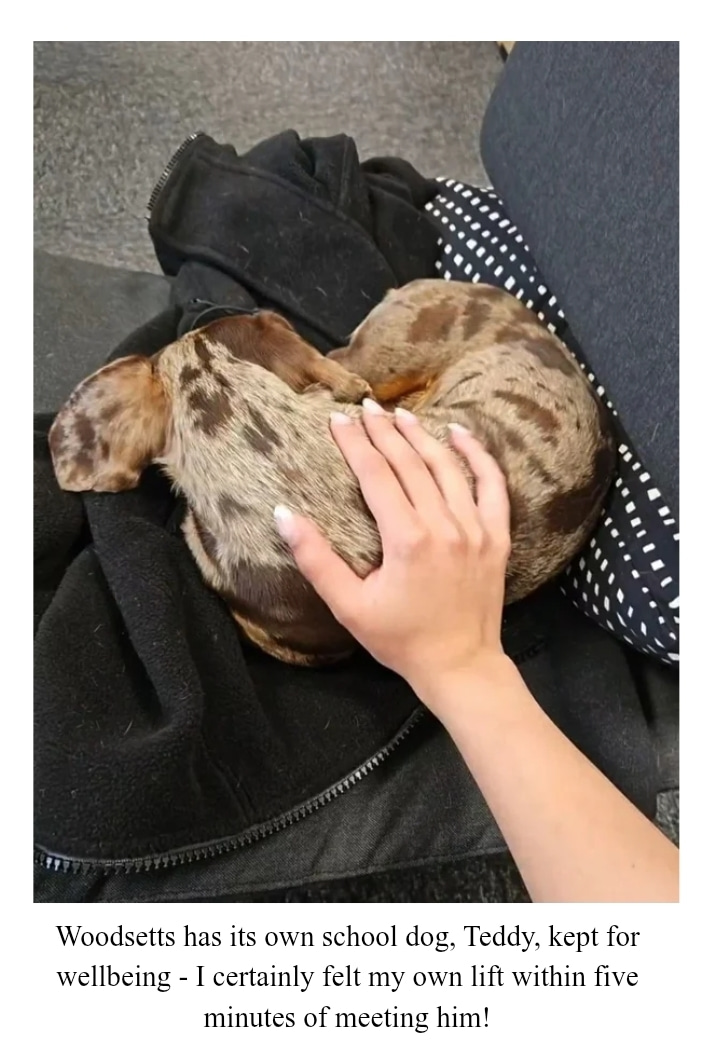
This week I visited Woodsetts Primary School, a small institution in Rotherham on the outskirts of Sheffield, (where on my journey I learned that Robin Hood is a real story and Sherwood Forest is a real place). Deprivation rates are lower here than the schools I have visited in Middlesbrough, but their size brings its own challenges. With only one class per year group, pupils with diverse needs (such as learning or physical disabilities) are integrated into mainstream classes - resources stretch only so far, with a single iPad cart circulating the school.
What struck me as I moved from classroom to classroom was the sheer excitement that met the word AI. Teachers eagerly sat me down to show me the assignments they had been running with pupils and the resources they had generated to complement their own expertise. They described it as revolutionary for their pupils' engagement, for their own workload and wellbeing, and above all for adaptive learning. One year 6 pupil with special educational needs is currently working at a year 1 level, but with the help of an AI tool, her teacher tailored a reading text to her level so she can accomplish the same task as her classmates without feeling excluded. Using transcription tools, they are also able to support pupils with memory difficulties to communicate their ideas and stories without the slow struggle of writing every word down.
Interconnected Issues
Not everything I heard was hopeful. I met the school's pastoral lead, who oversees mental health, family relationships and safety, whose observations deeply concerned me. Many parents stand at the school gates at pick-up time entirely absorbed in their phones, not noticing their child running up to them at the end of the day, missing that moment of connection. Babies sit in strollers glued to their parents' phones before they can learn to grip a pencil, because it is the 'easier' way to manage them. I am slowly but surely realizing how interconnected these issues are. You cannot address a child's use of AI or social media without engaging and educating their parents on the risks. It is enormously difficult to shift a child's habits, their interest in education or their resilience if their family does not see why it matters, or if the behaviour modelled at home points the other way. Everything starts with the family and returns to the family when you look at how digital technology intersects with disadvantage.
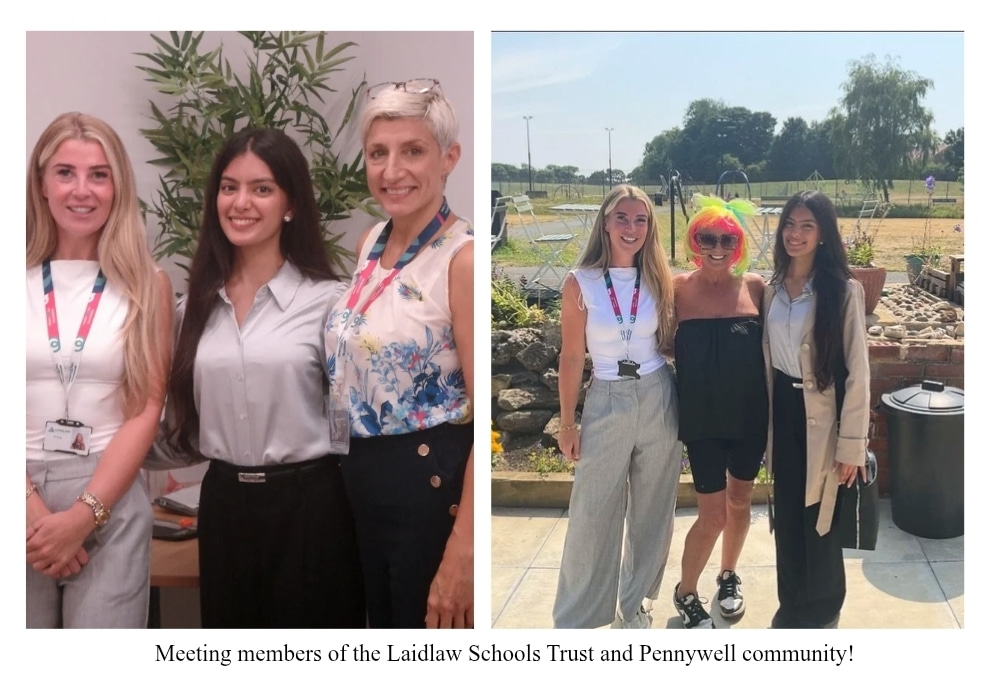
Speaking of interconnectedness - before arriving in the North-East for my project with SHINE, I had not known that the Laidlaw Schools Trust and new Pennywell Fellowship were based so nearby! Upon learning this fact and realizing how similar our missions are - to support students facing disadvantage in innovative, partnership-based ways - I knew I had to visit. The Laidlaw Foundation has changed my life through the scholars programme, as I know it is for countless other young children through the Laidlaw Schools Trust, the ripple effects of which we may only see in a few years. Pennywell is one of the most deprived areas of England, and SHINE itself a major funding partner for the Pennywell Fellowship's work. I couldn't leave without first meeting some of the staff who make it possible, learning about their work and getting to know the community from the lens of our project and beyond!
I have the privilege of meeting Sarah Hammond - School Improvement Partner at LST and the driving force behind the Pennywell Fellowship - as well as her new partner-in-crime Amber Fox, who grew up in the Pennywell area and now serves as a community connector of their local city partners. Pictured in this photo is the charismatic, fun and down-to-earth Karen Noble - CEO of Pallion Action Group - once a single mother who built her life up from scratch and now dedicates it to the community centres that bring people together in this town.
Common Threads
My final workshop presentation for the team at SHINE is coming around quickly - much to my disbelief at being in my second-last week. Preparing for this is now at the forefront of my mind. Wrapping up my last school visits this week, countless common threads have emerged. The teachers I speak to may think their insights are small, ordinary day to day observations, but when they answer, held in my mind are the 25 other teachers and 70 other children I have spent time with across this region. Their small local observations turn out to be threads in a much larger, shared pattern across communities facing disadvantage in the North East; what one person tells me in one city echoes almost exactly what someone said in another. Their thoughts are not just observations, but phenomena - this is exactly what SHINE and I aimed to bring to light this summer.
The challenge in front of me now is how do I pull all of it together? How do I take five weeks of deep, organic conversation, of days spent in schools and communities watching their challenges, struggles and excitement play out, and turn it into something actionable? Week 6 should provoke thought and genuinely engage the team at SHINE, inviting them to think critically about how these insights might shape their direction as an innovation funder and how they consider the communities they serve in future. It is a real challenge, but one I am excited to take on. More on how it all comes together after Week 6, stay tuned!

Hello there! I'm Ashiya, a member of the 2025 Laidlaw Leadership & Research Programme Cohort. I am a student at the University of Toronto's Munk School, pursuing a double major in Peace, Conflict & Justice and Ethics, Society & Law.
I'm passionate about education and the governance of digital technologies, particularly artificial intelligence. I am currently exploring how this affects children facing socioeconomic disadvantage through my Leadership-in-Action project in Northern England. This builds on my previous work in student advocacy, my research of Indigenous-led education initiatives in Canada for my first Laidlaw summer, and my new role as a Center for International Governance Innovation Digital Policy Hub Fellow.
I look forward to reading and contributing to the incredible body of work on this platform (you all are awesome)! Outside of research, I love to read, dance ballet, explore, learn new things and make new friends - please feel free to reach out anytime :)