For the past three months, I have been living in Québec City, working in two healthcare facilities: CHUL hospital and St. Brigid’s Home, a long-term care and hospice facility. The skills I have gathered extend beyond medical care; they encompass humanity, communication, and self-autonomy.
The language barrier (and its unexpected gift)
Québec is proudly French-speaking, and as someone by no means fluent in French, I struggled. From attempting to explain my visa at immigration to trying to close my Canadian bank account at the end of my internship, it seemed very clear my GCSE in French didn’t hold up very well in real-life situations. At first, I really worried that my limited vocabulary would hinder my ability to connect with patients. However, after a couple of days, it became clear that language is only one dimension of communication. My lack of fluency meant I had to rely heavily on body language, tone, eye contact, gestures, and contextual clues to convey warmth, empathy, and attentiveness.
This extra care when communicating turned out to be invaluable, especially when working with residents at St. Brigid’s who could not speak for themselves due to disability or neurological conditions. I learnt that silence, too, can be a form of dialogue and that sometimes holding someone’s hand, smiling, or mirroring their expressions can communicate more than words. The experience deepened my sensitivity to non-verbal cues and taught me that connection does not depend entirely on shared vocabulary.
Dignity often lies in the details.
Many of the people I worked with were in hospice or long-term care, living within systems where most decisions were no longer theirs to make. Treatments and routines often stripped them of choice. One of the projects I led, “The Market on Wheels”, aimed to reduce this clinicality. Every week, residents could use coupons they had earned through activities to purchase small items, such as scarves, mugs, or sweet treats. On the surface, it was just a mobile market. But the heart of the project was about restoring autonomy. Choosing between a chocolate or a cookie, or deciding on a brightly patterned scarf, may seem trivial, but for someone whose medical journey has taken away most options, those small choices allow people to retain their humanity. It was about reclaiming the right to decide, to express preference, and it showed me that empowerment is not always about grand gestures; sometimes it is about enabling choice in the smallest of ways. I learned that healthcare is not just about prolonging life; it is about enriching the life that remains. As someone who aims to stay in the biomedical field, this is a lesson I feel was imperative for me to understand.
Lessons I will carry forward
- I learned that unfamiliarity, whether in language or culture, is not a barrier but an invitation to expand how we communicate and connect.
- I learned that dignity can be restored through the smallest of gestures.
- I learned that presence and humanity are as vital as treatment in healthcare.
I arrived as an outsider, anxious about what I could contribute without fluency or familiarity. I leave with the understanding that unfamiliarity itself can be an asset, pushing us to adapt, notice and connect in ways we might not otherwise consider.
I'm glad to have shared this journey with people from across the world:
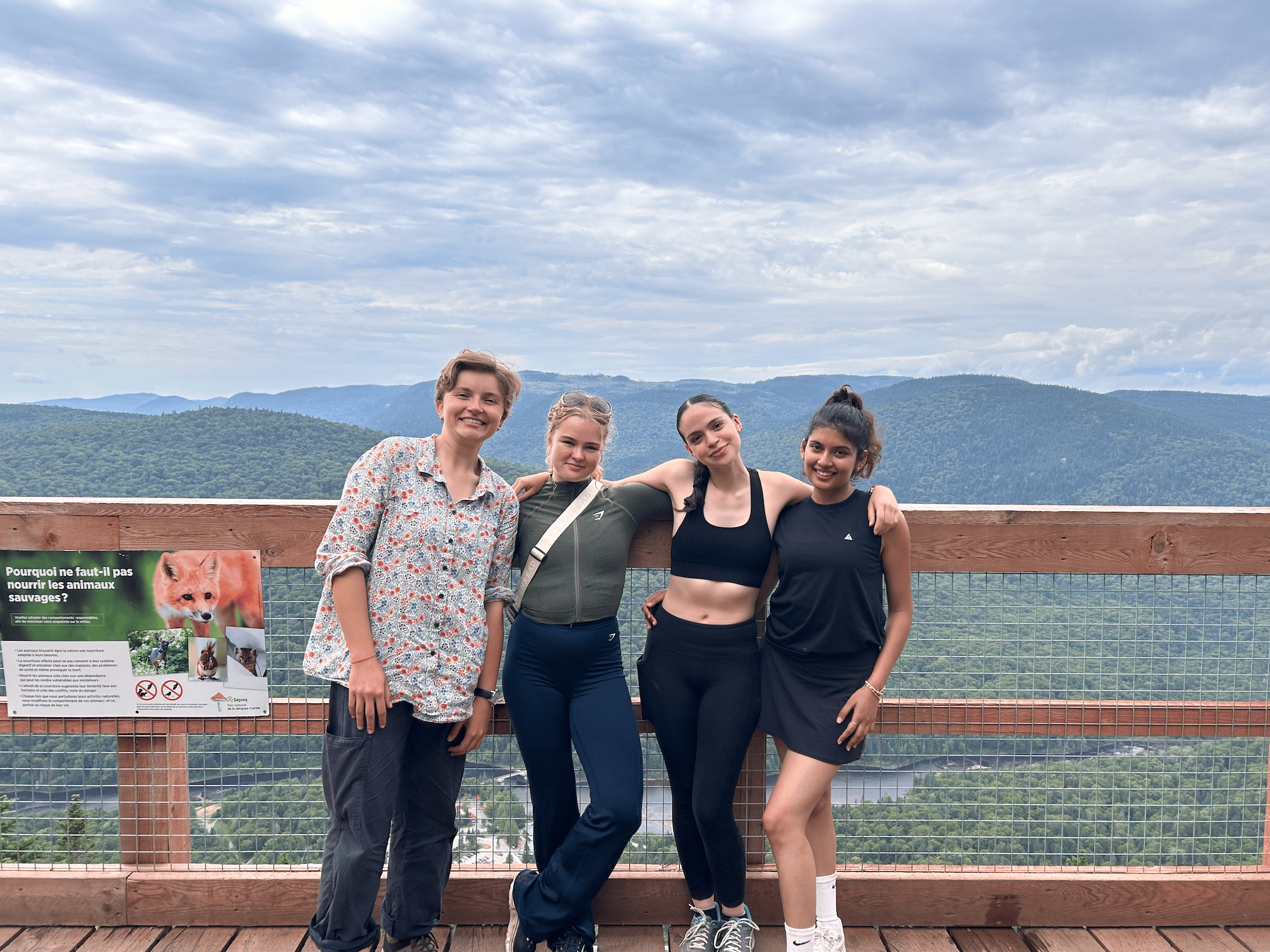
Flora from France, Me, Miranda from Mexico, and Swasti from Nepal
Hello! I am Emily, a Biosciences student at Durham University with aspirations to become an academic researcher. I am particularly interested in molecular biology and genetics.
I love meeting people and learning new things - I would love to connect with you!
Recommended Content



Help a fellow scholar - 10 minute survey: UK Men aged 18-25.

Please sign in
If you are a registered user on Laidlaw Scholars Network, please sign in