Project Outline: Nature's Pharmacy Project
Developing the Habitat-Based Microbial Recovery Index (hMRI) to Assess Soil Microbial Recovery Potential in Re-Wilded New England Forests
Supervised by Professor Benjamin Wolfe
Background
The global crisis of antibiotic resistance threatens modern medicine. As drug-resistant bacteria spread, we desperately need new antibiotics - and nature holds the solution. Temperate forest soils represent one of the most promising reservoirs for antibiotic-producing microorganisms, particularly Actinobacteria, which produce the majority of naturally derived antibiotics in clinical use today. In September 2025, researchers at Rockefeller University made a stunning demonstration of this potential: From a single forest soil sample, they identified hundreds of previously unknown bacterial genomes and discovered two novel antibiotic compounds (Burian et al, Nature Biotechnology 2025).
But here's the challenge: we don't know which forests hold the greatest discovery potential, or how to support microbial development in the ones that aren't there yet. As post-agricultural soil recovers across New England, microbes are regenerating at different rates. Currently, assessing these below-ground communities requires expensive laboratory DNA sequencing, making it inaccessible to the conservation organizations and land managers who steward these sites daily.
The hMRI
This project introduces the Habitat-Based Microbial Recovery Index (hMRI): a diagnostic tool that translates simple field measurements into estimates of soil microbial diversity, a key indicator of antibiotic potential. Built on a foundation of 85+ peer-reviewed studies focused on temperate forests, the hMRI functions like a "health score" for forest soils. By measuring five visible habitat features — canopy cover, coarse woody debris, leaf litter depth, plant diversity, and distance from forest edge — we can identify which recovering forests have habitat conditions associated with strong microbial communities.
The hMRI serves two complementary functions: first, as a management guidance tool that shows which habitat features may be limiting microbial recovery, helping land managers make evidence-based restoration decisions; and second, as a discovery potential assessment that helps researchers target sites where habitat conditions are most promising for pharmaceutical bioprospecting.
Methodology
The summer research period will focus on model development and field validation across six weeks. Weeks 1–2 will finalize the hMRI by updating the literature base and establishing reference ranges. Weeks 3–4 will apply the model across field plots in contrasting re-wilded and degraded forest sites across New England. Weeks 5–6 will evaluate the model's internal consistency, gather practitioner feedback, and develop final deliverables.
Soil samples will be collected at each site alongside habitat measurements, providing empirical data to test whether hMRI scores align with observed microbial diversity metrics.
Anticipated Outcomes
By the end of the summer, I anticipate four key outcomes: a fully developed and documented hMRI; a validated, repeatable field data collection protocol; a preliminary dataset from multiple forest sites demonstrating proof-of-concept; and a research paper and Laidlaw poster communicating the methodology and findings.
This research fundamentally reframes rewilding as a critical public health strategy. Beyond their recognized value for biodiversity and climate mitigation, restored forests represent infrastructure for the next generation of medical discoveries. The hMRI helps land managers guide forests toward recovery while simultaneously identifying when habitat conditions suggest those forests may be ready for therapeutic research. It's a tool for supporting restoration success and recognizing when that success creates opportunities for discovery.
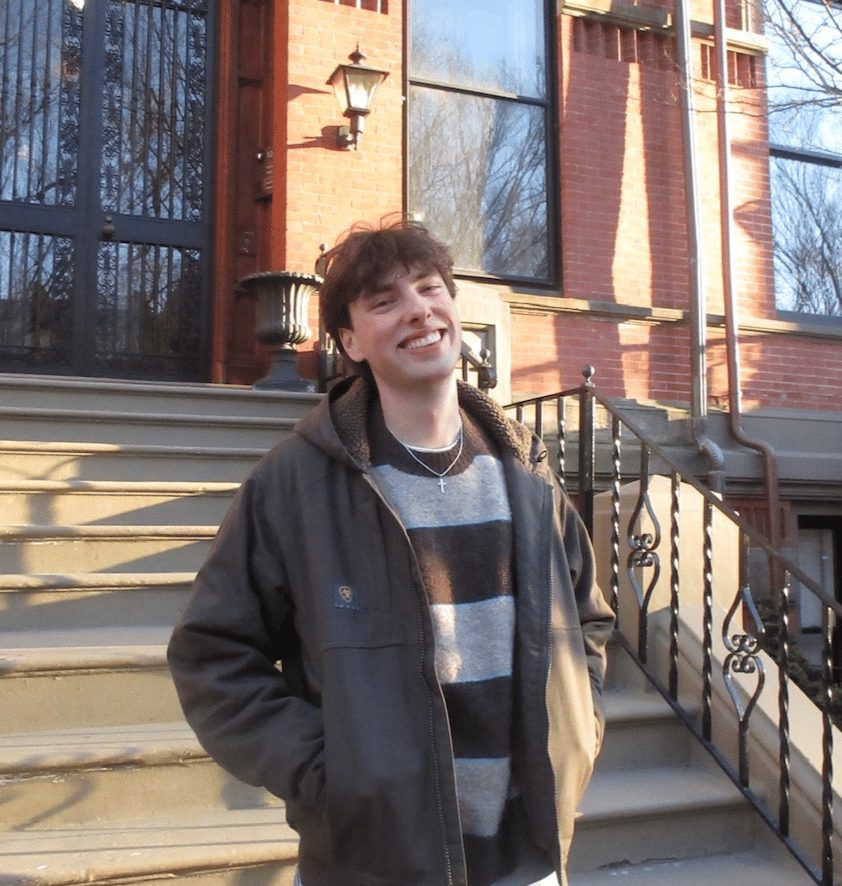
Hello! My name is Harry, and I am a student at Tufts University and part of the 2026 cohort of Laidlaw Scholars.
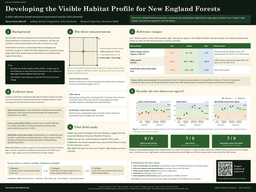
My project develops the Visible Habitat Profile (VHP), a pilot field tool that lets land stewards compare easy-to-measure habitat features (deadwood volume, native woody species richness, and litter depth) against regional reference ranges to judge whether their forest plot is unusual.
Through this research, my overall goal is to reframe rewilding as a public health strategy, not just an environmental one. As antibiotic resistance is increasing, some of the most promising sources of new antibiotics are soil microbes. By identifying which recovering forests have conditions associated with strong microbial communities, I hope to help direct conservation efforts toward the forests most likely to yield tomorrow's medical discoveries.
If you would like to connect or have any questions at all, please feel free to reach out!