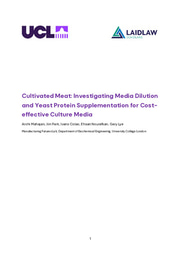
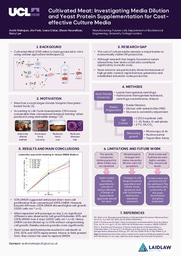
Project Outline: Making Lab-grown meat more accessible
Two-thirds of the global agricultural land is used as grazing fields or crops to feed livestock. Despite occupying this massive footprint, meat and dairy provide a relatively small portion of humanity's nutritional needs.
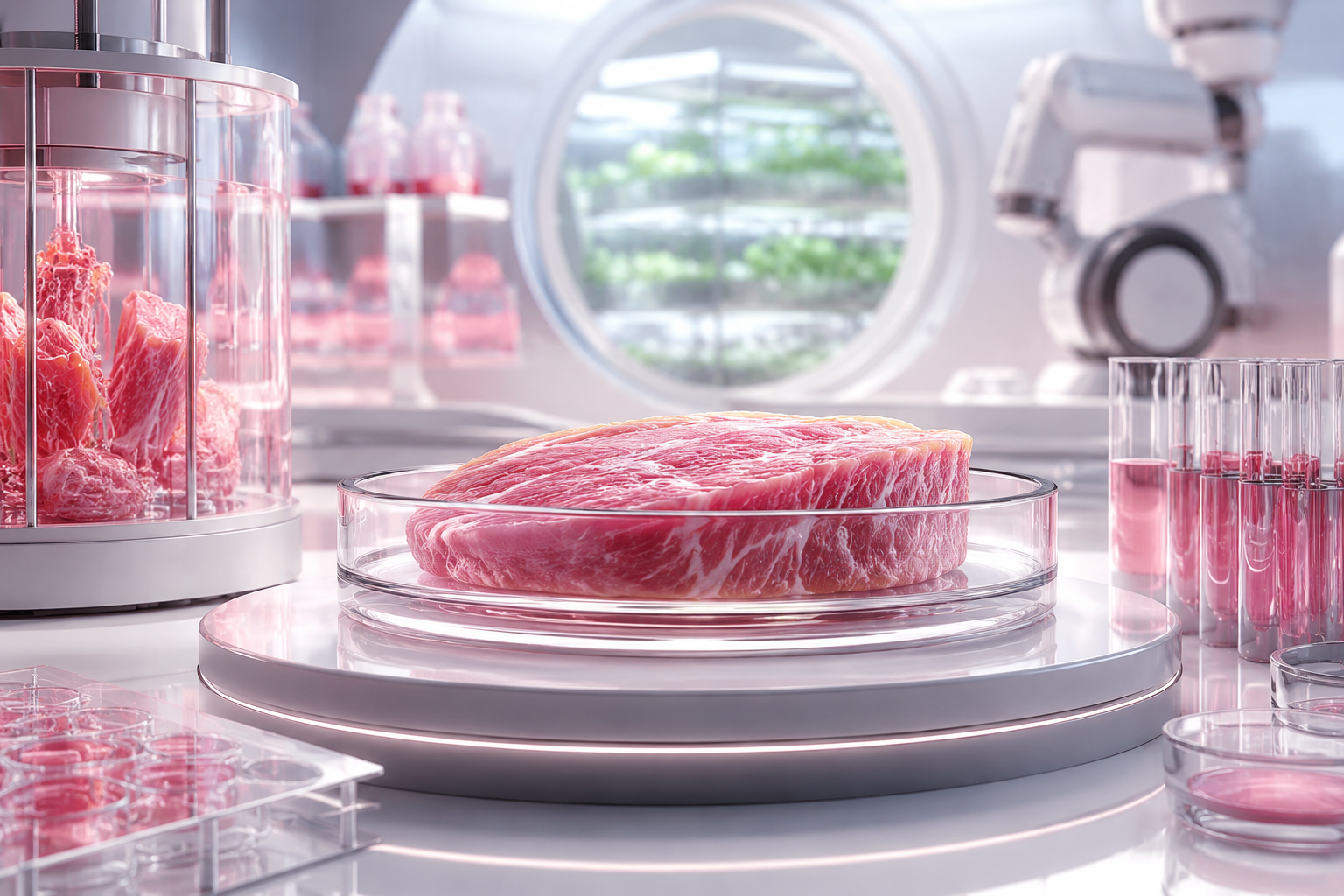
Cultivated meat, the process of generating meat in vitro without sacrificing animals, is a promising alternative to the traditional practice of livestock agriculture. One study showed that if produced using renewable energy, cultivated meat could reduce greenhouse gas emissions by up to 92 percent and land use by up to 90 percent compared to conventional beef. However, its widespread use is currently limited by the high costs of the media used to grow animal cells.
Traditionally, DMEM (Dulbecco's Minimum Essential Media) is used to grow animal cells. This is a medical-grade medium that is supplemented with FBS (Foetal Bovine Serum), making it an expensive and unethical option. My Laidlaw Research project aims to use Yeast Hydrolysates as a protein source, and glucose as a carbon source, in varying dilutions to replace DMEM and FBS. I also plan to perform a Cradle-to-Grave Life Cycle Analysis on the new media formulation to assess its environmental footprint. This project addresses UNSDG 2: Zero Hunger and SDG 13: Climate Action.
Feel free to reach out to me if you'd like to hear more about the project or discuss the science/ethics behind it!