Project Outline: Designing a Stem Cell Model for Bulbar-Onset ALS

Design of a Stem Cell-Derived Model for Neuron Degeneration in Bulbar-Onset Amyotrophic Lateral Sclerosis (ALS)
Supervised by: Dr. Nisha Iyer, Department of Biomedical Engineering and Nicole Teaney, PhD student, Department of Neuroscience, Tufts University
Project Background
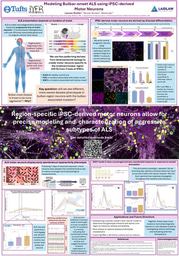
A major unresolved question in amyotrophic lateral sclerosis (ALS) is why specific motor neuron (MN) subpopulations are more susceptible to degeneration than others. ALS may be categorized by its location of onset: limb-onset ALS impacts the peripheral nervous system first, affecting fine motor skills and strength, and bulbar-onset ALS comes on from the brain stem, impacting facial functions like speech, swallowing, and control of aspiration. Bulbar-onset ALS progresses significantly more rapidly and is associated with shorter survival and lower quality of life than limb-onset disease. However, it is not yet known whether this poor prognosis is driven mainly by the physiological consequences of bulbar disease or by inherent cellular and molecular differences that make bulbar MNs intrinsically more vulnerable. Addressing this gap requires human model systems that allow direct comparison of MN populations under controlled genetic conditions.
My aims
In order to develop my model system, I will be generating gene-edited human motor neurons using stem cell engineering and directed differentiation. Our lab uses a doxycycline-inducible cassette, which is a genetic construct containing transcription factors which can be added to a system to encourage cells to express certain genes and take on a certain identity upon activation with doxycycline. This specific cassette contains neuron-specific transcription factors Neurogenin 2 (NGN2), ISL1, and MNX1 (hNIL) to drive lower motor neuron identity; lower motor neurons are the cells that connect the brainstem and spinal cord directly to muscle without traveling through the rest of the brain. In order to introduce the cassette to human pluripotent stem cells (hPSCs), I will use PiggyBac transfection, a nonviral gene editing technology that allows for precise excision and insertion of specific DNA sequences within a genome. I will be using a line of hPSCs carrying the ALS-associated FUS R495X mutation, which is strongly linked to aggressive bulbar-onset disease. This will allow the creation of a disease-relevant line that can be directly compared with existing isogenic control and spinal-onset–associated lines in our lab. My role will include:
- Gene delivery and selection: Transfecting hPSCs with the hNIL cassette and performing puromycin selection to establish a stable, polyclonal cell population. I will verify successful cassette integration using BFP reporter expression.
- Initial neuronal induction: Applying doxycycline to activate the cassette and confirm that the transgene can drive neuronal differentiation from stem cells.
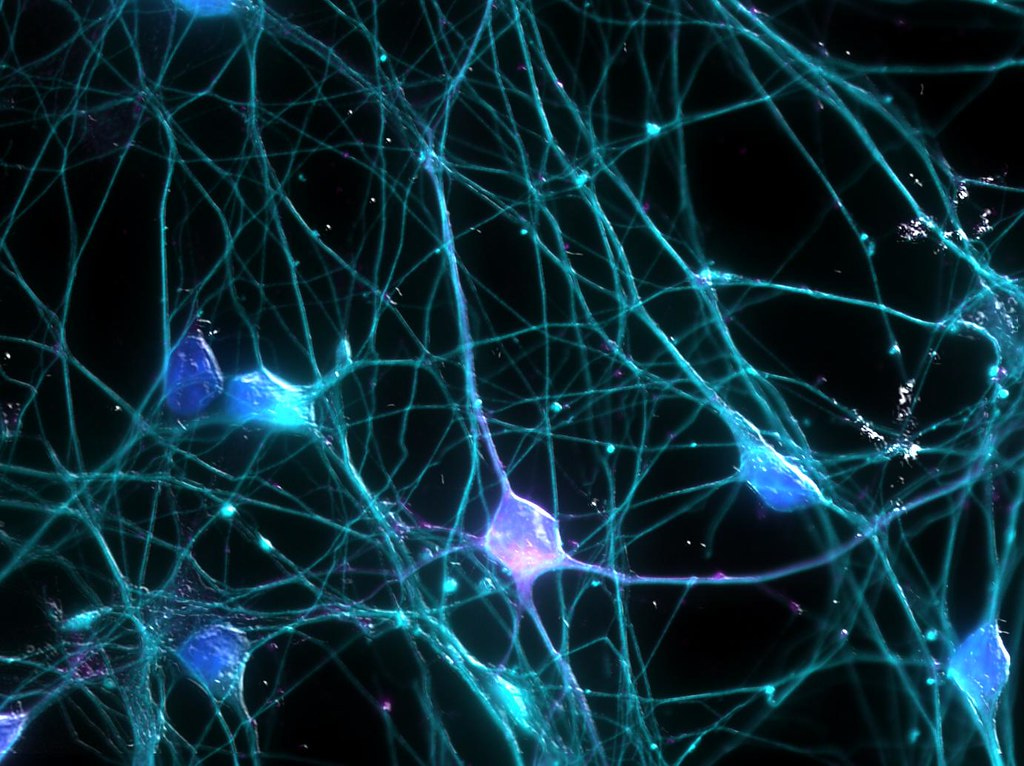
- Cell identity validation: Fixing and immunostaining for neuronal (Tuj1) and MN markers (MNX1, ISL1) to assess differentiation efficiency and neuronal identity.
- Functional characterization: Following neuronal induction, cells will be plated on multielectrode arrays (MEAs) to assess spontaneous electrical activity and overall health. These recordings will confirm that the induced neurons are functionally active and suitable for downstream applications. Spontaneous firing rates will be compared with isogenic control neurons to identify functional differences between the ALS-mutant and healthy control lines.
Impact
By establishing a disease-relevant, genetically defined stem cell line, this project lays essential groundwork for future studies examining motor neuron vulnerability in ALS. Reliable human cell models are a prerequisite for identifying disease mechanisms and testing therapeutic strategies. Currently, there are no available treatments for ALS that target the root cause of the disease; the limited number of available interventions focus solely on symptom management and delaying progression. Additionally, there is no clinical distinction in treatment between limb- and bulbar-onset ALS despite the major difference in progression and prognosis. This project ultimately enables downstream research that could contribute to more targeted treatments for ALS in order to target the root cause of a specific disease subtype.