Project Outline: Biophysical Principles in Transcription Regulation in Mycobacterium tuberculosis
Abstract
Tuberculosis kills over a million people per year, and a big reason Mycobacterium tuberculosis is so hard to eliminate is that it's exceptionally good at adapting to hostile conditions inside a human host. That adaptability depends, in part, on the bacterium's ability to selectively switch genes on and off in response to stress. My project centers on one of the proteins responsible for that switching: the cAMP receptor protein, or CRP, a transcription factor that becomes active when it binds the signaling molecule cyclic AMP and then goes on to regulate genes tied to virulence and metabolic flexibility.
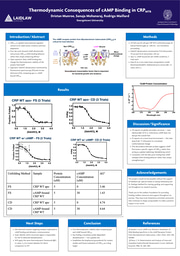
What I'm specifically measuring is how stable CRP is as a folded protein. Using two spectroscopic techniques, fluorescence spectroscopy and circular dichroism, I unfold the protein incrementally using a chemical denaturant and track the structural changes at each step. Fitting that data to a thermodynamic model lets me extract three key parameters: the free energy required to unfold the protein, how sharply the transition occurs, and the denaturant concentration at which the protein is half-unfolded. Together, these numbers give a quantitative picture of the protein's physical resilience.
The immediate goal is a rigorous thermodynamic baseline for wild-type MTB CRP. Once that's established, it becomes possible to ask whether disease-associated mutations in CRP change its stability in ways that might alter how it regulates gene expression. That question has real implications for understanding how MTB survives and persists, and potentially for identifying new drug targets.
Research Objectives and Questions
The primary objectives are to characterize the thermodynamic stability of wild-type MTB CRP through chemical denaturation experiments and to build a data analysis pipeline capable of extracting reproducible, well-validated parameters from spectroscopic data. Secondary objectives include assessing variability across biological replicates, understanding what drives that variability, and establishing the quantitative foundation needed for future comparisons with mutant CRP variants.
The questions driving the project are fairly concrete. What are the actual thermodynamic parameters governing CRP's folding transition, and how cooperative is that transition? How consistent are the measurements across repeated experiments? And looking ahead: if point mutations shift those parameters, what might that tell us about CRP's functional role in MTB virulence?
Background
CRP has been studied extensively in Escherichia coli, where it functions as a master regulator of carbon metabolism. When glucose is scarce, cAMP levels rise, CRP binds cAMP, and the CRP-cAMP complex activates dozens of genes. The MTB ortholog shares significant structural similarity but operates in a different context. In MTB, CRP has been implicated in regulating virulence-associated genes that help the bacterium survive inside immune cells, making it relevant not just as a model for gene regulation but as a potential point of vulnerability in the pathogen.
The broader literature on prokaryotic transcription factors has increasingly emphasized that physical protein properties matter as much as DNA-binding specificity. Stability, conformational dynamics, and ligand sensitivity all shape how a transcription factor behaves in vivo. My mentor's lab has been investigating these biophysical dimensions in MTB regulatory proteins, and my project extends that line of work by focusing on CRP's thermodynamic properties as a measurable, interpretable window into its function.
Methodology
The two core techniques are fluorescence spectroscopy and circular dichroism, used in parallel to monitor protein unfolding.
Fluorescence spectroscopy takes advantage of the fact that aromatic amino acids, especially tryptophan, emit light whose intensity and wavelength shift depending on their local environment. As the protein unfolds, tryptophan residues that were buried in the folded core become exposed to solvent, and the fluorescence signal changes in a predictable way. By measuring this signal across a series of samples with increasing concentrations of the chemical denaturant guanidine hydrochloride, I generate a curve that traces the unfolding transition from start to finish.
Circular dichroism measures something different: how the protein absorbs left versus right circularly polarized light. Because that difference is determined by secondary structure elements like alpha helices, CD provides an independent, structure-level readout of the same unfolding process. Running both techniques on the same samples lets me cross-validate the results.
Both datasets get fit to a two-state model, which assumes the protein exists in either a fully folded or fully unfolded state, using nonlinear least-squares regression. The three parameters that come out of the fit are the free energy of unfolding in water, the m-value (which reflects how much new surface area becomes exposed upon unfolding), and the midpoint concentration of denaturant. Analysis happens in Mathematica, and a significant part of my work this summer has been building and troubleshooting that pipeline to make sure the fits are valid and the parameters are meaningful.
Potential Impact
A quantitative thermodynamic profile of MTB CRP is useful in a few ways. First, it's foundational. Comparisons with mutant CRP variants are only interpretable if there's a solid, well-characterized wild-type baseline. Second, if specific mutations turn out to measurably destabilize or stabilize the protein, that's a concrete clue about how those mutations might affect CRP's ability to bind cAMP, interact with DNA, or assemble into its functional pentameric form.
There's also a longer-term angle. The CRP-cAMP pathway is an attractive drug target because it's central to MTB's adaptive gene regulation and structurally distinct from human proteins. Better biophysical characterization of CRP contributes, at least incrementally, to the body of knowledge that makes rational drug design against that target more feasible.