Please Look After This Scholar (Thank You) - Experience Abroad Refection
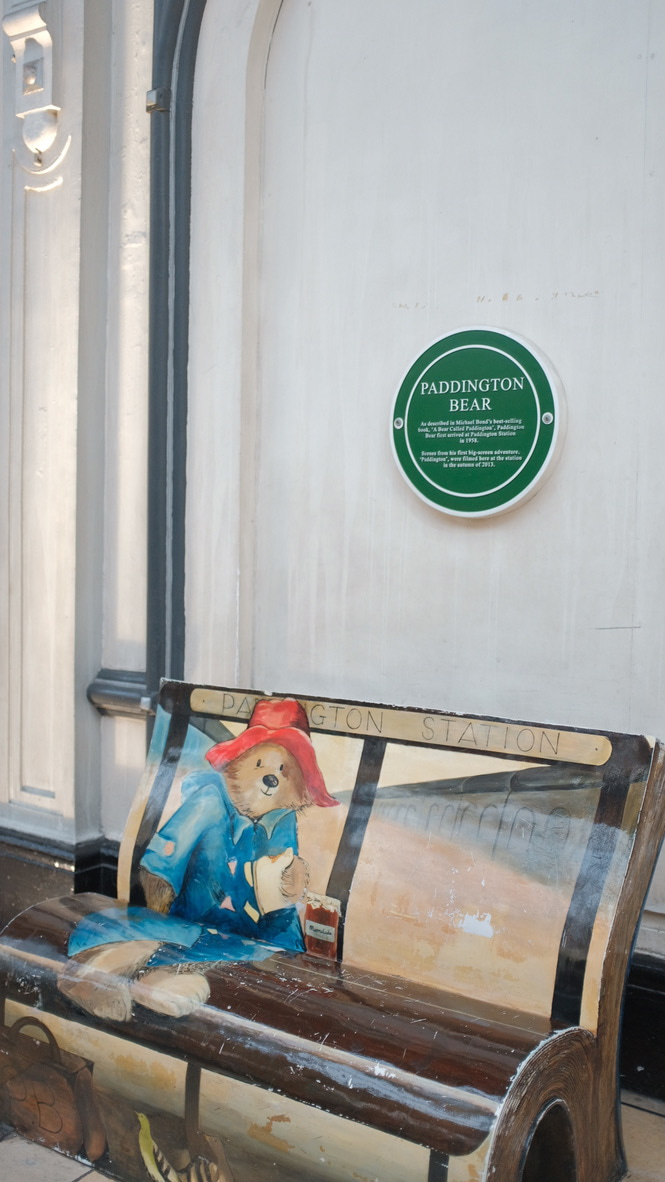
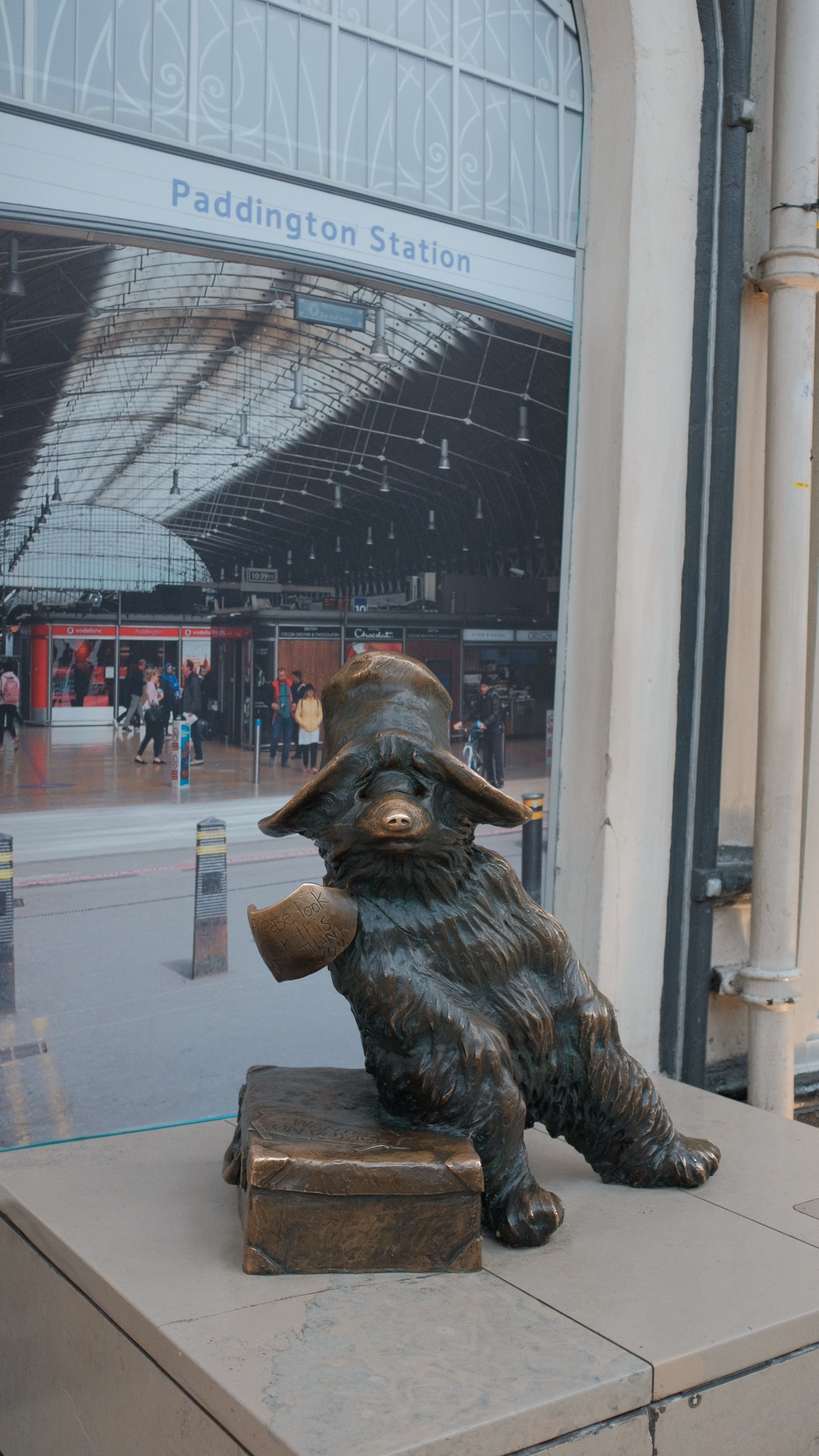
Somewhere in the bottom of Paddington's suitcase, under the marmalade sandwiches, there is a label that reads: "Please look after this bear. Thank you." I found out I'd booked a flat on Paddington Street entirely by accident, weeks before I ever thought to connect it to the bear at the station, and I definitely didn't plan for it to become the frame for my entire Leadership-in-Action placement with Sense about Science. I landed at Heathrow with two suitcases instead of one, and, completely by coincidence, with a blue bag that wasn't far off the shade of his duffle coat. I didn't clock it at the time. It's the kind of detail you only notice in hindsight, once a summer has quietly rearranged itself around it. A stowaway from "darkest Peru" arriving in a country he doesn't understand, with nothing but a tag around his neck and a stranger's willingness to take a chance on him, turned out to be an uncomfortably accurate description of how I showed up to London too, minus the marmalade, plus a laptop full of half-finished briefing documents and, if I'm honest, a lot more fear than I let on to anyone that first week.
For the first stretch, I was less diplomat-in-training and more Paddington on his first bus ride: present, nodding, badly out of my depth. Within days of arriving, I was introduced to All-Party Parliamentary Groups and select committees and asked to start making real recommendations for Evidence Week 2026, work that only holds together if you actually understand the system you're recommending into, and I did not. I could describe the difference between the Commons and the Lords the way Paddington could describe England before he'd ever set foot in it, correctly, and from a book, and completely unprepared for what it would feel like in practice. My early recommendations earned something close to the Paddington hard stare from colleagues who understood the system far better than I did, that look he gives someone who's clearly made a mess of things but hasn't quite been told off yet. I learned to take it the way he does: not as rejection, just the ordinary cost of learning to belong somewhere you weren't handed a map for.
Aunt Lucy tells Paddington, before he ever gets on the boat, that if you're kind and polite, the world will be right. It's the kind of line that sounds almost too simple until you have to actually practise it on people who owe you nothing. I thought about it when Katherine pushed back on my first attempt at scoping a Voice of Young Science panel, I'd reached for the names I already recognised from media coverage, and she pointed out, kindly but plainly, that visibility isn't the same thing as representativeness. And I thought about it again scoping a community engagement project in Weymouth and Portland, where residents had real, earned scepticism toward outsiders who show up with a plan already decided. Being polite there didn't mean being agreeable. It meant listening first, the way you'd hope a stranger would listen to you, before assuming you had anything to offer a place you didn't belong to yet.
The Browns take Paddington in on almost no evidence at all: a scrawled note, a fondness for marmalade, and Mrs. Brown's instinct that a bear alone at a train station needed somebody, immediately, no further questions. That is roughly the level of vetting Emily and Jane operated on with me. In my third week, I learned that a close friend back in Toronto had passed away, and something in me just quietly broke, thousands of miles from anyone who had known her the way I had. I found out how thin the idea of "support system" really is until you actually need someone to answer it, at eleven at night, on a weekday, in a country where you've barely learned the tube routes yet. My colleagues at Sense about Science helped as well, and somehow that gentleness was exactly what let me fall apart a little without feeling like I was failing at the internship too. Emily, a fellow intern I'd known for barely two weeks, just kept showing up, lunh one day, a run the next, until it turned into a routine that outlasted the week that started it and became one of the steadiest things in my whole summer. And Jane, a friend from a UN summit in 2024, told me to come straight over the moment I found out, the way you'd take in a bear you'd just met at a station because the alternative was unthinkable. I remember crying to her that evening, and feeling, for the first time since I'd landed, genuinely less alone.
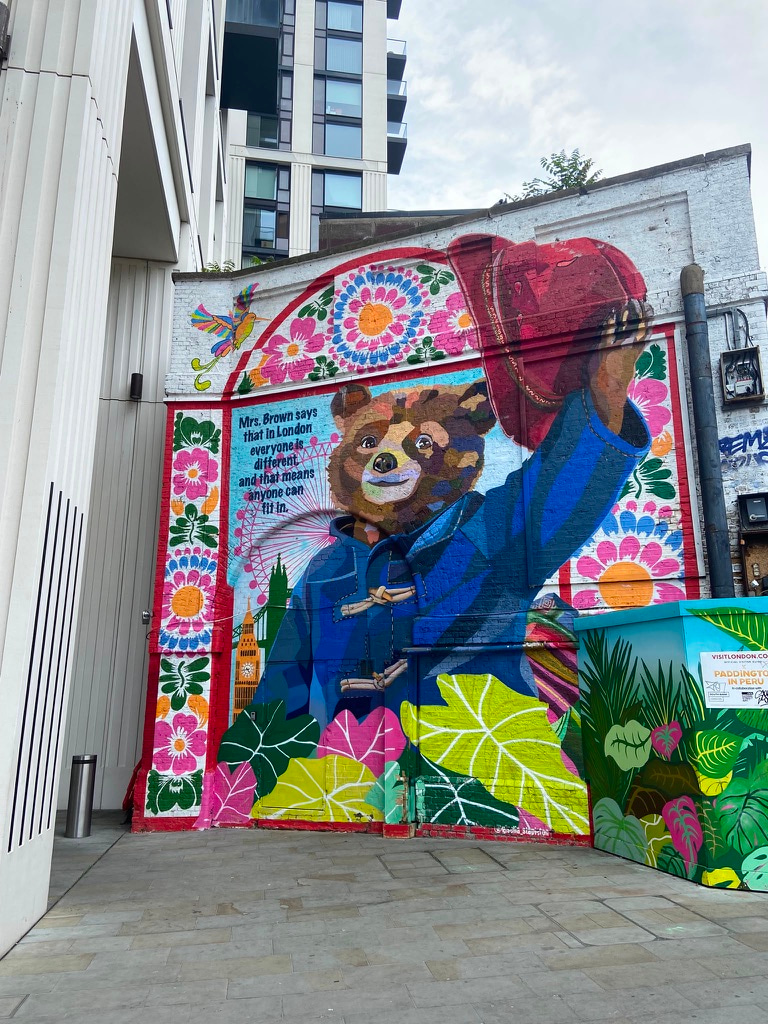
Jane's family carried that thread the furthest. She vetted my flat listing before I'd even landed, and met me at the station on day one to make sure I got in safely, despite having had a minor cosmetic procedure that same morning. By my final week, she and her family had folded me into their household through their Eid celebrations: a cinema trip and a West End show with her daughter, dinner cooked together in her kitchen, a proper goodbye to their dog Star. On the day I flew home, I finally sat down to write Jane a real thank-you, and the Paddington thread I'd been quietly tracking since week one wrote itself in without my really trying. There's a line in the film, from the family who takes him in, that everyone in London is different, and that's exactly what makes room for anyone to belong there. I told Jane she'd made me feel like Paddington: fed, looked after, and completely undeserving of how kind she'd been to a near-stranger. Orange marmalade and all.
Not everything I learned about belonging came with a lesson attached. Shakespeare's Globe, on a colleague's recommendation, turned into a habit: A Midsummer Night's Dream, then The Play That Goes Wrong, Sherlock Holmes, Oliver! with Safi, The Book of Mormon with Emily. Greenwich and Canary Wharf on a free afternoon. Watching the Changing of the Guard, meeting Emily beforehand, fittingly, at the Canada Gate kiosk. A day trip to Oxford by myself, over thirty thousand steps for no better reason than wanting to see all of it. Paddington's red hat and battered suitcase are how you'd spot him as a newcomer at a glance; I think my version was a pair of black ballet flats and a blue embroidered bag from my hometown Karachi.
I did arrive in London with something like a label around my own neck: two suitcases, a blue bag I didn't know yet was a small joke the universe was setting up, six weeks, a job I didn't know how to do well, and none of the instincts that make a place feel like yours. I am leaving with a much smaller, much more honest idea of what global citizenship actually means than the one I'd have given you in April, back when I still thought it was mostly about how many stamps were in my passport. It has far less to do with how fast I could make London make sense on my own terms, and a lot more to do with how willing I got to admit what I didn't understand yet, a parliamentary system, a coastal community's history, or my own stubborn habit of handling a hard week completely alone instead of letting anyone read the label around my own neck. Before I left, Emily gave me a small Paddington keychain, no explanation needed by that point, and it's on my keys in Toronto right now, jingling against everything else I carry around with me every single day. A tiny, corny, yet completely sincere piece of London riding around in my pocket months later, on a different continent, still somehow still with me. Paddington's whole story only works because somebody was willing to take a chance on a stranger with nothing but a tag and a sandwich (shortbread in my case) and a lot of hope. Mine worked the same way, and I don't think I'll ever be able to explain London to anyone back home without eventually getting a little emotional about it, or without touching that keychain without meaning to while I'm telling the story. I'd like to think I'll be the one reading somebody else's label next, the way London read mine, and until then, I'll just keep carrying this bear around on my keys.
I would like to thank the Laidlaw Foundation, Shraddha Prasad, Elena Shik, and the Laidlaw Scholars Programme for making this international experience possible, and the team at Sense about Science for welcoming me into their work and their lives during my six weeks in London.

Hey! I’m Amna, a third-year molecular biology student at the University of Toronto.
I’ve worked in labs studying genetics and nanoimmunoengineering, but I also care a lot about science communication, from writing about microbes to speaking at places like the UN. For my summer research project, I am exploring anticipatory science diplomacy in Geneva. When I’m not deep in research mode, I’m probably planning my next escapade.
Always down to connect, especially if you care about science, systems, or asking big questions.
![[Summer 2] Learning to Translate - LiA Reflection](/cdn-cgi/image/metadata=copyright,fit=scale-down,format=auto,quality=95,width=256,height=256/https://public-storage.zapnito.com/FA3yXx4kRzWF9-Tl-XoxJy7V_pBtCrbNkx0kRvwmBxs)

![[Research Report] Anticipatory Science Diplomacy as a Framework for Addressing Inequities in Cancer Research and Care: Insights from Geneva](https://images.zapnito.com/cdn-cgi/image/metadata=copyright,fit=scale-down,format=auto,quality=95,width=256,height=256/https://images.zapnito.com/users/868052/documents/291212/4c0e5abe-b9c6-45f5-ad55-18a4888cb86f-med.jpg)