Oxford Research Summer Week 4
During the fourth week, our team had the opportunity to interview two key stakeholders University-community sport partnership. This taught me two key things about leadership:
The ability to communicate and ask questions of experts in a way that allows them to open has proven to be a valuable skill. As a medical student, this is often taught to us and practised in clinical communication sessions with patients, but I had not realised how transferable this would be to other aspects of academia and life in general. This builds on what Sir Matthew Rycroft previously said about running the Home Office, that leadership is often not about having the expertise itself, but knowing with whom the knowledge lies, and how to initiate those conversations in a mutually respectful manner.
The power of compounding in the building of a network was highlighted to me following the interview with our first stakeholder. It was out of my final question, "Is there anything that you think we might have overlooked, or anyone else that you think we should speak to?" that the interviewee opened up about his vast network of contacts. This proved to be extremely helpful in finding a second interviewee, who had an insightful perspective on many of the issues in our research.
Brought together, these lessons could perhaps be summarised as the importance of a people-centred approach to leadership, grounded in respect and humility, to learn from the wisdom of others.
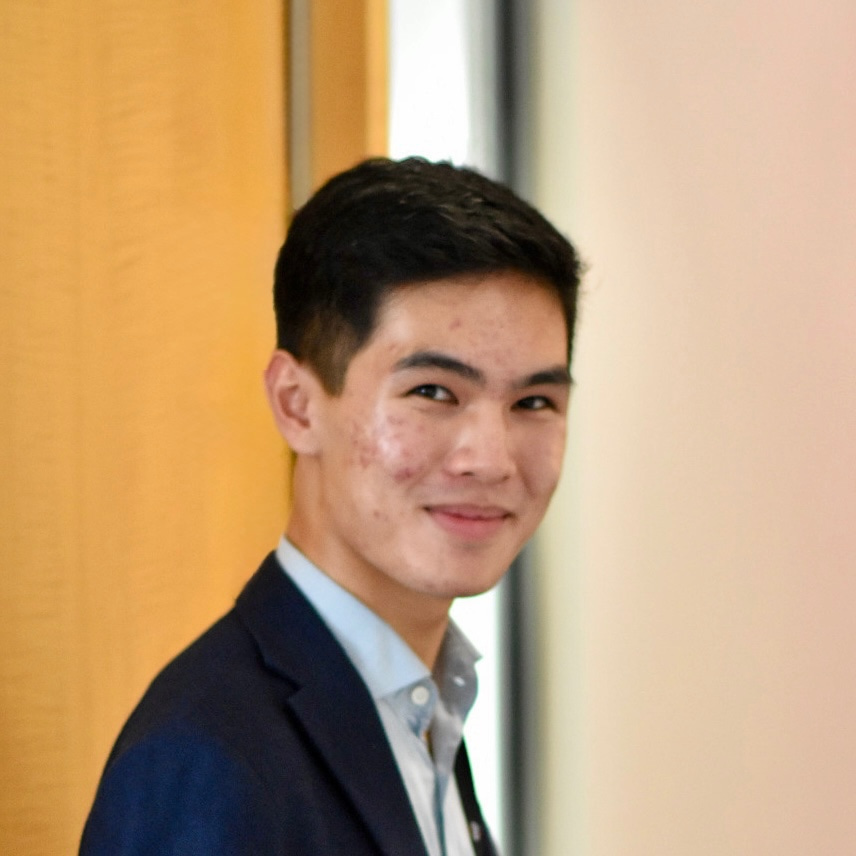
I'm Frederic, a first-year undergraduate on the six-year medicine programme (BA BM BCh) at the University of Oxford. Outside of medicine, I am an avid musician, playing violin with the Oxford University Philharmonia. This year, my research with the SDG Impact Lab partners with the recently established Leys Cricket Club to investigate participation of underrepresented groups in this community initiative.