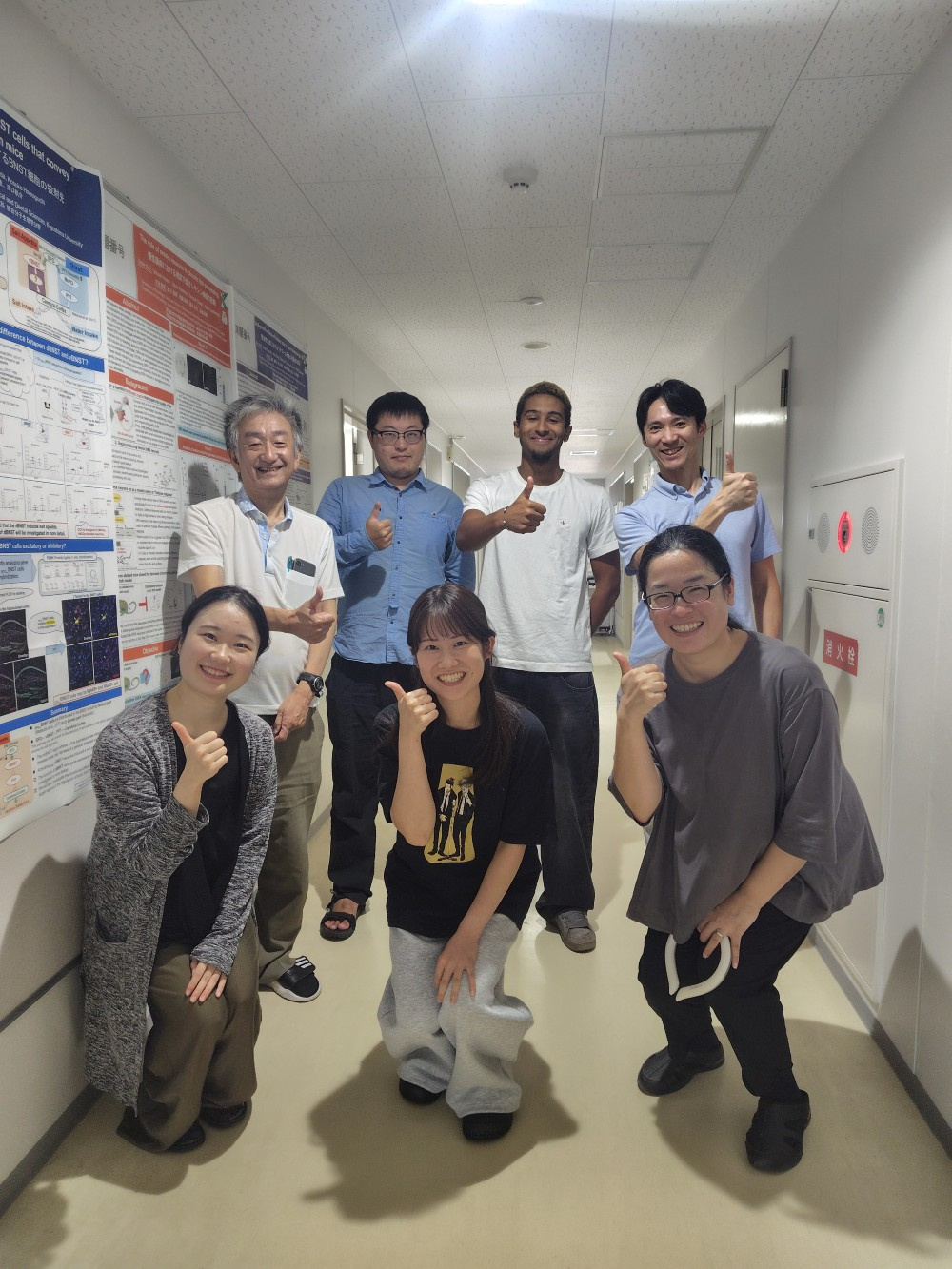
What I actually hoped for going in was pretty small, and I think that ended up being the right size. I wasn't going to fix anything about how Alzheimer's care works in rural Japan in two months, and I knew that before I landed. What I wanted was to come back with something real enough that I could hand it to someone in my own research world and say, here's what this actually looks like on the ground, not on a graph. If one nurse or caregiver felt like someone had actually listened to her instead of surveyed her, that was already a win by my count.
Adjusting to the place took longer than I expected. A lot of the caregivers I talked to wouldn't say things directly. Someone would tell me a situation was "a little difficult" and I'd nod and move on, until I learned that "a little difficult" was often doing the work of "this is destroying my family." I had to slow way down, stop treating conversations like interviews with a list of questions to get through, and just let silences sit there instead of rushing to fill them. I picked up small things too. Taking off my shoes without being told. Bringing something small when I visited someone's home instead of showing up empty handed. None of it was hard exactly, it just wasn't how I was used to operating, and it took a few awkward moments to learn.
One of those awkward moments taught me more than most of the successful conversations did. Early on I asked a hospital nurse a pretty clinical question, something like what interventions she'd found most effective for slowing cognitive decline in her patients. She got quiet, then told me, politely, that she didn't think about her patients in those terms. She thought about whether they'd had a good morning. That stuck with me. I'd walked in assuming my science background made me equipped to ask the right questions, and it turned out I was asking questions from a completely different universe than the one she lived in every day.
That was probably the bigger lesson about my own assumptions. I'd been thinking about myself as someone bringing something useful, research literacy, a modeling background, a decent grasp of how learning and memory work computationally. What I hadn't clocked was how much privilege sat underneath that. I've never had to choose between keeping a job and caring for someone I love. I've never had to watch my own income shrink because a parent needed supervision during the day. I was walking around a topic that was, for me, an intellectual puzzle, and for everyone I talked to, it was Tuesday.
The hardest ethical question I ran into was actually about the restaurant story I already wrote about. The husband was completely open with me, and clearly wanted someone to know what he and his wife were doing and why. But she was the one actually living with the diagnosis, and she wasn't in a position to sit down and give me informed consent the way he could. I went back and forth on whether it was right to write about her at all. In the end I talked to him again, specifically about how I planned to describe her, kept it to what he'd told me rather than anything I observed or guessed at myself, and left out anything that could point back to the exact restaurant. It didn't fully resolve the discomfort. I don't think it was supposed to.
If there's one thing that changed in how I think, it's this. I used to treat cultural humility as basically politeness, a checklist of things not to do wrong. Now I think of it as closer to what that nurse gave me without meaning to: a reminder that the frame I walk in with is not the only frame, and usually not the most useful one in the room. That lines up with something I already believed about research generally, that the person closest to a problem almost always understands it better than the person with the fanciest model of it. Kagoshima just made that uncomfortably personal instead of theoretical.

I'm a Computer Science student at EPFL with a strong foundation in mathematics, physics, and interdisciplinary thinking. My academic path includes distinctions such as the Laidlaw Leadership and Research Scholarship and hands-on research experience in computational neuroscience, where I explore biologically plausible reinforcement learning.
Beyond academics, I have practical experience ranging from electronics diagnostics to web development for social initiatives. I'm passionate about educational outreach—leading workshops for children, tutoring young students, and promoting inclusive learning. I’m also active in sports and the arts as a football player, pianist, and chess enthusiast.
With fluency in Italian, French, and English, and a growing command of German, I enjoy connecting across cultures and disciplines to solve meaningful problems.