LiA Week Two: How to Stop Seeing Yourself as a Laboring Body and More as a Physical Idea
Sunday
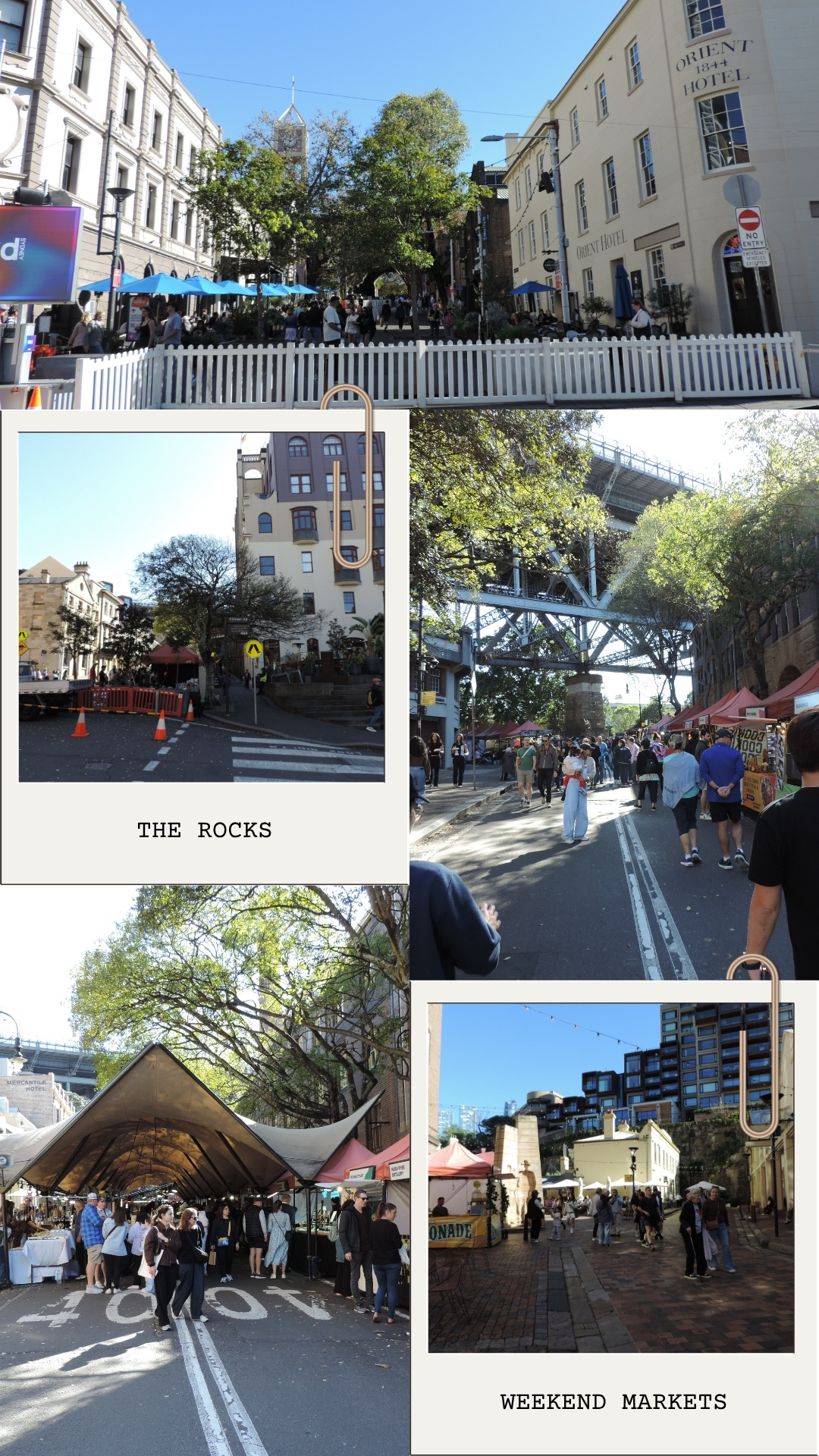
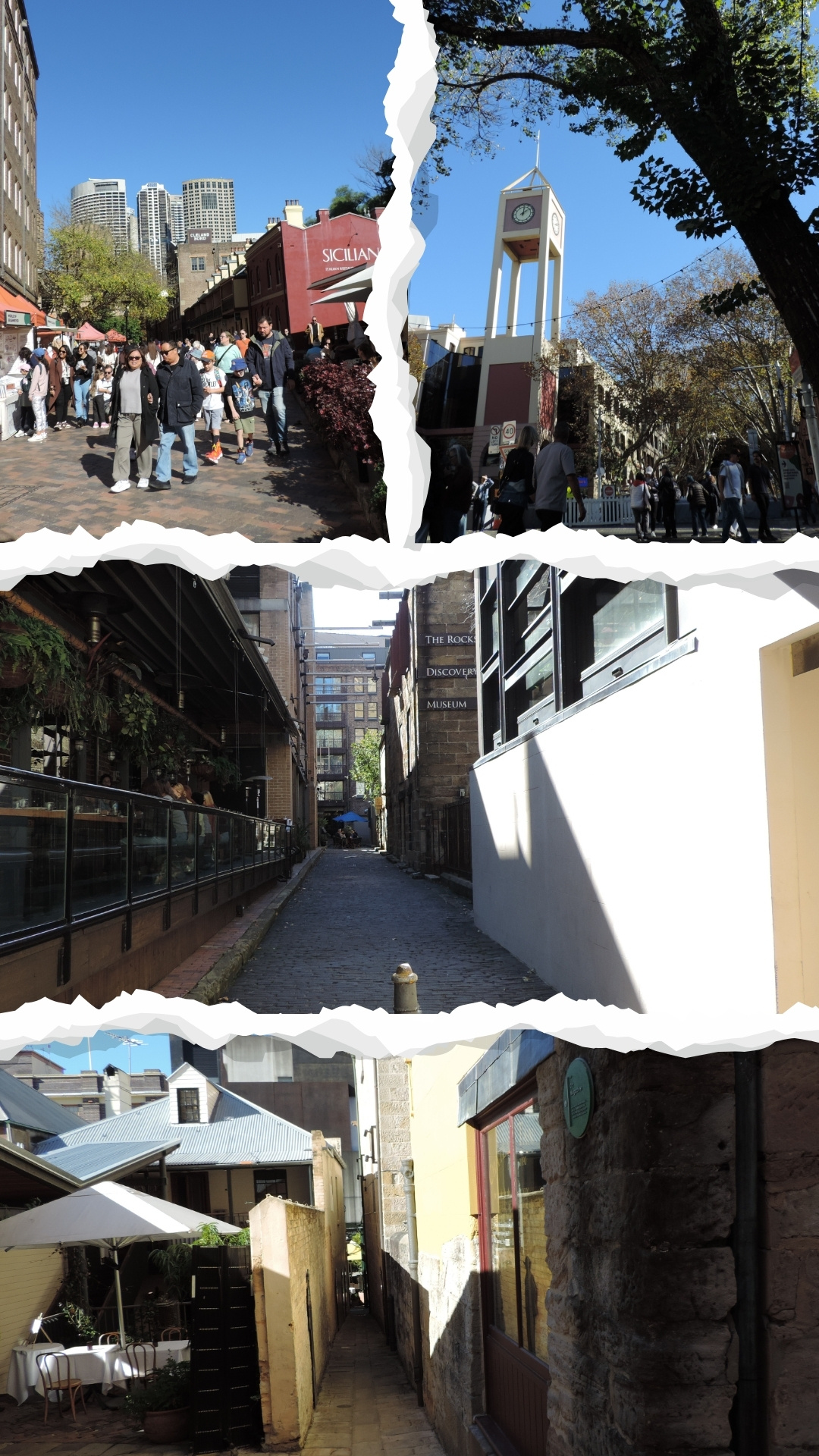
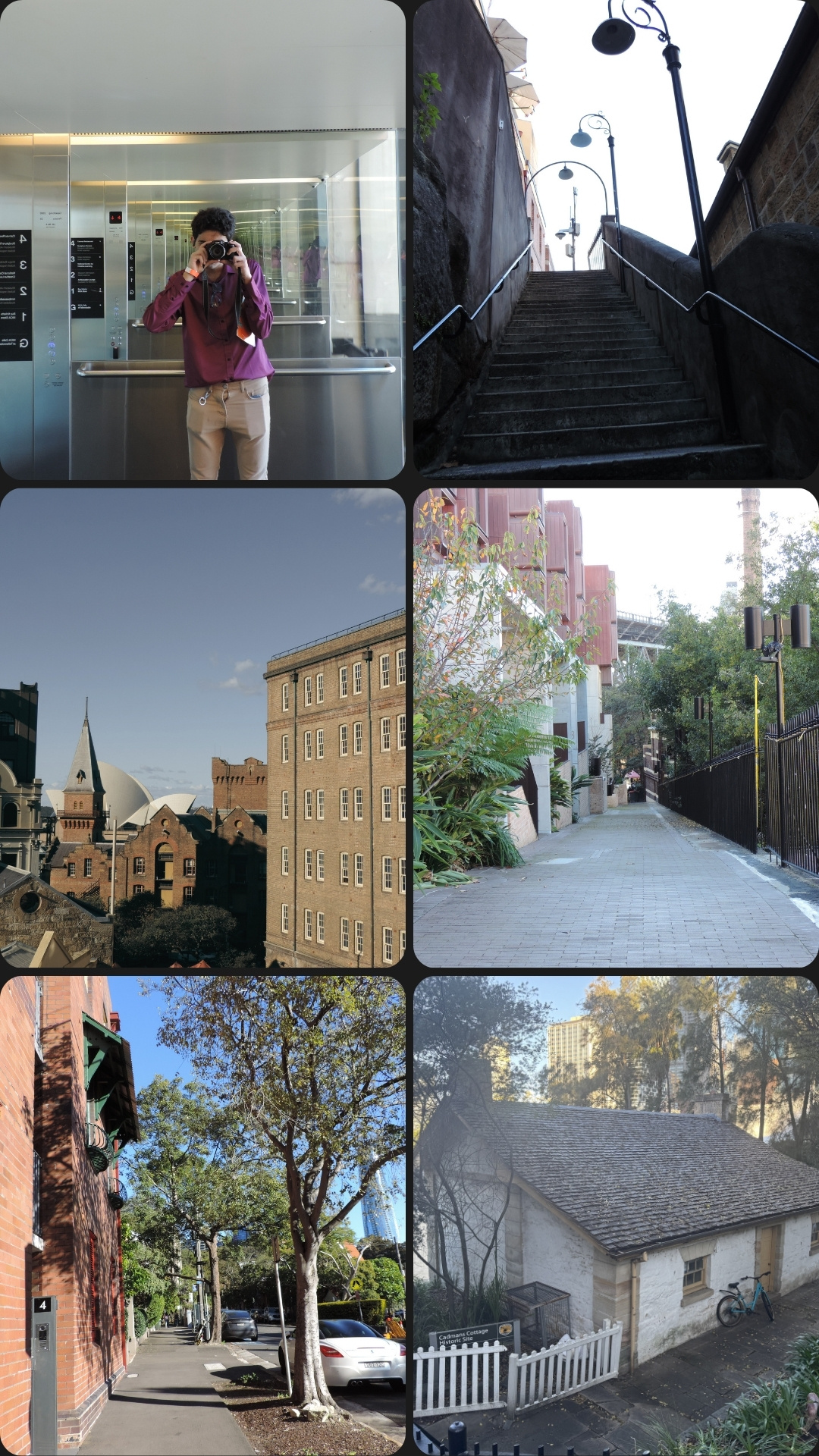
I didn't expect to find myself in the Rocks this past week. No, rather, I had fully planned to be entirely hedonistic: walk across the Sydney Harbour Bridge, wander in the Sydney Opera House, drink at the Opera bar (it's legal here), and then stumble through the botanical gardens at sunset. It was fully planned out: I would engorge myself today. But what I failed to realize was that on the way to the Sydney Harbour Bridge, I would need to cross The Rocks: a historical neighborhood in Sydney that has relied almost entirely on preservation for an antiquarian purpose. The cobblestone paths and tight alleyways reminded me of Italy, and I could hear the sounds of the multicultural street markets bustling from the entirely opposite street. Immediately, I would notice the saturated pink clock tower surveilling the small shops in the square and the old houses that persist through the modern city. The feeling of being in The Rocks was one of being surrounded by an unknown but significant history.
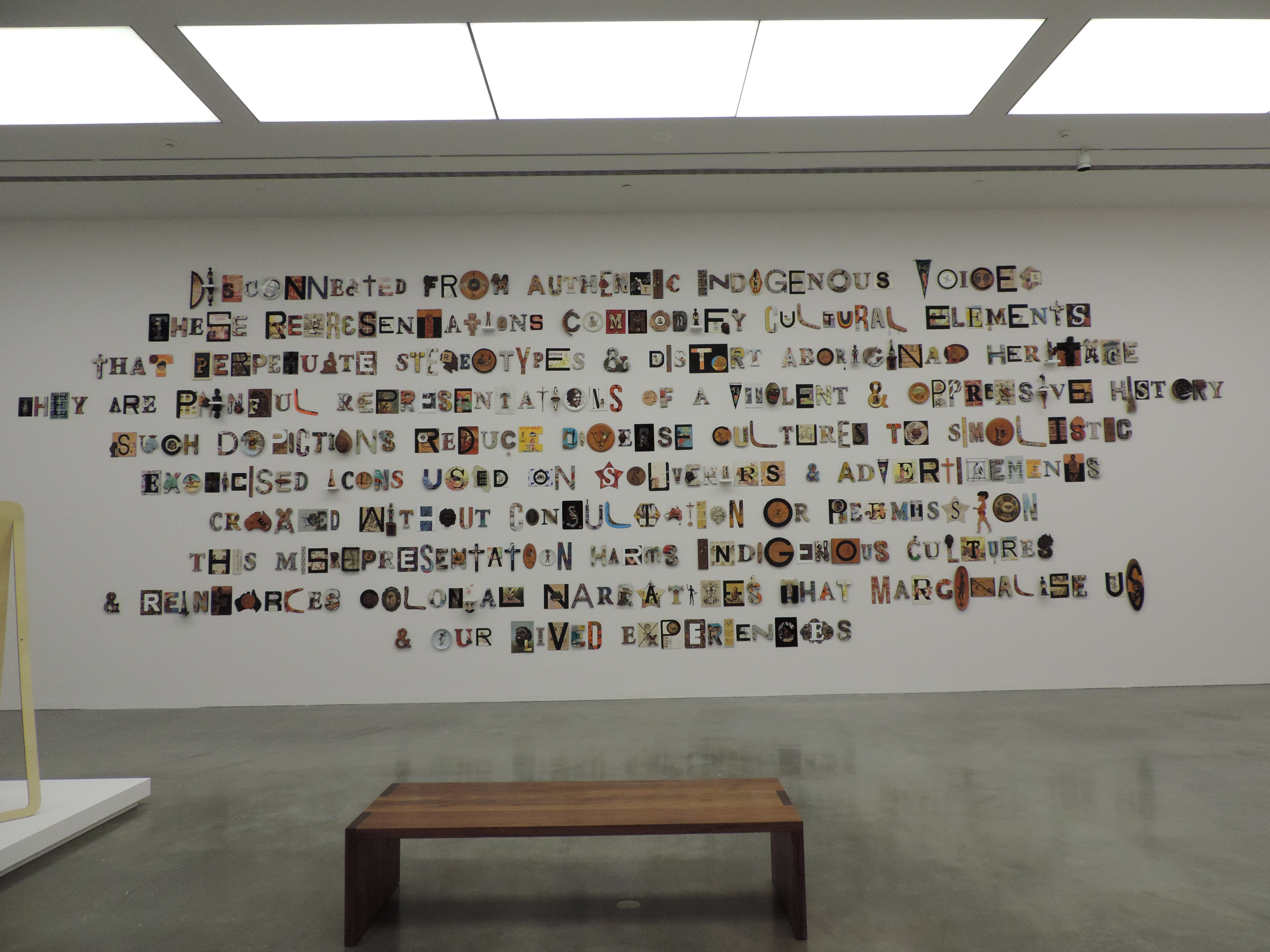
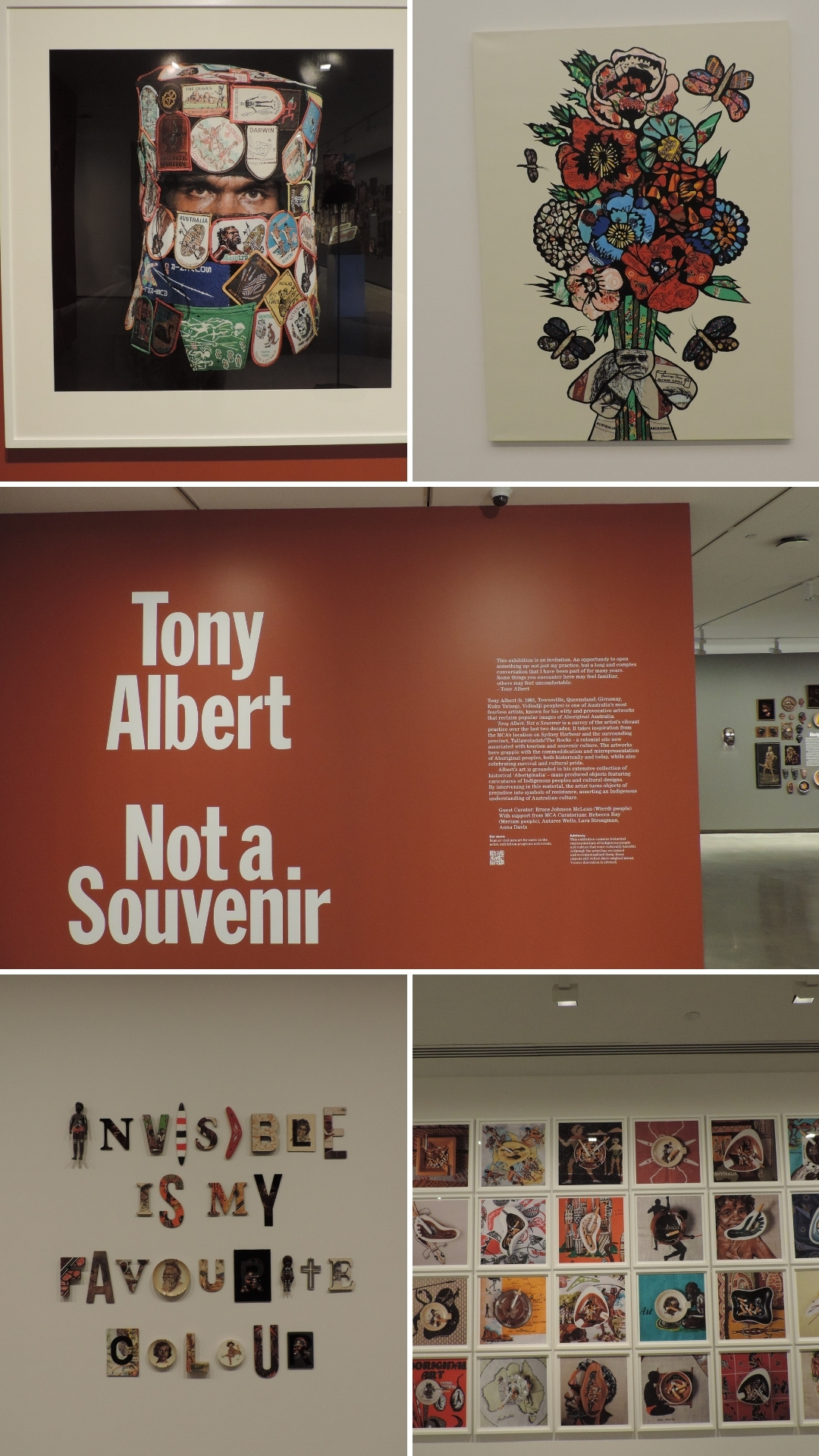
One of the best exhibitions I had visited during my time in The Rocks was housed within the Museum of Contemporary Art. Not a Souvenir by Tony Albert reuses Aboriginalia, mass-produced objects that depict Aboriginal peoples and cultures in stereotypical ways, for the purpose of unveiling the exploitation and persecution Indigenous Australians endured and still face in the modern world. There are two displays I would like to bring to light: the first I found particularly poignant was "ASH on me." This display was a series of ashtrays that misrepresented Indigenous peoples, and these bodies were smothered in cigarette ash. At the most basic interpretation, the act of butting a cigarette on a face or a body is the most symbolic act of colonial violence; however, throughout my time in Australia, I had also learned about the well-documented chokehold the Australian tobacco industry had on Indigenous peoples. This chokehold had caused detrimental short-term effects, but it had also webbed a much more systemic entrapment of generational lung cancer. The second display of note was Albert's "Bodies," a sequence of photographs of Indigenous Australians carrying bags of colonial objects with their backs facing the camera. Albert once said he used "the Indigenous body as a political tool and reiterate its presence...Not as subjects of history, but as living, breathing, sovereign bodies." I was particularly drawn to this idea of rewriting the body as a source of labor and rather, autonomous representations. Was there a way to take Albert's original idea of the body as a "political tool" and generalize it to be inclusive towards any list of ideas that could be embodied pragmatically? These were the questions I had asked as I strolled around Foundation Park—a section of The Rocks in which tourists could peer into the original buildings of families living in Sydney during the 19th century—and eventually the Sydney Harbour Bridge. I was prepared to spend the next week entrenched in becoming "ideas."
Monday
On Monday, I began calling past fundraisers for City2Surf, an annual charity running event in Sydney, to see if they were willing to fundraise again for Cancer Council. Immediately, what I noticed from these conversations is that they were much deeper than the conversations I had with 7 Bridges volunteers. The primary reason why I had to take my time through these conversations was because these people typically had loved ones that had either recovered from cancer, died from cancer, or were still fighting the disease. These conversations required me to fully immerse myself in the philosophy I had touched upon the previous day: I could no longer rely on utilizing my body for "efficiency," I had to rather transform myself into the manifestation of ideas I held on closure, concealment, mortality, to have these intensely emotional conversations. There was not an end-goal "want" I was seeking from these conversations; rather, the purpose of the conversation became a gradual process of reconciliation. Unfortunately for the tenants of capitalistic endeavors, these conversations would take much more time and leave me much more physically exhausted. The result of these efforts were the tangible outcomes of bringing about more fundraisers (which is, in my opinion, the less important outcome) and the creation of an atmosphere of furthered understanding.
Aside from reaching out to the City2Surf fundraisers, I also reached out to campaign supporters in three campaigns (F Cancer, Dog Walk for Cancer, and Pilates for Cancer) who had their packages marked as "Return-to-Sender."
Tuesday
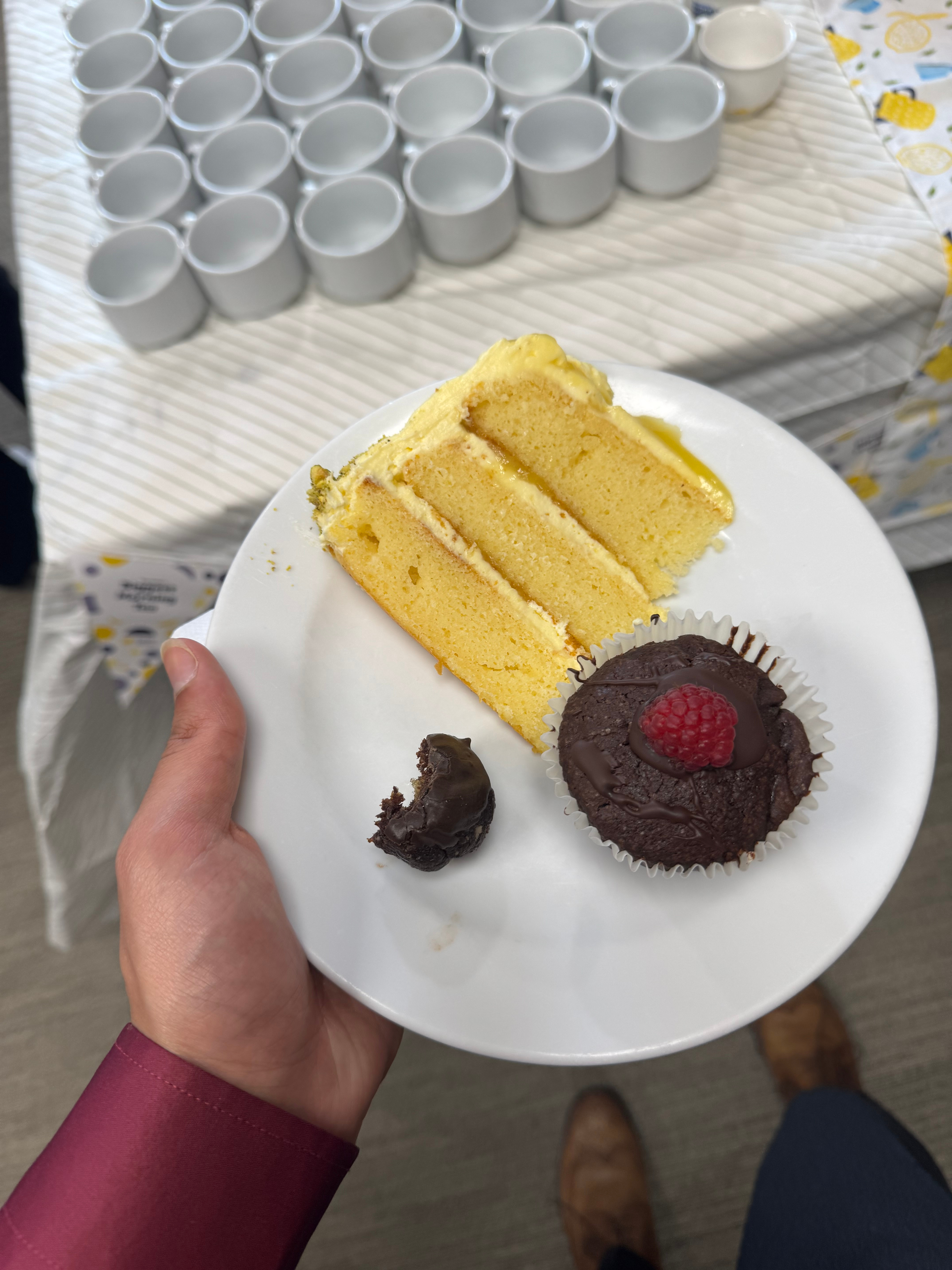
On Tuesday, I supported my second pre-planned Cancer Council event. This event was an Internal Bake Off & Bake Sale, and I got the opportunity to donate 12 dollars for a few pastries and a coffee. I've attached a picture of the flourless chocolate cupcake, truffle brownie, and lemon cake I devoured on that day. This event was special not only because I had the opportunity to contribute my own funds towards cancer prevention and treatment, but also because the event created a space for me to connect with new people in the organization. What I found really interesting was that a lot of my colleagues in my organization have some connection to cancer, whether it be they knew someone who went through treatment or a family member was personally affected by the disease. These conversations not only add so much significance to the work I am doing, but they also further refute the treatment of bodies as "laborers." I think it is difficult to find alienation from the work my coworkers or I produce, since the work directly pertains to and personally impacts our lives.
After the event, I continued to reach out to more City2Surf past fundraisers, as well as contacting new fundraisers to introduce myself as a support point for them. Throughout the rest of my time in Sydney, I would be helping these new volunteers with their fundraising ideas and goals in order to help each of them raise $1,000 by the beginning of July.
At the end of my workday, I attended my first Monthly Mass Fundraising (MFU) Meeting, where I got to see the impact of our current campaigns, while also hearing from my other colleagues on their progress.
Wednesday
Final emails to City2Surf fundraisers were sent and 7 Bridges volunteers who I had left a voicemail for the previous week were called. Remarkably, I got a lot of responses from both City2Surf fundraisers eager to participate in this year's race, or 7 Bridges volunteers who had agreed to volunteer again this year.
There were three things that were particularly exciting about this day: the first was that I found out I would be in charge of a trivia night fundraiser that would be held on Wednesday June 24th. This fundraiser was originally supposed to be organized by an external supporter of Cancer Council, "Linda," but unfortunately, she needed to see one of her family members in another country. Linda was worried that the fundraiser she had started would not come to fruition, so I was especially receptive to creating and running the fundraiser. This fundraiser would have been my "third project" that I initially broadly planned when filling out the LiA application in March. The second thing that happened on this day was that I found out I would be joining the Research Support & Operations (RSO) department. I had put in a request on my first week to shadow this department during my time in Sydney to gain more experience, not expecting to have my request fulfilled. I was notified that I would be joining their internal meeting the next day.
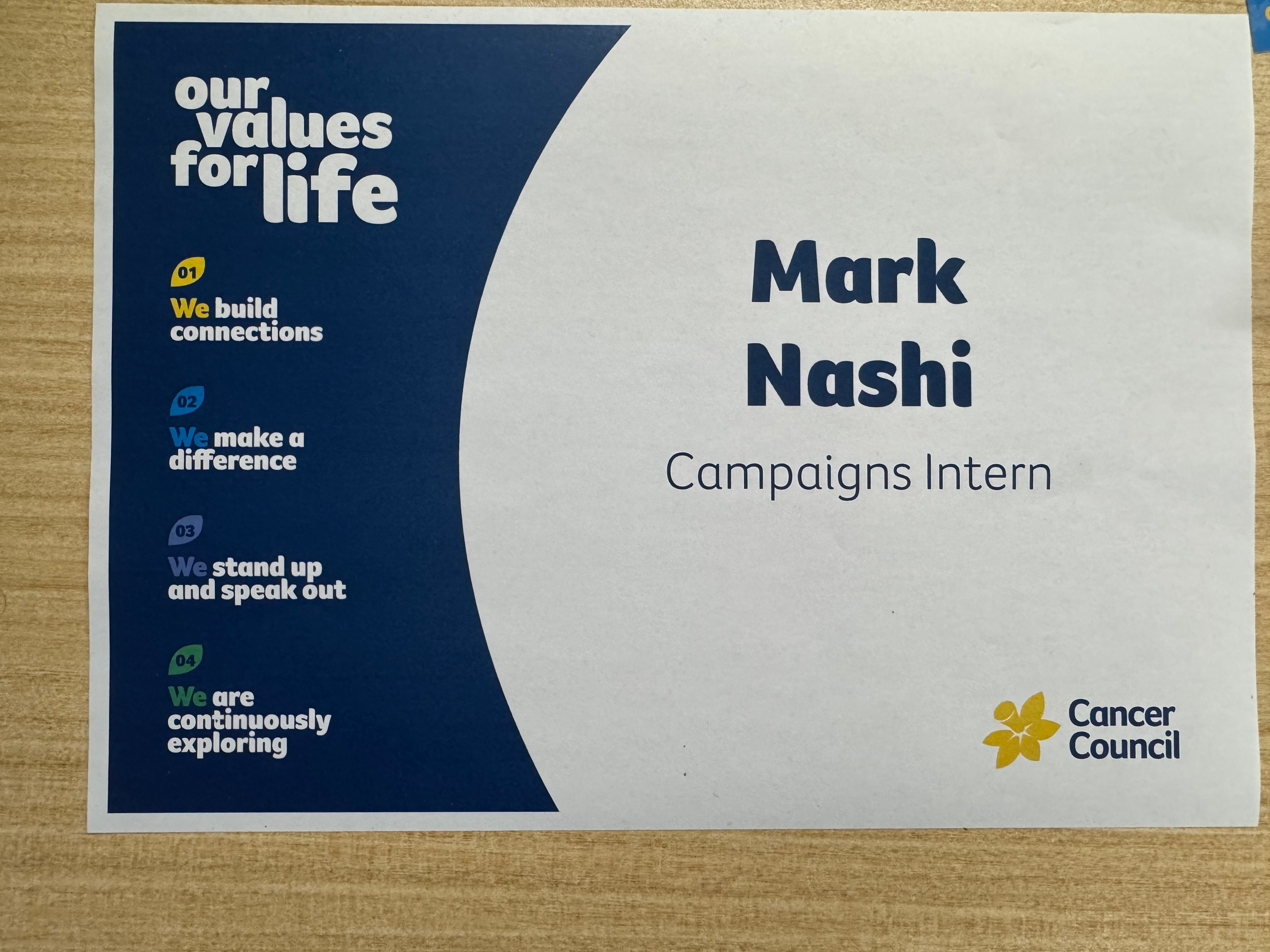
The third exciting thing was that I had finally gotten my signage to hang at my desk!
Thursday
As a college student fully entrenched in research, being at the 5-person RSO meeting was one of the most captivating experiences of my time at Cancer Council. I was briefly introduced to the team comprised of professors and PhD students before I got to watch a research grants application being made live by the team. I was able to see their perspective and priorities when designing the application, and I even got to offer my own insights in tailoring the application to be inclusive towards wet-lab theoretical grants as well as clinical-based research. After the meeting, I spoke with one of the RSO team members to express my interest in doing some hands-on work for the department.
Later in the day, I met with Linda to see her ideas and vision for the original trivia night. It was incredibly important for me to meet Linda, as I wanted to incorporate her plan for the event into the actual night. As we each held our individual compositions of ideas, I was grateful that the efforts to create this event would be much more collaborative, rather than portraying this event as something to claim some type of "ownership" over.
As the day went on, I continued to input missing addresses for Dog Walk for Cancer, as well as input confirmed 7 Bridges Walk volunteers into our mailing list.
Friday
As the week finished, I inputted the rest of the confirmed volunteers into our mailing list. Afterwards, I helped RSO with finding past lymphoma projects funded by Cancer Council to include on their website, as well as starting on the briefing document for trivia night. However, this point is when I encountered a roadblock: I have a lot of different ambitions for my summer in Sydney. From the Shave-a-Thon to the "Virtual Wall of Hope" I planned to create for patients at the nearby cancer hospital to the trivia night I was now organizing on behalf of Linda (and everything in between), these goals and events required different mechanisms and proceedings to getting approved. The non-profit is, to my surprise, much more bureaucratic and corporate than I initially expected it to be. Thus far, my templates for my Shave-a-Thon still have not been approved by upper management, preventing me from continuing onward with the project. My Virtual Wall of Hope program proposal has not even reached its first stage of approval, and it would take many days to hear back from the bar where Linda and I decided to host the trivia night to figure out the space and AV situation. Furthermore, getting templates and resources needed to continue these projects relies on the efficiency and accessibility of other people higher-up within the organization. My current concern right now is that I will probably not be able to complete all my projects before I fly back to New York. I think the solution to this concern is not necessarily more tools, but rather, I need to reorient how I tackle my time in Cancer Council. Rather than accomplishing all my projects in my time here, I rather need to set up systems that would eventually lead to the implementation of my projects far after I'm back in the United States. Just like how I could switch my perception of the "body," I think it's very feasible and justifiable to switch the perception of accomplishment to include this long term success.
Saturday
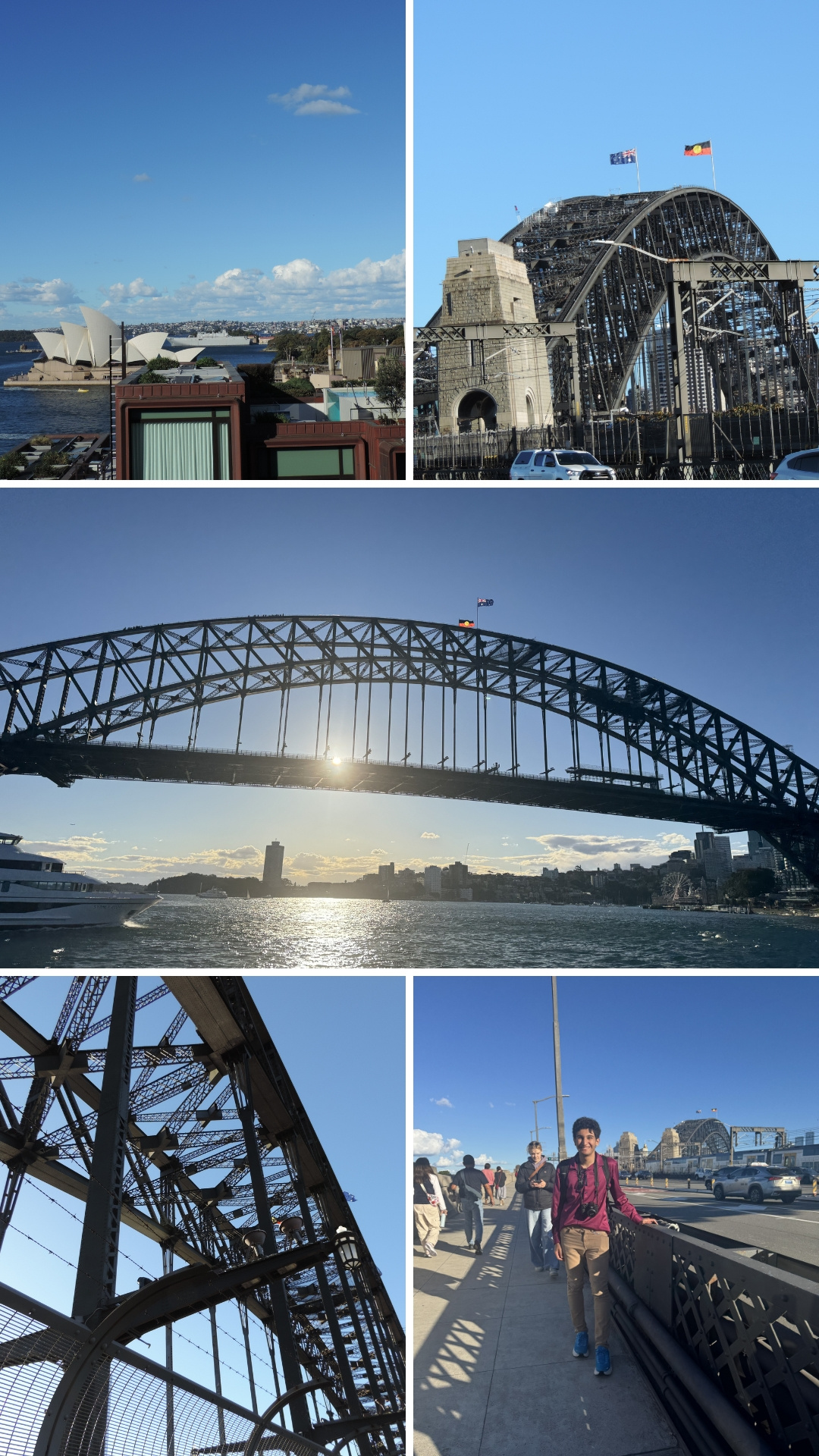
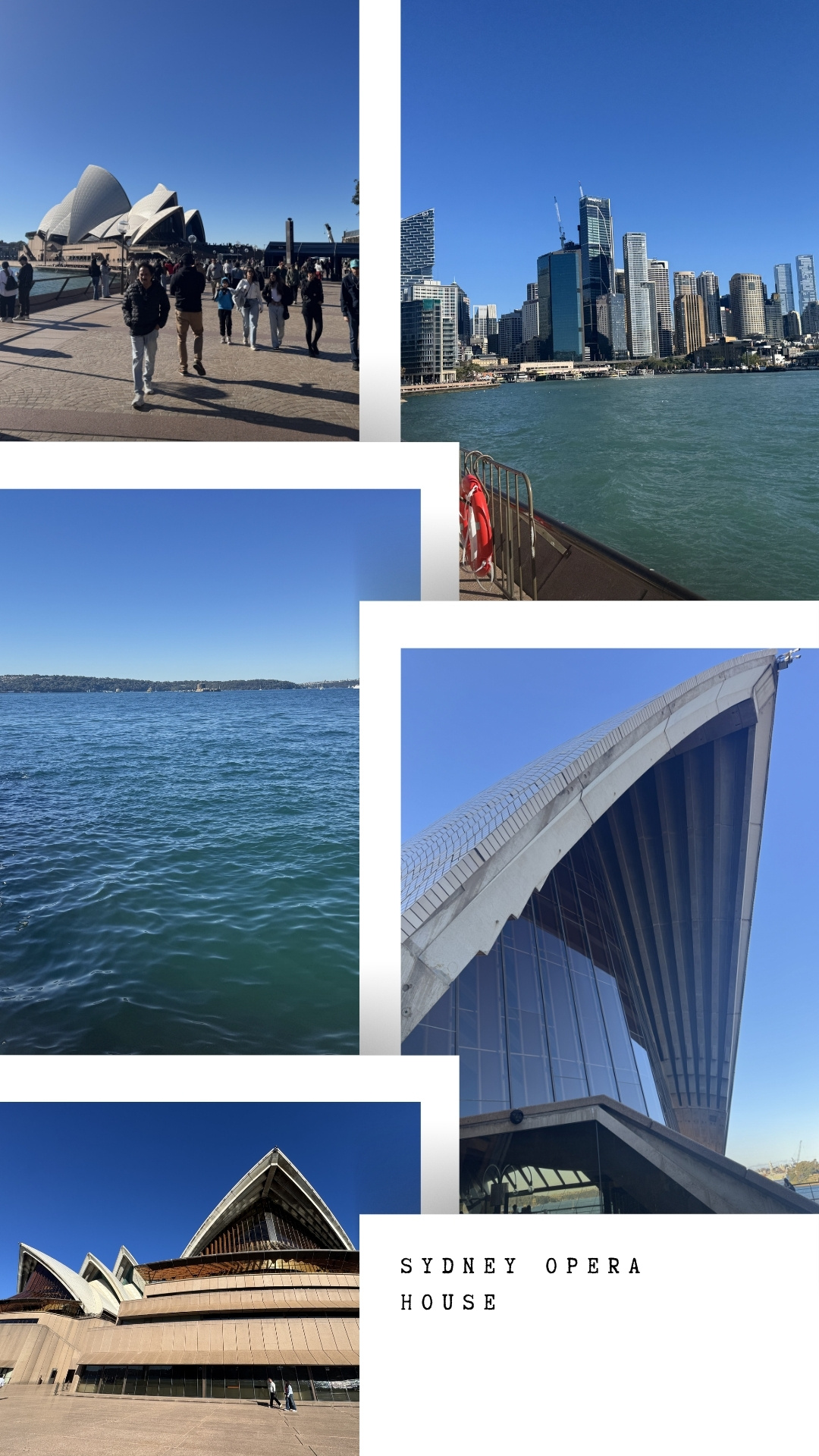
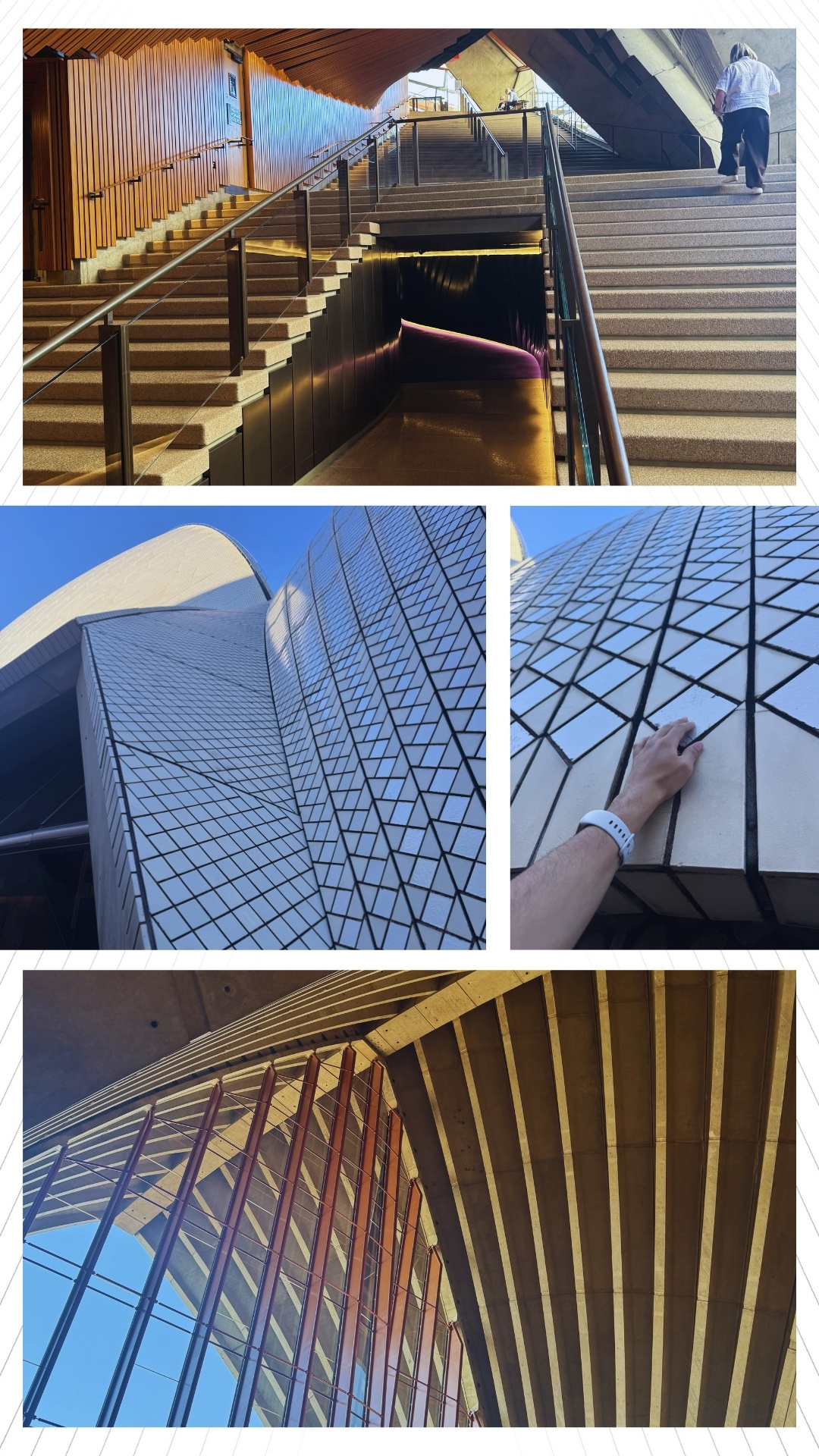
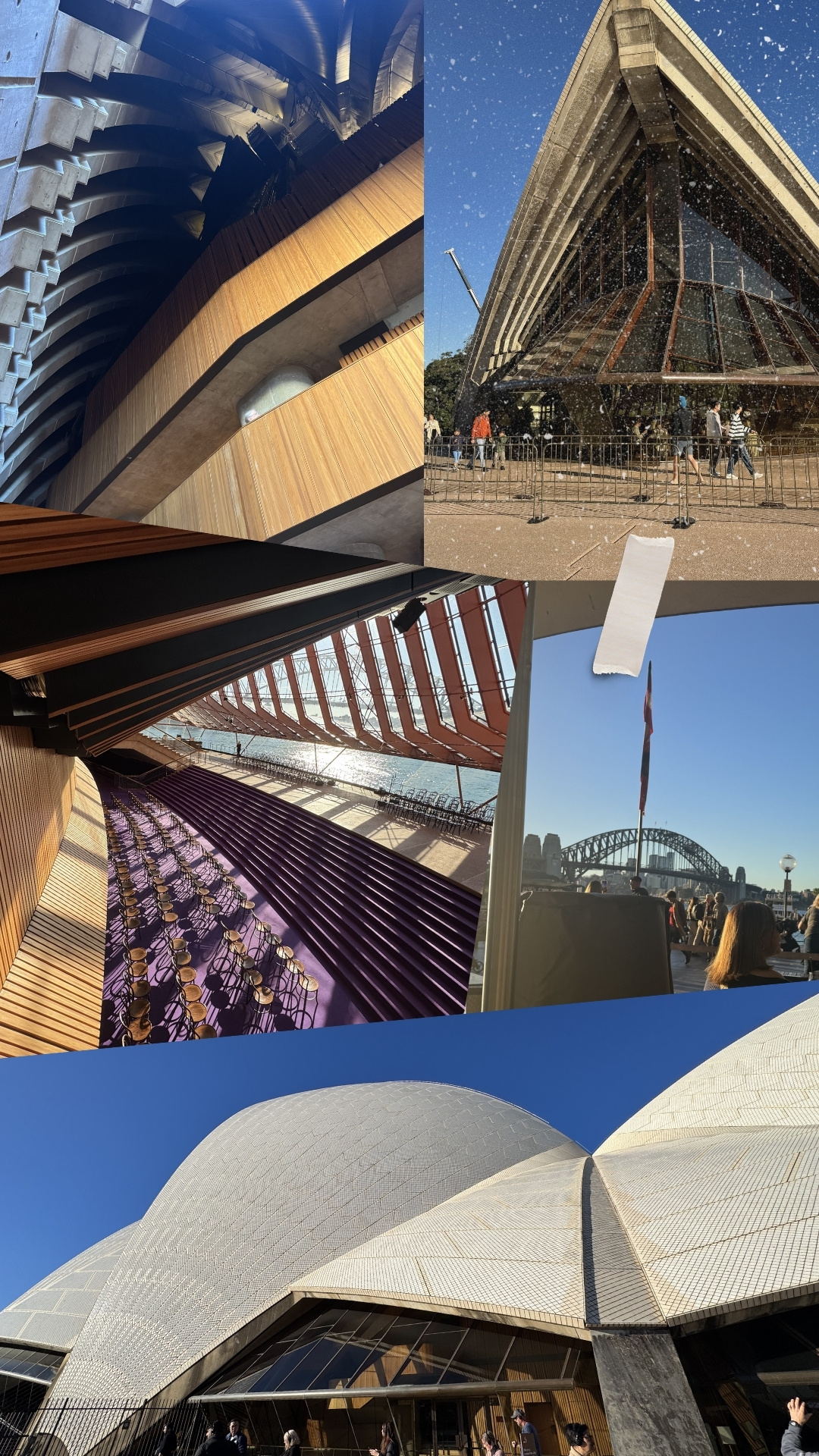
I wandered in the Sydney Opera House, nourished myself at the Opera Bar, and then stumbled through the botanical gardens at sunset. It was entirely hedonistic.

I am an undergraduate at Columbia University, currently studying Chemistry & Human Rights.