LiA Week Three: Falling Behind on Internal Humanity and a Faith in the Impossible
Sunday
I took some extreme discomfort in the idea of being behind. No, not on being behind on my work or academics or social life; I could most certainly stomach procrastination (this LiA blog might even be late). No, rather, I took extreme discomfort in the idea of being behind on my humanity. There was a lingering idea I've had for many years that maybe somehow, in some way, I was lagging on fully conceptualizing what I was connected to—who I was connected to, even. So when my uncle called me the previous week to invite me to his home, I lied to him and said I'd have to see how my schedule would shape out. Ah yes, the mountain of work I would have to undertake on a quiet Sunday when even the coffeeshop is closed (Australia, as I've learned, is quite a religious country). It's such a shame: I really like coffee. All this to say, it wasn't a very convincing lie, but what other choice did I have! The options were either to continue to ignore the doubt, the known ignorance that I was lacking something, or to confront the humming sound from the corner of the loud room and see just how much I had fallen behind. For if I were to visit my uncle's home, I'd have to see my two cousins (whom I did not even know the names of) and learn about their lives and how much they've resisted assimilation. So, no. "There's just no way I can go," I told my father the day after I had received the invitation. "It's your choice," he replied. And that was the end of the conversation: it was my choice, and I had chosen to continue to ignore the humming sound. There was no regret either, the humming sound could continue to buzz, but there were much louder, more important fixations I could focus on. I was going to spend the Sunday outside of the closed coffeeshop perhaps writing poetry, or just thinking. Then, I would get up and continue to explore Sydney. It would be a day of pure fulfillment, and I was going to continue to ignore that light, infinitesimally light humming sound. I could barely even hear it.
My hands were shaking quite a bit as I opened the door of my uncle's car. As he drove me, I kept my heart rate under control as I tried to formulate my next question I would ask about his life. I really didn't know anything until that meeting: he had only moved, with his family, to Sydney quite recently (only 9 years ago). He was still working to run his business back in Iraq, which I felt he was particularly proud of. His demeanor was quite the opposite of my father, really—he was much more invested in the more emotional conversations that comprised my character. Well, to be fair, most of the conversations were still very analytical, but I generated a much kinder image from my interaction than what I initially expected. When I arrived at the apartment, I was greeted by my aunt and my two cousins—Eylaana and Tanya. Eylaana was in Grade 8 and much more reserved (for fair reason), so I spent much of my time talking to Tanya, who was finishing her time in the University of Sydney studying genomics. It was striking how initially similar we were: we both were on the pre-medical track, had interests in politics and philosophy, and had similar academic experiences in university. However, the difference that separated me quite cleanly from the family unit was quite clear: they had seemingly mastered the art between assimilation and preservation. They all spoke both fluent English and Arabic; they were involved in Sydney's social life but were ingrained in their Mandaean community; Western-based shows played on the TV, while in the opposite side of the room stood portraits of my grandparents. To say that I had not been lagging in some extent would be to lie, but I came back home with a new fascination—I now understood the pathway between what was previously considered to be impossible and the possible. It was quite a push, seeing old pictures with my parents in a family gathering and wonder what discussions took place. If I could face these fears of connection, who says I could not also face fears of relearning culture from square one? Riveting—faith in the impossible.
Monday
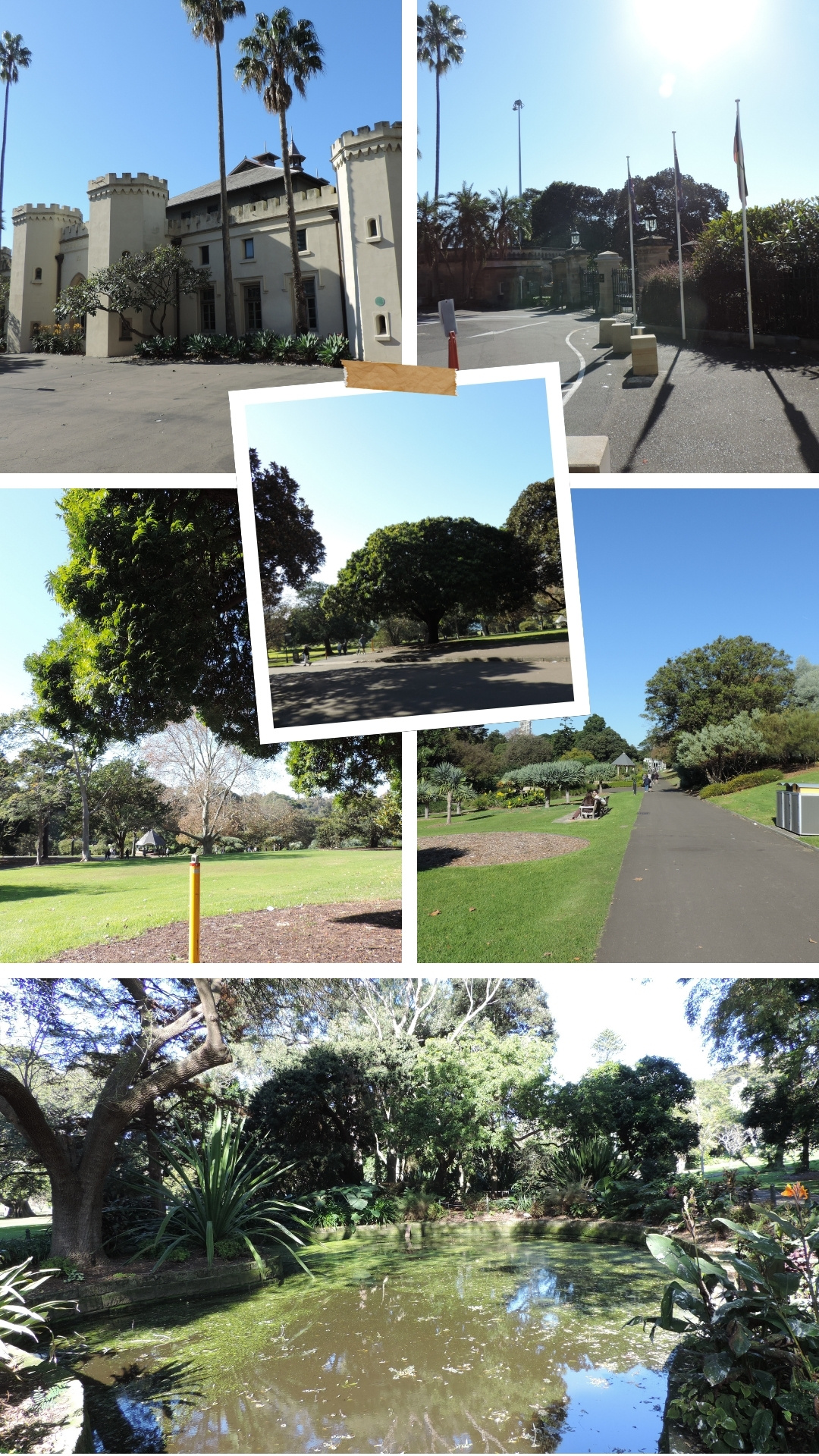
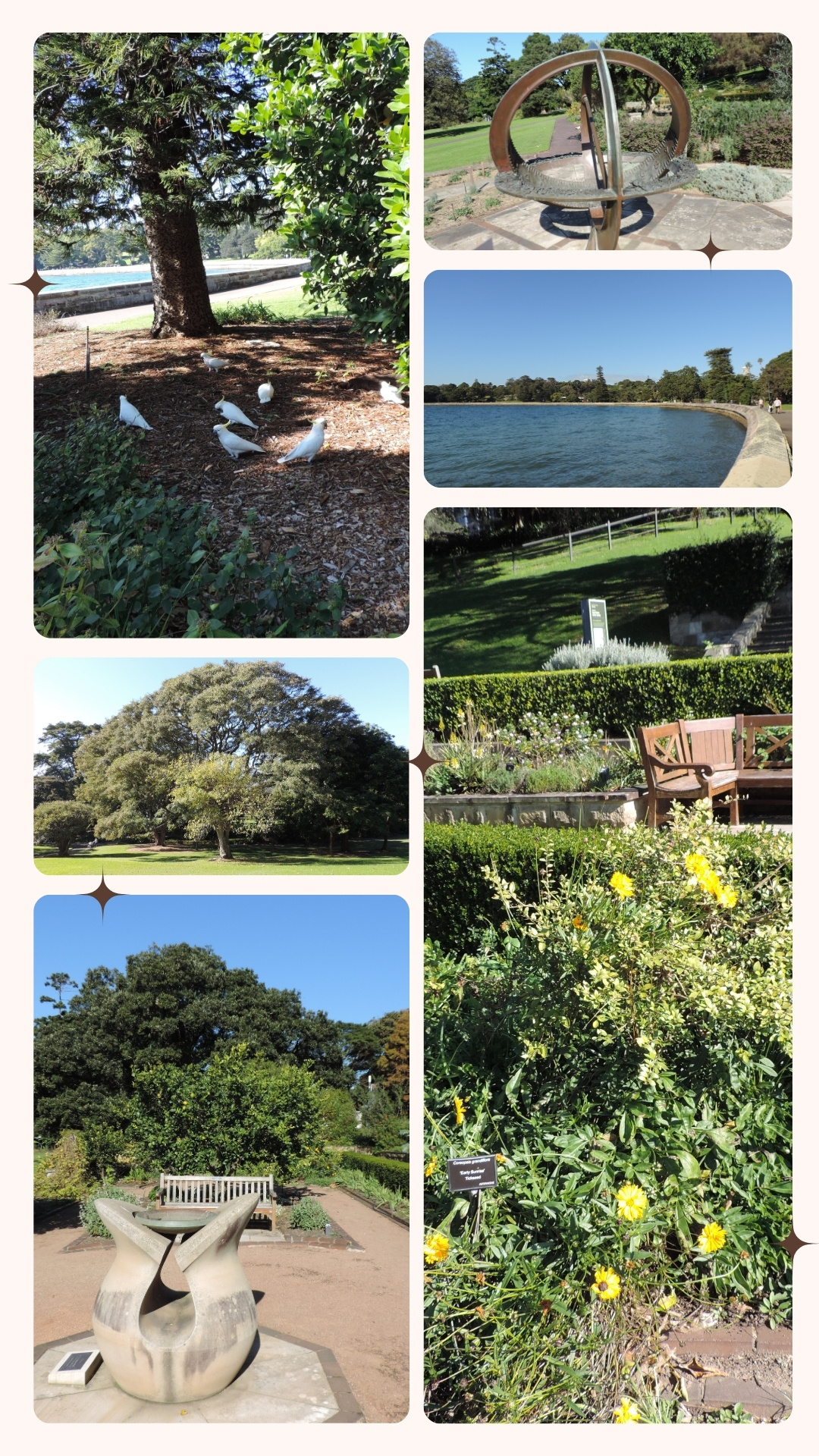
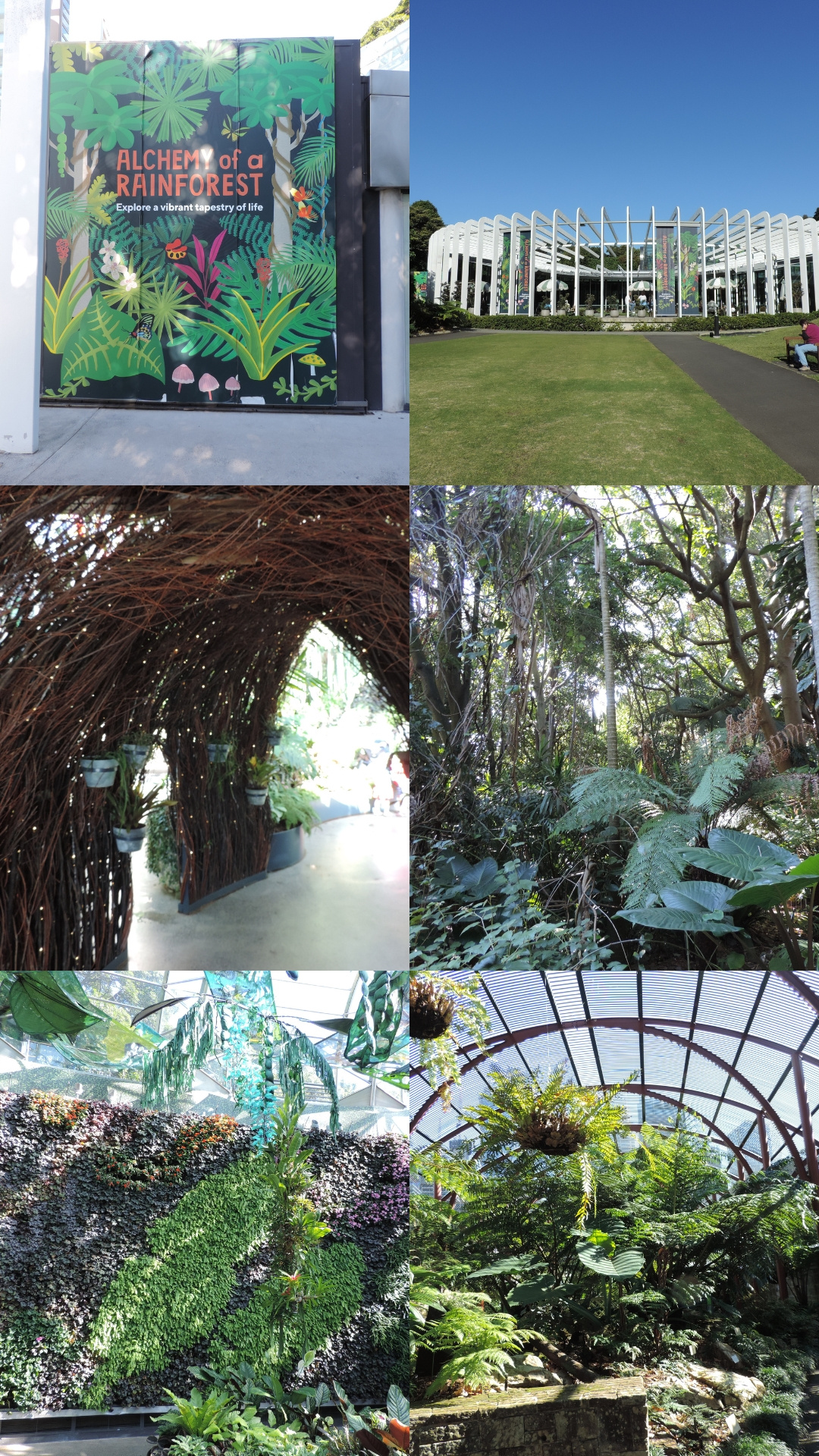
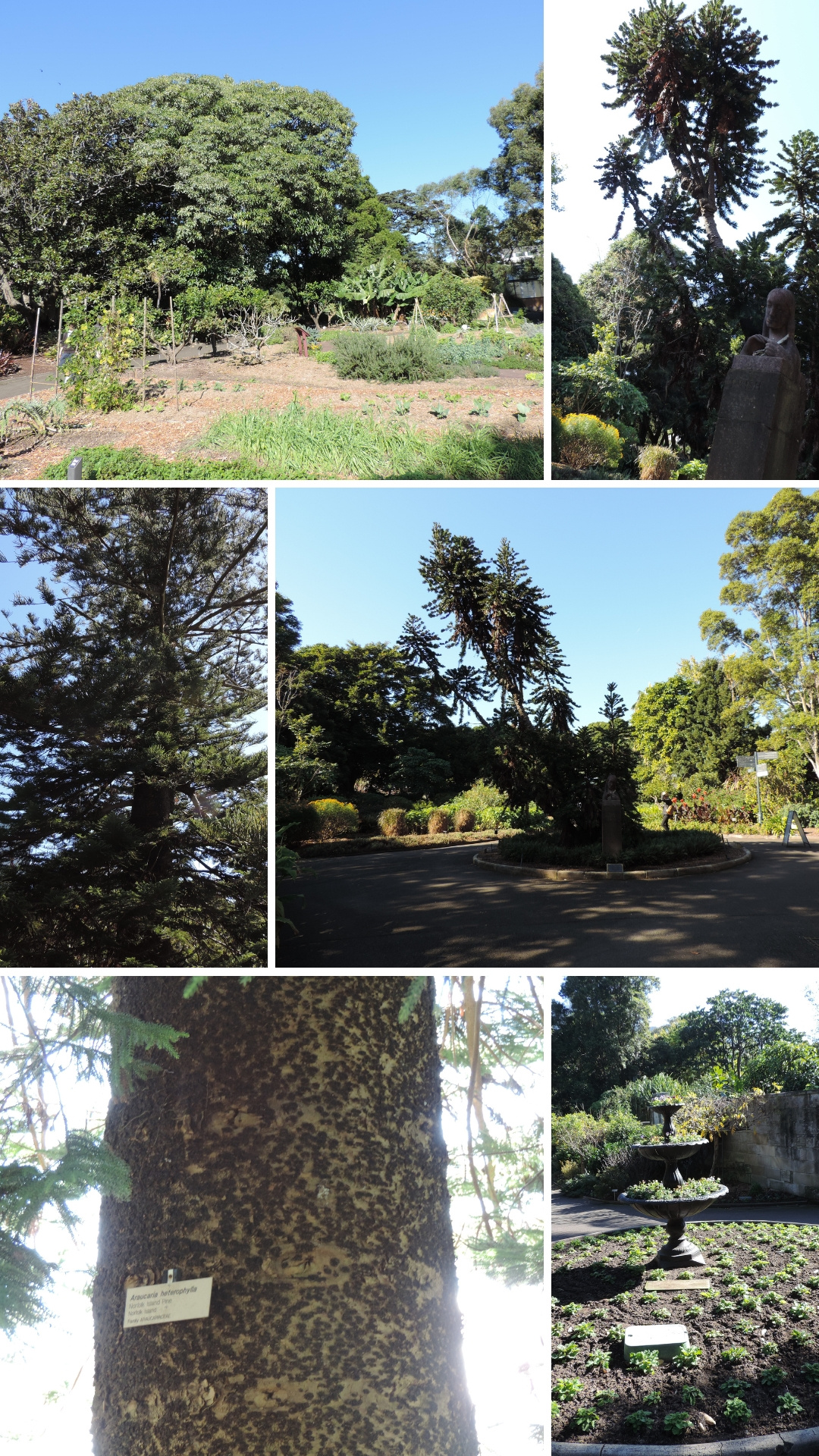
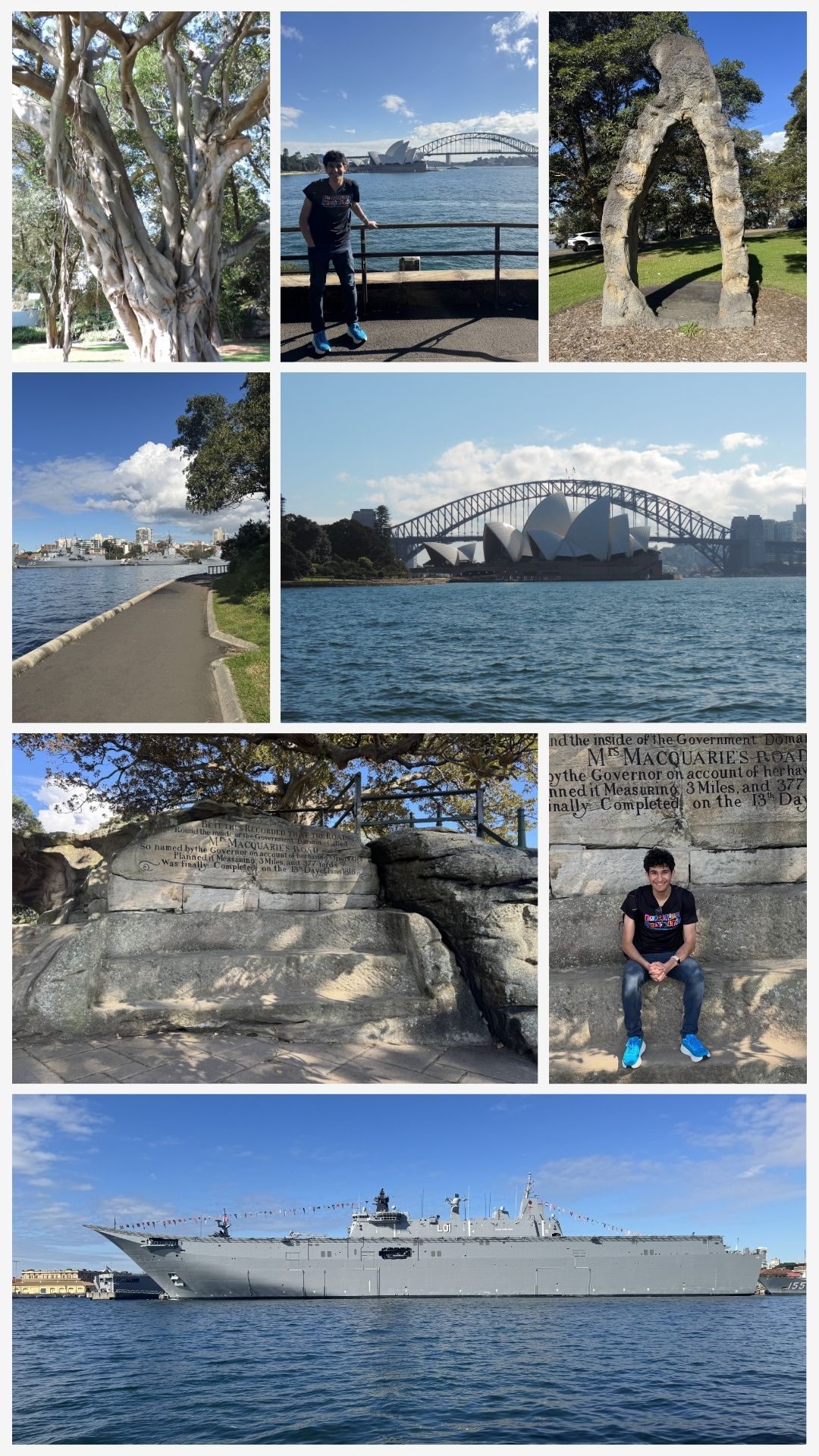
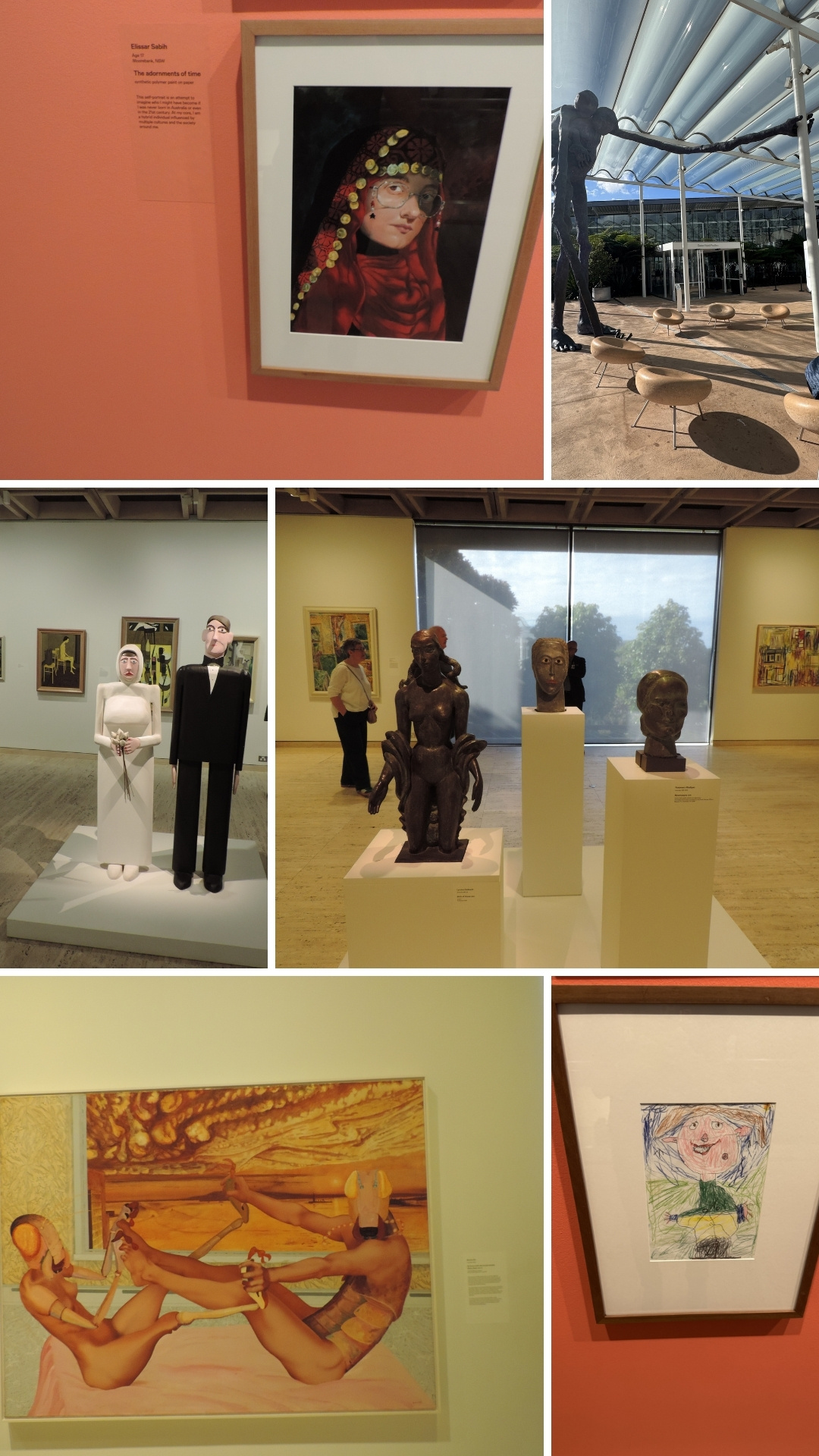
Monday was the King's Birthday, which is considered to be a federal holiday for Australians. One would assume that this would make the idea of the King favorable to Australians, but no, they mostly hate him (so much so that prices on this day increased). King Charles III had stopped me from doing any Cancer Council work, but he would not halt me from going out to see Sydney's Botanical Gardens. I spent the day surrounded by plants, and when I returned, I stumbled upon the Art Gallery of New South Wales. It was free entry, so I was already intrigued; I took many photos of some very abstract pieces of artwork I hope to maybe use in ArtHum next semester.
Tuesday
I discussed a bit, in my last post, about the Trivia Night I was planning on behalf of a Cancer Council external supporter. When I came back from the long weekend, I was gifted with a tentative run sheet I could work with to draft a more concrete plan for the night. It was actually quite fun: I got to continue to craft questions while letting my imagination envision the different possibilities the event could take form.
By midday, I had sent emails to 2025 7 Bridges volunteers who I had left voicemails for the previous week. Once these emails were completed, I was able to create more resources and templates for my Do It for Cancer program. They were, admittedly, quite ugly. Unfortunately, Canva premium can't fix bad design taste, but I'm sure they'll improve as long as I improve over the next weeks.
By the end of the day, I had entered in more Return to Sender mailing addresses; a lot of these supporters believed that we were spam, so I worked with Genevieve (one of the Campaigns Coordinators) to create a form for supporters on Cancer Council's page for them to submit their mailing address.
Wednesday
I was delighted to enter into the office-space on Wednesday to see that supporters had begun to submit their information on the form. This made the process of submitting all mailing addresses much more feasible, and I was really grateful to have temporarily solved the problem with one of the division leads. I also finished sending emails to the last few City2Surf volunteers who could be eligible for refunds.
On the 7 Bridges side of things, I actually received information about 2024 volunteers on this day, so I begun removing 2025 duplicates and adding them to our database. I also was assigned to shadow and help out the Direct Marketing team with another fundraiser called Daffodil Day.
Thursday
On Thursday, I received the most horrid spreadsheet to input phone numbers for the 2024 7 Bridges Walk volunteers. This spreadsheet was not only missing more than half of the 2024 volunteers in the database, but it also was split into 7 different tabs corresponding to 7 different weeks in which volunteer information was collected. Obviously, this data was consolidated into one tab, but it still was excruciatingly tedious to scavenger-hunt 150 volunteers' phone numbers. On the other hand, I've become ridiculously good at using Excel. If this blog somehow made it to an IMC Trading executive, know that I'm always available (after July 7th, of course).
I finished creating all the rounds and questions for trivia night, as well as the welcome speech when I got the wonderful news that Linda had managed to actually make it to the trivia night event. We had been collaborating all this time, of course, but it's still very exciting that we would actually run this event in-person together as a team. It's a moment I'm still thinking about today, and it definitely bolstered my re-established faith in the impossible.
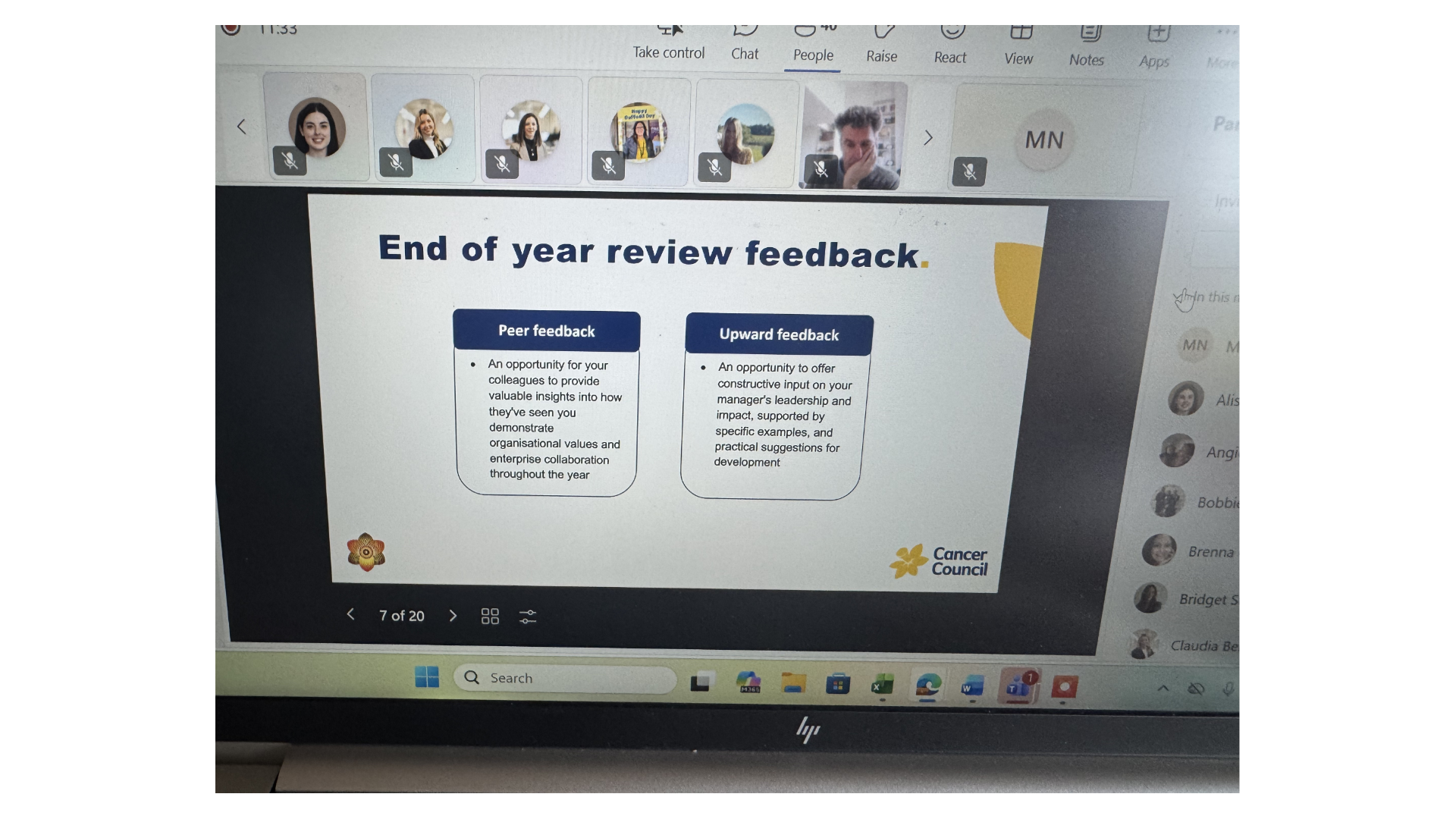
This week's internal event was a highly-professional end-of-review event I got the chance (it was required) to join via Teams. It wasn't as fun as eating kangaroo or drinking coffee (again, I really like coffee), but it was still nice to get to peer into the internal machinery and date behind what makes a nonprofit run. And, since I wasn't staying for very long, I didn't have to get stressed out by the end of year peer review that each employee was assigned to complete before the end of the month.
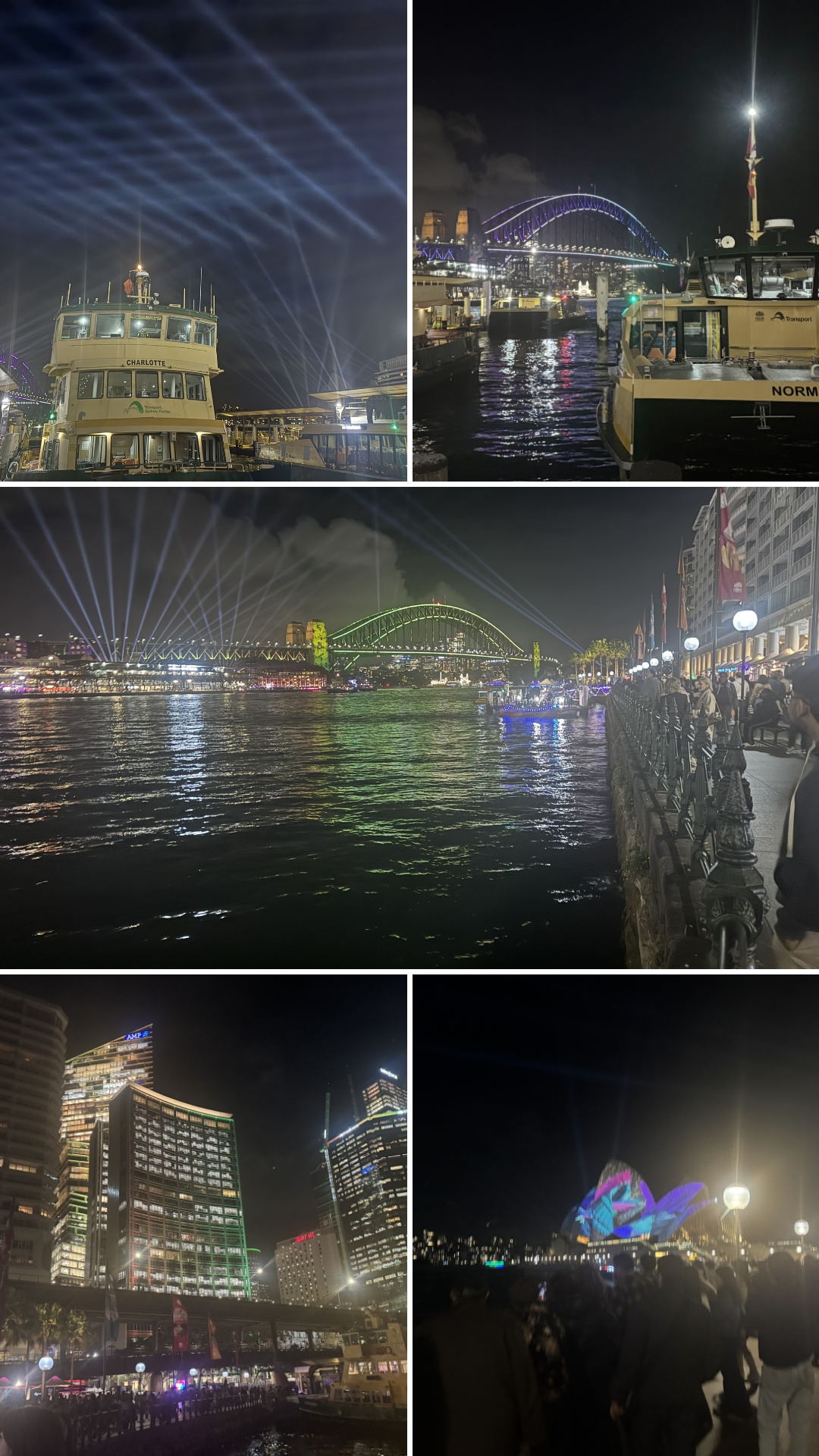
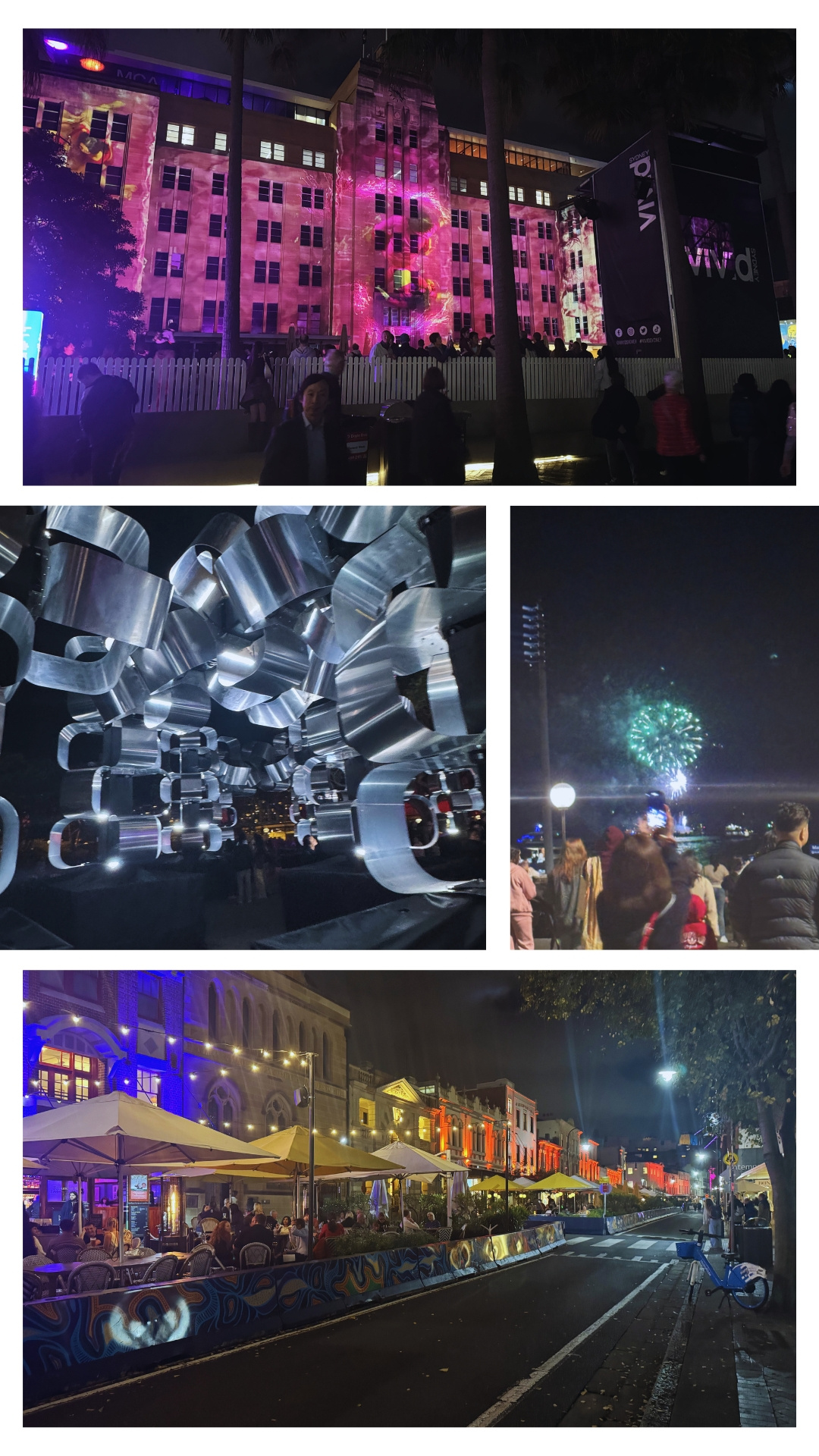
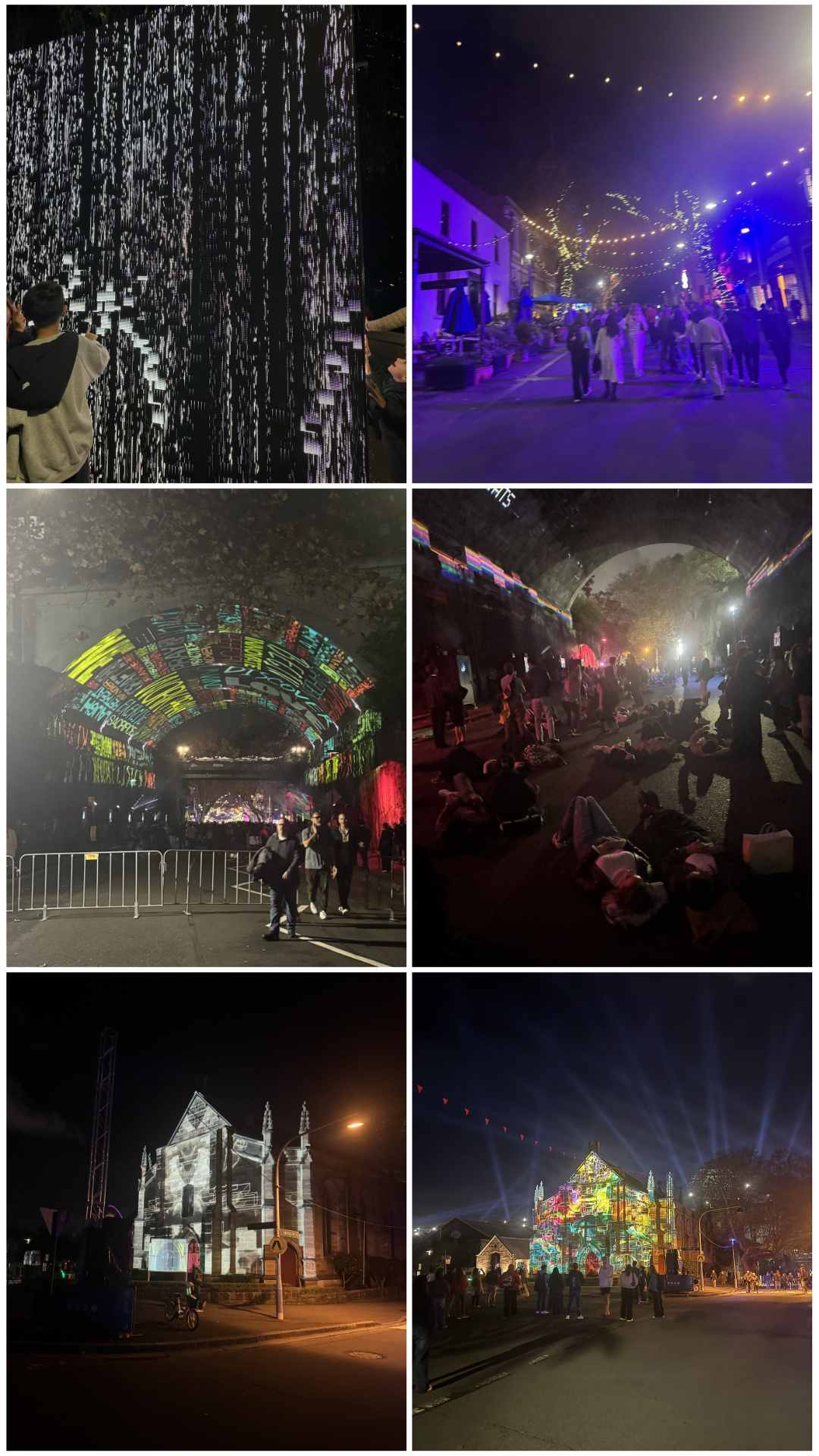
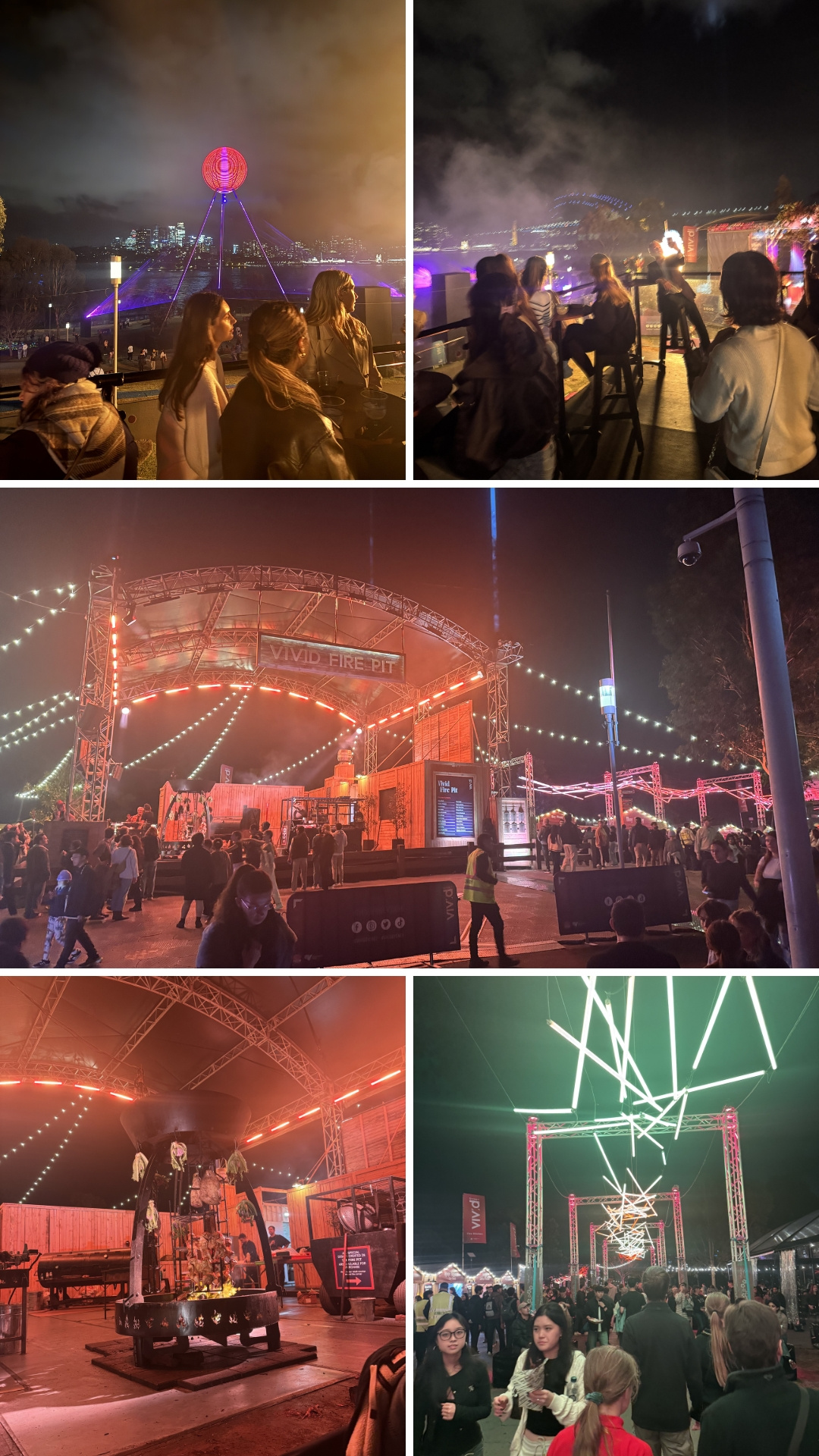
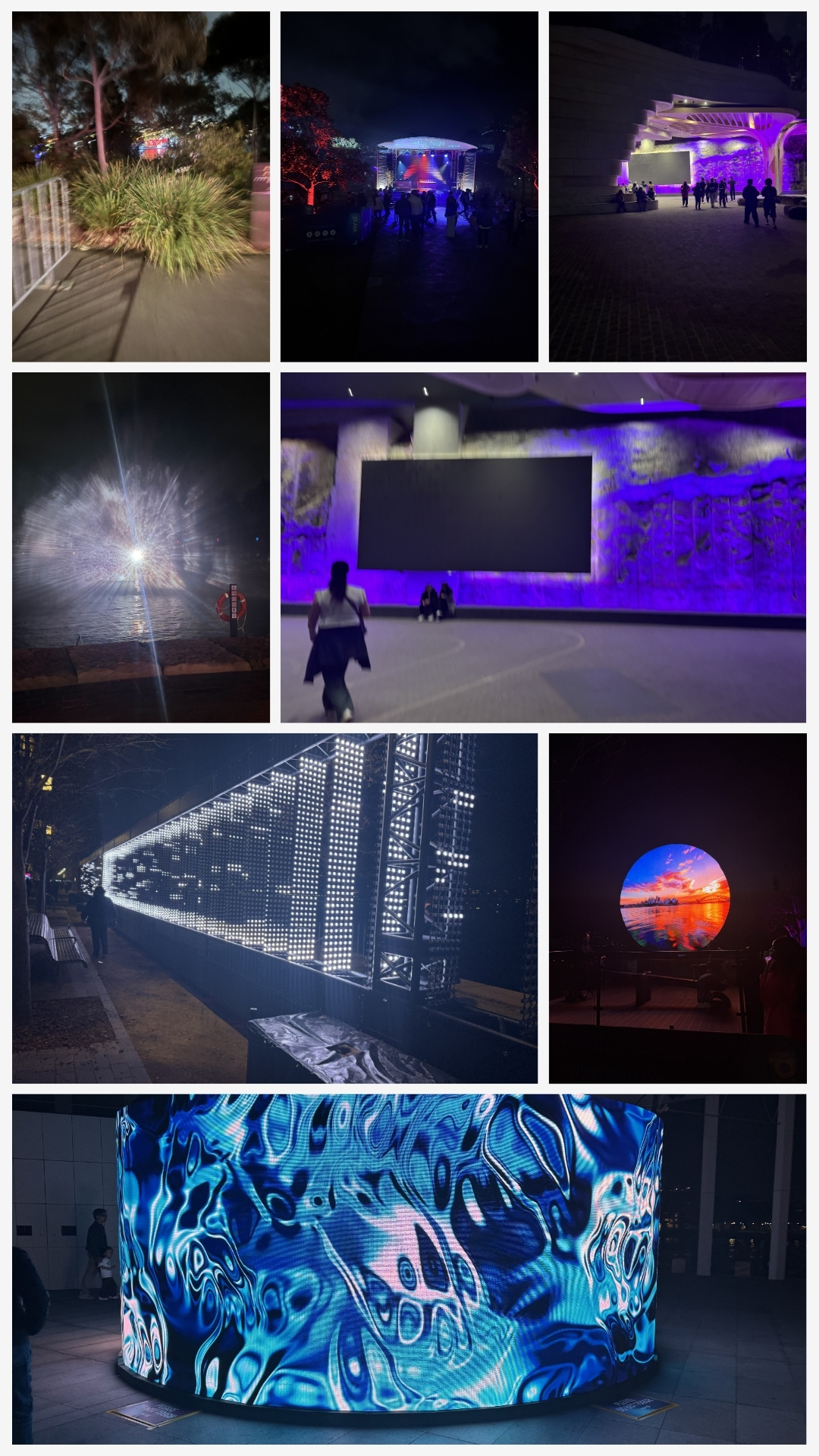
When my work finished for the day, I had to quickly get ready to go to a winter event in Sydney called Vivid. Vivid is a lights festival that hosts all kinds of light exhibitions, drone light shows, and fireworks. It's quite surreal actually—it's something I do not believe I'd ever get to experience in the United States. The 6.5 km (4 mile) walk spans from the Sydney Opera House all the way to Darling Harbour. On the walk, there are venues that serve food and drinks and several different artistic displays from all around the world. There's nothing too deep or metaphoric I could say about this event: I basically just got to cosplay as a moth for 4 hours.
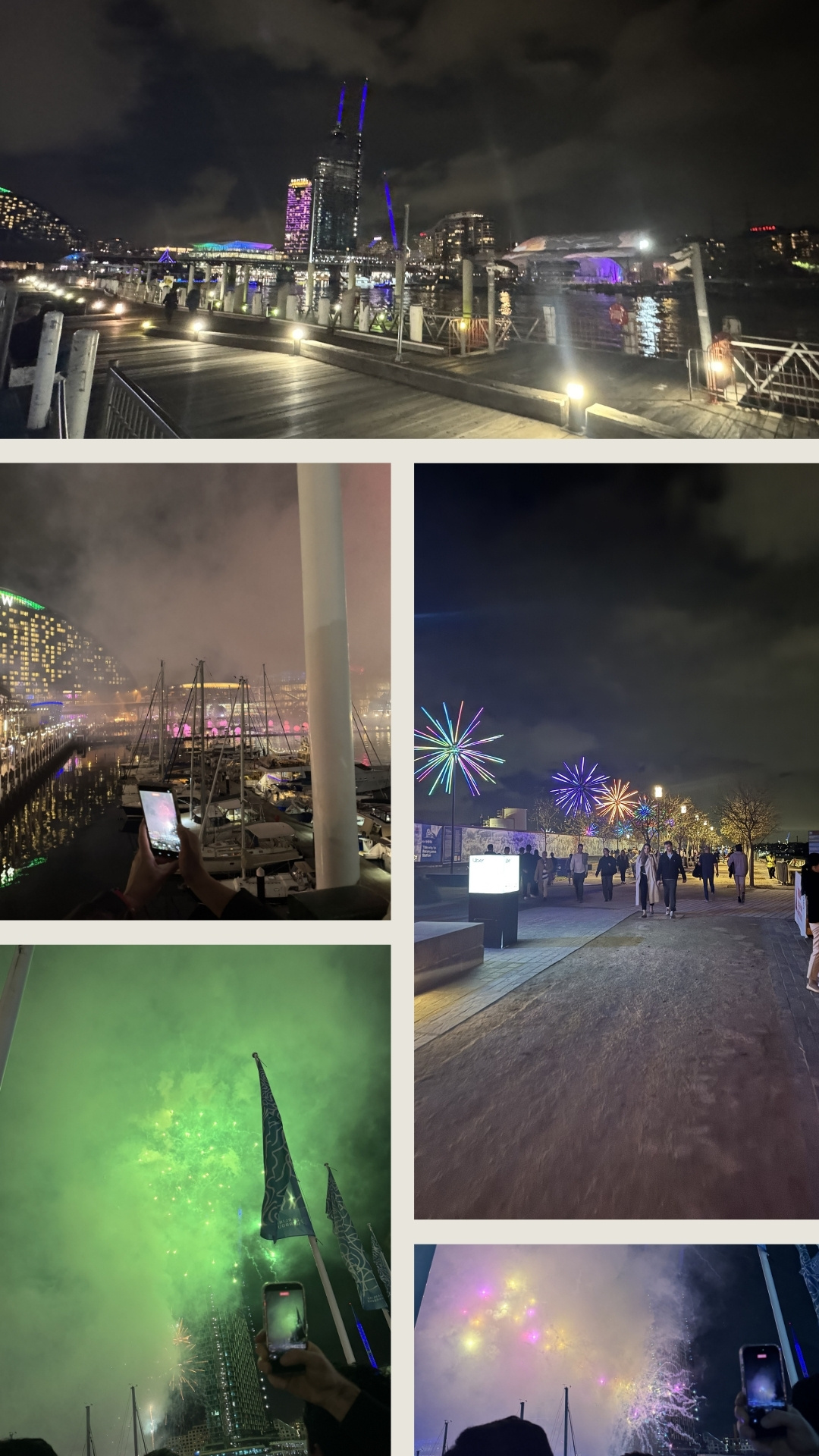
Friday/Saturday/Sunday
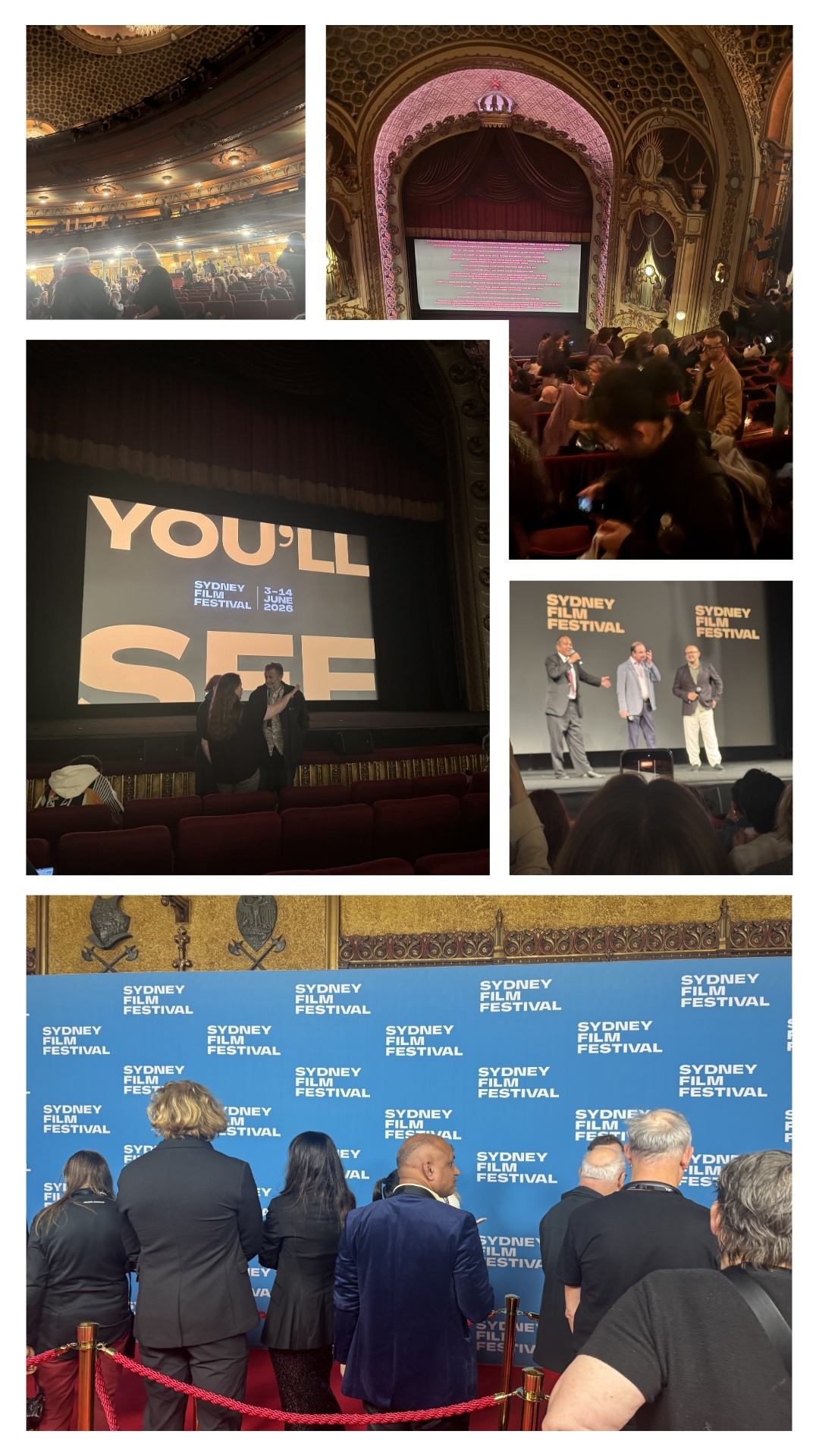
Over the weekend, I got the chance to go to the Sydney Film Festival, where I got to watch a bunch of unreleased award-winning films. It was really exciting for me, as a cinephile, to see truly spectacular films that portrayed a myriad of really complicated topics. On Friday, I was able to see Minotaur, and to my surprise, Andrey Zvyagintsev (the director) came to watch his premiere with us and answer questions from the audience after the movie. It was perhaps the coolest city experience that I've had in Sydney so far. I wrote about Minotaur in my personal blog, review linked here, so I won't say too much on this Laidlaw blog, but it was definitely a worthwhile experience (my other two blogs about Fjord and All of a Sudden should be out soon).
I think the movie that definitely struck out to me the most was All of a Sudden, which I got to see on Sunday. Briefly, it's about a burnt-out director of a failing Parisian nursing home that employs a philosophy called Humanitude to care for their residents, who mainly have cognitive disabilities. Humanitude is a philosophy that requires utilizing empathy and individuality when dealing with elderly patients, which requires all staff members to be trained. However, this method decreases efficiency, which in the French capitalist society, leads to a lot of frustration from all parties involved. This all changes when Marie-Lou, the nursing home director, meets a terminally-ill Japanese playwright named Mari who helps her change her attitudes and the way the nursing home operates under capitalism while preserving Humanitude. In this movie, the belief in the impossible is explicitly mentioned and confronted. There is no pathway from the impossible to the possible, but the only way to distinguish between the impossible and the seemingly-impossible is for one to try and find such pathway. It was not my favorite movie out of the festival (actually, probably my least favorite), but the movie did have the most significant effect on my work in Cancer Council, as well as my struggles with assimilation. There is no way to know if you can reshape yourself, your identity, or your role within an organizational body unless you have faith in a rugged, uncut pathway that may or may not lead to an outlook above the clouds.

I am an undergraduate at Columbia University, currently studying Chemistry & Human Rights.