LiA Week 5: Choosing to See (Success): Is Meaning Found, or Made?

My last post about WEEK 4 was called "Be(e) the Change you Wish to See," where I reflected on my perspective shift on leadership, re-examining where and who I could actually contribute, or help, while on this trip, since the audience/community I thought I would support was turning out to be a different one than I expected.
THIS WEEK, I have a similar thoroughline on the power of a perspective shift, but I want to differentiate: this post is on my perspective shift not merely towards leadership itself, but on the process of deriving meaning and value from anything. Whether the goal was to exercise leadership, or to simply be part of something you personally deem "meaningful" to you, how does the process of interpreting "meaning" work in the first place?
Now that my LiA trip has concluded, how do I assess what I got from it? By whose metrics, by whose goals? By what observations? Let's get into it.
--------
The final week of my LiA period included:
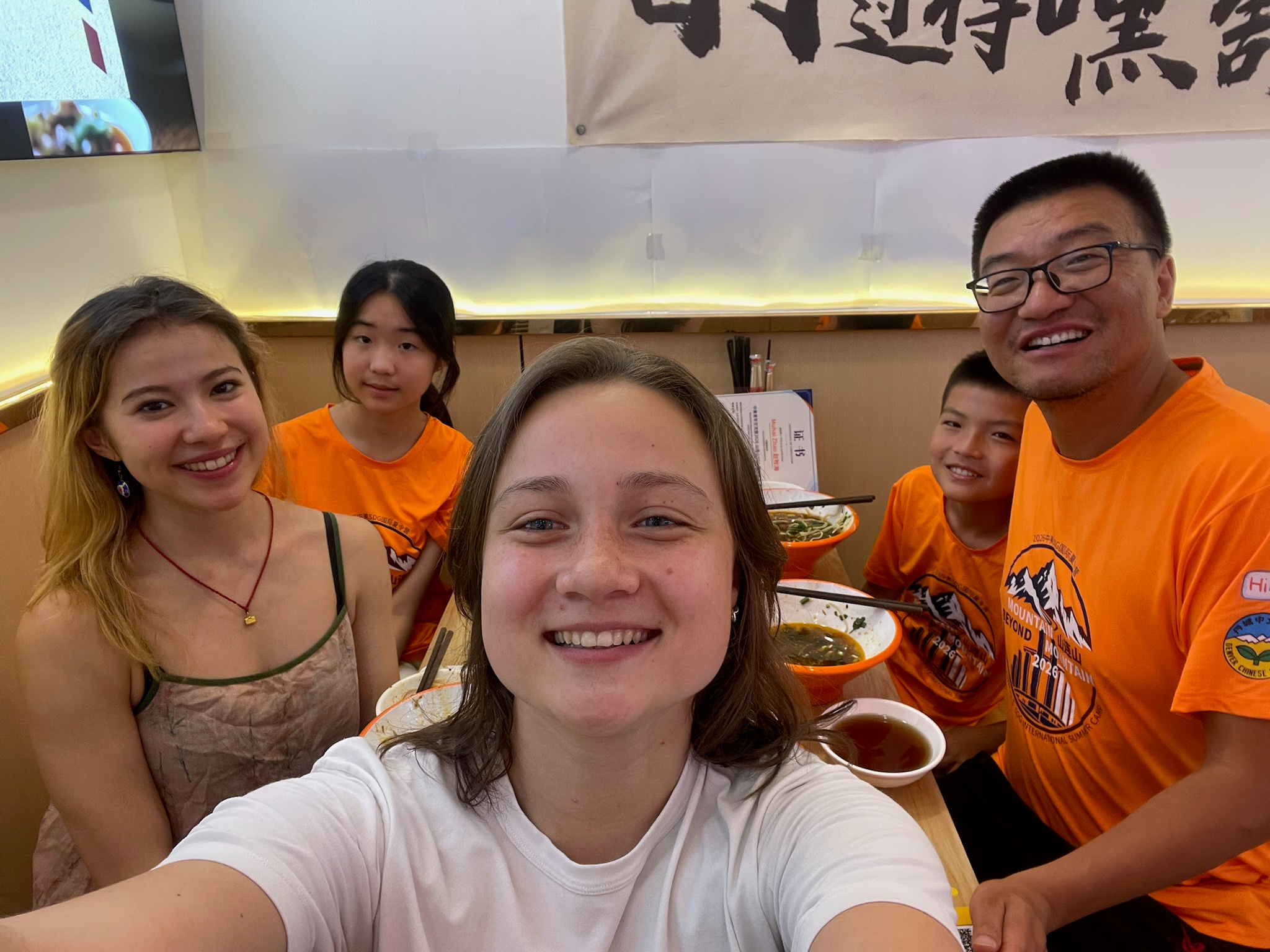
- the closing ceremony for the GCB "Mountains Beyond Mountains" trip, as well as spending the remaining days in Chongqing
- further interviewing Zhao,
- filming myself and Stella as we reflected on our own experiences and insights from the trip, and
- beginning the daunting task of consolidating the hours and hours of film footage I've collected to piece together the documentary I'll end up making (!!).
- first-time filmmaker and editor, here...feel free to contact me if you have any tips :) for myself, I already know the first tip I need to follow is conquering the intimidation I feel, which has been encouraging my procrastination this week. I've just got to start.
After weeks of discovering China's vast, lush natural landscapes, animals and experiencing the hospitality and culture of local farmers, villagers and park rangers in various villages, I had a lot to feel grateful for.
During the Closing Ceremony, I entered with the expectation that the American pre-teen campers would have a lot to say, too.
After all, their Chinese counterparts---the local Chongqing city kids who had voluntarily served as our tour guides---were so earnest and passionate in the speeches they gave about how eager they'd been to share their culture with us, to engage with Americans, and to ultimately form cross-cultural memories and connections they would never forget.
So after hearing such touchingly sincere words from the locals who'd been so generous to us, you can imagine how embarrassing, how humiliating, how disappointing I felt to be affiliated with these American kids when some of them were handed a microphone and they squirmed, going practically nonverbal or attempting to thrust the microphone upon one of their equally unenthusiastic peers, each deflecting questions about their takeaways or memories from the trip, questions I thought were incredibly easy to answer (if not in our broken Chinese, then at least in English).
Hoping to counteract the humiliating sight, Stella and I both volunteered detailed speeches and answered questions about what we'd learned from our travels across China, what we'd loved and valued about the experiences this camp gave us regarding environmental conservation and experiencing local culture, etc.
But I couldn't help wondering: what was it about our campers, our American teens, that made them so incapable of mustering a thoughtful expression of gratitude compared to our hosts, their Chinese counterparts, who spoke so generously about encountering the opportunity to engage with us, and their hope for what it spelled for the future of US-China relations?
The purpose of this program was cultivating empathy and gratitude for the world's people and the universal gifts of nature ("Mountains Beyond Mountains"), but judging by the campers' performance at the Closing Ceremony, I felt incredibly discouraged at whether they'd absorbed any semblance of that message.
What meaning had they found, if any?
What meaning could I draw from these past several weeks? I'd embarked on this journey thinking I could make a difference in the cultural-exchange aspect between myself and the locals, but realized the only place I could truly create change, within the timeframe and structure of this camp, was in the operations and environment of the camp itself; thus, if I could improve the camp and the student campers' engagement for the duration I was apart of it, wouldn't that be the measure of my success?
If I hadn't been successful at my newfound mission of cultivating an appreciation for reflection and meaning-making into these kids' brains over the last week of this trip, were the lessons I've learned about leadership nothing more than ideas? Had I actually exercised leadership or made any sort of impact at all?
What good were the lessons I learned, if they weren't implemented in time to impact the kids?
Here's my idea: judging by the closing ceremony, the kids were not able to express whether they had found meaning from the trip in the way I hoped they would. However, that in itself isn't "meaningless." In fact, meaning can be drawn FROM that display, not to say the trip was a failure, but rather to say that the age group and rule enforcement during the trip reveals a lot about anticipating such an outcome going forward. If anything, the closing ceremony was a treasure trove of factors that can be taken into consideration for future revisions, improved iterations, of the camp.
Meaning changes depending on the metrics one uses to assess/create it. If I choose to measure the success of the camp by whether these kids could talk adequately at the end or not, I would have label the trip a failure. But if I choose to assess the experience based on whether the camp's goals aligned with the experiences it offered those kids, it was absolutely a success. After all, people in me and Stella's age group got so much value from the opportunities and activities we did.
In that sense, the children's inability to expressing their sense of value from the experience aren't a failure of the camp itself, but rather a reflection of the young (statistically more immature) age-group, the overall disinterest for nature education unique to this cohort of enrolled kids (many of whom were enrolled by their moms, rather than by their own personal interest), and the lax enforcement of cellphone limits during the experience (which allowed them to grow accustomed to willful distraction and disrespectful behavior).
In interviewing Zhao this week, as well as from conversations I had with Stella, we agreed that for next year's session, it could be a great idea to have a more selective enrollment process---not one that makes the camp less accessible to students, but simply ensures that the students who are registering are those who would be genuinely passionate or enthusiastic about the program's specific mission and focus.
Mining for Meaning: Found Beneath the Surface-Outcome
There is always another way to explain, to analyze, the same case. While from my perspective, I initially thought the camp had not achieved its goals of environmental engagement between the kids and the villages who hosted us, speaking with Zhao made me realize the program had been successful from his nonprofit's perspective and the long-term goals he has.
I asked Zhao what meaning he draws from this experience in relation to Green Camel Bell (GCB), when it appears the kids didn't absorb or engage much with the stated goals of the camp. Zhao told me at the end of the day, every iteration of children's programming camps like this one are learning and improving from past versions, but that such programming is ultimately a proxy for GCB to continue supporting the livelihoods of the villages they've been working with for 10+ years.
Whether the kids on this camp engage with the "cross-cultural exchange" opportunities he offers is ultimately less important than the fact that bringing them, as foreigners, as Americans, to live with local villagers in the first place, to rent from those locals' homes, to purchase their sustainably-sourced tea leaves and honey, and to show interest in their lives merely by being there...all these things in themselves demonstrate to those Chinese communities the long-term profit potential of continuing to invest in and adopt a more environmentally conscious alternative livelihood--ecotourism---that sustains their partnership with GCB.
This perspective made me realize the trip was a success! ---if measuring success by a different goal, not the mere "did the kids do what I thought they should do, based on what I thought the goals of the camp were in relation to them?", but rather,"did the camp function in the way GCB needed it to, in order to sustain the organization's long-term goals"? The answer is yes.
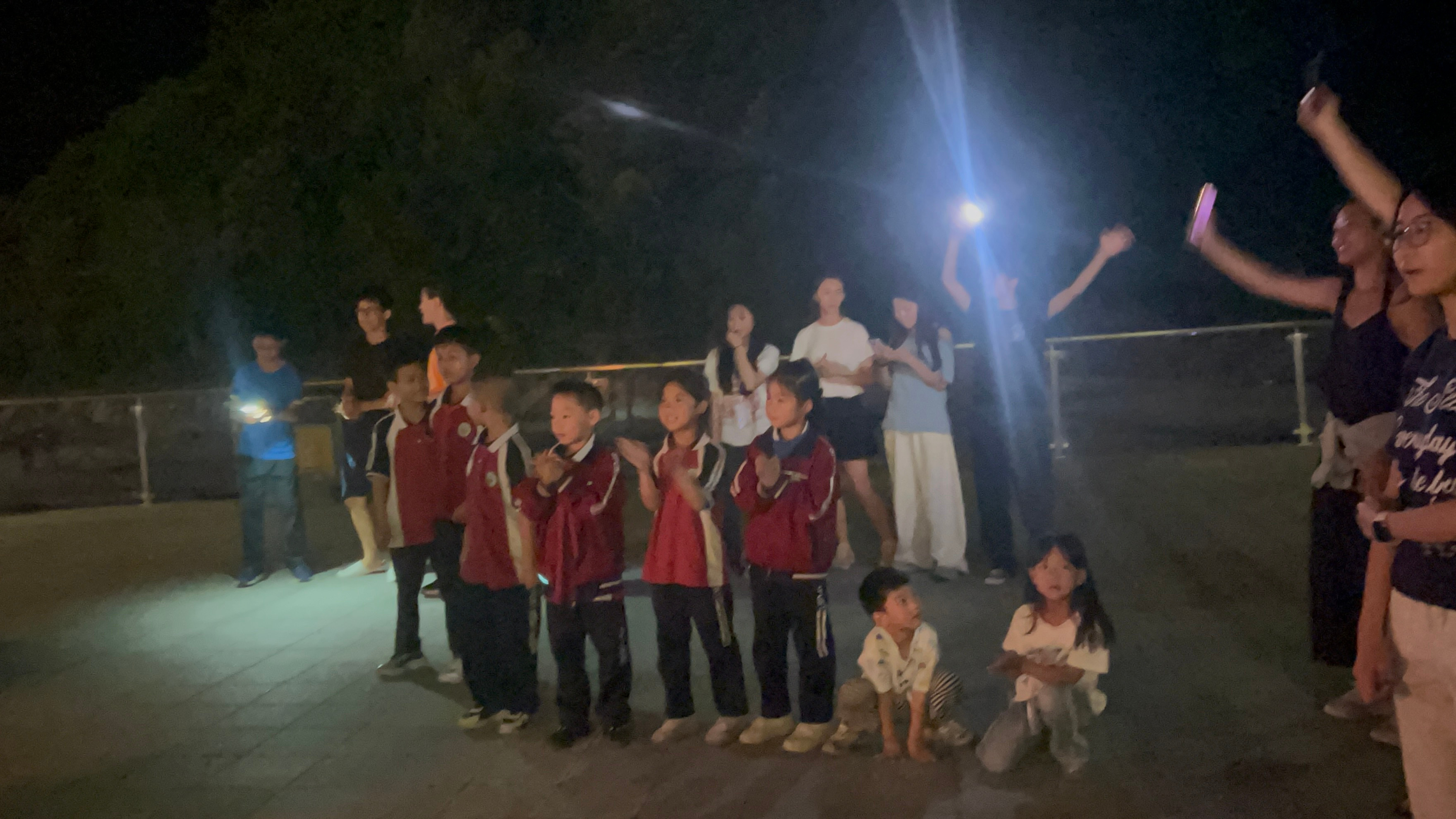
There are ways Zhao, in the long-term, can and will improve the camp, to assure students are more engaged with the meaningful experiences they are receiving. I am committed to supporting him in that process.
However, I also learned from speaking with him that the success of a mission isn't limited to what you think you can achieve in the moment. It is also measured by how that experience will ultimately contribute to a gradual, long-term process: in this case, the camp's presence is already a positive impact for the villagers and their partnership with GCB regardless of how the campers behave, AND what we learned about the campers behavior will also benefit tailoring programming to improve it going forward.
So is this meaning I've drawn something I've totally created, a facade, from what I initially saw as failure? Am I only stretching things to make myself feel better? Is everything, in fact, meaningless?
This camp is proof that the meaning I've found in it was always there; I just had to expand my perspective to see it.
I like to think that this phenomenon is applicable to anything in life that "doesn't make sense." There is no sense in anything unless you choose to find it. To make it. That doesn't mean the meaning is fictional. But it does make finding meaning an active choice. Just like I learned on this trip, choosing to focus on what is possible, on what is achievable, even if it doesn't match your initial expectations, is what allows you to do anything that feels meaningful.
Not everything is a whole "success" or "failure," labels which try to stuff complex experiences into a tight, easily satisfying judgement that leaves zero room for growth, no matter the direction. I know I'd rather choose meaning than render anything a failure. That doesn't mean saying something is a smashing, faultless "success," or viewing everything with rose-framed sunglasses; it means choosing to putting on a pair of shades that allow you to see potential, rather than letting yourself be blinded by loud, bright rays of helplessness.
So in the closing ceremony, I choose not to see failure, nor success. But I see it was meaningful, meaningful to my understanding of what I really learned and did from my experience being part of this camp: I learned about the camp's dual-functions as children's programming and GCB's organization goals, I learned about the campers themselves, and I ultimately learned from Zhao that both meaning-making and leadership alike are an active choice to choose possibility, rather than letting expectations and subsequent limitations dictate the sense of impact you think you can have anywhere.
I'm a current undergrad student at Barnard College pursuing a double-major in Theatre & Human Rights, with a minor in East Asian Studies. I'm often asked why I’m studying such seemingly divergent fields. For me, these subjects go hand in hand: my diplomacy and human rights practice are informed by an empathy uniquely cultivated from my experience in the arts; my acting on theatrical stages is enriched by my understanding of what is happening on the "world stage." Mastering both mediums is my answer to the seemingly unsolveable divisions we face today. My work bridges these fields in an innovative, urgent and radical effort to highlight our shared humanity at a time we need it most.