LiA, Week 3 - Alliance for a Sustainable Amazon
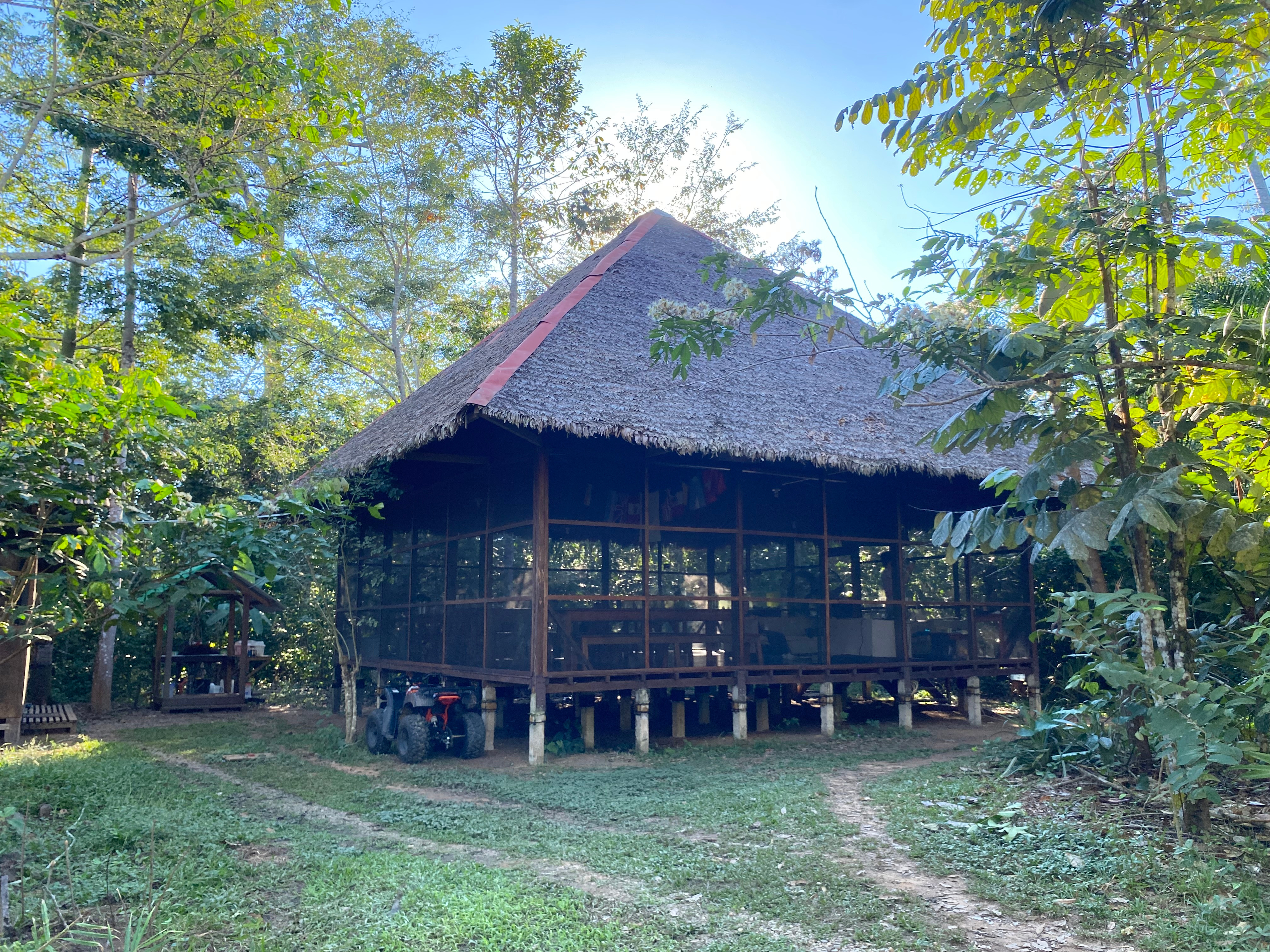
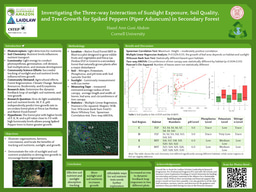
For my LiA project this summer, I am participating as an intern at Alliance for a Sustainable Amazon (ASA). This is a non-profit organization that focuses on reforestation, conservation, and preservation of both plant and animal biodiversity. The research station is located at Finca Las Piedras, Madre de Dios, Peru. My project specifically contributes to ASA’s reforestation efforts. At ASA, I am studying the three-way interaction between plant growth, sunlight exposure, and soil quality in the secondary forest with young Spiked Peppers trees. In this project, two sites are compared and with both being in the secondary forest. Site A is the secondary forest near the research station in Finca Las Piedras, Madre de Dios, Peru. Meanwhile, Site B is the native food forest that borders the primary forest and the edge of the forest. To investigate the difference in the overall net growth of young trees, I am testing for pH, phosphorus, potassium and nitrogen content in soil and document sunlight exposure with a lux meter which is a way to measure light intensity. With those values, I intend to identify patterns and relationships using statistical tests like the Shapiro-Wilk test, t-test, Mann-Whitney u-test, Fligner-Killeen test, and Pearson correlation test. With measurements, I am monitoring the average radius of tree canopy, circumference of tree canopy coverage, estimated maximum height of the trunk, average length and width of leaves, estimated number of leaves and its measurements using Montgomery Equation and Montgomery parameter k to estimate such an area. (Schradar et al., 2021)
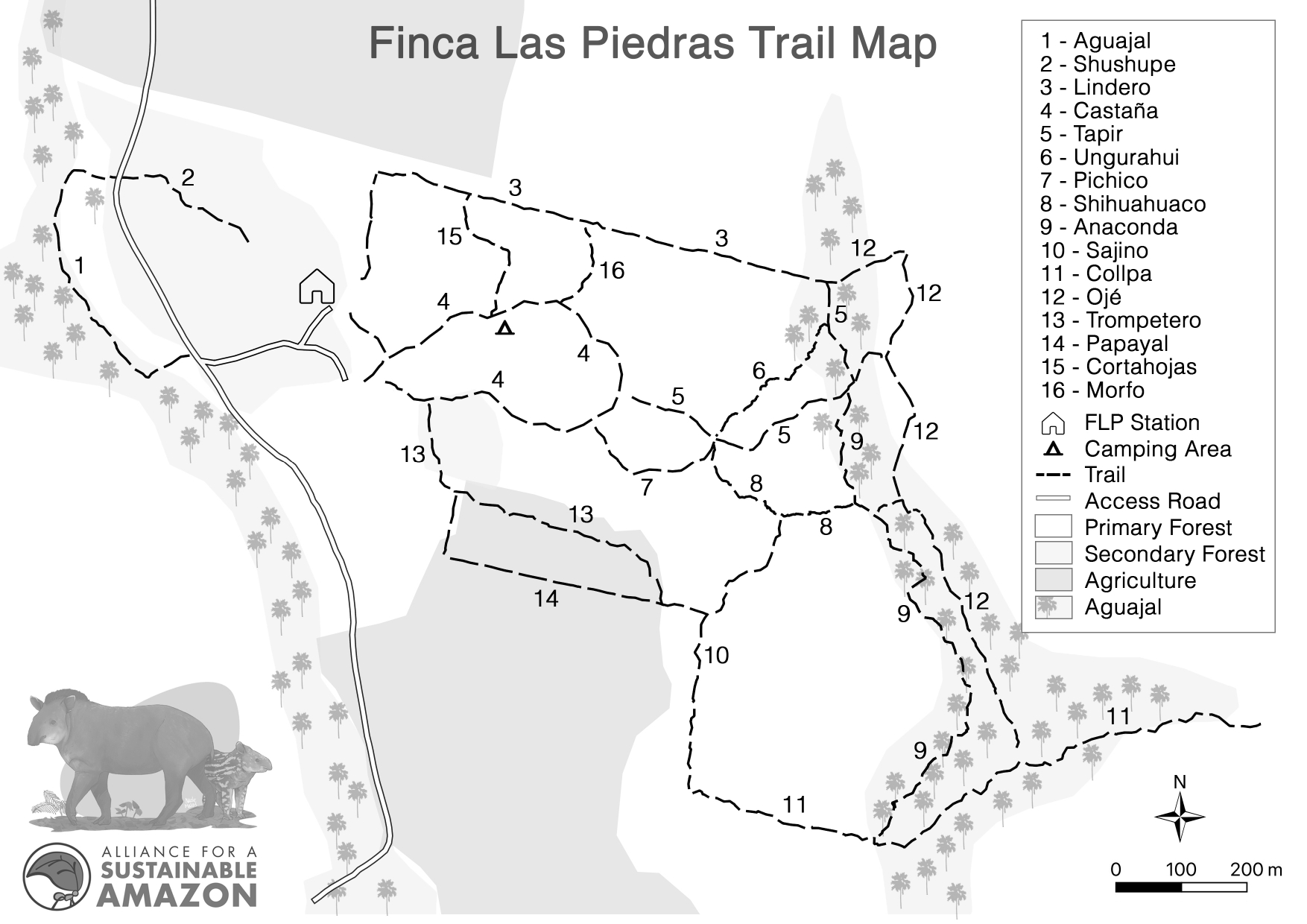
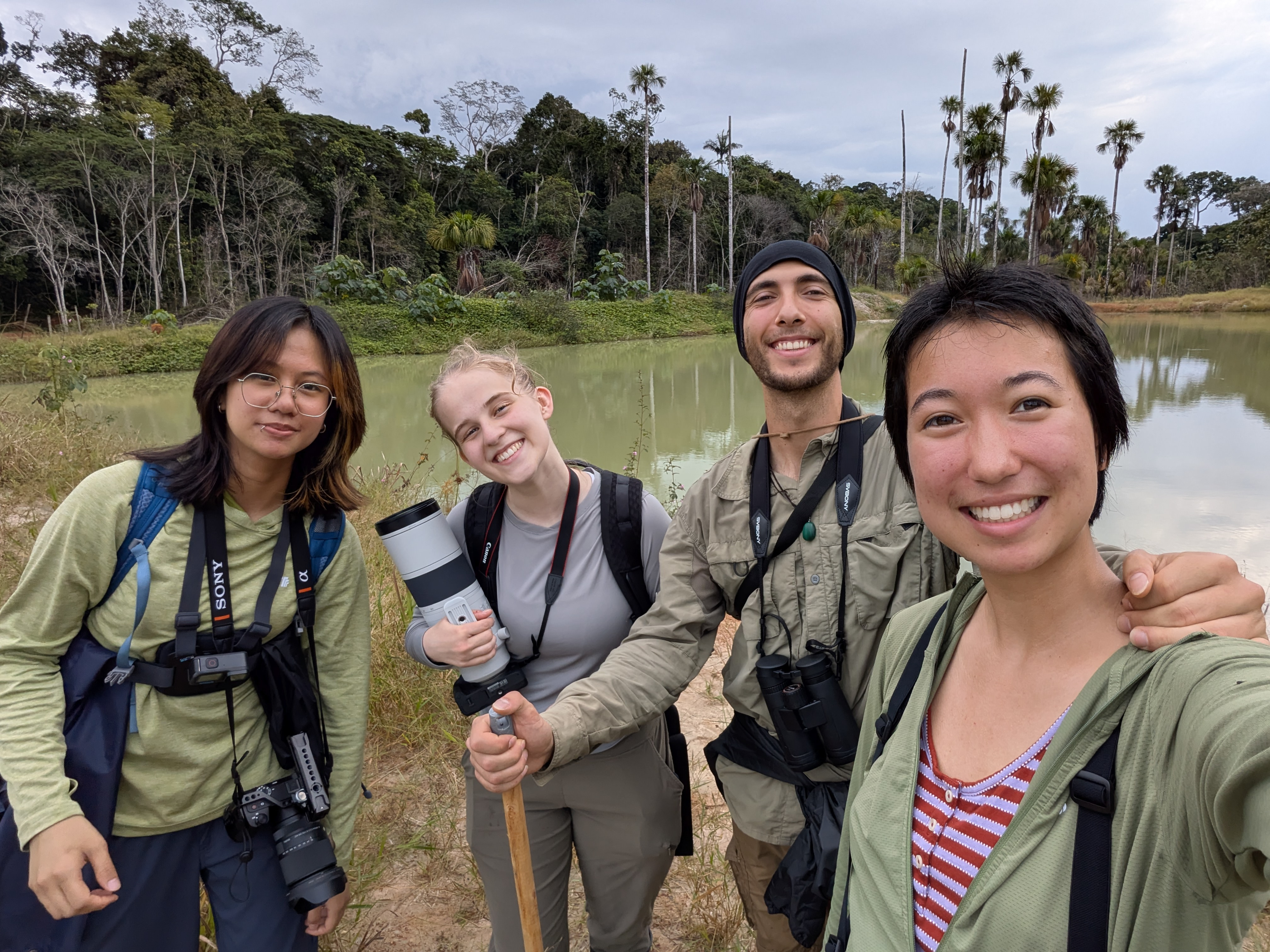
With my LiA project, I have spent the first week planning a pre-proposal and exploring the Peruvian Amazon to brainstorm more ideas about my project. The second week, I began writing my pre-proposal while attending workshops like reforestation, phenology, R studio, reading discussion, night hike, and etc. The third week was applying and testing my methodologies, tagging trees, visiting different sites, identifying young Spiked Peppers trees, and adjusting and updating my proposal after getting feedback. Moreover, I am also taking photographs of the surroundings to produce a narrative approach on nature photography.
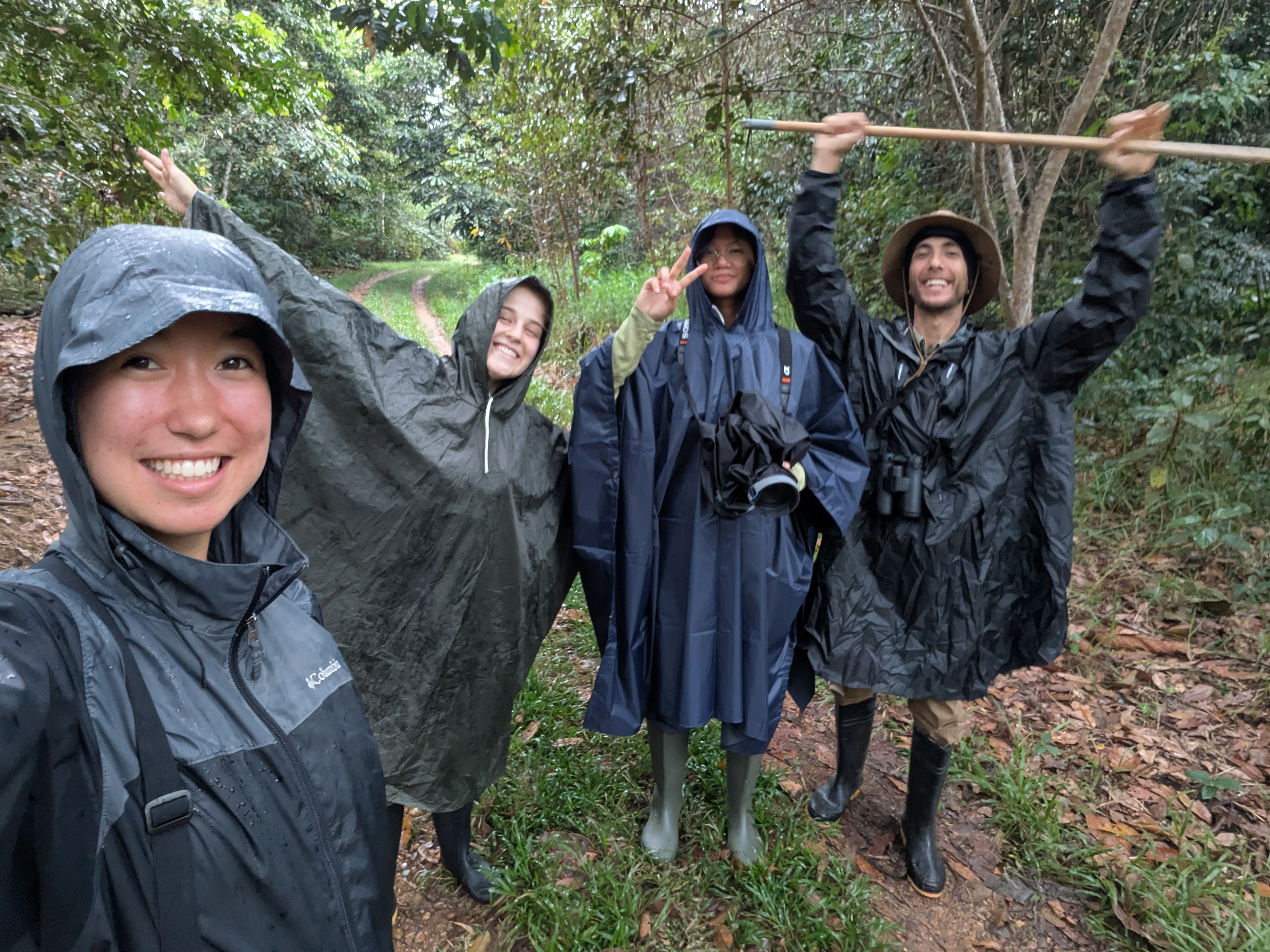
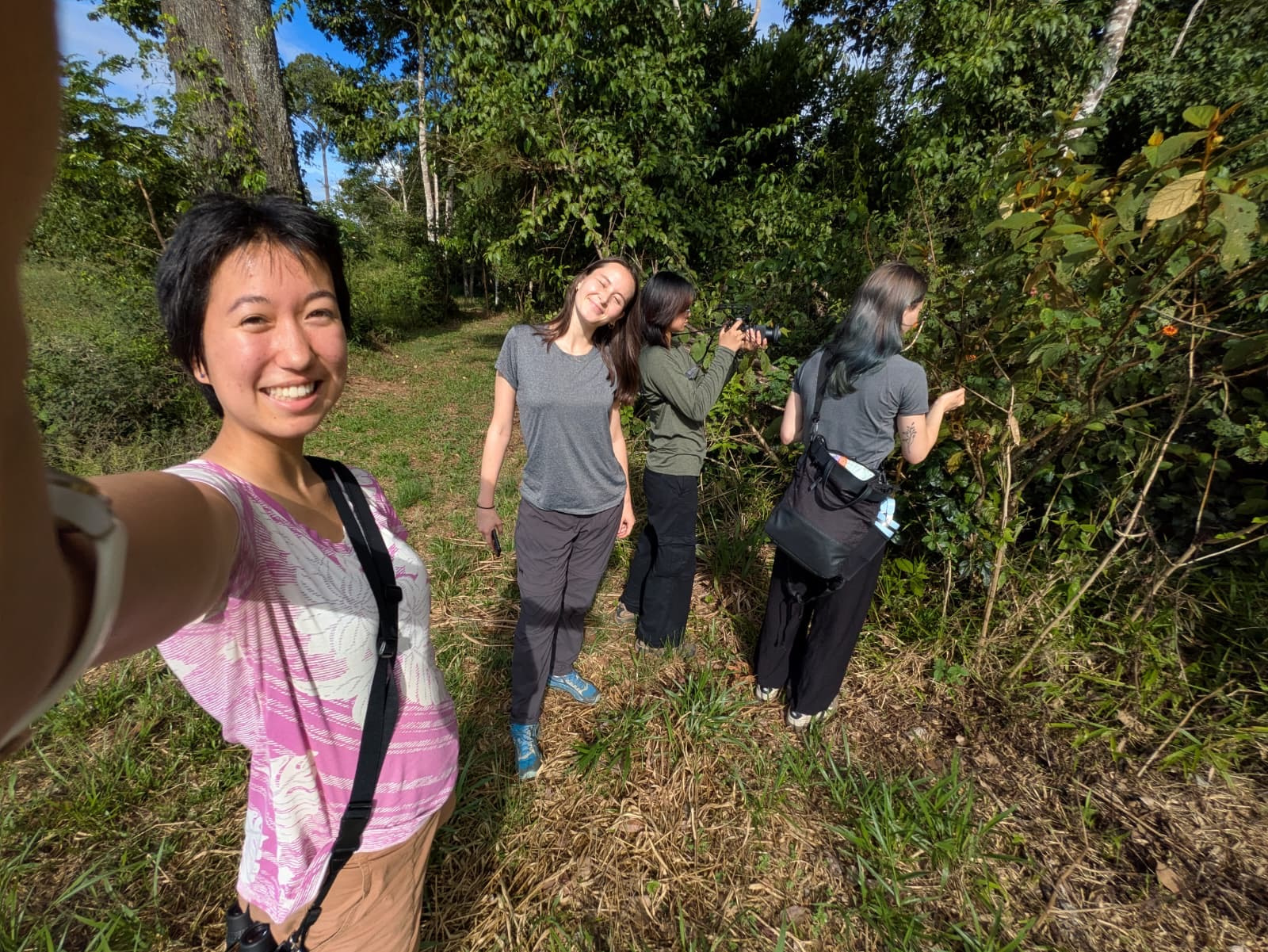
As far as living experiences go, my first week went well. Most activities were guided by professionals like walking in the Amazon rainforest in daytime and nighttime. Food was served at such a specific time. Breakfast is at 7:00 in the morning, lunch is at 1:00 in the afternoon and dinner is at 6:30 in the evening. This was one of the main surprises for me as someone who does not have a designated schedule for eating. However, I learned that having three meals a day is very important especially when the humidity is high. Another factor was that, for every building in the station no shoes are allowed and only mainly socks or bare feet are encouraged. The bathroom is also outside and lights are limited up until 8:30 in the evening, so I have to adjust my late night showers to morning or midday showers. Clothes are also washed by hand at the field station which I considered my main workout and it is also dried by the sun. Charging hours were only from 10:00 A.M. to 4 P.M. due to solar panel power limitation with sunlight behavior. Also, power and internet gets cut off at 8:30 P.M. and only opens at 8:00 A.M. This was mainly the hardest adjustment because I have to make sure to do my work that includes the internet before it shuts off. However, it allowed me to make use of my time wisely and improve time management while balancing out other activities that aren't work specific. Huge downloads like apps, videos, and any streaming apps are not allowed since it drains out the internet faster and proposes a high risk of not having internet at all. Thus, I learned that having limited resources forces us to think about what we use daily and how we can conserve without depleting others' access to such electricity, food, water, internet, etc.
Despite all the new routines and changes compared to unlimited resources I had back home in New York City, I was able to be more present with other interns, the nature, staff members of ASA and especially myself. When you have limited resources, I have realized you make sure to make something out of them like making activities with others such as birding, movie nights from people who have downloaded shows, walking trails, discovering new frogs to identify, reading, play volleyball at 4:00 P.M., and many more. The more I became present in these spaces, the more I connected with others and myself. If I were to compare myself from the beginning when I started, I would say that I became less attached to devices and more present with others. I learned to navigate research without fully relying on the internet but instead asking others and those with expertise. I feel more connected not only with others but my core values, nature, and especially myself. Moreover, the staff and directors here at ASA are knowledgeable, helpful, and can arrange any transportation, advice, and any type of assistance you may need throughout your stay. Thus, ASA has been a safe place for me to learn, connect, experiment, and enjoy my stay in Peru.