Tonga High School Rugby for All:
Building Character, Community and Girls' Rugby
Vincent Lin — Laidlaw Scholar, Cohort LL25, Trinity College Dublin
Leadership-in-Action · Summer 2
In partnership with the Tonga Rugby Union and Tonga High School, Nuku'alofa, Tonga
Local supervisor: Richie Taliauli, Tonga Rugby Union
Part II — Reflection
Lessons Learnt and Future Goals
"The best leaders are the best learners." I copied that line from Kouzes and Posner into my personal development plan in the programme's first week, beside a paragraph promising myself a particular kind of Summer 2: a project beyond my comfort zone, aimed at some tangible and lasting good. I joined Laidlaw wanting two things at once — to test myself as a leader somewhere truly unfamiliar, and to leave something real behind. I could not have known, writing it in a Trinity library, how completely Tonga would take me at my word, nor how much of the learning would turn out to be unlearning.
A year earlier, my Summer 1 research project — Numbers Under Fire — had been a solitary affair: a laptop, a spreadsheet, and the particular loneliness of debugging a stubborn model late at night. The only person I had to lead was myself, through one dead end after another, and the clearest leadership lesson of that summer came second-hand — from watching my supervisor lead me by asking questions rather than handing down answers, giving me room to make my many mistakes and stepping in only when I was truly stuck. I had noted at the time that I hadn't yet really tested myself in an unfamiliar cultural setting. Tonga was the answer, and it inverted almost every lesson of the year before: here, next to nothing turned on me alone, and the things I cared about most — whether the girls kept coming, whether the teachers kept coaching — were precisely the things I could not do for them.
When I listed my strengths in that same plan, I thought of drive, competitiveness, and a fondness for being the organiser, the one with the schedule and the stopwatch. Tonga asked me, repeatedly, to set each of them down. The country keeps time loosely — what everyone affectionately calls "island time" — and a meeting fixed for nine might (and often did) open at half past eleven, without anyone thinking it strange. Against my unforgiving deadlines I found this maddening; in hindsight it was the best teacher I had, for it prised my fingers off a control I had long mistaken for competence. The hardest stretch of the project was not the coaching but the waiting — the slow grind of approvals, the daily negotiation for a corner of one shared pitch, the evenings that ended with nothing to show but a rearranged diary. What stung was never the dent in my schedule but the stakes behind it. For me, every idle week was another week the girls had no team, and another in which the three days I had spent flying across the planet seemed to have meant nothing. There was a night I sat on the empty half of that field and asked myself, with some sincerity, what on earth I was doing there. From down on the grass, both my tidy proposal and my tidy idea of myself looked very far away.
In my plan I had set "cross-cultural empathy" as a goal, as though it were a competency to be collected. What it turned out to mean was subtler and harder. I had arrived quietly certain that punctuality was respect and that authority was earned through competence; Tonga disagreed on both counts. With the elders — in whom authority resides by age, not by argument — I learned to ask more than I told, to move slowly, and to wait to be trusted rather than presume that I was. With the girls the lesson ran the other way. Shyness is its own kind of wall, and the only way through it was to be louder and sillier than any of them — first onto the pitch, worst at every drill — so that trying badly in company might begin to feel safe. Reading which register a moment called for, mistaking it, catching myself and trying again, was the truest empathy I learned, and no amount of the weekly journalling my plan had once prescribed could have taught it.
Some of what I carried from the spreadsheet summer did translate. The habit of saying complicated things simply pitched rugby to sceptical classrooms, wrung real sessions out of seventy beginners and four rugby balls, and walked a debate team through a persuasive argument one gruelling step at a time. The Laidlaw leadership sessions, too, had handed me the vocabulary for much of this before I needed it — servant leadership, leading from behind, influence over authority — but it was Tonga that gave those phrases any tangible weight. The deeper promises of my plan came due in ways no old habit could cover. I had wanted to strengthen my teamwork — a quiet irony for someone who had spent the previous summer needing no one — and Tonga left me no choice, because the programme would live or die on hands that were not mine.
So it became a study in working with people very unlike me. Richie, my supervisor, was mostly occupied with the boys' game, but living and working beside him taught me more of Tonga than any briefing could. Three teachers picked up the whistle and have promised to keep it; the vice-principal carried the parents; and the girls, in the open minutes I left them, began to coach one another proactively. None of them were my helpers. They were the programme's future, and my real work, in the end, was the slow and deliberate art of making myself unnecessary to them.
That plan had made me one last promise — that I would grow more comfortable with failure — and Tonga delivered it with interest. I had imagined some noble and cinematic sort of failure. Instead, what arrived was three of my own objectives quietly set aside because the island had disproved them, and the daily indignity of plans that did not survive contact with reality. Letting them go — without resentment, and without lowering the bar even as I moved it — was the most useful failure of my life.
Beneath all of it ran an ethical thread that troubled me. I had promised, in writing, to lead from behind and to serve on the front line — and yet I had become the engine, designing and coaching and negotiating and building, very often alone. Was I making something that could stand on its own, or only a dependence on me? I have made an uneasy peace with the question: a pilot like this needs someone to carry it, stubbornly and imperfectly, before anyone will trust that it can stand without them, and the ethical test is not whether you do too much at the outset but whether you spend the end giving it away. So I gave it away. There was one line, though, I would not cross. Integrity was the first value I named for myself, and it is worth nothing the moment it bends to convenience — so the girls' safety stayed absolute: contact slowed to the pace of their confidence, long warm-ups, and never any live tackling on a wet or unwatched field.
So have I become the leader I described, in the future tense, that first week? Not entirely — and I distrust any reflection that ties its bow too neatly. But I am closer. I had written that success should be measured not by my own achievement but by the growth I could draw out of others; I believed it then as a sentiment, and I know it now as a discipline, learned the hard way on a half-built pitch. My motivations have not so much changed as matured: the same drive that once simply wanted to win now wants, more quietly, to build what outlasts me. I will keep helping the TRU with its database from the far side of the world. Beyond that, the shape of what I want is clear even where the detail is not — to carry what this summer taught me into whatever I do after my degree, to keep building in the places the map tends to overlook, and to be, for the scholars who come after me, a little of what my own mentors have been for me. If I have one piece of feedback for the programme, it is to put outgoing scholars in touch with those who have worked in the same part of the world before — one honest conversation about "island time" would have saved me a fortnight of frustration. Taken as a whole, across both summers, Laidlaw has done for me more than what I could have imagined. It has made me a markedly better leader than the one who applied, mostly by handing me problems I had no idea how to solve and trusting me to solve them anyway. I have thought often, these weeks, of my grandfather — the first leader I ever admired — and I think I finally understand what made him one: that the quiet work of making other people stronger outlasts anything done for applause. I did not learn that in a lecture hall. I learned it down on the grass, in Nuku'alofa.
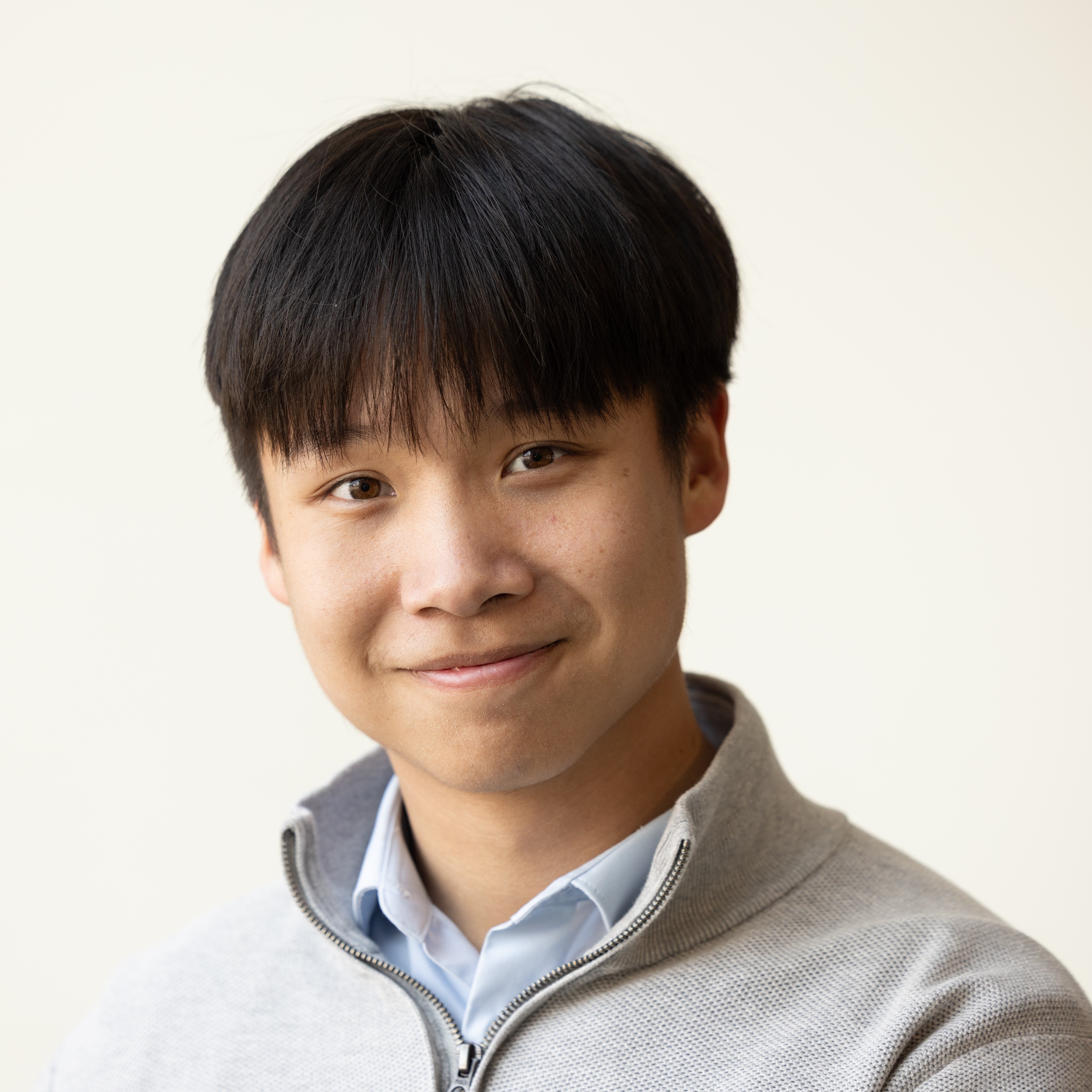
Hi! My name is Vincent and I'm a Maths/Economics student in Trinity College, Dublin.
My research interests lie in education (particularly the STEM side of things) and how to promote activities such as debating and public speaking to younger generations. As a former debater in secondary school and a massive maths nerd even now, I find that anything that combines these aspects endlessly fascinating and easy to be passionate about.
Moreover, I am a big believer in keeping up with current affairs and the state of technology in the world. I think markets and geopolitics are inextricably linked and at the centre of most meaningful things around the world such as the development of technologies like artificial intelligence.
In my spare time, I like playing rugby, going to the gym and playing card games like poker with my friends. During extended breaks, I love travelling to new places to experience different cultures and, above all, try new foods!