Tonga High School Rugby for All:
Building Character, Community and Girls' Rugby
Vincent Lin — Laidlaw Scholar, Cohort LL25, Trinity College Dublin
Leadership-in-Action · Summer 2
In partnership with the Tonga Rugby Union and Tonga High School, Nuku'alofa, Tonga
Local supervisor: Richie Taliauli, Tonga Rugby Union
Part I — The Open Door
On my first afternoon as a rugby coach in Tonga, I had planned a session for twenty or thirty girls, split into two groups based on junior and senior age grades. But on that day, over seventy turned up — in school uniform, many of them barefoot, from all six year groups, onto a corner of pitch I had spent the previous days clearing of weeds and negotiating the right to use. As they kept arriving, far more than I had cones or any real plan for, it dawned on me that the problem I had crossed the world to solve was not going to be persuading Tongan girls to play rugby.
About three weeks before I landed, the Tongan government had repealed a law that until then had barred girls in state schools from playing contact sports. In a country where rugby is closer to a national faith than a pastime, and one of the few reliable roads to a scholarship overseas, that single repeal opened a door that had been shut for decades. To walk the first state-school girls through it was, in its small way, an act of gender equality conducted in the one language the whole island already speaks. Working with the Tonga Rugby Union (TRU) and Tonga High School, I served as the architect, designer, and lead coach of the TRU's first girls' rugby programme inside a state school — a pilot meant, if effective, to become the national template. More than that, my job was to keep that door open long after I had flown home. It was the project I had promised myself on joining this programme: something outside my comfort zone, in a community I had never known, aimed at a good that would outlast my stay. The brief I had written for myself back in Dublin was ambitious and, as briefs written in Dublin tend to be, a little fictional.
Reality did the editing for me very quickly. Of the seventy or so my classroom visits had drawn in, around forty stayed the whole of my placement: a committed group training four or five times a week, settling into two main age grades, under-14 and under-16. With no spare staff and barely any equipment at first — rugby balls had to be found and cones had to be borrowed — I learned quickly to teach a crowd, turning the handful of girls who could already catch and pass into pseudo-coaches for the majority who could not (and most could not). Every session also had to satisfy three non-negotiables at once: World Rugby's safety standards, the TRU's development aims, and the bare resources of a single school, which meant that designing a suitable curriculum was the real work of those first preparatory weeks. The pathway I had set out to build — twenty girls, three sessions a week, local coaches ready to take over — the school outgrew almost before I had finished planning it. If the placement asked one thing of me again and again, it was to be adaptable: to put in far more hours than I had budgeted, and to wear far more hats than I was used to coming from Western institutions that champion specialisation above all else.
Some of what I had planned, I had to let go of — and the letting go was probably the most useful thing I did all summer. I had meant to coach the boys too, but they already had teachers, equipment, and a hundred bodies on the pitch; to spend my one pair of hands on them would have been to take from the girls who had no one. I had meant to set up a student-run social-media team, until the school's rules on pupils online made it a non-starter; and to film a piece with a well-known player, until it became clear that virtually every Tongan star is based abroad. Other promises I kept in full: the girls' pathway itself, and the coaching Playbook I had proposed — a written manual of drills, sessions and safety routines, so the programme's knowledge could not simply walk out the door on the day I did. A plan, after all, is only a hypothesis. The discipline lay in seeing quickly which parts of mine the island had disproved, and moving the freed-up hours to where they would do the most good.
More often than not, those hours went to the TRU's office. In a single week, and at no cost, I built the TRU a player-management database from scratch, replacing the handwritten, club-by-club ledgers that had made national planning nearly impossible. It holds players from age five to the professional ranks, sorted by village, club and school, and tracks those who move to clubs overseas — turning scattered paper into the kind of analytics that let a stretched body of around ten staff spend its limited money where it counts most. They hope to register a thousand players in the coming months. I also drew up the budget and paperwork for a World Rugby development grant, now working its way through the system, and taught the TRU's staff to lean on AI for the repetitive admin that had been eating their days. Outside the office and the pitch I ended up in the school anyway: helping the boys with their homework in the evenings, lending a hand to the chess team at lunch, and coaching the school's first-ever debate team to argue from first principles; They won the national senior title the next day with it a substantial cash prize, and a new chapter in the story the school tells about itself.
However, none of this happened on my effort alone and my reliance on the staff and locals could not be overstated. I have rarely been made so welcome anywhere. The school met the project halfway — a vice-principal whose door was always open, and a hundred boys who, with some negotiation and a great deal of good grace, made room on their field for sisters and classmates who had never been allowed onto it. The TRU, for its part, was a team of good people willing to take a chance on a twenty-one-year-old they had never met, arrived from quite literally the other side of the world.
All of which leaves the one question that decides whether any of this was leadership or merely effort: what happens when I leave? After a week of simply watching the programme run, I have real cause for optimism. The plan was built from the start not to depend on me, and it will, I hope, carry on through five things I am not taking with me. A vice-principal who has put the school's weight behind it and squared the parents. Four teachers who came to help, three of whom have committed to keep coaching once I am gone. Forty girls who, in the fifteen unstructured minutes I hand them at either end of training, already run their own games and rehearse old drills without me — leadership grown not from a certificate but from being trusted. The Playbook, on a shelf for anyone to pick up. And, at the TRU, a database and grant application that strengthen not one school's team but every team in the country, now in the care of Richie Taliauli, the TRU's national development manager. The first tournament is three weeks away; the girls will travel to it whether or not I am still in the country to watch — which is, in the end, the only result that ever truly mattered. I came to prop a door open. I am leaving it held by Tongan hands, and that, far more than anything with my name on it, is the part I am proudest of.
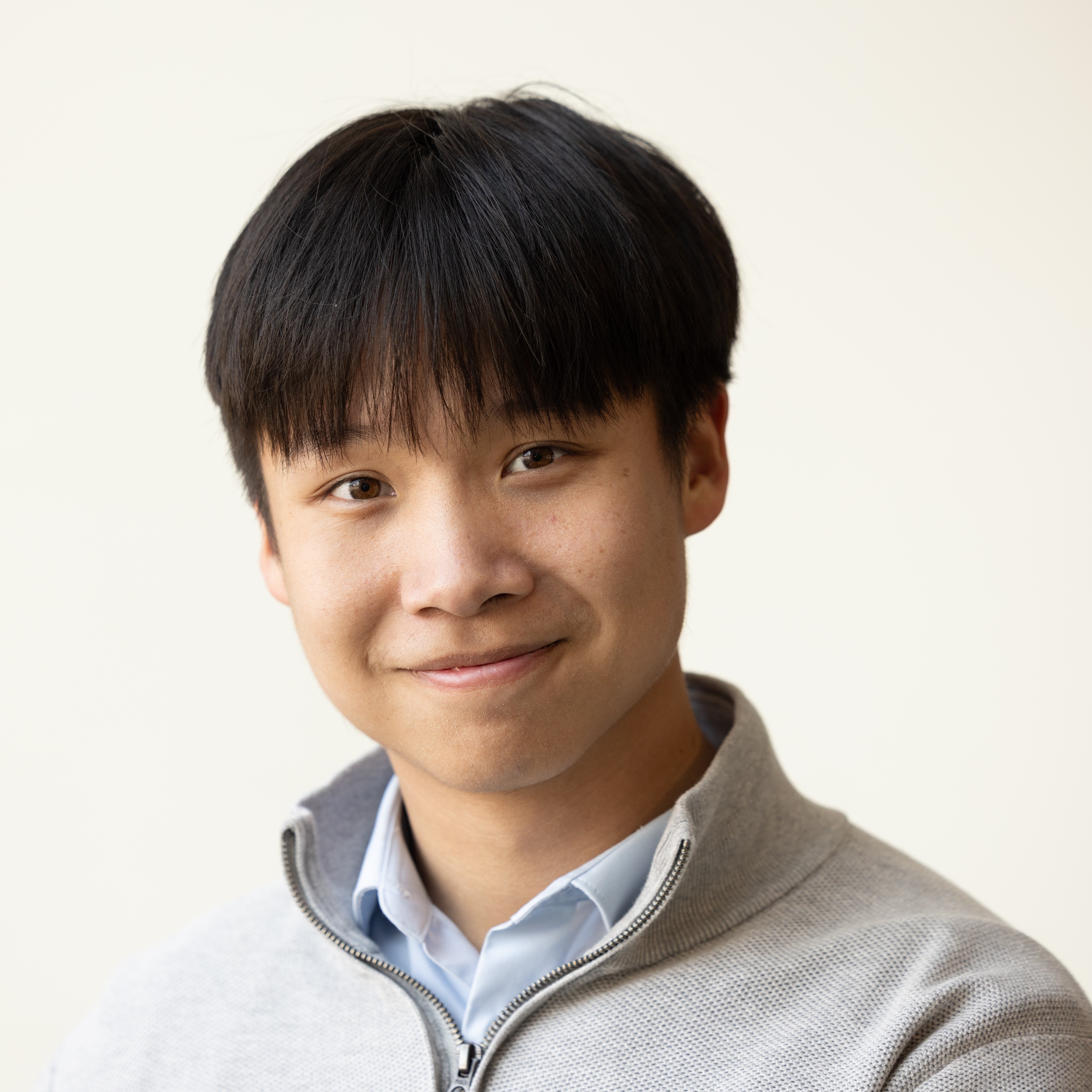
Hi! My name is Vincent and I'm a Maths/Economics student in Trinity College, Dublin.
My research interests lie in education (particularly the STEM side of things) and how to promote activities such as debating and public speaking to younger generations. As a former debater in secondary school and a massive maths nerd even now, I find that anything that combines these aspects endlessly fascinating and easy to be passionate about.
Moreover, I am a big believer in keeping up with current affairs and the state of technology in the world. I think markets and geopolitics are inextricably linked and at the centre of most meaningful things around the world such as the development of technologies like artificial intelligence.
In my spare time, I like playing rugby, going to the gym and playing card games like poker with my friends. During extended breaks, I love travelling to new places to experience different cultures and, above all, try new foods!