I arrived in Tokyo on the 25th of July 2026 with a question: Could we build Volunteers International’s first community in Japan in six weeks?
Volunteers International had already built communities across Italy, Spain and the Netherlands around a straightforward idea: bring young people together to volunteer while having fun. It was a simple value and objective that allowed the organisation to adapt fairly easily and do all sorts of different events, from helping the homeless, kids or elders, to cleaning the city, donating food or organising fundraising events. This allowed it to become one of the largest youth-led volunteering communities in Italy, and then in Europe.
Japan, however, was new territory.
The idea had emerged almost accidentally. I was already good friends with one of the leaders of the Spanish section and originally contacted him simply to ask whether he knew any organisations in Japan. One conversation became another, and somewhere along the way the question changed from “Who could I volunteer with?” to “Why don’t we try building Volunteers International here?”
The ambition was not simply to organise a few events during my six-week LIA project. We wanted to see whether the model itself could travel to the other side of the world: whether a youth-led volunteering community, developed in Europe, could take root in Tokyo and, more importantly, continue once I was gone. This would be a great school of leadership and teach me how to start something from scratch, which would be very useful for my future, as well as showing me how Japanese culture really worked from the inside.
I was not starting completely alone. I knew my friend Kaito, who quickly became central to the project. But there was no team, no established volunteer community and no network of partner organisations waiting for us.
The first challenge was obvious: find people. This would help us to complete every other step quicker.
We had already started before I landed: Kaito and I had begun recruiting mainly through the group chats of International Christian University in Tokyo. We posted introductions in student groups and then spoke individually with people who expressed an interest.
On paper, things initially looked excellent.
Within roughly two weeks, we had gathered a group of around ten to twelve young people interested in what we were trying to create. The conversations were encouraging. People liked the idea of volunteering, but also the social dimension behind it: a community where friendships and positive impact could reinforce each other.
At the same time, we were preparing our first event.
Before arriving in Japan, I had contacted Grama Seva Japan, a relatively small organisation working with people experiencing homelessness in Tokyo. Since Volunteers International had never operated in Asia, and since I had personally never led a charity event before, it seemed wiser to begin by learning from people who already knew what they were doing.
There was also a practical reason. We had enthusiasm, a group chat and a Google Form. What we did not have was a legal entity capable of collecting donations or running more complex charitable activities independently.
Enthusiasm, unfortunately, is not yet recognised as a legal structure.
After several conversations with Sarah from Grama Seva Japan, we planned our first event for Sunday morning in Yoyogi Park.
And this was my first useful lesson in community building: There is a surprisingly large distance between “Yes, I would love to volunteer!” and actually leaving your house on a Sunday morning.
The message went into the volunteers' group.
Silence.
We sent a form asking who could attend.
Some replies arrived.
Mostly “no”.
Then came the least scalable but most effective recruitment technology ever invented: personally messaging people one by one.
Eventually, four volunteers confirmed, in addition to Kaito and me.
Six people. Not bad.
But then Sunday morning arrived...
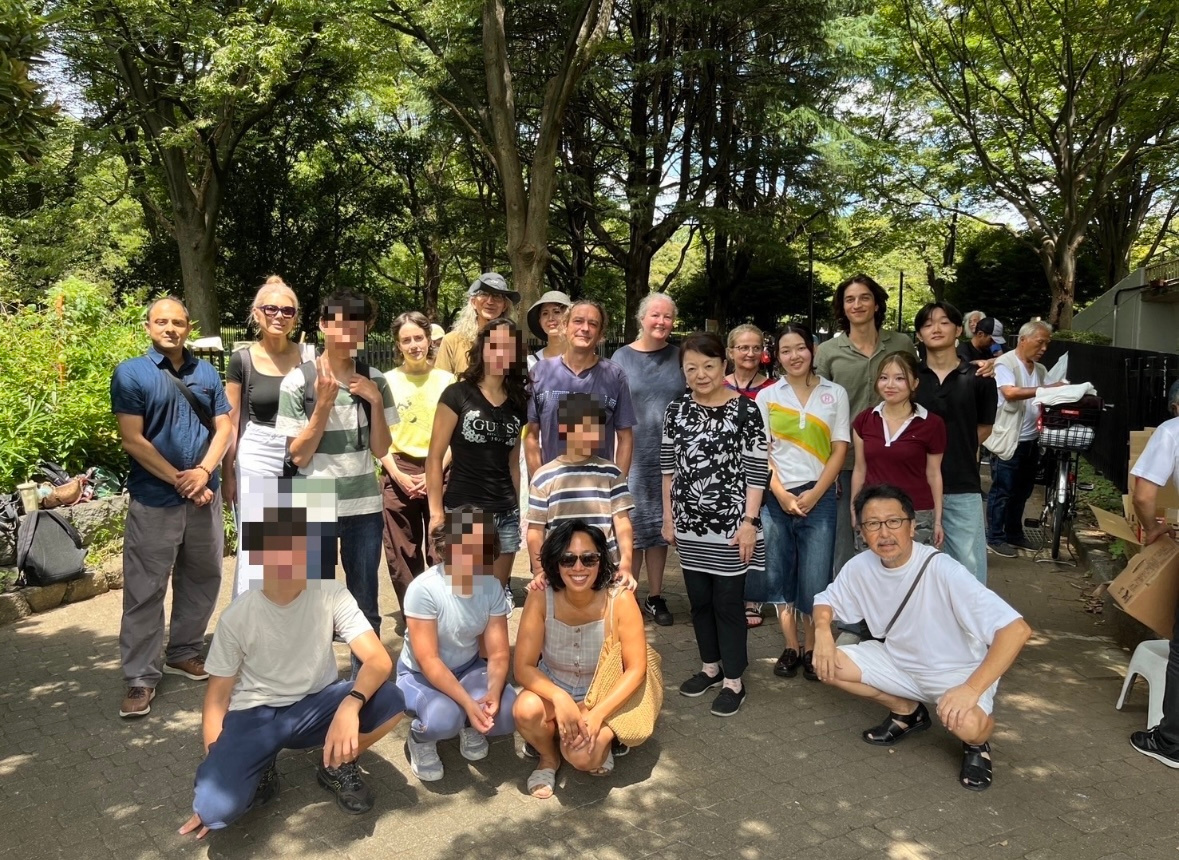
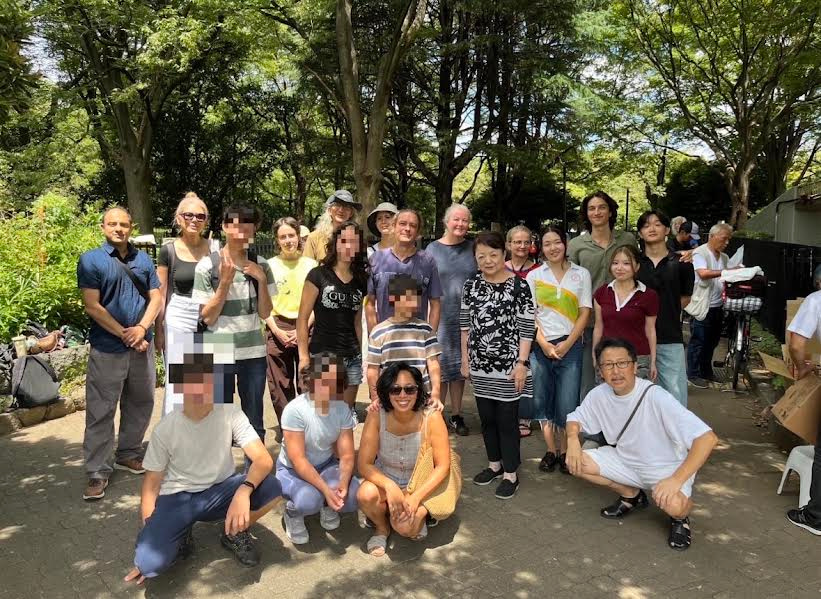
Only four of us actually showed up.
I was disappointed. Not for myself; I was worried that Grama Seva would not take us seriously, but most importantly, that the other volunteers, or Kaito, might not either. I had spent two weeks thinking about recruitment numbers, forms, interviews and group size, and suddenly the project seemed considerably smaller in real life than it had looked on my laptop.
But standing there with the people who had come made me realise that I had been measuring the wrong thing.
Ten people in a group chat are not necessarily a community.
Four people standing together in Yoyogi Park on a Sunday morning might be the beginning of one.
That morning, alongside Grama Seva's volunteers, we helped distribute more than 80 warm meals.
Sarah explained why the quality of the food mattered. A warm meal that actually tasted good was not simply calories; there was dignity in offering people something prepared with care by an actual restaurant.
That became much clearer when we started speaking with some of the people receiving the meals.
There are experiences that sound almost small when written down: seeing them bow to us, hearing them say thank you, exchanging a few words.
And yet, suddenly, whatever spreadsheet, recruitment target or organisational plan you had been obsessing over becomes secondary.
I remember leaving that morning feeling very different from when I arrived.
Partly relieved, of course: the first event had actually happened.
But also more conscious that we were not building an organisation by collecting names. We were building it through experiences people would want to return to.
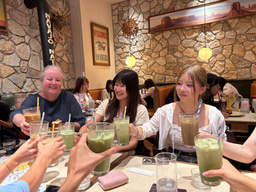
So after the event, we went for coffee.
It was hardly revolutionary community-building theory, but it worked.
We talked, laughed, reflected on the morning and started discussing what we could do next. I was glad: the volunteers seemed to actually have enjoyed the event, and Grama Seva was taking us into consideration. The volunteering event had created the reason to meet; the coffee afterwards started creating the relationships.
And perhaps that distinction matters.
If Volunteers Japan was going to survive beyond my six weeks in Tokyo, people could not simply feel committed to the cause. They had to feel connected to each other.
By the end of those first two weeks, we had something very small.
A handful of volunteers.
One event.
One partner organisation.
And absolutely no certainty that any of it would work.
But it existed.
For the first time, Volunteers Japan was no longer an idea I was explaining to people.
It was something people had actually shown up for.
The next challenge was considerably harder: understanding the country in which we were trying to build it.
Because recruiting four people in Tokyo had already taught me something useful. Building a community in Japan was going to require much more than translating a European model into Japanese.