LiA Final Reflection

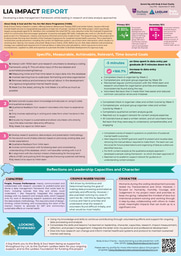
Please see my LiA impact report here for more information! https://laidlawscholars.network/documents/lia-impact-report-data-management-and-research-analysis-on-the-longitudinal-benefits-of-body-soul-s-you-are-not-alone-programme
Who am I becoming as a leader?
Before the Laidlaw Scholarship, in general, I would not have considered myself a good enough leader or adopt the wider framework of leadership that global influential leaders hold. My understanding and adoption of leadership went as far as teamwork within a classroom group setting. I previously held a simplified image of leadership – the strong head of a group who knows exactly what to do and delegate to each person in the team. However, as I went to university and through my journey as a Laidlaw Scholar, I now hold a profound lesson that a leader can take shape in many forms. Most importantly, all ethical, good, leaders hold at least one thing true – listening to the people they serve, representing all voices so no one is unheard, and acting accordingly with a critical, creative, and practical mindset. Having done my LiA, leadership in practice had a colourful palette of moments spanning struggle, epiphany, confusion, small and significant successful impacts, failure, worry, and constant communication. I appreciate that this is what most influential and good leaders go through. I learned that leadership can also look quiet, in collaboration, facilitating, and supportive most of the time as well. Across my LiA I feel this is often times where the most meaningful work happens – an integration of a leader’s facilitative role and expertise, with the people’s voices, ideas, and abilities.
Reflecting back, my leadership in classroom teamwork – recognising people’s strengths, concerns and collaboratively planning a project accordingly – was the beginning of a leadership journey. I am deeply grateful to the Laidlaw Foundation for such a profound opportunity to stretch my abilities to manage an impactful project that has sustainable and real-world outcomes.
Character
Leadership in my project also involved way more collaboration with the people I’m serving than I thought. Working and planning a strategy together touches on the root needs and issues that needed to be addressed. A piece of feedback from the volunteer I worked with has stuck with me: “I always thought things could be done in a more organised way in the back of my mind, but I always went with the things they are, because I could live with it, and also because I’m just a volunteer. This is so much better, thank you so much.”* Thus, I learned a valuable lesson that leadership didn’t always mean delegating and telling people what to do. Still, it also meant really listening to needs and concerns, facilitating a conversation that needed to be had, and actions that needed to be done. Through collaboration, ideas can be developed, errors can be collectively addressed, and impact can be tangible.
I was stretched in Character that I considered to be my strengths. I consider myself adaptive, but I occasionally value preparation in advance when it comes to completely new situations. I was stretched in my flexibility and adaptability to last-minute notices and changes, and limited communication with the team during a week in my LiA. These things understandably happen in a busy mental health charity providing service to high-risk members. I felt grateful I got to experience what it’s like to be in a work-place providing holistic and revolutionary suicide prevention service, and what it takes to stay organised, supportive, attentive, and professional.
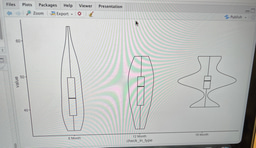
Personally, I felt challenged in navigating R programming and learning how to code – something I have never imagined touching and actively avoided before my Laidlaw Scholarship. However, I saw the incredible benefits of learning it for efficient data processing and analysis with my research supervisor, Professor Tuomas Eerola, in my year 1 research summer project. I was determined to make this happen for Body & Soul, as the manual labour they’ve been doing to clean up and process data felt like it was taking time and energy away from developing such a meaningful and impactful study for sustainable mental healthcare. I tapped into my innate curiosity more than ever before, and embarked on learning something that initially felt too big to grasp. There were many times I felt uncertainty I’d be able to learn and apply coding on time, and leading with this feeling took tapping into drive, humility, courage, temperance, and transcendence to boost up motivation, yet patience. Through this I broke down an ambitious project to small, manageable tasks and steps I could take that could build up to the impact I wanted to make. It also felt especially important to maintain communication with the people I’m working for to think critically, set priorities and strategise to make a sustainable impact by the end of 6 weeks. In the end, tackling this challenge with haste and courage felt like one of my biggest achievements.
*Quote is not word for word, but captures the description and essence of what the volunteer communicated
Change Maker Values
I felt Ambitious, Determined, and Extraordinary guided my ideas, but Fast, Curious, and Good helped polish my decisions and make them realistic and impactful. Thus, there were oftentimes tensions between them. Weekly reflection helped to notice and navigate those tensions, and notice my next small steps towards achieving my ambitious ideas.
In practice, this looked like having an idea or outcome I wanted to achieve with R – which was a cleaned-up dataset that the research volunteers can input data as efficiently as possible. I eliminated the impossible – It was not possible under my knowledge-base and resources for data from another survey to be automatically entered into the database. Then, I tapped into what could quickly be achievable, but make a small impact – In my observations and communication with the research volunteers, I identified the repetitive manual steps that could be automated with basic coding and make a small impact. This eventually built up to sustainable impact, which is providing comprehensive tutorials for running the basic code that got rid of tedious and error-prone manual labour. As my proficiency in R progressed throughout, I was able to go beyond my SMART goals and eliminate the manual labour required to process data for data visualisation.
Capacities
I had a strong baseline in the People capacity to begin with. I enjoy collaboration, communicating, and listening to people when it comes to working on something together. However, through the LiA, this has gone through sophisticated development and profound integration with the capacities Process and Performance. People acted as a bridge between the core database that the researchers deal with and the wider research project and study. In this project, my experiences with People have evolved my Process capacities – project management, critical thinking, prioritisation, and time management, impact measurement, problem-solving, as well as creative ideation, strategy, and vision in Performance.
I believe Process still needs more work, as there are times I tend to act on a certain code and I look back and realise I missed something, and more time is spent on re-doing the code to make up for the mistake. I understand this is a natural part of project development. I feel that if I incorporated more critical thinking and progress-tracking, including organisation of my notes from communicating with the team members and research volunteers, I would have a better internalised overall picture of what needs to be done. I felt I noticed this and had a better grasp towards the end; however, I know I can implement this from the start in future personal and professional pursuits.
Developing a Global Mindset
Body & Soul Charity’s You Are Not Alone (YANA) Programme specifically targets young people (16-35 years old) at high risk of suicide, many of whom are underrepresented in the local community around London (i.e., ethnic minorities, neurodivergent, LGBTQIA+, and those with complex trauma). My prior understanding about wider mental health challenges the limits of the mental healthcare system were based on word-of-mouth, literature, statistics, and news. Most of which were about the long waiting lists in the United Kingdom (UK)’s NHS, the rigid and short-term nature of mental health intervention, and the overwhelming rise in suicide rates amidst rising socioeconomic issues and adverse experiences. Having interacted with both individualised quantitative and qualitative data on the members’/graduates’ development in their mental health journey throughout the programme has deepened my understanding about the unique barriers and challenges underrepresented people in the UK face in coping with adverse experiences and maintain mental well-being. I’ve developed more appreciation for the value of longitudinal research for pushing forward the implementation of DBT, trauma-informed practice, and community-based long-term support for sustaining mental well-being for people across the UK. Being at community night and directly interacting with the graduates was meaningful to directly experience the profound and valuable impact of community for the graduates’ implementation of DBT skills, Life Worth Living Goals. and maintain well-being.
I originally felt there is much more to understand about mental health having been from Hong Kong where mental health, culturally, isn’t talked about much in the wider community, and only having an academic background in psychology and mental health. This LiA experience has deepened my ability to understand unique experiences in coping with mental health challenges, and the importance of holistic healing. I strive to advocate and increase the evidence base for such holistic practices and integrate them with the current protocol-heavy, structured intervention in the NHS – contributing to making interventions with long-term benefits more accessible.
Global citizenship to me not only means being open and curious about all sorts of cultures and backgrounds, but it means exposing yourself to understand as many experiences as possible, especially those you don’t particularly understand much about. This also includes the challenges underrepresented people may face in day-to-day life. Mental health difficulties is a universal challenge that anyone in the globe can experience, and can transcend identity and national borders. I believe the only difference is how it is expressed and treated depending on cultural differences and beliefs. Body & Soul’s individualistic and holistic model has deepened my appreciation for a trauma-informed practice that focuses on what happened to the individual, rather than the pathology. I strive to keep this mindset in my heart as I pursue future efforts in mental healthcare.
Hi there! I'm an incoming 3rd year BSc Psychology student at Durham University.
The question "why does sad music help us feel better sometimes?" sums up my first year research project. I investigated how international students interact with music to make themselves feel better in different contexts. It is important to investigate cross-culturally as our world becomes more globalised. Moreover, I believe music can transcend geographical and cultural boundaries, as it seems to have such a profound effect on everyone, regardless of where they’re from. Not only may music connect us all, but it can also connect us with ourselves.
For my Leadership-in Action I worked on Body & Soul Charity's You Are Not Alone (YANA) research project: Evaluating the longitudinal effectiveness of Group Dialectic Behavioural Therapy and ongoing trauma-informed community support for young people aged 16-35 at high risk of suicide. I formed a data management framework to automate data entry with R and made the corresponding tutorials for research volunteers.
Ultimately, my involvement in mental health research builds onto my future career aspirations; I aim to be a Clinical Psychologist while encouraging the integration of arts and culture into mental health interventions.
I'm deeply interested in the interdisciplinary nature of music and psychology; however, I’m also excited to hear how other academic disciplines may interact and merge. Likewise, I enjoy multiple hobbies like playing the piano and ukulele, singing, cooking, crocheting, and reading. I think being a nerd about your interests is really cool, so if you’re like-minded, I’d love to chat with you!