LIA Field Journal Week 3
This week, I spent two days at the United Nations Development Programme’s (UNDP) Annual Meeting on the Rule of Law and Human Rights. Hence, while our given LSN assignment for this week was to discuss our typical work day -- this week has been so exciting, so eye-opening, and so out of the ordinary -- that I am choosing to dedicate my post to the new perspective, connections, and knowledge I gained at this conference instead! Stay tuned for next week for an in-depth description of my daily routine :)
The UNDP Annual Meeting consisted of a series of topic-specific panels/discussions comprised of expert/in-country speakers. Unfortunately, the UNDP coincided with another important panel, the Commission on Crime Prevention and Criminal Justice (CCPCJ), hosted in Vienna by a different UN body, and so my direct boss and the ILF’s Executive Director were unable to come to the UNDP Annual meeting. Luckily, however, this meant that I, Samuel (a fellow Laidlaw Scholar), Penny, and Arooj were able to attend the conference as their proxies! Here are some pictures of us at the events:
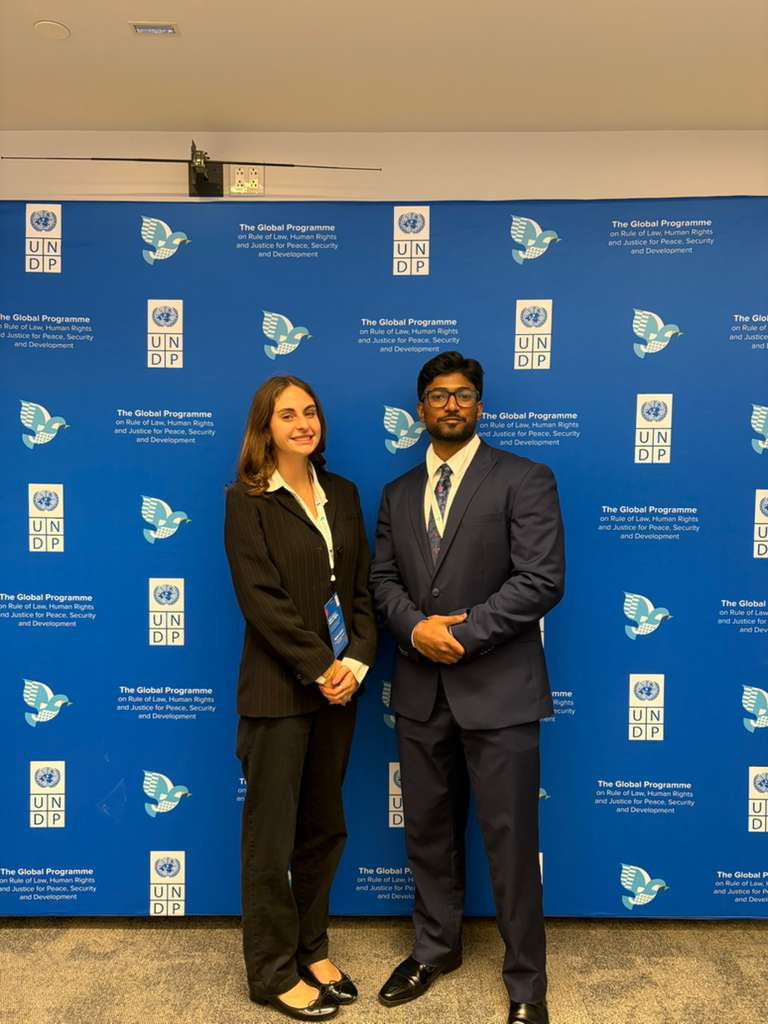
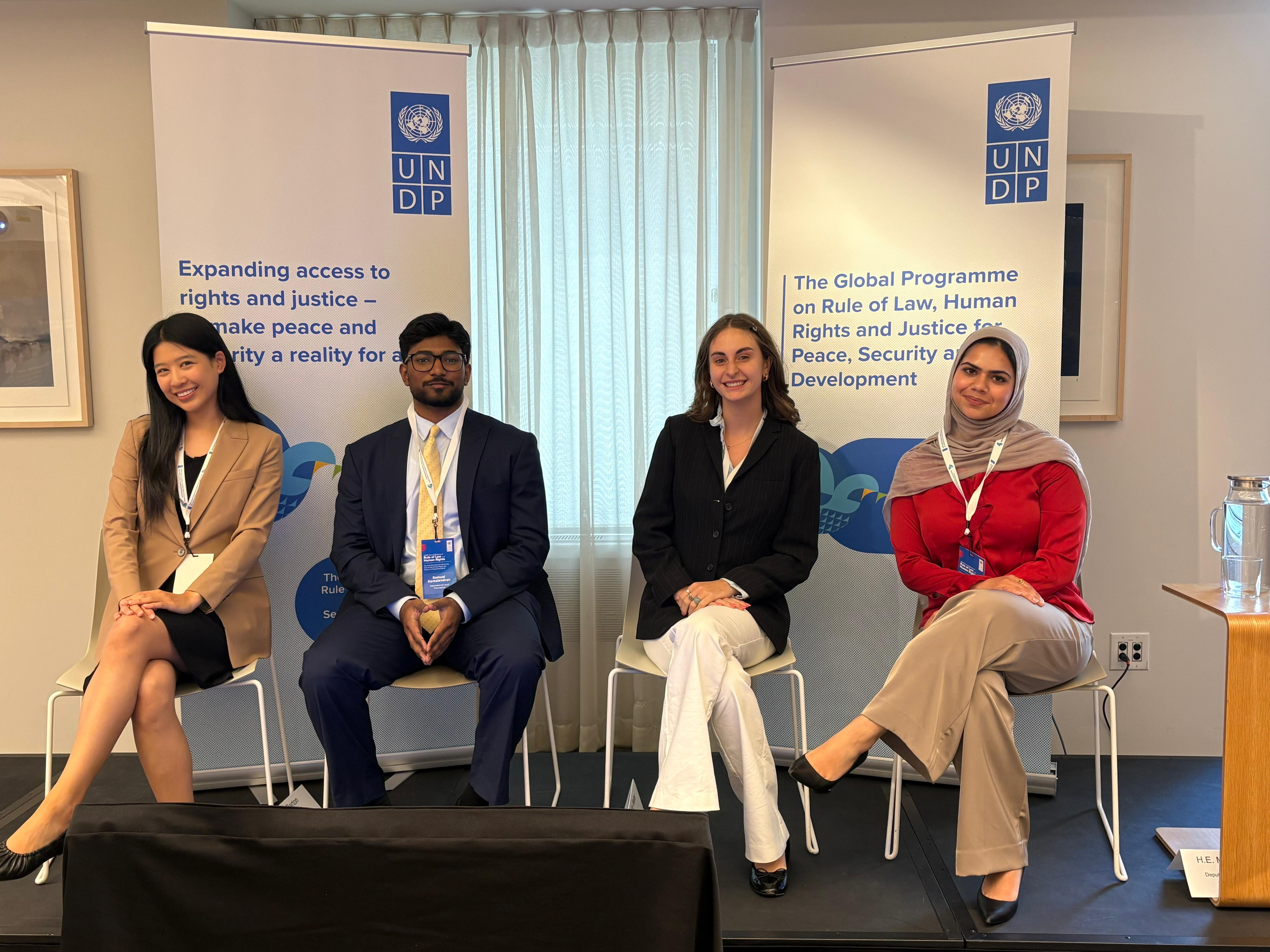
Each day of the conferences, there were three to four panels totaling 7 riveting discussions from speakers from all across the world. Three sessions particularly stood out to me, and so, I wanted to describe them in detail.
On Day 1, the most profound panel to me discussed violence, justice, and peace in Lebanon, a country facing ongoing conflict. For this conversation, H.E Adel Nissar, Minister of Justice of the Lebanese Republic, spoke alongside a member of the Lebanese parliament and other UNDP regional experts. This conversation used the case of Lebanon to describe how government, civil society, and NGO’s can and must create partnerships and come together as one community to ensure justice is upheld in wartime. With an interest in Middle Eastern politics and problem-solving, this conversation allowed me to broaden my scope away from merely news coverage of geopolitical conflict into the collaborative coalitions that are maintaining and defending human rights even in trying times. Such insight is helping me to explore beyond the headlines and more deeply understand the underlying institutional protections (and lack thereof) that exist, or need to be created!
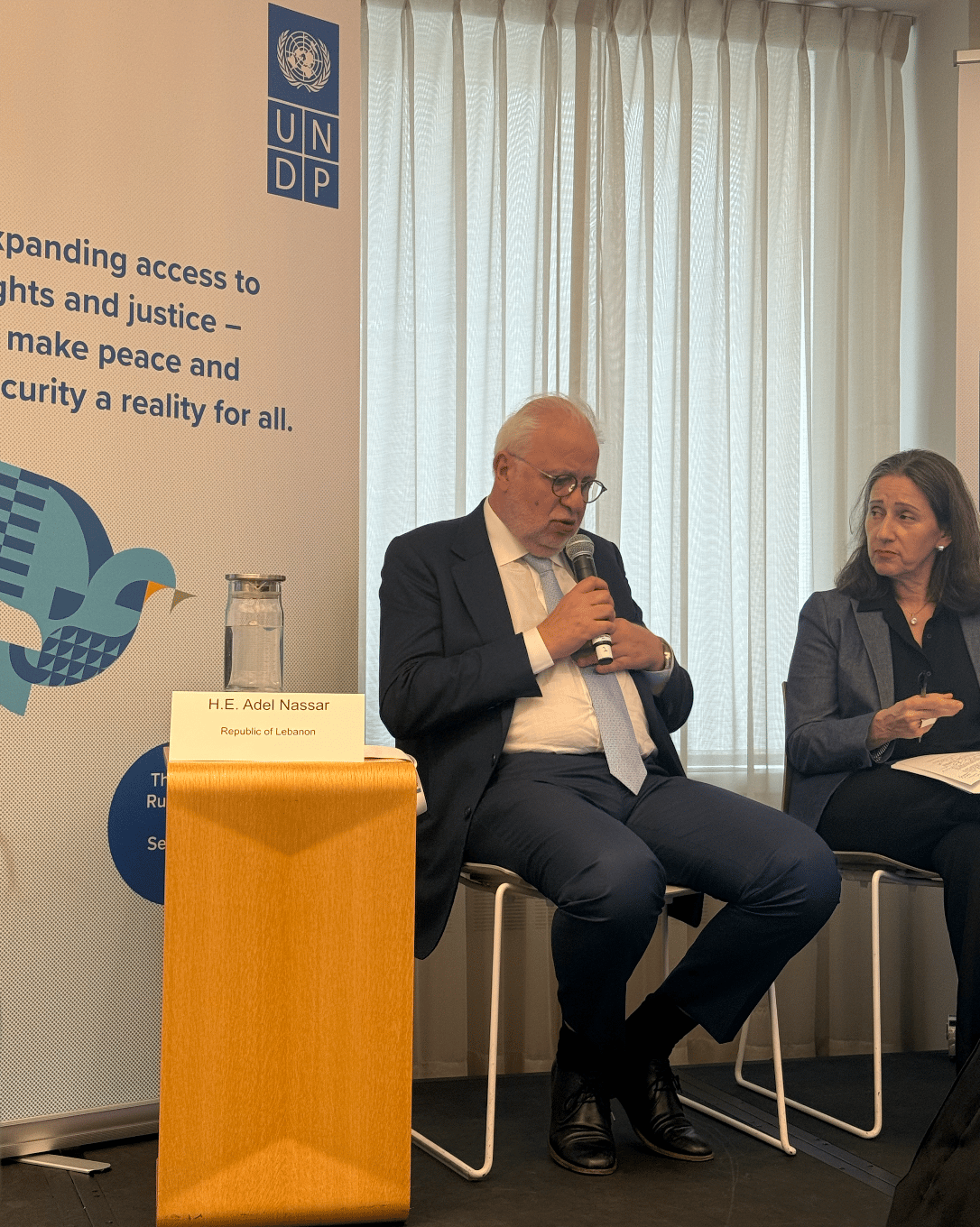
(Here is a picture of H.E Adel Nassar speaking)
Day 2 included two panels, which similarly left me enlightened. The first pertained to business interests in securing peace and featured an array of panelists, including law professors, community advocates, and sustainable investors, all of whom were exploring how the private sector can step up -- especially in developing nations -- to protect the rule of law. Having worked at a sustainability-focused venture capital firm for over 6 months, this panel interested me as I am increasingly interested in discovering how the public and private sectors can work together to create just outcomes! Secondly, the final panel of the conference contained speakers from Nigeria, Japan, and South Africa, as well as UNDP consultants and non-profit leaders, to discuss gender discrimination and its impact on justice and peace. Much of this talk reflected ongoing efforts relating to Women, Peace, and Security (WPS), an issue within international relations that has inspired me to pursue a graduate degree at Columbia SIPA. I made wonderful connections with the speakers on this panel and plan to keep in touch with many of them going forward, to continue learning as we navigate a tumultuous time for gender equity in IR.
This final point brings me to perhaps the most rewarding takeaway from this conference: the people. In choosing to attend an unrequired networking session, I was able to connect with various UNDP affiliates, members of the UNDP, and other UN missions, diplomats, in-country UN specialists, consultants to foreign governments, governmental leaders, lawyers, professors, academics, AND MORE. Meeting all of these people and sharing conversations with them about their everyday world reaffirms my commitment to a career in international policymaking and diplomacy -- and reinstates my eagerness to continue to widen my perspective, welcoming new world-views and career paths to help form my own. 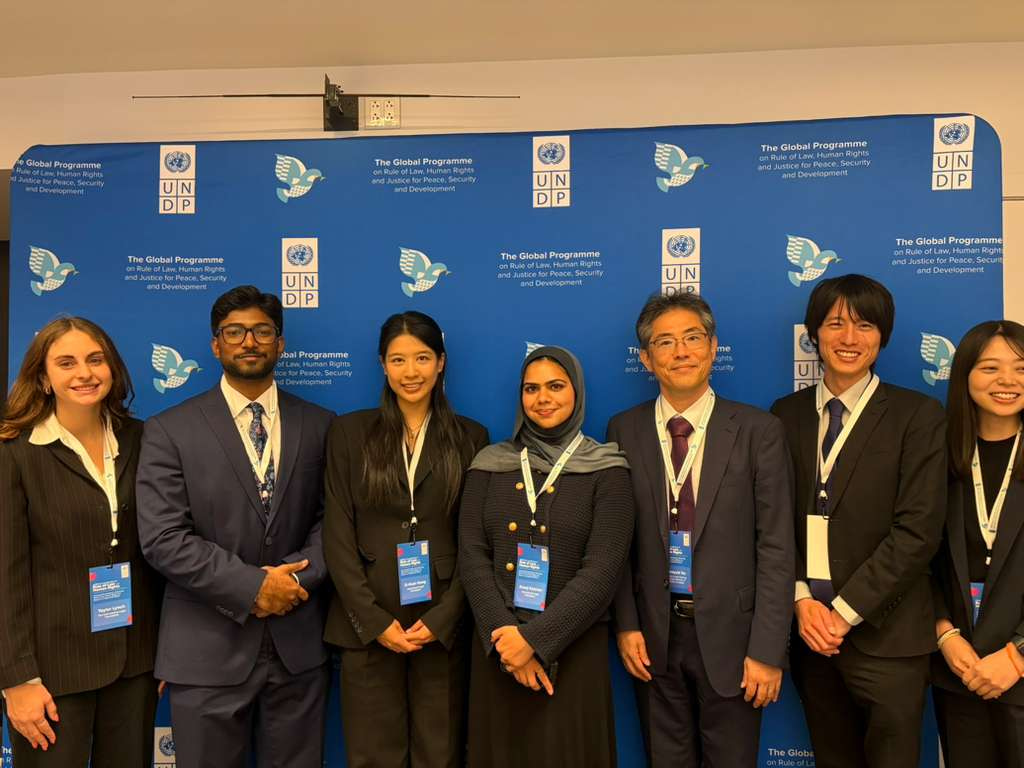
(Here is my ILF cohort among several UN Delegations!)