LiA 2026: Explaining science to the people it leaves out

The problem
Ask a seventeen-year-old what a bacteriophage is and you will probably get a blank look. Ask them what antimicrobial resistance could mean for their lifetime, or why cultivated meat has been banned in several US states, and you will likely get the same. Young people are curious about science. Very little of it is written for them.
Most science writing comes in one of two forms. At one end are research papers and specialist journalism, written by experts for experts. At the other are headlines and short social media clips that report a result with no context and no sense of how it came about. The space in between, longform writing that is accurate, readable and honest about what we still don't know, exists mainly in magazines aimed at older readers who are already engaged. A young adult who is interested in science but not studying it has very few places to go.
That gap matters. Today's young adults will vote on, pay for and be treated with the technologies emerging now: gene therapies, engineered immune cells, lab-grown food, and whatever replaces the antibiotics that are gradually failing. If the only science they encounter is either impenetrable or reduced to a headline, they are poorly placed to take part in those decisions.
There is a second, sharper version of the same problem, and it affects the youngest audience of all. Advanced therapies such as CAR-T cell therapy are among the most complex treatments medicine has ever produced. A child who starts CAR-T faces weeks of unfamiliar procedures: having their blood cells collected, days of preparatory medicine, an infusion, and a period of close monitoring for fevers and exhaustion. Most of the explanatory material that exists is written for parents and clinicians. The child's friends, who simply notice an empty chair at school, get nothing at all.
My Learning in Action project asked one question: can the stories behind science be told in a way that the people it usually leaves out actually want to read? I tried to answer it with two outputs, one for each end of that audience.
Where I went, and why
My LIA had a split structure. I spent the in-person part of it in Barcelona, at Hospital Sant Joan de Déu's Advanced Therapies Platform, followed by time at Great Ormond Street Hospital and UCL's Advanced Centre for Cell and Gene Therapy in London. Both the Barcelona and GOSH placements focused on patient access strategy: the work of getting new therapies from the laboratory to the patients who need them.
Barcelona was a deliberate choice. The city has become one of Europe's centres for CAR-T. In February 2021, ARI-0001, a CAR-T therapy developed at Hospital Clínic de Barcelona, was authorised by the Spanish medicines agency under the hospital exemption pathway, making it the first CAR-T developed entirely in Europe to be approved by a regulatory agency. Sant Joan de Déu itself is one of the five largest paediatric university hospitals in Europe by number of children treated, seeing around 160,000 patients a year. It is a place where the question of how you explain an advanced therapy to a seven-year-old is not theoretical. It comes up every week.
Working alongside the strategy and patient access team changed how I thought about access. It is usually discussed in terms of money, regulation and manufacturing capacity, and all of those matter. But a therapy is also harder to reach if the patient and the people around them don't understand what is happening. Explanation is part of access.
I also chose Spain for a more personal reason. I wanted to work partly in a language I was not confident in. Receiving complex information in a language you only half command turned out to be a useful lesson for a science communication project: I spent a good part of my time on the receiving end of the exact comprehension gap I was trying to close.
Alongside the placement, I carried out my own research for the writing side of the project, in London and in Spain. I spoke to people working in the relevant fields and used the libraries in Barcelona, Girona and Valencia to work through the historical and scientific sources behind each article.
Output one: Subcultured
The first output is Subcultured, a longform science publication I launched on Substack for readers aged roughly 18 and over. It publishes one article a week, every Thursday, and is promoted through an Instagram account, @subcultured.mag, which turns each piece into short visual posts that point readers back to the full article. I developed the editorial approach with guidance from my Laidlaw editorial mentor, Dr Sunny Bains.
Every article follows the same principles. It opens with a scene rather than a summary, because people remember stories long after they forget facts. It explains the science in plain language, without assuming the reader has studied it. It follows the human story behind the discovery, including the mistakes, rivalries and ethical problems that textbooks leave out. It ends on an open question rather than a neat conclusion. And it lists its primary sources in full, so a curious reader can check everything and go further.
I have written five articles so far, each chosen because it connects a piece of scientific history to a problem young people will inherit.
The Guinea Pig Club tells the stories of four scientists who tested their ideas on their own bodies: Werner Forssmann, who threaded a catheter into his own heart in 1929; Albert Hofmann and his accidental discovery of LSD; John Paul Stapp, who rode a rocket sled to 632 miles per hour to prove the human body could survive far more force than engineers assumed; and Barry Marshall, who drank a beaker of bacteria to prove that stomach ulcers were an infection. It asks what modern research ethics rightly prevents, and what good ideas might be stuck in the system today.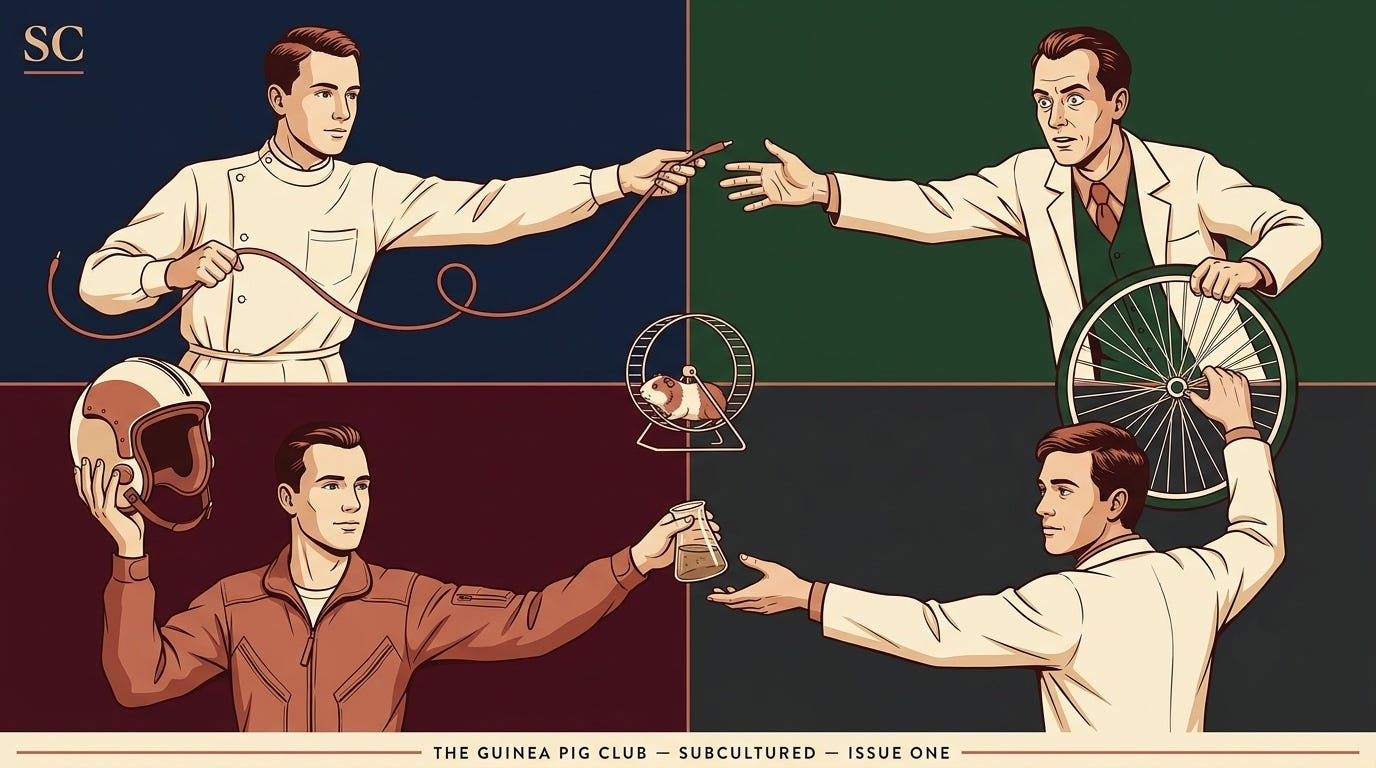
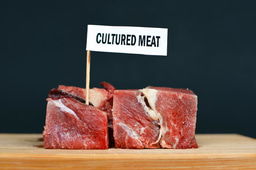
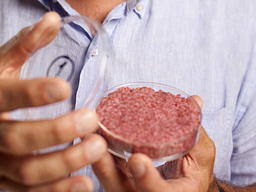
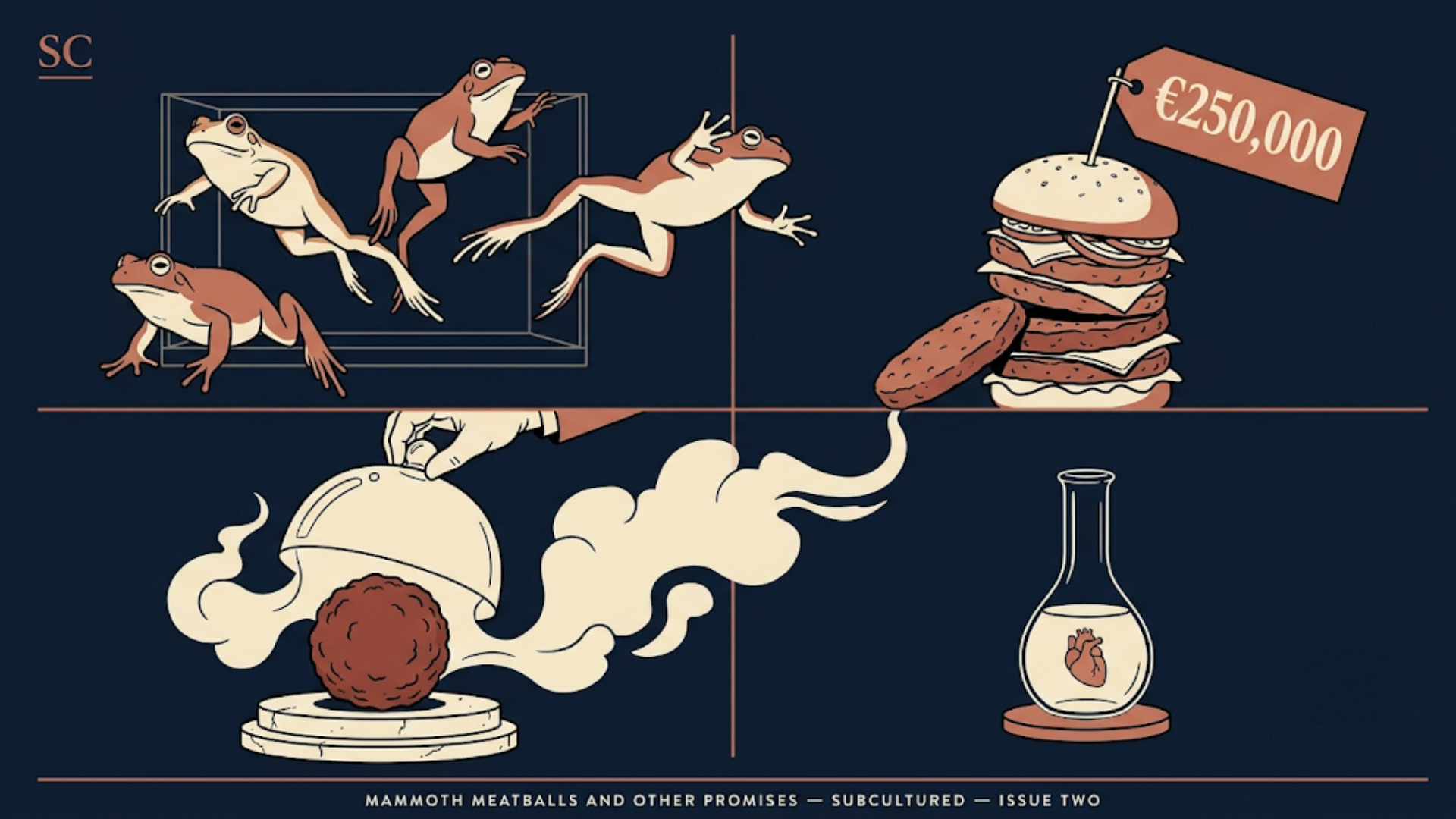
Mammoth Meatballs and Other Promises follows a century of attempts to grow meat in a laboratory, from a disastrous frog dinner in Nantes in 2003 to the €250,000 burger of 2013, the collapse of investment after 2021, and the second wave of companies now producing cultivated meat at a fraction of the earlier cost. It sets the environmental promise against the economic and political reality, including the bans now spreading across US states and parts of Europe.
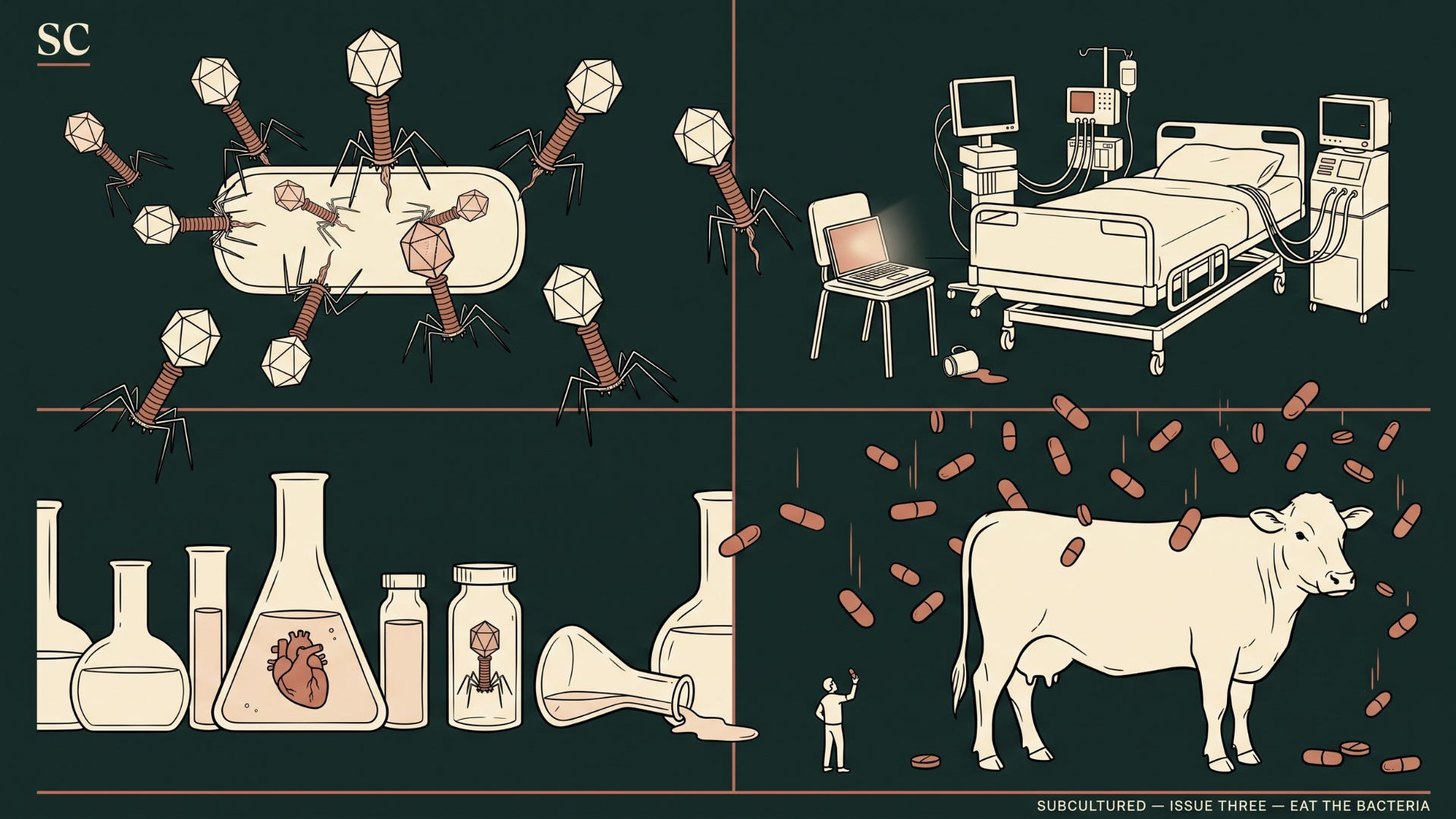
Eat the Bacteria covers phage therapy: the use of viruses that kill bacteria. Discovered in Paris in 1917, abandoned by the West when penicillin arrived, and kept alive in Georgia through the Soviet era, it is now being revisited as antibiotic resistance grows. The article explains how phages work, including phage steering, where bacteria that evolve to escape a phage can become vulnerable to antibiotics again.
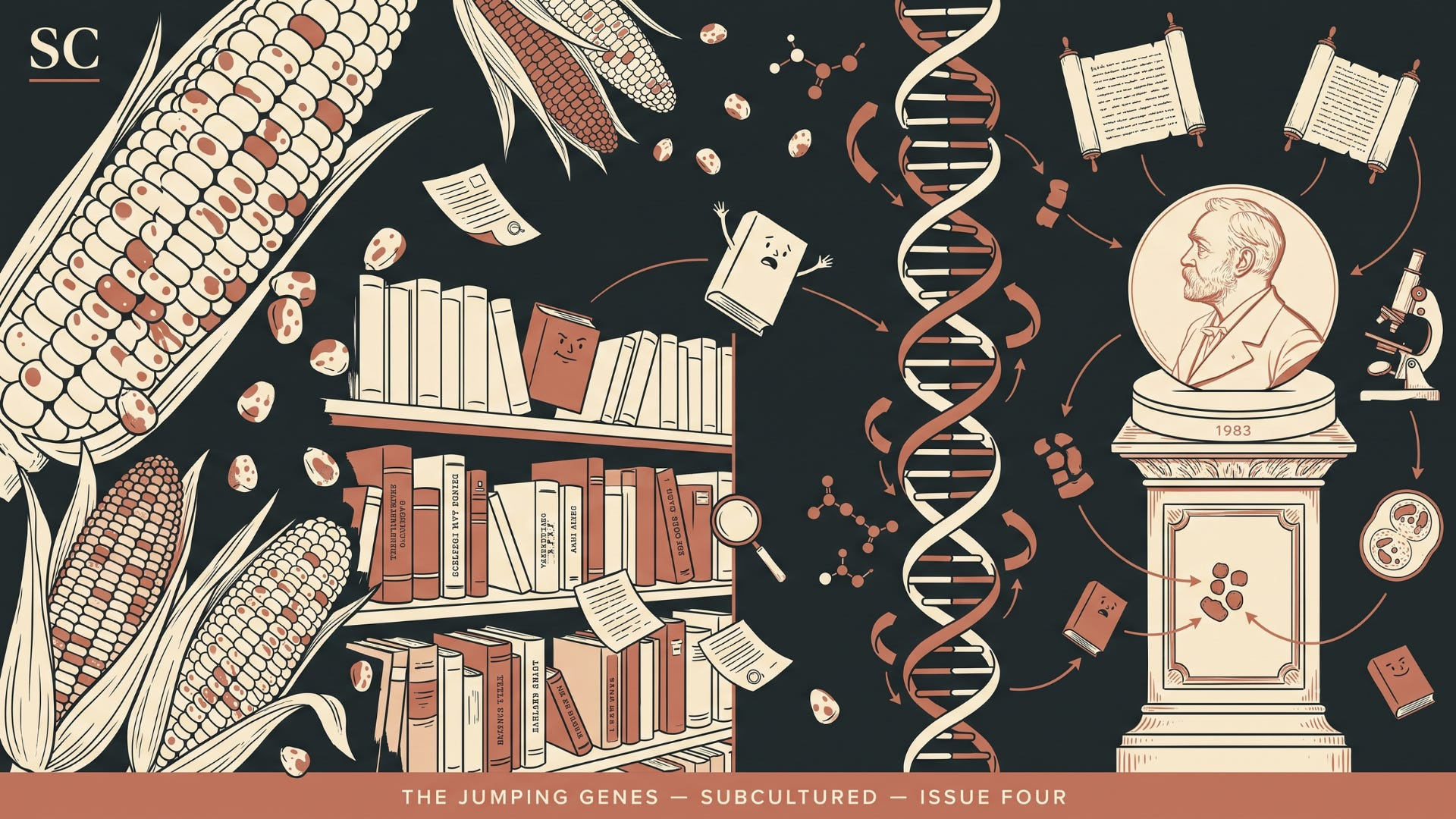
The Jumping Genes tells the story of Barbara McClintock, who showed in the 1940s that sections of DNA can move around the genome, and who waited more than thirty years for the rest of science to accept it. It presents both the popular account of why she was sidelined and the more complicated version historians have since pieced together, and it explains why her discovery underpins our understanding of cancer and gene editing today.
Liquid Gold examines the global blood plasma industry, from Edwin Cohn's wartime fractionation method to the infected blood scandals of the 1980s and the present system, in which the countries that ban paid plasma donation import much of their supply from paid donors in the United States. It is the most openly ethical of the five pieces, and it deliberately leaves the reader with a tension that has no comfortable resolution.
Subcultured grew from zero to around 350 subscribers in its first ten weeks, entirely through organic sharing and the Instagram account. Just as usefully, readers have responded to specific ideas, rather than just the stories. Comments on the phage therapy piece singled out phage steering, which suggested the science itself was landing and not only the narrative around it.
Output two: Teo y las gafas superpoderosas
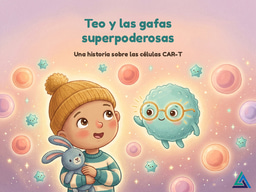
The second output came directly from my time at Sant Joan de Déu. While working with the strategy and patient access team, I created a Spanish-language children's picture book, Teo y las gafas superpoderosas (Teo and the Super-Powered Glasses), which explains how CAR-T cell therapy works to children aged roughly five to nine. It is written for two audiences at once: children who are about to begin treatment, and their friends and classmates, so both can understand what is happening inside the body and why the therapy is remarkable.
The book follows Mara, a seven-year-old girl, and Teo, one of the T cells that guard her body. Some of Mara's cells have "forgotten the rules" and multiply out of control, and they wear disguises, so Teo walks straight past them without recognising them. CAR-T gives Teo and his friends a pair of super-powered glasses that let them see a hidden star beneath every disguise. Across twelve illustrated spreads and a cover, the story follows each real stage of treatment: collecting the cells, sending them to the laboratory, giving them their glasses, growing them into a huge team, preparing Mara's body with medicine that "makes room", returning the cells through a drip, and the days of fever and tiredness while the team works. It ends with Mara back at school, telling her friends the story, while some of the guardians stay inside her, keeping watch just in case.
Almost every creative decision in the book was also a scientific or ethical one.
The central metaphor is accurate. Cancer cells really do escape the immune system by avoiding recognition, and the CAR receptor really does work by letting T cells recognise a specific marker on the cancer cell's surface. The glasses and the hidden star are a child-sized version of that mechanism, so nothing a child learns from the book will need to be unlearned later.
I avoided the language of war. Much writing about cancer uses words like battles and enemies, which can frighten young children and imply that a patient who doesn't recover somehow lost a fight. In this book, the cancer cells are confused rather than evil, and the text states plainly that it is nobody's fault. The ending is hopeful without promising a cure, because CAR-T does not work for every child and the book should not make a promise that real life might break.
Mara wears a knitted beanie throughout. Most children who reach CAR-T have already had chemotherapy, so many will have lost their hair. The beanie means every reader can see themselves in her, whether or not that has happened to them. The side-effect page names fever and tiredness in simple terms and emphasises that doctors and nurses are watching the whole time, so a child who experiences those symptoms recognises them as expected rather than frightening.
I wrote the text in neutral Castilian Spanish and produced the illustrations using an AI image-generation workflow, writing a detailed brief for every page and building character references so that Mara and Teo stay consistent throughout. I then laid out the book myself, choosing typefaces designed for early readers. Because the text sits on top of the illustrations rather than inside them, the book can be translated into Catalan, Galician or Basque at almost no cost, which matters for a resource intended for children across Spain.
I will attach the storybook in a separate post.
What I learned, and what comes next
The biggest lesson from both outputs is that explaining science well is mostly about deciding what to leave out. The storybook covers a treatment process that lasts weeks in roughly six hundred words of Spanish. Each Subcultured article compresses decades of history into a single read. In both cases, the hardest and most important work was choosing the one image or story that would carry the science, and cutting everything that got in its way.
The second lesson is that the same science needs different doors for different people. A young adult reading about phage therapy wants the rivalries, the politics and the unresolved questions. A six-year-old about to start CAR-T needs to know it isn't their fault and that someone will be watching over them. Both deserve accuracy. Neither is served by the default way science is usually explained.
Both projects are continuing. Subcultured keeps publishing weekly, and I plan to widen its reach through collaborations with student societies and other science writers. For the storybook, the next steps are a clinical review of each treatment stage, a short page for families and teachers with a glossary and an activity for children, and translations into Spain's other official languages, so that the book can reach hospitals and classrooms across the country.