What new ideas, challenges, or other issues have you encountered with regard to your project (this might include data collection, information that contradicts your assumptions or the assertions of others, materials that have enriched your understanding of the topic or led you to change your project, etc.)?
Classicists in the field of reception tend to have a bias towards the importance of the Classics in the period that they are studying. I have always been well aware of this fact, but still have partially fallen prey to it. In a meeting with my grad student advisor, she asked about the relative influence of the Classics versus Enlightenment ideals. I am not an expect in Enlightenment and early Modern European philosophy and believe that I have undervalued their appearance in the Debates and Federalist papers because I have overweighted the Classics. Therefore, I do not believe that I am have considered enough evidence to make a claim of causation between Classical constitutionalism and empire with the US constitution, leading me to reconsider and narrow my thesis.
How have these ideas or challenges shaped the bigger picture of your research? Has the scope or focus of your topic changed since you began this project? If so, how?
Many Classicists justify this bias by pointing out that scholars in other fields equally disregard the Classics. My grad student mentor was shocked to hear that Cicero had such a complex conception of individual property and the state before her own studies on Marx. Realizing that the lack of connection was a two-way street, I definitely felt more confident in packaging my research as a lens through which to view the historical development of American imperialism, both providing more insight into the Classical influence for non-Classicists and extending the field of Classical reception in the Constitution into new territory for Classicists as well.
Now that you’ve engaged in Part II of the Leadership Retreat, reflect on a learning point that remains with you as a new way to understand leadership, and to incorporate into your own engagement, in the future.
I really appreciated Pamela's definition that criticism hurts when it mirrors something we believe about ourselves that we are ashamed of. In leadership situations, I always make space for feedback, which can be extremely difficult. I have personally tried to reframe criticism as contribution and tried to tie it more to the outputs than myself as a person. But some comments still worm their way through, and I try not to be too defensive when receiving them. This new way of rethinking criticism will definitely help me feel more confident and receptive in feedback situations, and to learn more about myself when a specific comment stings.
*Shakespeare in the Park with Laidlaw Scholars and Friends!
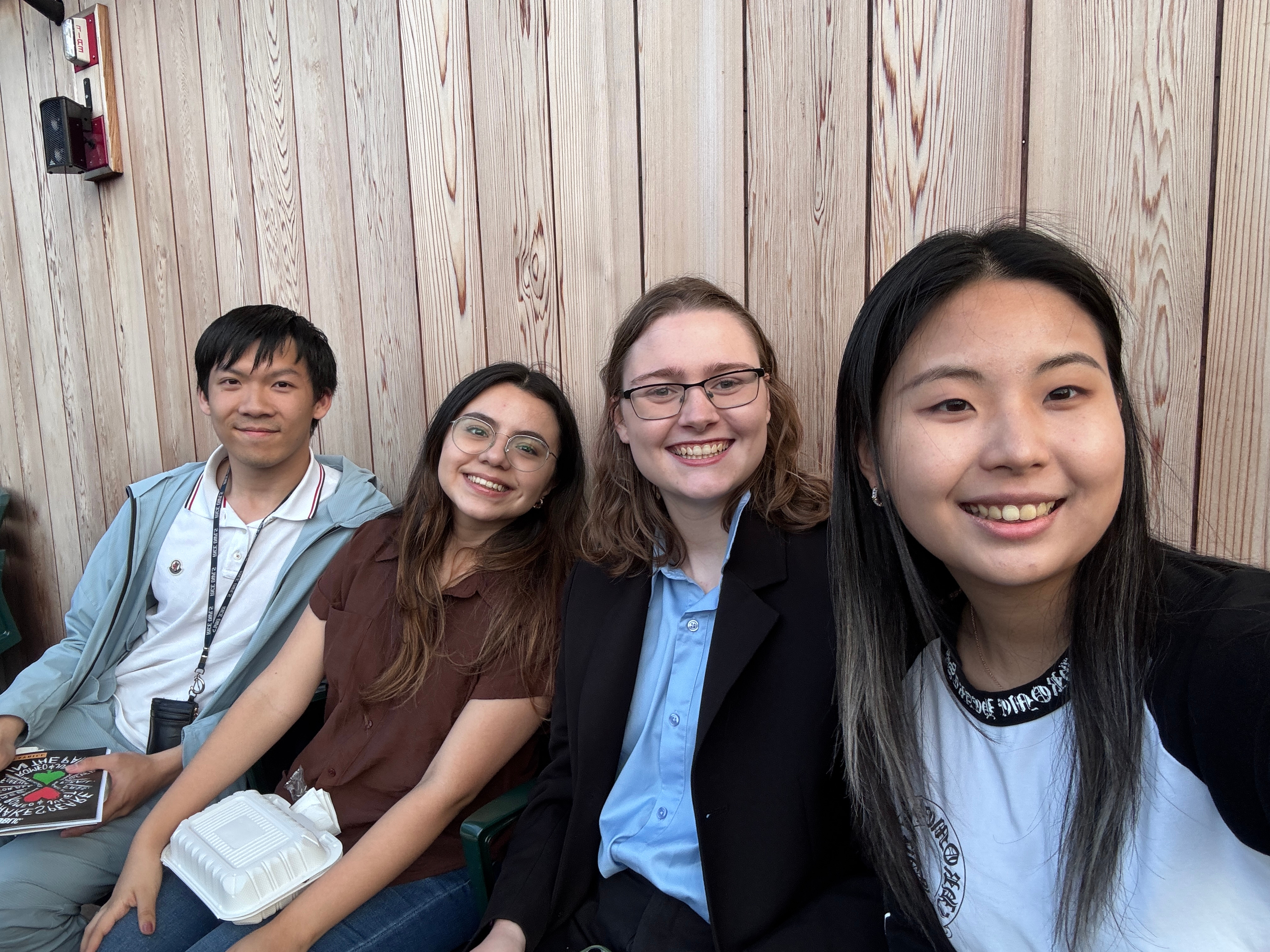

Hello! My name is Van Muller and I am a sophomore in Columbia College from Atlanta, Georgia. I intend on majoring in both Classics and Political Science on the Reception and American Politics/Theory tracks respectively. My project this summer analyzes the debates that formed the United States Constitution through the lens of Classical allusion and aims to evaluate the extent to which those allusions informed the founders about methods of good government.