What new ideas, challenges, or other issues have you encountered with regard to your project?
One of the biggest challenges I have encountered is defining exactly what it means to study "life before the Internet." At the beginning of the project, I assumed I would be primarily documenting analog practices and technologies that have disappeared or changed due to digital innovation. However, the more research I conduct, the more I realize that the project is not simply about technological change but about the social, cultural, and political consequences of that change.
I have encountered a wide range of perspectives that challenge simple narratives about technology. Some scholars and activists argue that digital technologies have weakened community ties, increased loneliness, and fundamentally altered how people communicate. Others point out that technology has expanded access to information, strengthened certain forms of connection, and created new opportunities for community-building. Rather than finding a clear answer, I have found myself navigating a debate filled with contradictions and competing interpretations.
Another challenge has been identifying organizations and movements that are actively attempting to create alternatives to digital life. Initially, I expected there to be a large and cohesive movement dedicated to helping people disconnect from technology. Instead, I discovered that many efforts are decentralized, ranging from grassroots campaigns around smartphone use to organizations focused on attention, digital wellness, and community-building. This has forced me to think more critically about what resistance to technology actually looks like in practice.
At the same time, I have been particularly drawn to questions surrounding communication and human connection. As I continue to build my annotated bibliography, I find myself returning to themes of social isolation, attention, loneliness, and the disappearance of analog practices such as letter writing, paper maps, home phones, and other forms of interaction that once structured everyday life.
How have these ideas or challenges shaped the bigger picture of your research? Has the scope or focus of your topic changed since you began this project? If so, how?
While I initially approached the project as a historical exploration of life before the Internet, it has increasingly become an investigation into the social consequences of life after it.
Rather than simply cataloging technologies and practices that have disappeared, I am now more interested in understanding what those changes reveal about contemporary society. Questions about communication, community, loneliness, attention, and social relationships have become central to my work. I have become particularly interested in how digital technologies shape not only the ways we interact with one another but also how we understand ourselves and our place within society.
As a result, the scope of the project has shifted from documenting the past to using the past to analyze the present. Looking at life before widespread internet adoption provides a useful point of comparison, allowing me to better understand what has been gained, what has been lost, and what remains unresolved as technology becomes increasingly embedded in everyday life.
Leadership Retreat Reflection
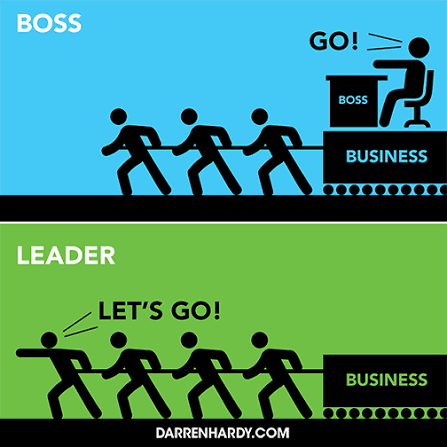
One of the most meaningful ideas I took away from Part II of the Leadership Retreat was the framework of the leader within, the leader in front, the leader behind, and the leader beside. Before the retreat, I often thought of leadership primarily through the lens of the leader in front, the person who takes charge, directs others, and serves as the visible face of a group or initiative.
Reflecting on these different models of leadership challenged that assumption. I began to recognize that leadership can take many forms and that some of the most impactful leaders are not necessarily the loudest or most visible people in a room. The leader beside supports and empowers others, the leader behind creates opportunities for others to succeed, and the leader within focuses on personal growth, values, and self-awareness.
This framework encouraged me to think more critically about my own leadership style. While I still value taking initiative and stepping into leadership roles when necessary, I have become more aware of the importance of supporting others and creating space for their contributions. Moving forward, I hope to become a more flexible leader who can adapt to the needs of a particular situation rather than assuming leadership always means being at the front. I think this understanding will not only make me a stronger leader but also a better collaborator, teammate, and community member.