CraftHER Week 5: Crash But Don't Burn
Half awake and drunk on the damp heat, I sat slumping, staring at my AI-generated fashion designs.
This week was our final consulting week, and we were finally working with the much anticipated Swara. Founded by Asha Scaria Vettoor, I was already comfortably familiar with Swara, given that Asha had also founded CraftHER.
Yet, I wasn't fully prepared for the challenges this week would hold. I love fashion, I love design, so surely nothing could go wrong - right?
The Challenge
For the first time during this programme, there was no consulting "brief" per se. Asha gave us creative freedom to work on whichever outputs suited us. Given this, we decided to work on a CraftHER fashion collection for Swara, with each of us contributing designs for the collection.
The challenges faced this week weren't derived from the task, or Swara, or anything external. This week, I had the task of confronting myself as I approached a large mental blockade.
As such, this reflective blog is slightly more personal than others. But leadership is not only measured by the impact we have on others; it is also forged in the quieter moments of self-examination. This week gave me four of those moments in a row.
AI and Me
As an intermediate artist, wannabe designer and fashion enthusiast, I was excited to gain experience in fashion prototyping and illustration with Procreate. However, with the time constraints of our busy schedule, I didn't have time to design in the way I wanted to. Instead, I outsourced to Claude AI for quick designs to take to the tailors.
I stared at my designs and questioned whether they were really mine. Sure, it was my thoughts, my ideas, my vision. But the soulless AI fashion model, whose image loosely reflected mine like some cruel joke, had a glance that seemed to mock me for my own inefficiency.
I have always personally held the belief that AI as a creative tool and image generator is largely unethical due to the process through which AI generates images and artwork. Yet, I faced a decision: either use AI in this instance due to time constraints, or visit the tailors with nothing.
In this instance, I made the decision to prompt AI with my specific vision, and the design concepts were impressive if slightly inhuman.
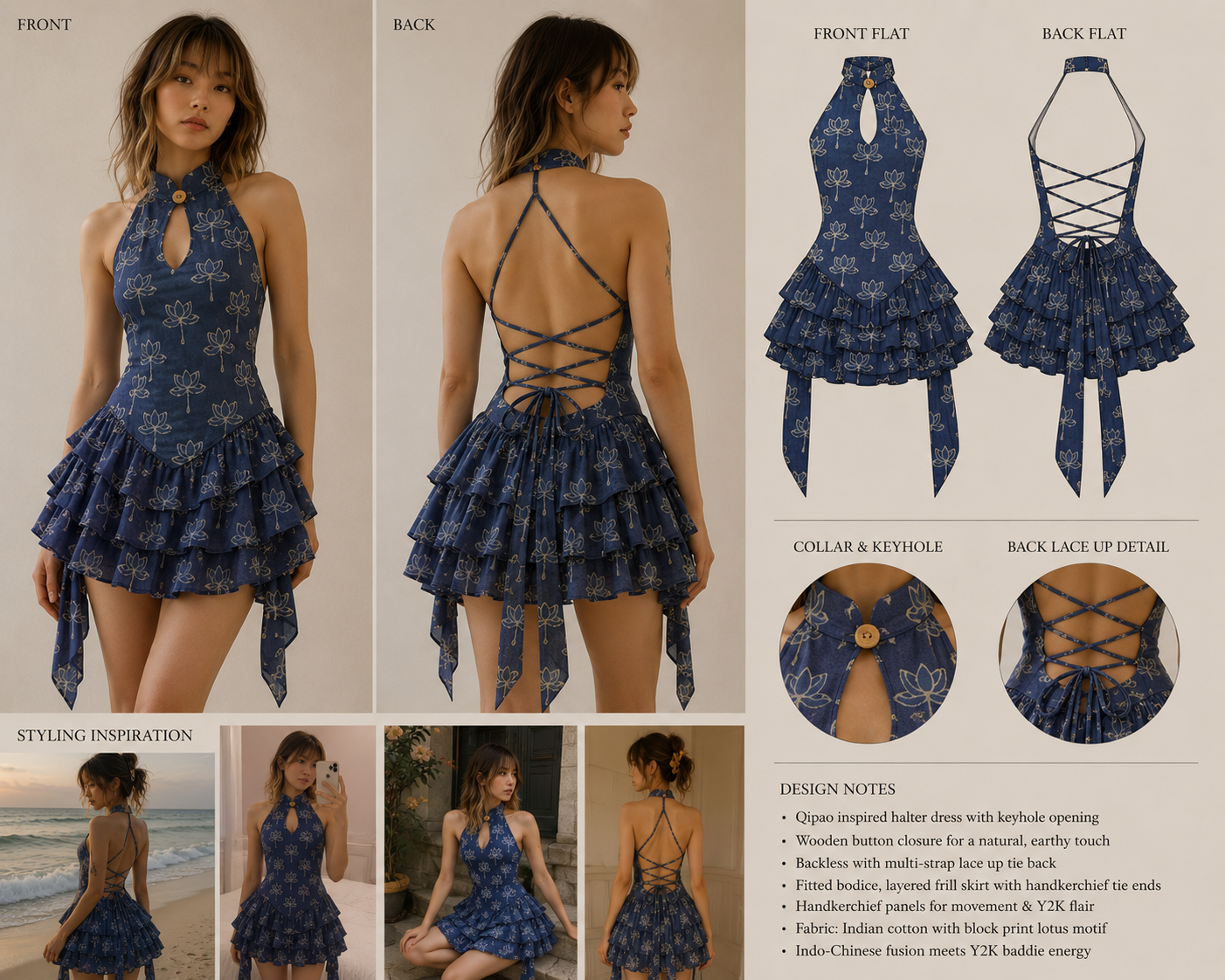
Although the decision was understandable given the circumstances, it left me with an uneasy sense that I had compromised one of my own values: that creativity should remain an authentically human process.
This experience forced me to reflect on integrity in a different way. Integrity is often understood as honesty towards others, but I realised it also means remaining honest with yourself. While my reservations about generative AI remain, I was forced to confront what compromises become acceptable under genuine constraints.
If that was a quiet negotiation with my values, the next few days asked something louder of me.
My Face is the New Storefront
This was only the start as I faced another weakness: self-image.
Throughout our time at CraftHER, I have been photographed and filmed for the purposes of social media. Every day, I have been confronted with new angles of my face, and unposed, half-asleep shots.
In our first week at CraftHER, I cried looking at pictures taken of myself. I called family vowing to come back with a new face, a new smile and slimmed jaw. It was not something I ever admitted, but my relationship with my own image has been an ongoing struggle.
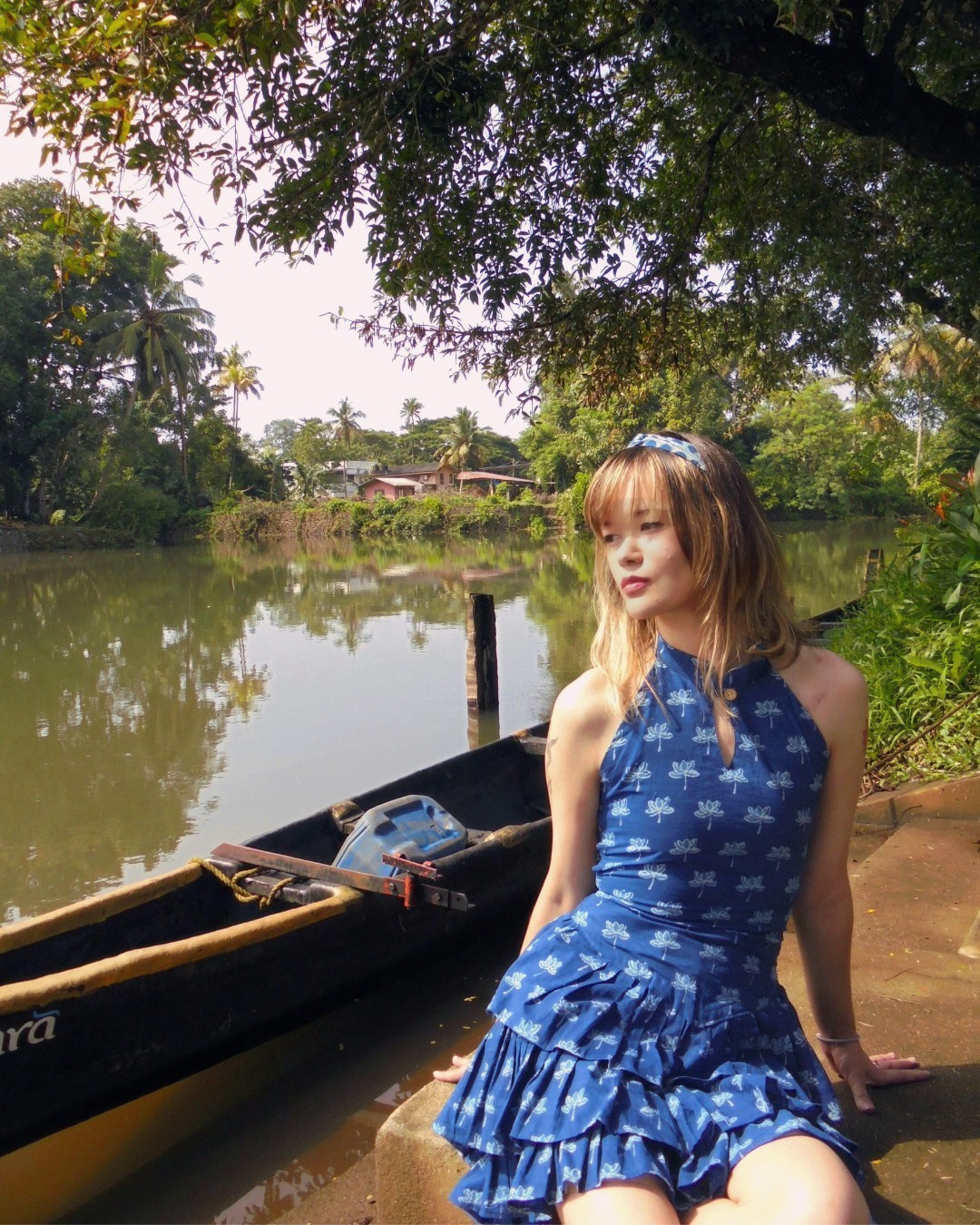
As the weeks have slipped by, I have grown used to seeing my face in different angles. But with the launch of a collection comes a product shoot. And so my image, the very thing I had been battling with, was also a marketing force behind my designs.
Despite my personal struggles with self-image, I had the courage to allow my image to be used, including the imperfect, less instagrammable ones. Not because I loved them, but because I could understand their purpose beyond my personal insecurities.
Looking back, this felt like an exercise in transcendence. I did not overcome my insecurities; I simply refused to allow them to dictate my decisions. Courage, in this case, was quiet: accepting that my discomfort mattered less than the purpose I was trying to serve.
By midweek, that same quiet resolve was running low.
Crash and Burn
Adding to these problems was a crushing weight of burnout, stemming from the constant performance of being seen.
For the past five weeks, I have not really had a private space. I have been around my fellow scholars essentially 24/7. And while everyone has been friendly and convivial, the permanence of observation was starting to feel suffocating. As someone who has always prized personal independence, the lack of freedom and constant navigation of group dynamics was beginning to exhaust me.
It was in this state that I found myself confronting a different question: what does drive mean in those moments of mental inertia?
I used to think drive looked like enthusiasm - showing up energised, wanting to be there. By midweek I wasn't enjoying myself at all. I was tired and burnt out. And yet the collection still needed designing, and outputs still needed to be finalised.
Through this, I realised that drive is the persistence of forward motion once the enthusiasm runs out. It's the willingness to keep contributing at a lower register, without waiting to feel ready or happy first. Progress didn't stop being progress just because I wasn't as productive, or because I wasn't happy.
Happiness and motivation are fleeting. Sometimes the bare minimum is drive enough.
Just as I'd made peace with that, the week had one more test waiting.
Calm Before the Storm
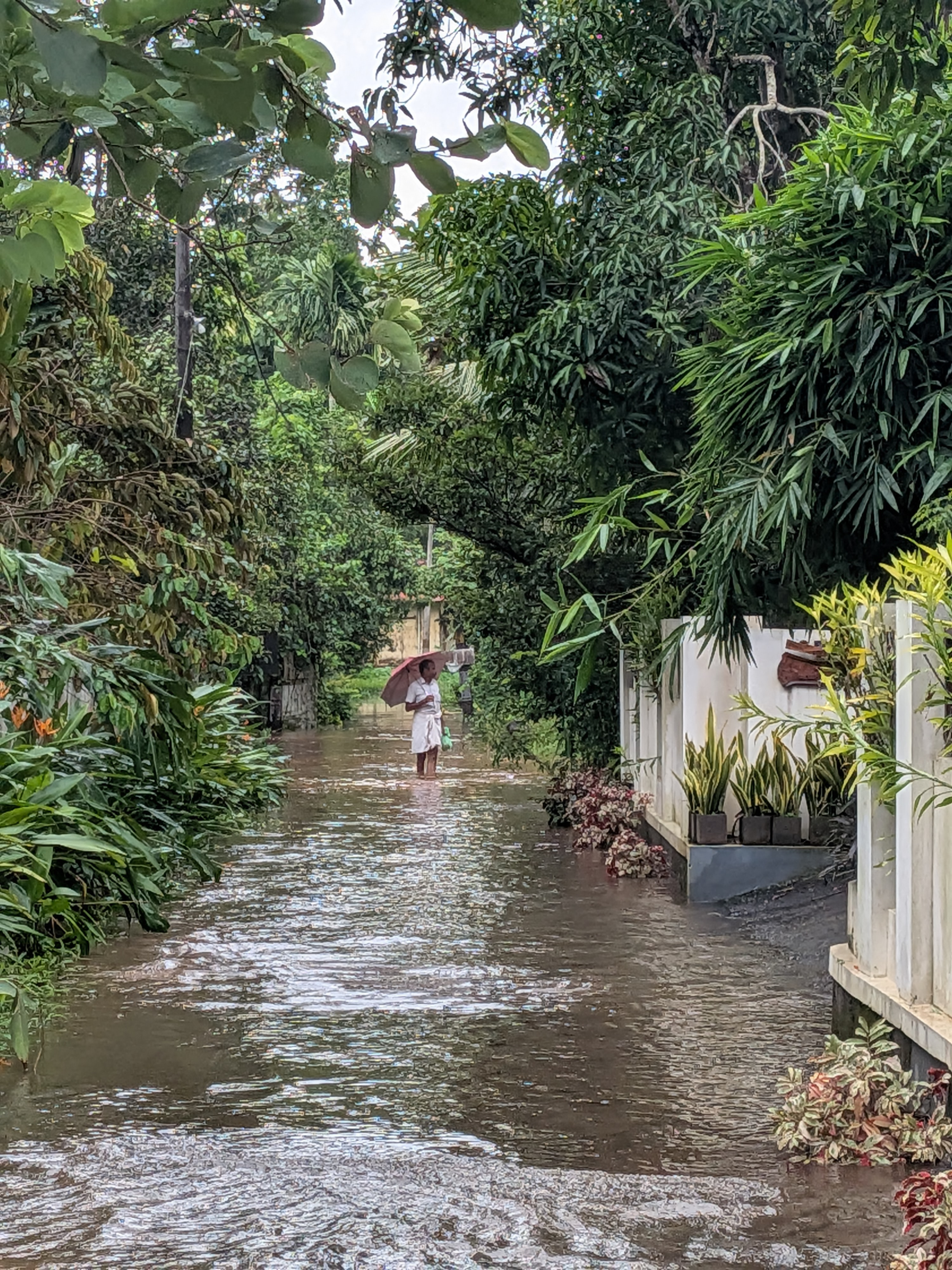
And finally, as almost a cruel cherry on top of a week already heavy with self-confrontation, I woke on Sunday morning to news that we needed to evacuate immediately.
Overnight, water levels had risen to a point where there was a real risk of being trapped in our accommodation. My first instinct was to minimise the flooding; I questioned whether evacuation was really necessary, whether this was an overreaction to a bit of rain. It was only when I saw the flooded streets, and locals wading through water up to their knees, that I understood the actual scope of what was happening.
After hurling everything into my suitcase, hoping I hadn't forgotten anything, I left with hurried goodbyes in the back of an evacuation vehicle.
Asha made the right call, and quickly. In hindsight, my own instinct to downplay the danger says something uncomfortable about my perfectionism: a reluctance to admit that a situation was beyond my control, that the appropriate response wasn't composure but urgency.
Leadership, in that moment, wasn't managing the crisis. It was Asha making a fast, unambiguous decision on our behalf, and each of us having the sense to trust it rather than argue with it. Sometimes knowing when not to lead, when to simply listen and move, is its own form of courage.
Final Thoughts
We presented our collection to Asha and the team at Swara on Friday, and the project was a success. Yet, in many ways, consulting faded into the background this week. What I expected to be a week of fashion design became one of introspection.
As the once-novel backdrop of Kerala gradually became routine, there were fewer external distractions and more space left with my thoughts. This week forced me to examine my perfectionism, my relationship with AI, my self-image and my drive. None of these were challenges I had anticipated when I arrived at CraftHER, but they ultimately proved more transformative than the consulting work itself.
Looking back, this week reminded me that changemaking is not only about the impact we have on others, but also about the character we develop along the way. Integrity, courage, drive and transcendence are not abstract ideals; they are practised in the quiet, uncomfortable moments where we choose to act in accordance with our values.
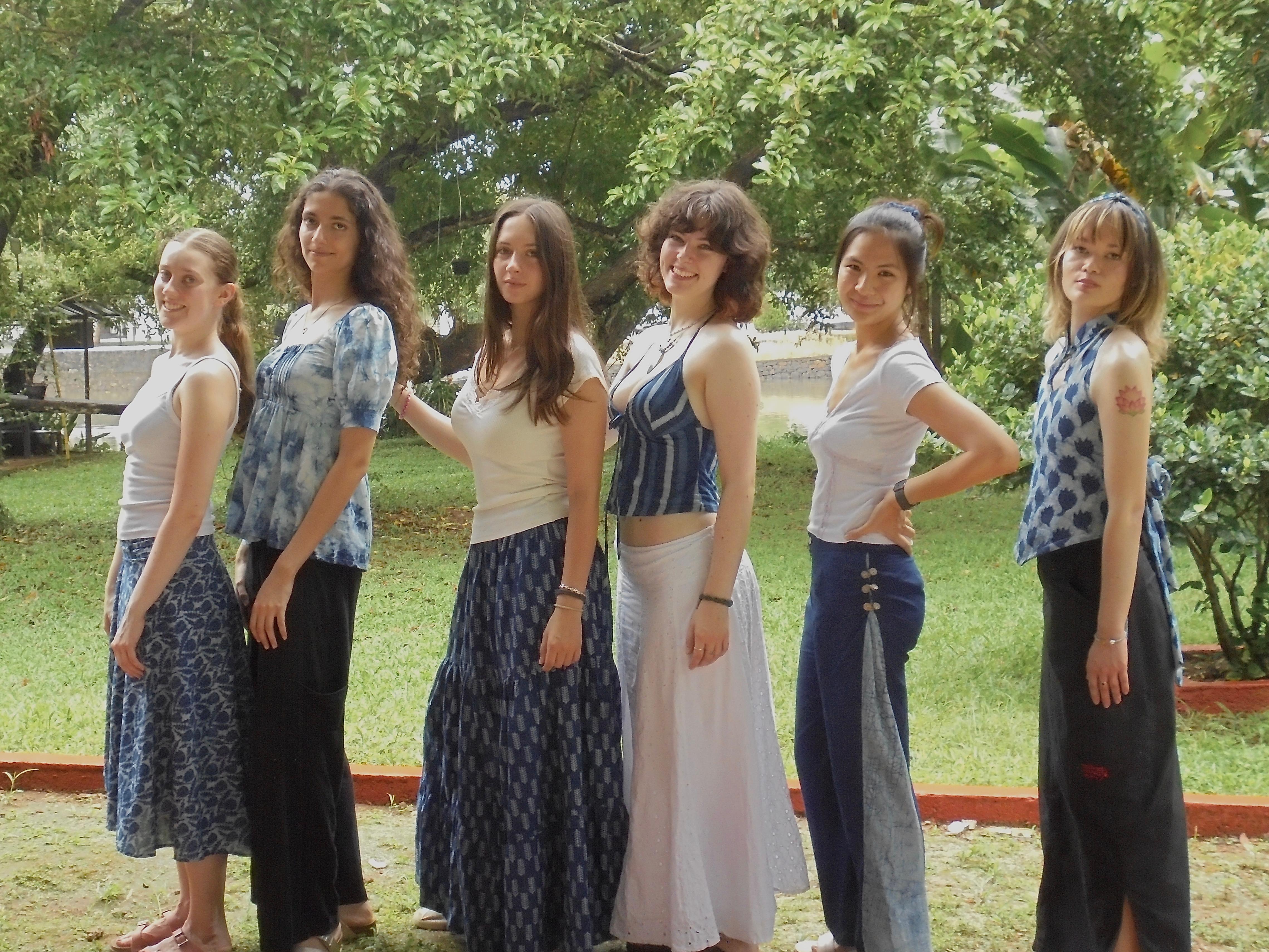

Hello! I’m a Philosophy student at Durham University, with academic interests in applied ethics, decision-making and sustainability. My broader aim is to use interdisciplinary research to drive measurable, socially meaningful change.
My summer research explored barriers to public transport adoption, with a view toward long-term policy implementation. This project combined behavioural science, psychology, urban planning, and design to contribute to more sustainable and inclusive transport policies.
For my LiA, I will be travelling to Kerala for the central CraftHER project, where I will undertake four consulting projects with local female-led businesses and a research project.

Please sign in
If you are a registered user on Laidlaw Scholars Network, please sign in