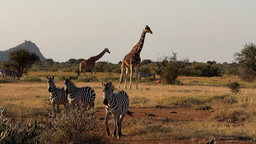
Conservation Across Scales: Integrating Field Ecology and Genomics
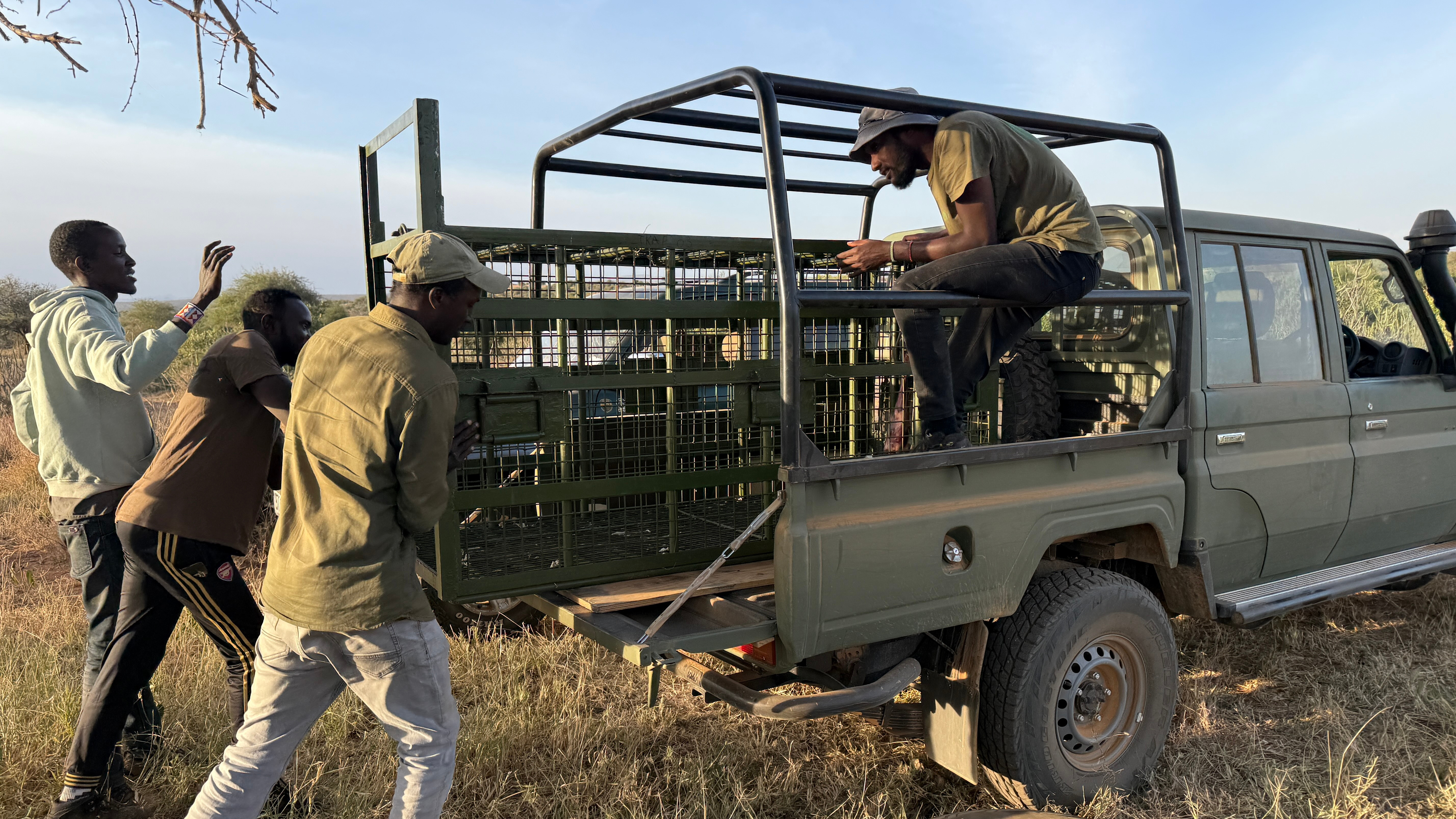
Over the past few weeks, I have continued working closely with the field team, collecting and maintaining camera traps, processing camera trap videos, and supporting ongoing wildlife monitoring across the conservancy. Seeing the amount of work required to transform raw field observations into reliable ecological datasets has given me a new appreciation for the often unseen foundations of conservation research.
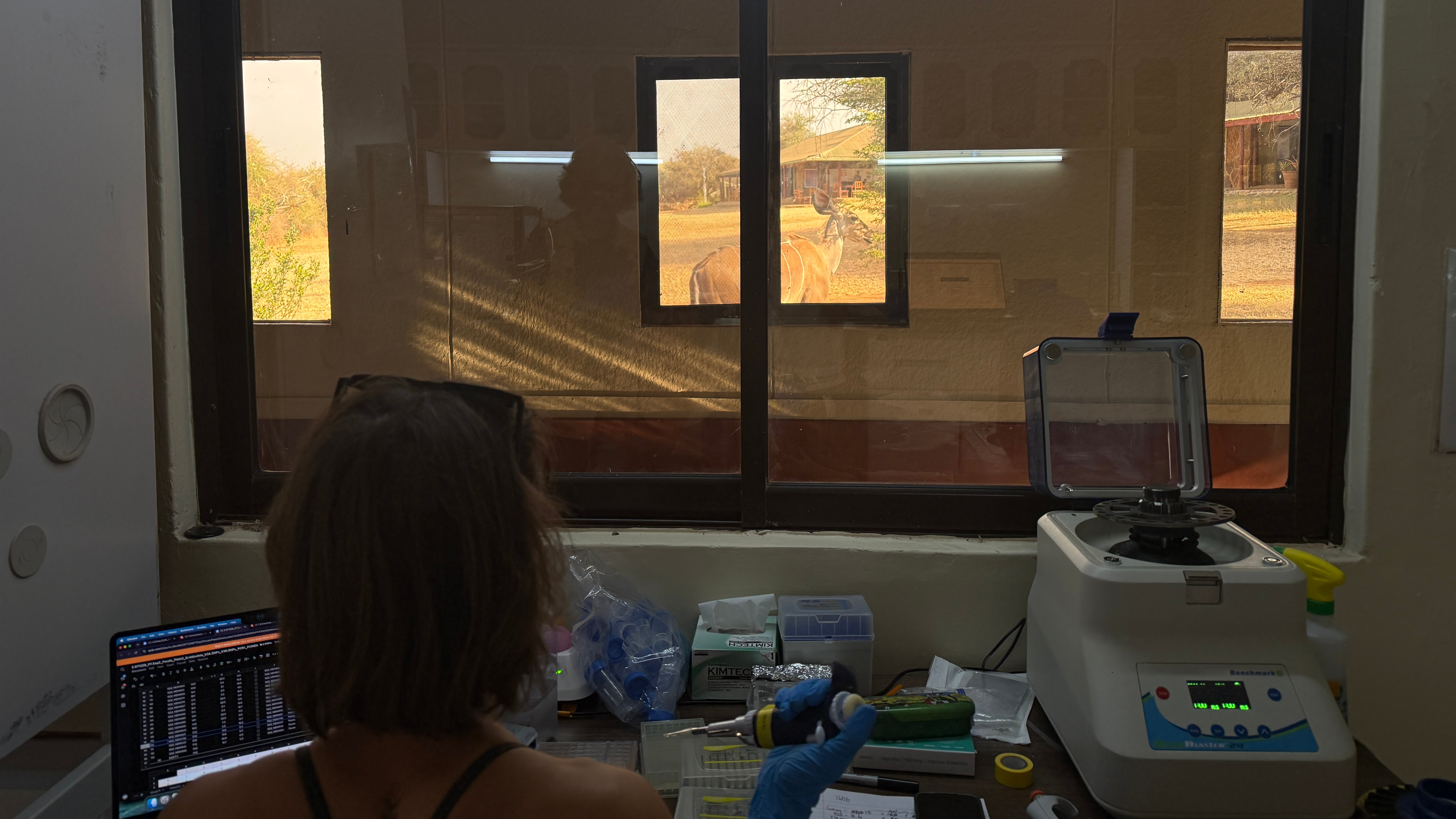
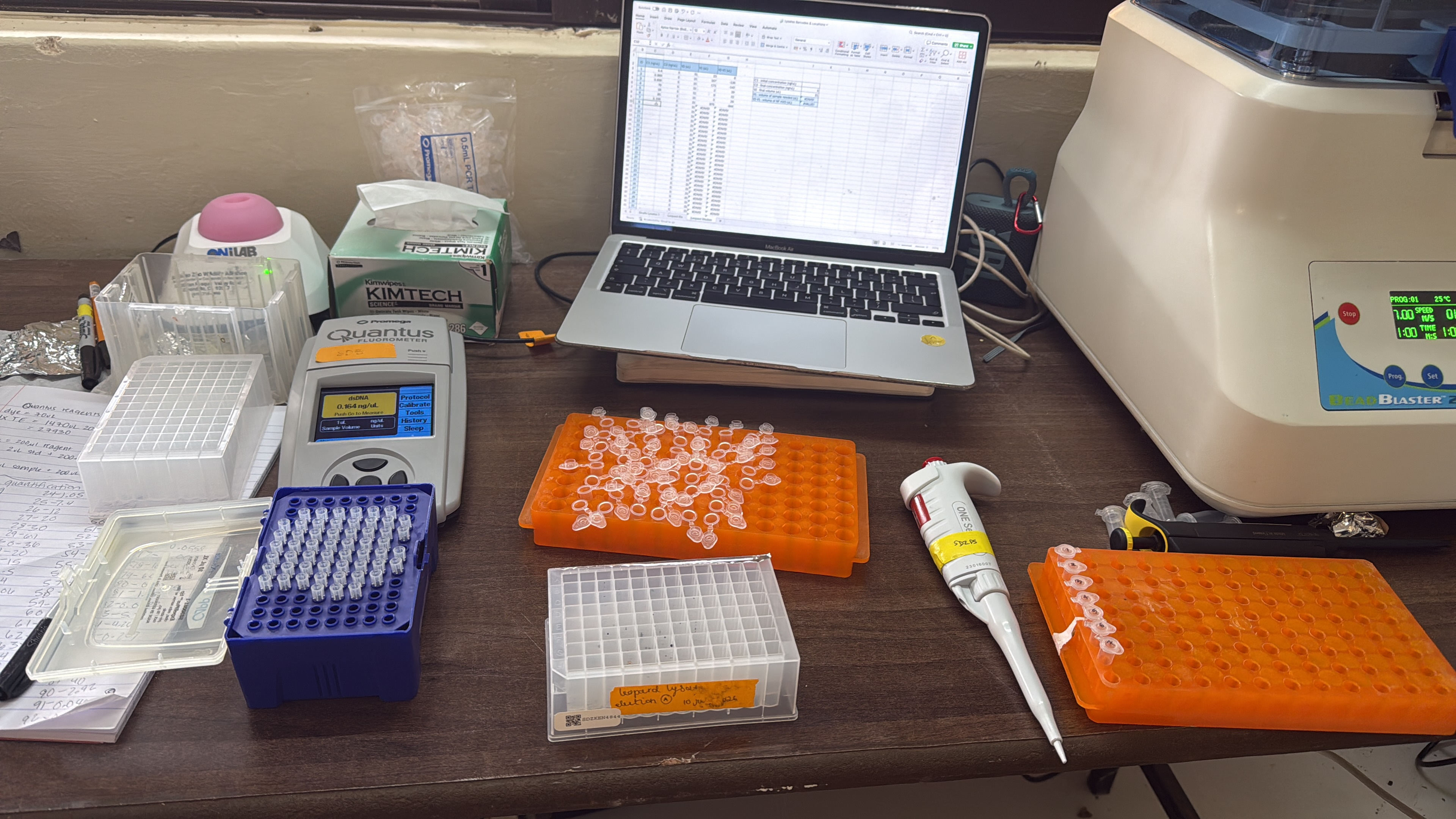
Alongside this, I have begun working in the laboratory in collaboration with researchers from the San Diego Zoo Wildlife Alliance (SDZWA), supporting working towards sequencing the African leopard genome and developing genetic approaches to wildlife monitoring. Using samples collected from leopards and giraffes, the team is investigating how non-invasive DNA sampling can be used to identify individuals, assess population structure, and monitor wildlife. Through ongoing collaborations and methodological advances, this work aims to support faster and more robust population assessments.
One particularly interesting aspect of this work has been gaining hands-on experience with molecular techniques used to prepare DNA for sequencing, including the high-throughput methods utilised by SDZWA that allow hundreds of individual samples to be uniquely labelled and sequenced simultaneously. By increasing the efficiency of large-scale genetic studies, these approaches enable rapid processing of samples collected across extensive field sites. In turn, they have the potential to improve understanding of genetic diversity, connectivity between populations, and ultimately provide evidence to inform conservation management across wildlife corridors.
Beyond the research itself, I continue to learn from the people around me. Working alongside the field team and collaborating with scientists from SDZWA and other partner institutions has demonstrated the importance of interdisciplinary and international collaboration in conservation. Every conversation - whether discussing field logistics, laboratory protocols, wildlife behaviour, or conservation challenges - has broadened my understanding of how research is translated into practical conservation action.
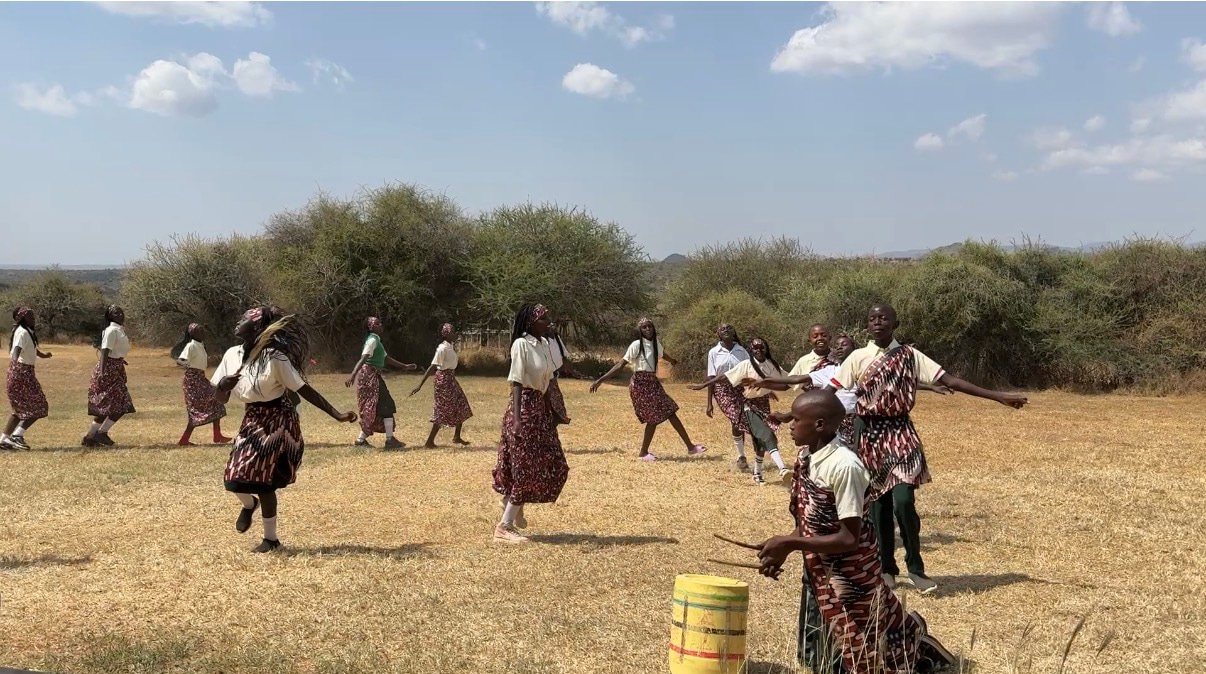
A particular highlight has been experiencing the community engagement that underpins conservation at Mpala. During a community day, local schools visited the research centre to perform traditional songs and dances celebrating the region's cultural heritage and relationship with wildlife. Witnessing how conservation is communicated through education, cultural expression, and community participation reinforced that successful conservation depends not only on scientific research, but also on fostering local stewardship and inspiring future generations to value and protect their surrounding landscapes.
Reflecting on the first half of my placement, one of the most valuable lessons has been recognising that conservation is rarely the result of a single project or discipline. Instead, it is the product of many complementary approaches - field ecology, conservation genetics, technological innovation, and community engagement - all working together to improve our understanding of wildlife while supporting coexistence between people and nature. As I look ahead to the remainder of my time at Mpala, I am excited to continue exploring how these different strands of research come together to inform conservation in practice.
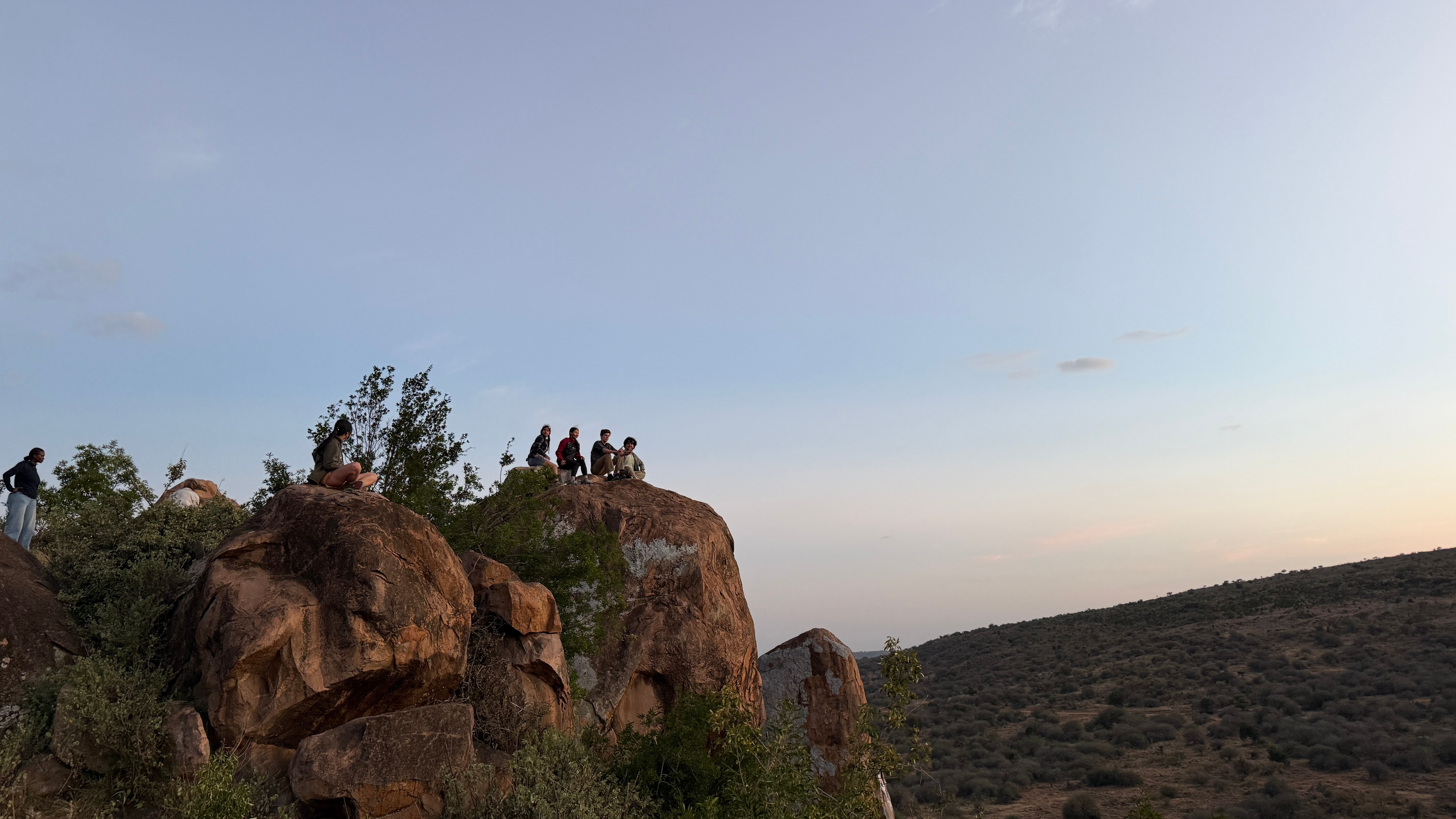
baboon rock sundowner