Allocation Under Scarce Capacity: Equity-Aware Routing for Urban Food Rescue in New York City
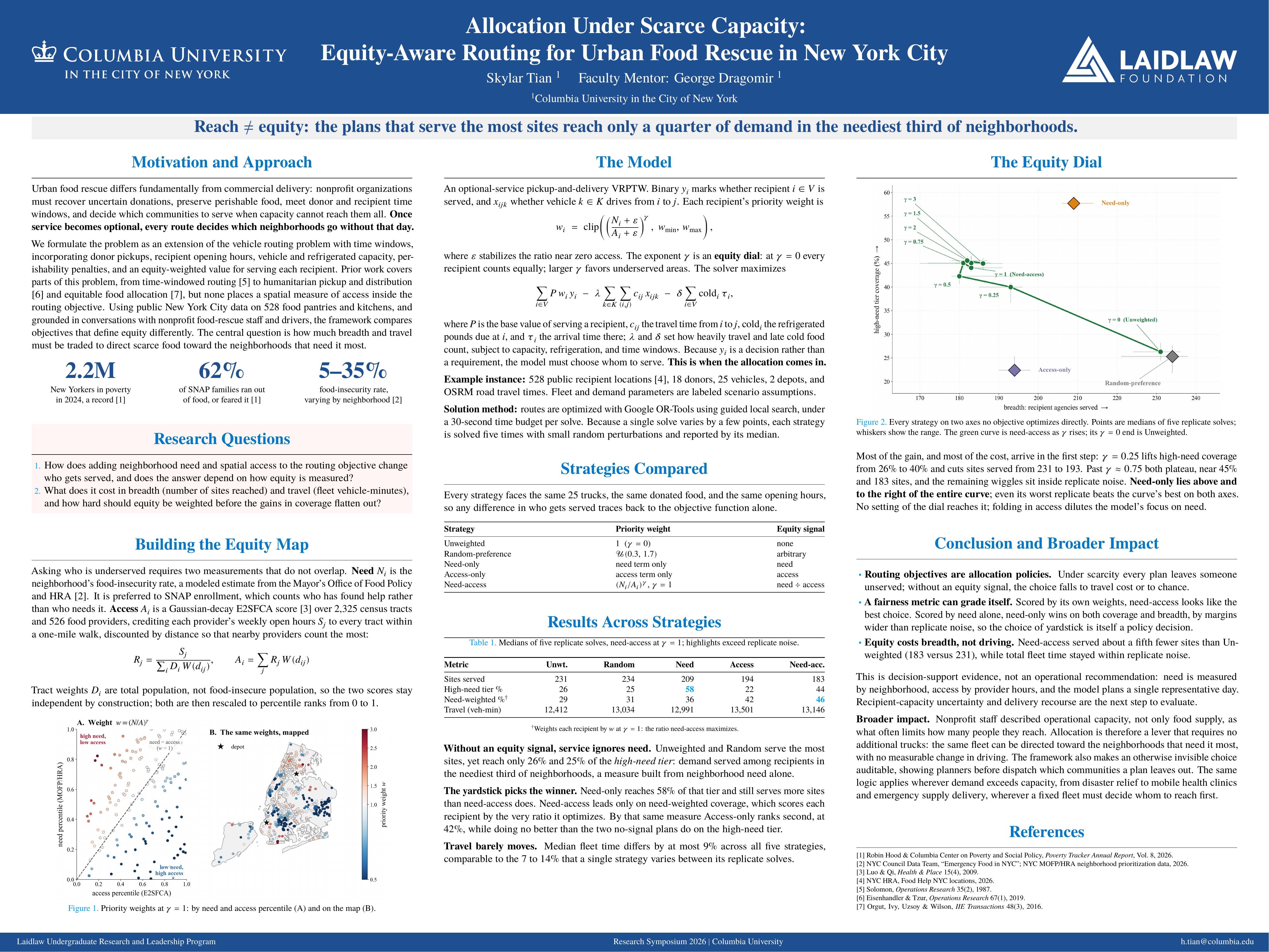
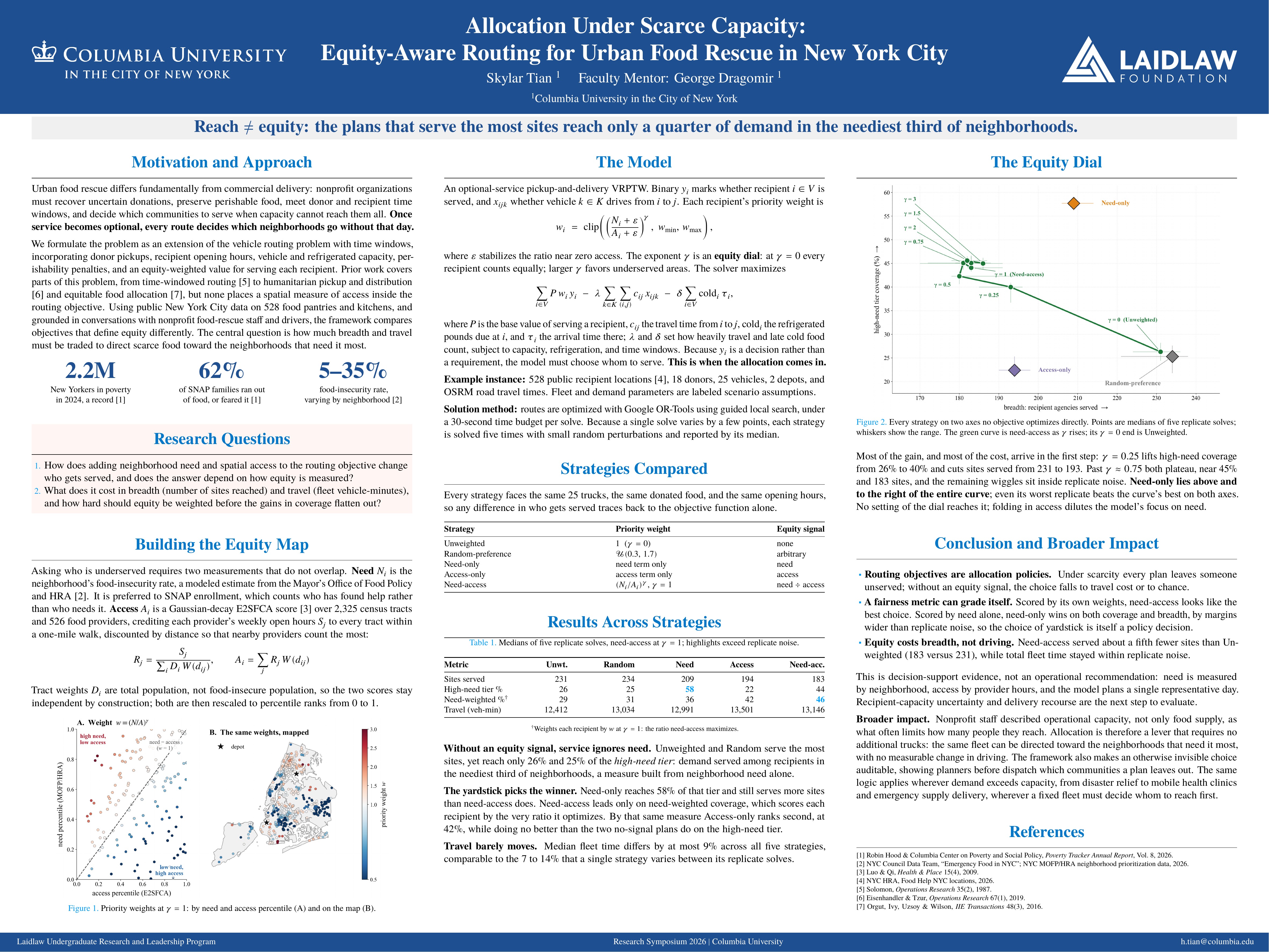 My Laidlaw summer research asks a question that sits underneath every food-rescue route: when there are not enough trucks to reach every pantry, who gets served? In New York City, 2.2 million people live in poverty, and food-insecurity rates range from 5% to 35% across neighborhoods. I built an equity-aware routing model on public data covering 528 food pantries and kitchens, weighting each site by neighborhood need and by access to existing food help, and conversations with nonprofit food-rescue staff and drivers shaped how I framed the problem. Three findings stood out: the plans that serve the most sites reach only about a quarter of demand in the neediest neighborhoods, the way fairness is measured can decide which plan looks best, and directing food toward need costs breadth rather than extra driving. I hope tools like this help food-rescue organizations make these choices deliberately, so scarce food reaches the people who need it most. Thank you to my mentor, George Dragomir, and the Laidlaw Foundation for supporting this work. I'd love to connect with anyone working on food access, humanitarian logistics, or operations research!