Opened ”Just In Case”: How uncertainty shapes sterile equipment decisions in surgical operating theatres
Preview
During operating-theatre preparation, sterile equipment is sometimes opened “just in case” but ultimately remains unused. Although this can create environmental and financial costs, anticipatory opening may also represent a reasonable response to changing procedural plans, equipment availability, ambiguous communication and patient-safety demands.
My Laidlaw research at the University of Leeds focused on the decision before the waste. I developed a mixed-methods simulation proposal using SUSTAIN, a high-fidelity simulated operating-theatre laboratory, to investigate how different forms of uncertainty influence equipment-opening behaviour.
The project integrates the COM-B model and Sociotechnical Systems Theory to examine both behavioural mechanisms and the wider clinical system. Rather than encouraging teams simply to use less equipment, the study aims to identify interventions that support safe, prepared and resource-efficient decision-making.
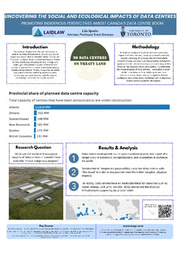
The poster provides a visual overview of the conceptual framework, proposed simulation scenarios and potential intervention pathways. The accompanying research paper presents the project’s complete rationale, methodology, limitations and anticipated contributions.
Ultimately, sustainable surgery requires better-supported decisions—not simply less equipment.
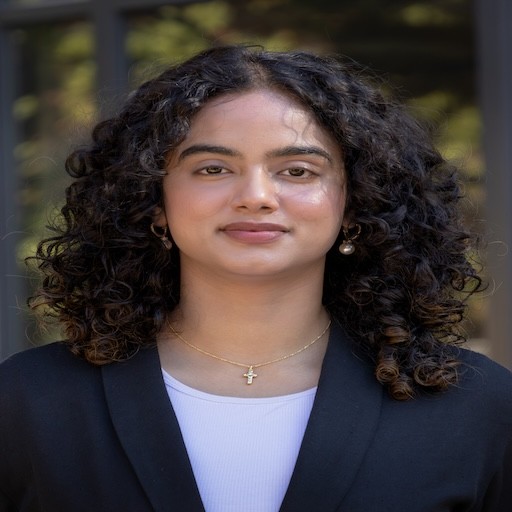
Hi everyone! I am Muskaan, a Laidlaw Scholar from Duke University, and a proud member of the class of 2028. Currently, I am studying Chemistry with minors in Computational Biology and Spanish. I am from Dubai, and spent my childhood growing up in the Middle East. I love learning languages, trying new foods, and spending time outdoors!
I am interested in global health, biochemistry and public policy and particularly how they all intersect! In a world that hosts a multitude of problems, which are often multi-faceted and complex, a call for interdisciplinary, open-minded thinking becomes all the more pertinent. Therefore, it is my goal to bring my views and values to the table, and to encourage others to view challenges through different lenses. Diversity in thinking is essential not only for developing more innovative solutions, but also for ensuring that those solutions are equitable, inclusive, and responsive to the communities they are intended to serve.