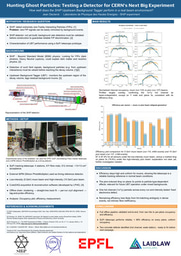
Research Report: Hunting Ghost Particles at CERN
Preview
This report is the longer, more detailed version of the poster I shared earlier this summer: same project, same detector, but with the full story behind it, from the physics motivation, to how I actually built and debugged the analysis, to everything I found along the way.
Coming in, I knew almost nothing about how particle detectors or their software actually work. By the end, I'd built a full pipeline to reconstruct particle trajectories and measure detector performance, and I ran into some genuinely interesting surprises: a faulty electronic part, a quirky structural feature of the detector, and a clear performance difference depending on which type of particle passed through, each requiring real detective work to explain.
If you're curious about the details, or just want to see what a summer of hands-on physics research actually looks like day to day, the full report is attached below!
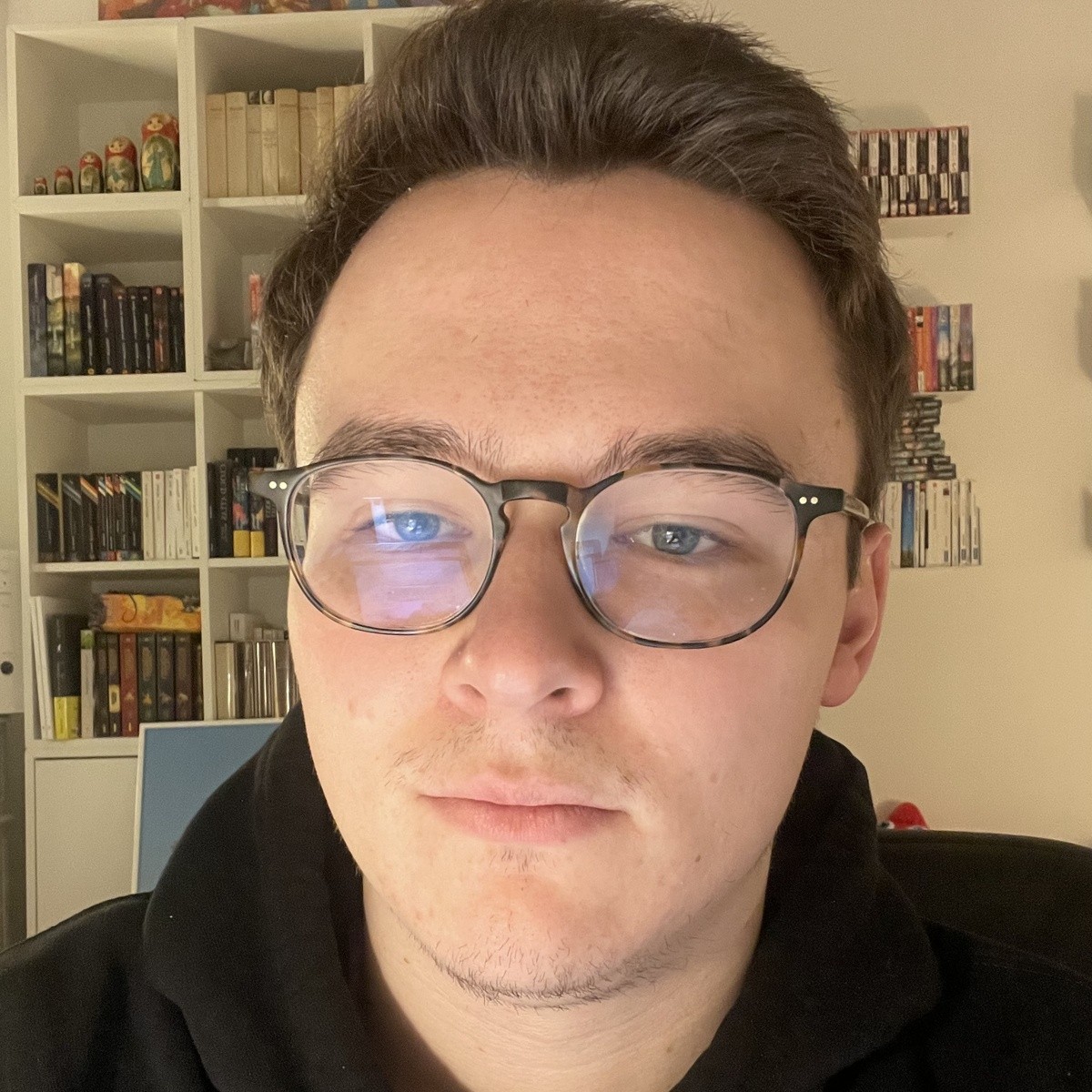
Bonjour ! I'm from the most beautiful city in the world (in my opinion!), the City of Light, Paris.
I'm currently a first-year Bachelor's student in Physics at EPFL, in Lausanne, Switzerland. I want to help push science forward by working in a cutting-edge scientific field later on: nuclear fusion is one that particularly excites me.
I'm doing my research internship in a particle physics laboratory. The experiment I'm working on aims to discover new particles, which would be a major step forward for physics.
For my Leadership-in-Action project, I don't have a precise idea yet, but I'd love to contribute to something in environmental protection or education, two causes I care deeply about.
Outside my studies, I'm passionate about art and museums, especially literature and opera, as well as sport, particularly climbing and skiing, and I follow politics closely.
Feel free to reach out if you'd like to swap book recommendations or chat about physics, art or politics!