What I Am Leaving Lesvos With | LiA Week 6
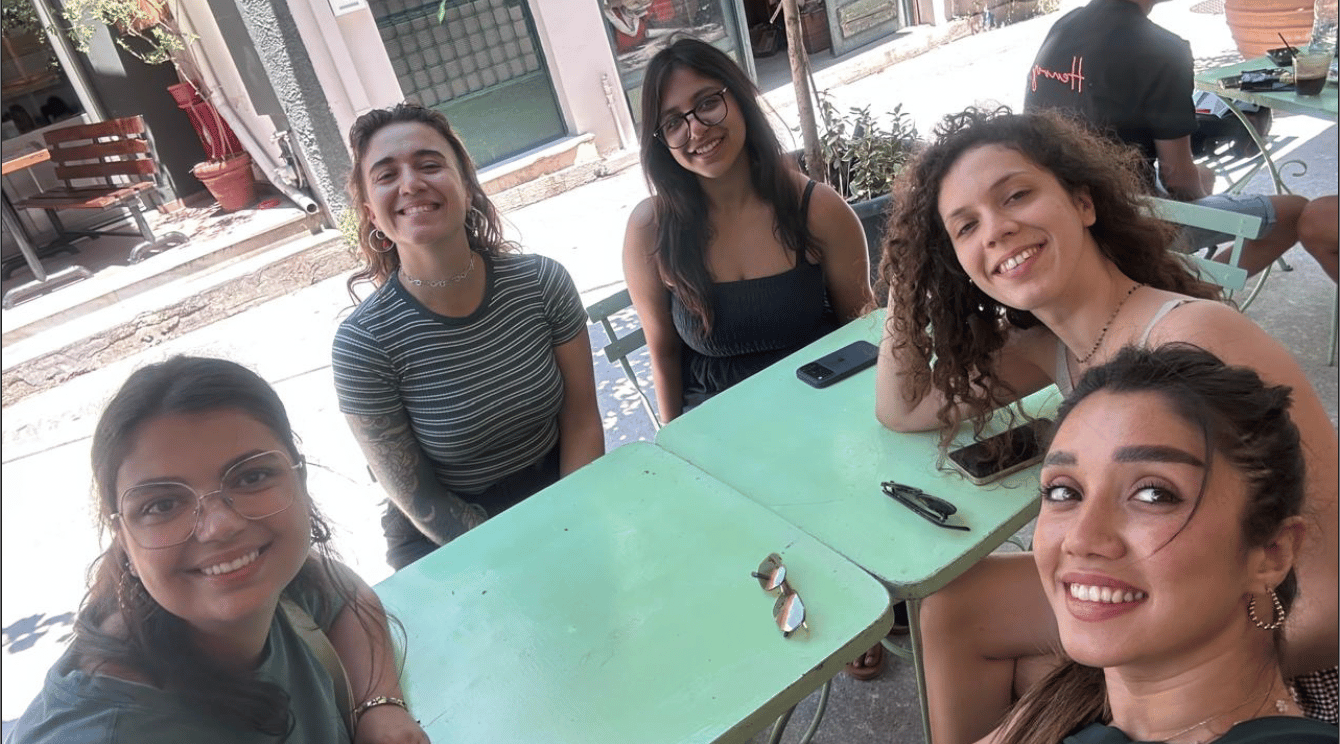
Six weeks ago, I arrived in Lesvos with a ridiculous number of questions. Would I actually be useful? Would my languages help? Would I understand the legal work quickly enough? How would I handle hearing difficult stories? Was six weeks even enough time to contribute anything meaningful?
I don't think I'm leaving with neat answers to all of those questions. What I am leaving with is a very different understanding of what being useful actually looks like.
What changed
By the end, my routine here felt completely normal. Monday, Wednesday and Friday mornings meant the camp. The security check stopped feeling unfamiliar. I knew the route to the legal-aid trailer. I understood how drop-ins worked. I got used to conversations moving through interpreters and to having absolutely no idea what question would walk through the door next.
The rest of the week meant interviews, detailed notes, research and memos. It is strange how quickly something that felt completely foreign became everyday life.
I also became much more confident, but not because I suddenly know everything about Greek or European asylum law. I absolutely do not. I just stopped thinking confidence meant knowing everything. I learned to listen before answering, research before assuming, ask a lawyer when something was outside my role and say 'I need to check that' when that was the responsible answer.
The role I expected versus the role I actually had
Before arriving, I thought interpretation would be one of my biggest contributions. I speak Hindi, Urdu and Punjabi, and I had specifically prepared myself for legal interpretation. In reality, I directly interpreted only once, for a Nepali applicant. Most of the people we met needed Arabic, Farsi, French or other languages.
I could have looked at that as something I didn't get to do. Instead, it became one of the better lessons of the placement.
A Leadership-in-Action experience should not be about arriving in a community and searching for opportunities to demonstrate the skills you want to demonstrate. It should be about responding to what is actually needed.
So my role became detailed interview notes, case memos, country-of-origin research, camp drop-ins, legal information and supporting the lawyers and applicants through the preparation process. The work needed me to adapt, so I did.
The strange responsibility of small things
One of my later research assignments was about how Bangladeshi birth certificates are issued and verified for use abroad. On paper, that sounds considerably less dramatic than researching persecution or blood feuds. It ended up teaching me something just as important.
Sometimes an entire legal question can turn on a document.
Something completely ordinary in the country where it was issued can become complicated the second it crosses a border. A legal process can depend on whether the correct document is obtained, whether it can be verified, whether the right interpreter is available, whether one sentence was recorded accurately, whether somebody understood a question, or whether a researcher actually checked the original source.
The smallest things can become consequential very quickly.
The people who made Lesvos feel like home
But when I think about what I'm leaving Lesvos with, I can't separate the work from the people who taught me how to do it.
My supervisor Vicky was a huge part of that. She guided me through the placement, helped decide what I would work on each day and was the person I could go to whenever I was unsure about something. She somehow managed to give me real responsibility while also making it completely normal to ask questions. I think that is a big reason I became comfortable so quickly, and it showed me the kind of supervisor I would want to be for someone else one day.
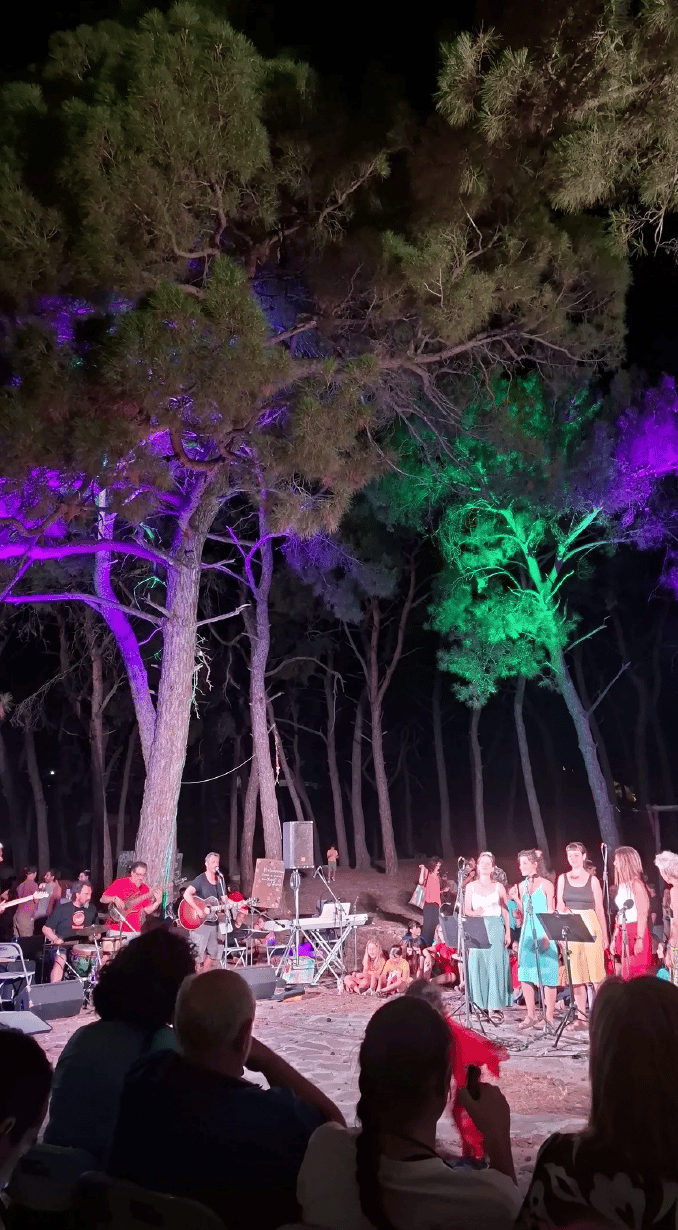
One of the things I loved about the team was getting to know people outside their job titles. Vicky, for example, is also an amazing singer. One night we went to see her perform at an outdoor music festival under the trees. It felt so different from the version of Lesvos I saw during the workday, and it is still one of my favourite nights from the whole six weeks.
And then there were the people who became my little Lesvos family.
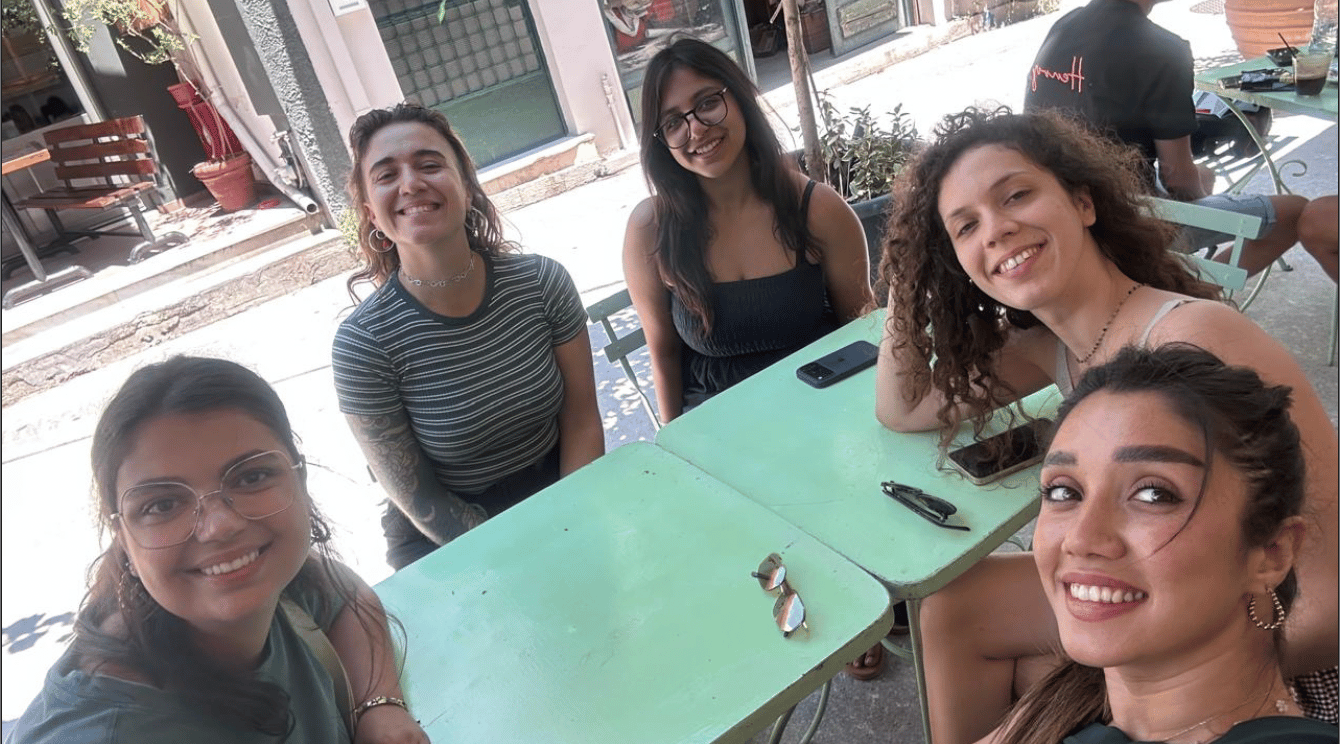
Megi, my roommate from Luxembourg and fellow Legal Assistant, basically became my sister for those six weeks. We lived together, worked together, explored the island together and somehow, after spending practically the entire day together, would still choose to hang out afterwards. I think that says everything.
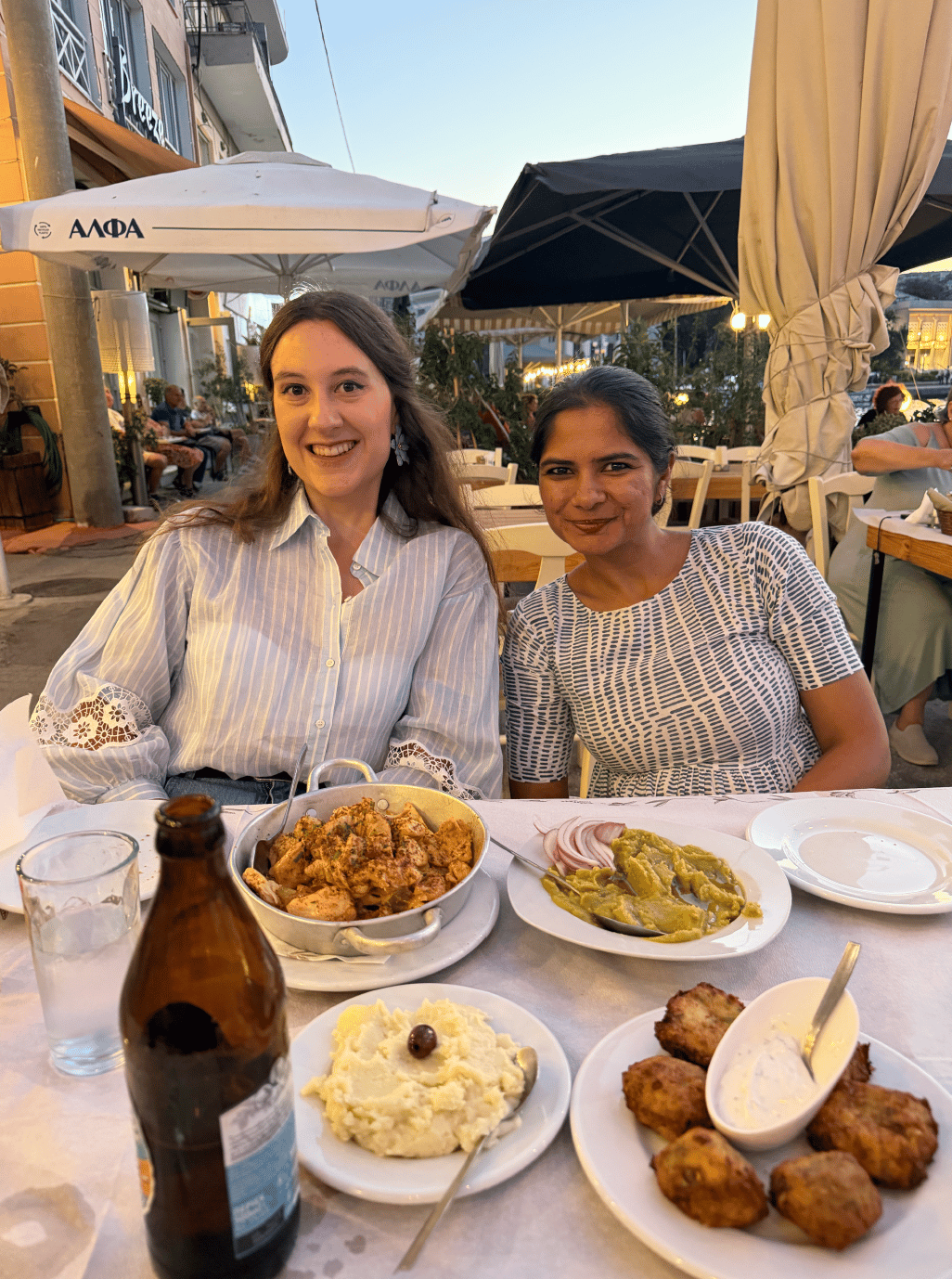
Then there was Natalia, one of the lawyers I worked with, and Shirin, one of our interpreters. We became a little girls' girl group very quickly. Outside the office, those titles stopped mattering. There were dinners, inside jokes, random conversations after long days and all the tiny moments in between that are impossible to properly capture in a reflection.
What made those friendships especially comforting was that we understood what each other's days looked like. Some days at ELIL were emotionally heavy, and there was something nice about being around people who didn't need an explanation for why a particular interview had stayed with you.
At the same time, we were also just a group of girls living on a Greek island for a little while. We went for food, watched sunrises, found beaches and laughed about things that had absolutely nothing to do with asylum law.
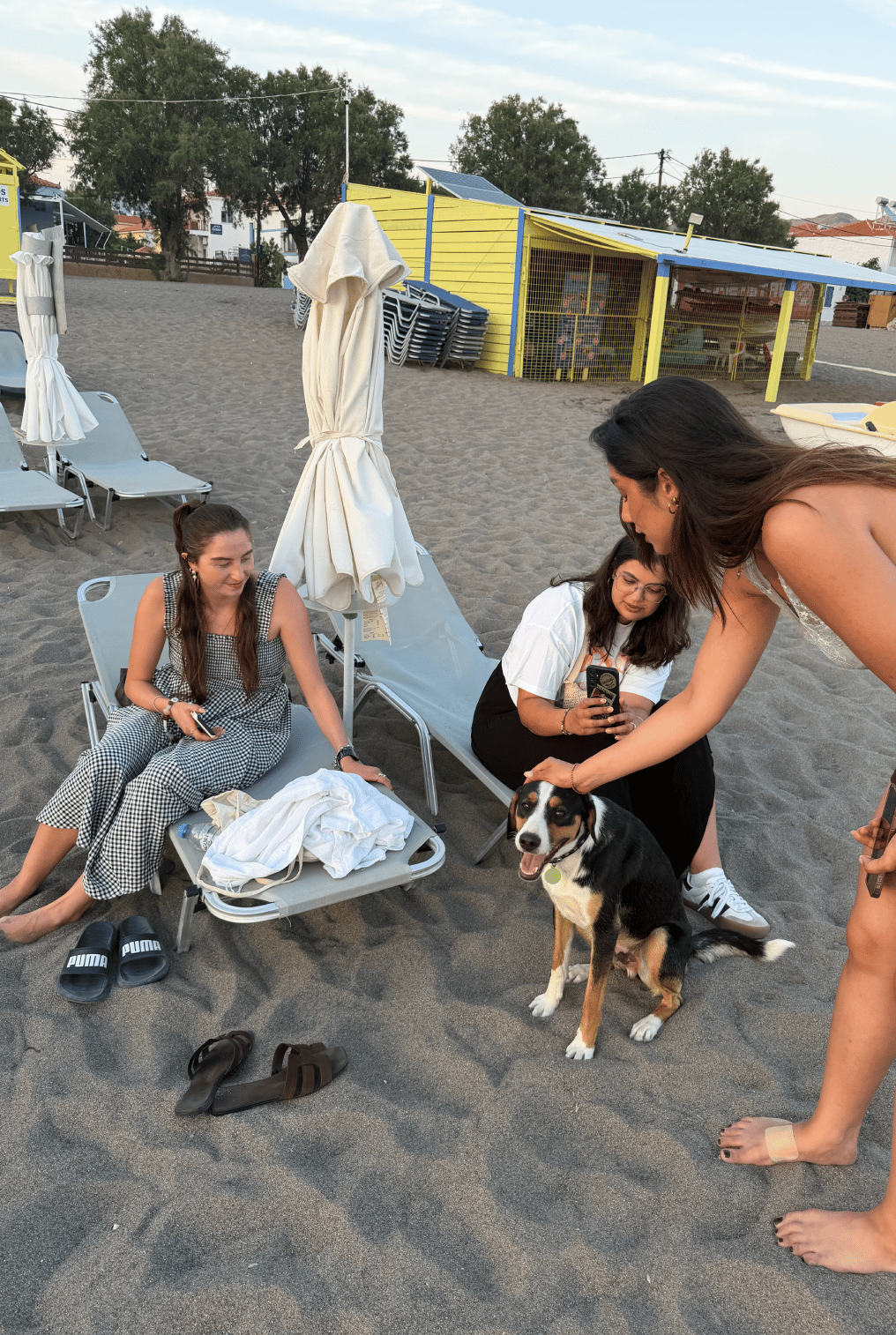
There were beach days too, and I learnt there's nothing as too many beach days.
The circle kept changing too. ELIL regularly had lawyers from across Europe joining for short pro bono placements. Some normally worked in corporate law in Brussels or London and would spend two weeks with us before heading home again. People like Valentine and Neetu would enter our little routine, join the dinners and conversations, and then suddenly it would already be time for them to leave.
And somewhere in the middle of all of that, I turned 21. I had arrived in Lesvos barely knowing anyone and ended up spending my birthday weekend in Eresos with my colleagues. Couldn't have asked for a better birthday!
Those things might sound separate from the 'leadership' part of the placement, but I don't think they were. A lot of what I learned came from figuring out how to enter a new team, let people teach me, build trust and actually become part of a community instead of just passing through it.
Carrying people's stories
In Week 1, I wrote that I was still figuring out how to carry what I heard without letting it sit too heavily. I don't think I've completely figured that out.
Over these weeks, I met people dealing with persecution, discrimination, family separation, questions of identity, vulnerability, pregnancy, childhood and enormous uncertainty about what would happen next. I also saw things that stayed with me: people with injuries, families navigating the camp, children living within a system built around applications and interviews, and people walking into our trailer without knowing whether we could help.
At the beginning, I worried that getting used to the work might mean becoming desensitised. I don't think that happened. If anything, I became better at understanding the difference between empathy and absorbing everything.
If I carried every story as though it were my own, I wouldn't necessarily become better at helping the person telling it. But if I treated every applicant as just another file, I wouldn't be doing the job properly either. I think the balance is somewhere between those two, and I'm still learning where.
Leadership without authority
Before Laidlaw, I think I associated leadership much more strongly with authority: making decisions, directing people, taking charge. ELIL challenged that.
I was a Legal Assistant. I wasn't the lawyer making the final legal assessment. I wasn't running the organisation. I wasn't deciding asylum applications.
But there were still plenty of moments that required responsibility: making sure my notes were accurate because someone else would rely on them, recognising when I didn't know something, doing research properly even when nobody would see the hours behind it, treating applicants with dignity when communication was difficult, and adapting when the skills I expected to use were not the skills the organisation actually needed.
I also saw leadership in other people. In Vicky giving me responsibility without making me afraid to ask questions. In interpreters carrying enormous responsibility without being the loudest people in the room. In lawyers stepping away from their regular practices to spend time working pro bono on Lesvos. And in the people who supported Salman without taking ownership of what he built.
Leadership, I have realised, can be extremely quiet.
Geographic luck
There is one idea I keep returning to as I prepare to leave: geographic luck.
I keep thinking about the world map at PAREA. I coloured India, somebody else added somewhere else, and neither of us chose where we began. Before coming here, migration was much easier for me to encounter through legislation, cases, reports and statistics. Here, I saw what those systems look like at the level of one person.
A statistic about thousands of arrivals does not tell you what language one person speaks. A nationality does not tell you why they left. A country being broadly categorised one way does not tell you whether one individual is safe there. An omission in an interview does not tell you why somebody was afraid to disclose something. And an asylum application definitely does not capture the whole person making it.
At the same time, I don't want to leave Lesvos remembering only difficult stories. I want to remember World Refugee Day and everyone dancing to each other's music. Despacito, obviously. I want to remember sunrise mornings, Greek dinners and lunches that went on too long. I want to remember Rashu wandering around the office, Salman bringing food to the table, Vicky singing under the trees, beach days, birthday cake and the people who somehow became family in six weeks.
Because somewhere along the way, the people around me stopped feeling like the categories I had first learned about in training — applicants, refugees, interpreters, lawyers, volunteers — and simply became people I knew.
Leaving
Leaving Lesvos feels strange because, for me, the six weeks are ending, but nothing around me is actually ending. The next morning there will still be another camp shift. Someone else will walk into the trailer with a question. Another interview will need an interpreter. Another piece of country-of-origin research will need to be checked. Somebody else will sit where I sat and take the notes.
I can pack my suitcase and fly home. The work, and the uncertainty many of the people we met are living with, continues.
Six weeks was never going to change an asylum system, and I don't want to pretend that it did. What I could do was contribute responsibly to one organisation working within it, learn from the people around me and try to be useful in the role I actually had.
I came to Lesvos asking myself how I could help. I think I'm leaving with a harder question: how do I make sure the way I help leaves room for somebody else's dignity, agency and voice?
I came here to learn how to help people seeking protection. I think I am leaving understanding that, before anything else, I had to learn how to see them.