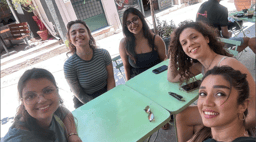
More Than One Story | LiA Week 5
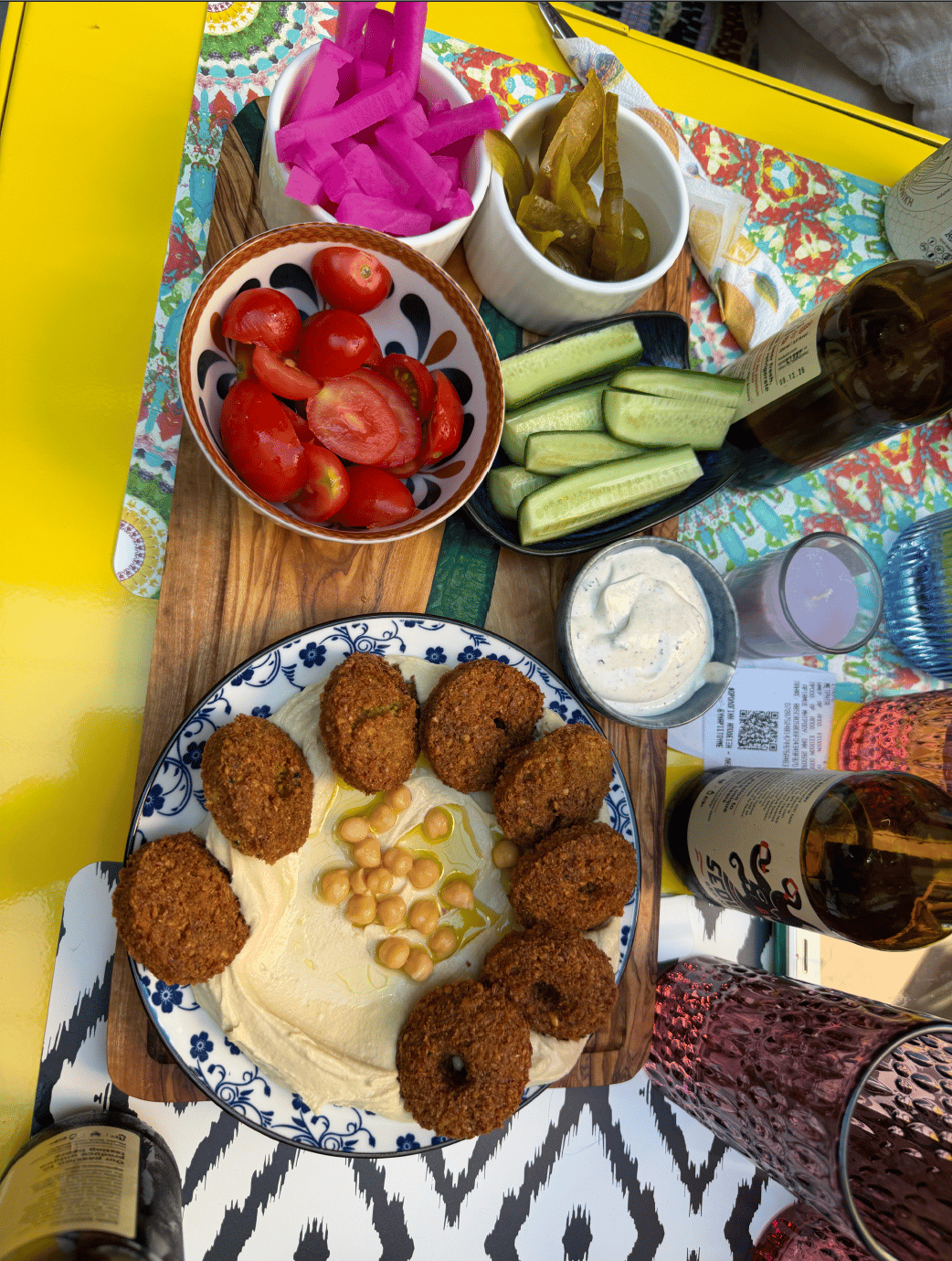
One of my favourite places in Lesvos was not a beach, a historic site or anywhere I expected to become important to me.
It was a pizzeria: SAVANNA HAVIR.
By this point, the people I worked with had become a huge part of what Lesvos meant to me, and HAVIR somehow came to represent that better than almost anywhere else.
Watching something begin
One of the people I was lucky enough to work with at ELIL was my colleague Salman, an Arabic interpreter and genuinely one of the friendliest people I met in Lesvos. He was the kind of person who brought warmth into the office almost immediately, and working alongside him, it was difficult not to notice how much energy he brought to the people around him. Earlier in his life, Salman had experienced displacement himself and had lived in a refugee camp in Greece. I do not want to tell his entire story here because it is his story, not mine, but one part of it became a really special part of my own experience in Lesvos.
Salman's HAVIR fundraiser and story: JustGiving fundraiser
Salman had always loved cooking, and before I arrived, one of the lawyers who had worked with him through ELIL started a fundraiser to support his dream of opening his own restaurant. Somehow, I happened to be in Lesvos when that dream actually became SAVANNA HAVIR. Watching it open made me think a lot about what meaningful support can look like. Salman already had the passion, the skills, the ideas and, very clearly, the willingness to work incredibly hard. What the fundraiser helped provide was an opportunity to turn those things into something tangible. Sometimes support does not have to mean doing something for another person; it can simply mean helping remove the barrier that is standing between someone and what they are already capable of building for themselves. It also challenged the way I had previously thought about leadership and impact. I think I used to imagine helping as something much more active, being the person with the solution, whereas this showed me that sometimes the more meaningful role is to recognise what somebody is capable of and help create the conditions in which they can do it themselves.
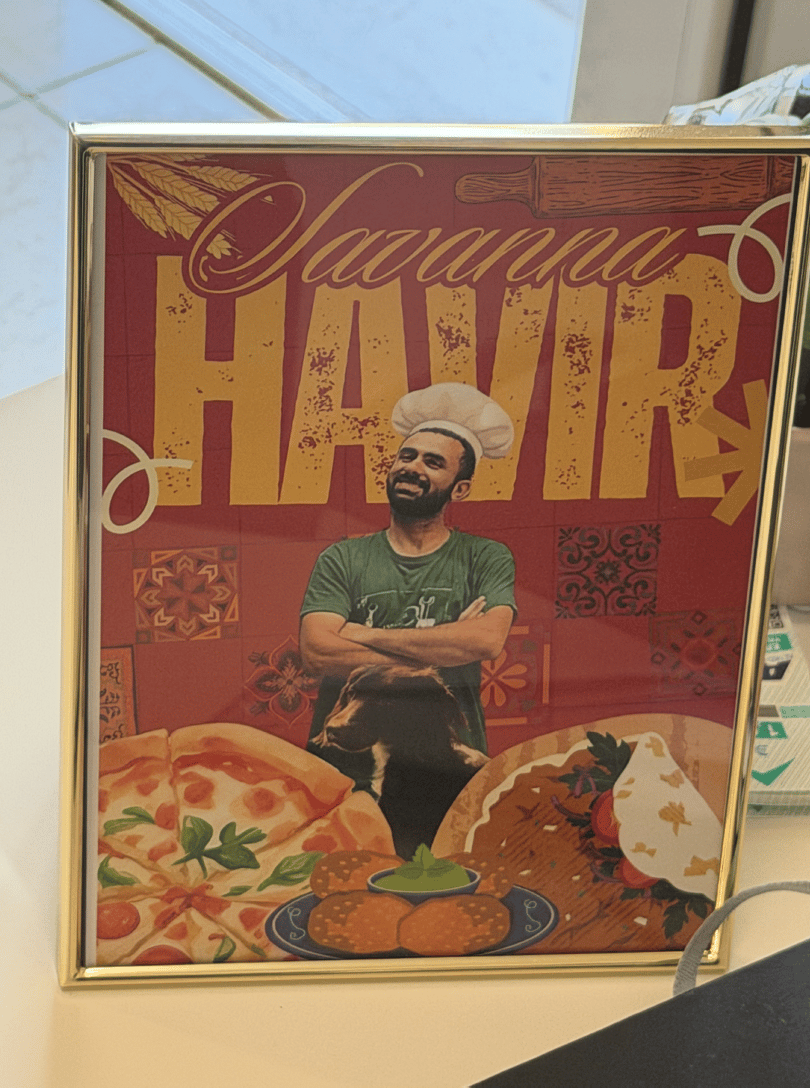
We were incredibly proud of him when SAVANNA HAVIR opened. My colleagues created a personalised poster for the opening with pizza, falafel, wheat and cooking imagery, Salman in a chef's hat and, most importantly, his dog Rashu, who was basically an honorary member of our office. We also gave him an evil-eye charm, one of the symbols I had come to associate most with Greece.
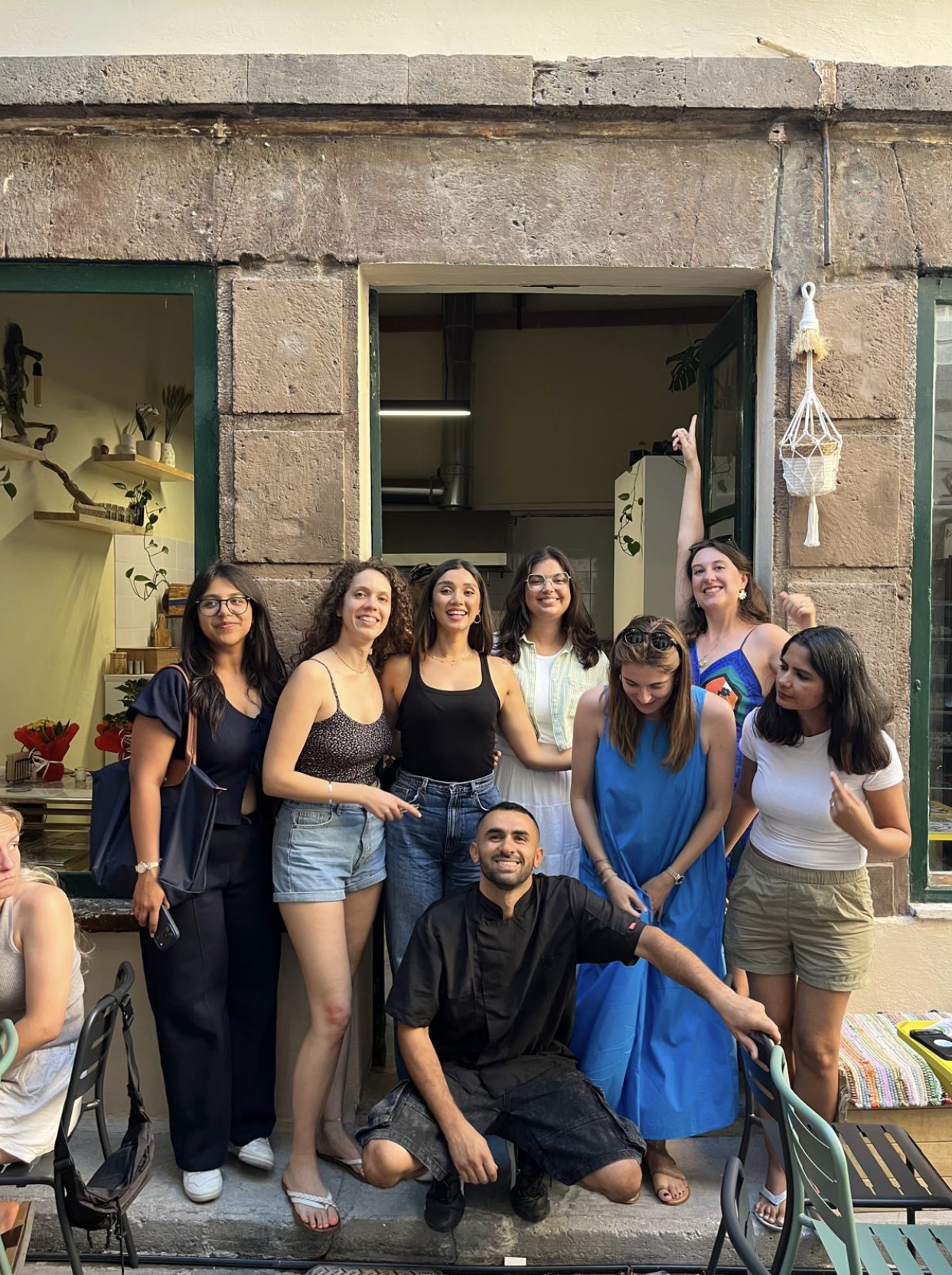
After that, his restaurant slowly became our place. We could end up there several times in a week for dinner, and Salman was constantly experimenting with food and wanting everyone to try whatever he had made.
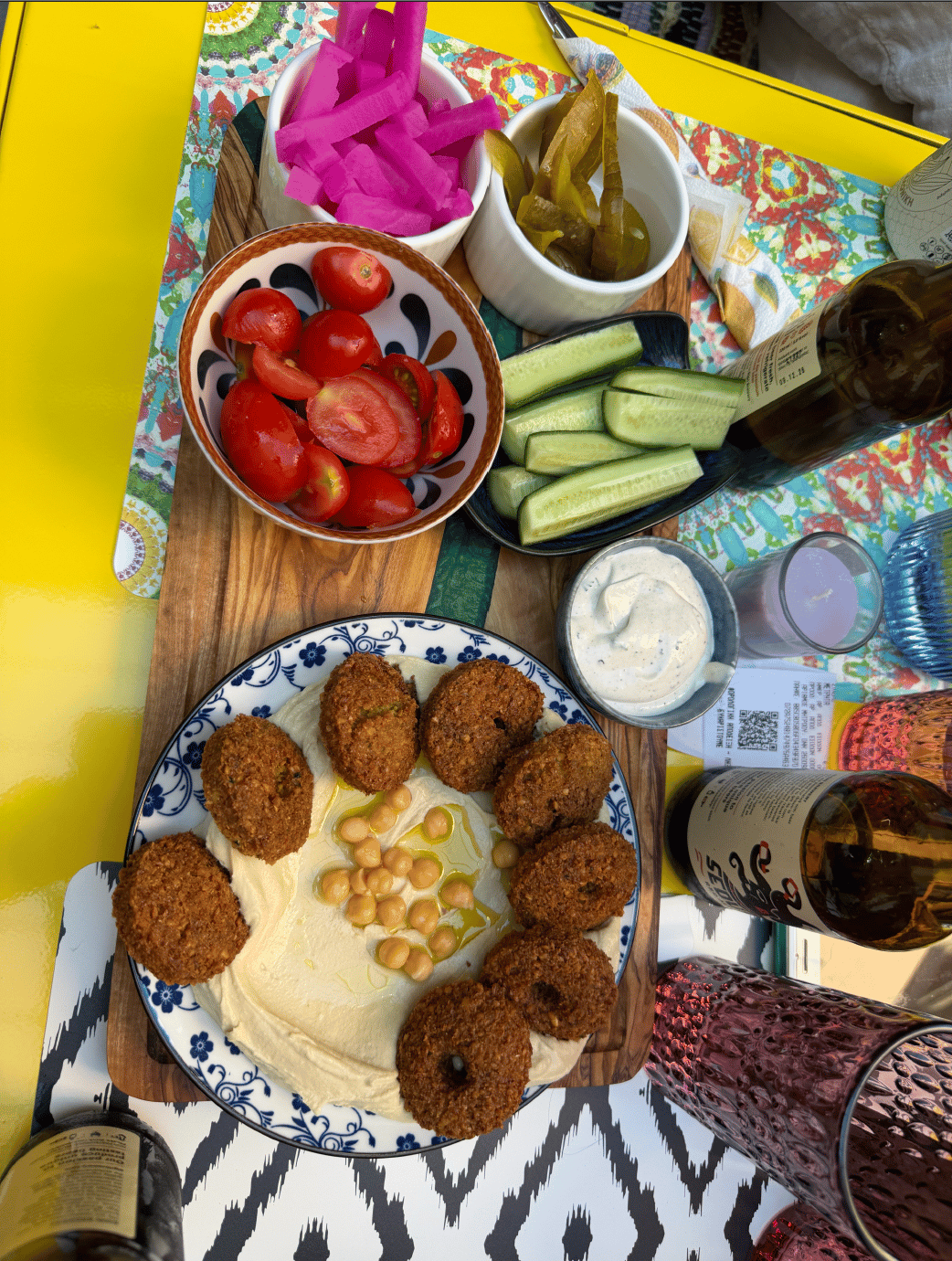
There was something incredibly comforting about being there with everyone after work, but there was also something really meaningful about watching the restaurant grow. It made the impact of that initial support feel much more real to me. A fundraiser might look like a financial contribution on paper, but here I could physically see what it had helped make possible: a restaurant, a livelihood, a space Salman was proud of, and something that brought people together. I came to Lesvos expecting that the moments that affected me most would happen inside the camp or through legal work, and many of them did. But some happened over dinner, surrounded by colleagues who had become friends, in a restaurant we had watched begin.
The danger of reducing somebody to one chapter
HAVIR connected to something I had been thinking about since World Refugee Day. In our work, we meet people at an incredibly specific and difficult point in their lives. They are applicants; they need an interpreter; they have an interview coming up; they need legal assistance; they may need to explain why they left somewhere. It becomes very easy for the system, and sometimes for those of us working around it, to see someone primarily through that moment.
Salman was a reminder of how incomplete that picture is. Someone can have experienced displacement and also be an interpreter, colleague, friend, business owner, chef, dog owner and the person insisting that everyone try whatever just came out of the kitchen. The word “refugee” can describe an important legal status or lived experience, but it cannot describe an entire person.
Precision and identity
That idea followed me into another country-of-origin research assignment this week. I was researching Afghanistan, specifically persecution affecting Shia people and questions concerning the recruitment or indoctrination of young boys. Very early in the research, I had to clarify something fundamental: Hazara and Shia do not mean the same thing. Hazara refers to an ethnic group, while Shia refers to a branch of Islam. Many Hazaras in Afghanistan are Shia, so ethnicity and religion can overlap significantly, but they remain distinct characteristics. It sounds like a small distinction, but in an asylum context it is not.
My research took me through material documenting violence and discrimination affecting Shia and Hazara communities, restrictions affecting religious life, and information concerning the recruitment and indoctrination of minors. The assignment made me think about how easily we categorise people: Afghan, refugee, Hazara, Shia, minor. Each label may tell you something relevant, but none tells you the whole story. Someone's ethnicity, religion, gender, age, family circumstances and geography can intersect in ways that completely change what vulnerability looks like. That was something I understood theoretically before coming here; working with actual cases has made it much harder to overlook.
Becoming more independent
By this point in the placement, I also noticed that I was not approaching every task with the anxiety I had during my first camp shift. I still asked questions constantly; if anything, I think I became more comfortable asking them. The difference was that I was getting better at identifying what I did not know. At the beginning, uncertainty made me feel underprepared. Now I see checking something as part of doing the job properly.
The same applied at the camp. I no longer felt that initial panic when somebody walked into the trailer with a question I had not heard before. I could listen first, work out what they were actually asking, help if it was within my role, and ask somebody else if it was not. That change feels small, but it has probably been one of my biggest developments over these weeks.
What I'm taking from Week 5
I've been thinking increasingly about how dangerous it is to believe that knowing one fact about somebody means you understand them. That applies to legal research, to culture and to the people we meet. Cultural humility is not knowing everything about every culture represented in the camp; that would be impossible. Maybe it is almost the opposite. It is knowing that the category in front of you is incomplete, being curious enough to ask, and being disciplined enough not to fill the gaps with assumptions.