What distinguishes the greatest leaders of our time is that success is very rarely a goal for them; it’s a byproduct of other goals that they have
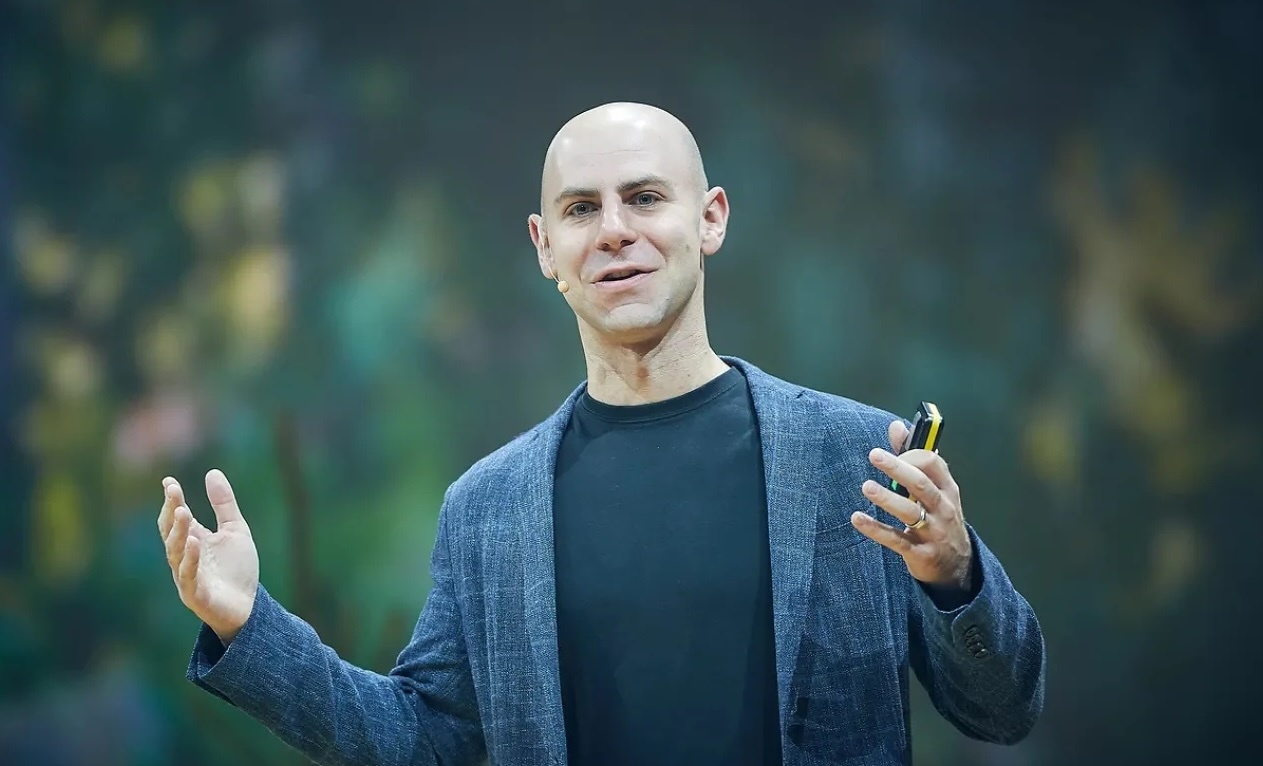
Adam Grant: Beyond the Measure of Success
For many across the Laidlaw community, the new academic year is now beginning to take shape. Research projects are getting under way, new plans are being made, and our annual conferences are drawing closer around the theme of Ambition. It is a good moment, then, to think not only about how much we hope to achieve, but about what we want that ambition to be in service of. Adam Grant, an organisational psychologist whose work has long explored motivation, originality and achievement, offers a useful distinction between the goals we pursue and the success that may follow them:
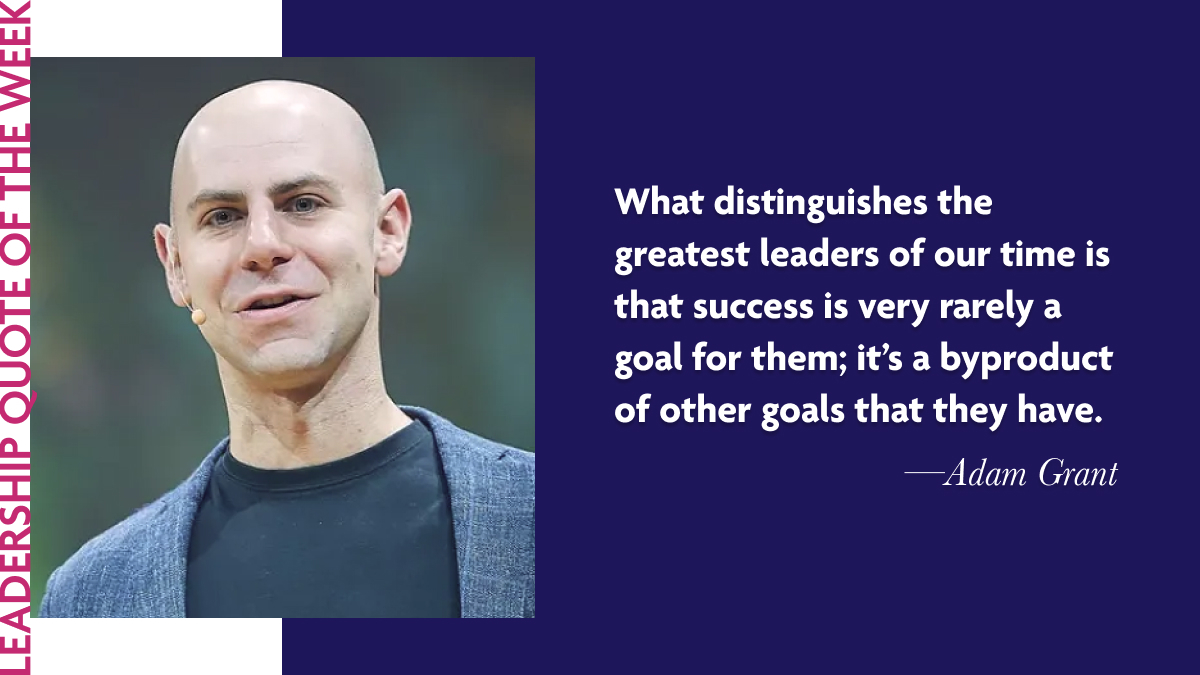
Adam Grant: “What distinguishes the greatest leaders of our time is that success is very rarely a goal for them; it’s a byproduct of other goals that they have.”
The Goal Beyond Success
Grant has spent much of his career studying what motivates people to achieve, contribute and challenge established ways of working. In books such as Give and Take and Originals, he returns often to the idea that consequential work tends to begin with a goal larger than personal advancement. When discussing this quote, he points to leaders who organise people around a vision, idea or project with consequences beyond themselves, whether that means solving a problem, advancing an idea or creating something that expands what others are able to do. With the academic year beginning and our conferences drawing closer, Grant’s point feels especially timely, since ambition inevitably raises a question of direction. Success may mark an achievement, but the goal itself determines what that achievement is for. Grant’s work invites a broader view of ambition, one concerned with the substance of the goal itself and the change it might make possible. Dreaming big, in that sense, begins with choosing something worth pursuing.
Seeing Who the Work Is For
Grant’s research gives this idea a more practical dimension. In one study, university fundraisers spent a few minutes with a student whose scholarship had been made possible by their work; over the following month, they spent far longer speaking with potential donors and raised substantially more money. A brief encounter had made the purpose of their effort tangible, attaching everyday tasks to a person whose life had been changed by them. For students, researchers and leaders, there is something useful in that finding as projects begin to fill with deadlines, experiments, revisions and measures of progress. Staying connected to the people, questions or possibilities that first made the work worth undertaking can give ambition a longer horizon, one capable of sustaining effort well beyond the satisfaction of reaching the next marker.
Values in Focus
Grant’s words speak to the Laidlaw value of being #Ambitious and the Oxford Character Project virtue of #Transcendence. Ambition gives us the scale of the goal, while transcendence gives it direction, keeping us future-oriented, purposeful and attentive to what the work is ultimately for. Grant’s point is that meaningful achievement often follows from pursuing something larger than the achievement itself, which makes ambition most powerful when it is anchored in a vision worth carrying forward.
A Call to Reflect
As you consider Adam Grant’s words, we invite you to reflect and share in the comments: what are you ambitious for, beyond the markers of success along the way
Photo credit: Pasi Salminen

Hi! I'm Amanda, a third year Neuroscience student and Laidlaw alum from UCL. I'm Swedish-Persian and grew up in Sweden before moving to London for uni. These days, alongside my studies, I work for the Foundation as a Marketing Assistant.
For my first year research project, I worked on optimising alginate hydrogels for 3D astrocyte culture systems. In simpler terms, I was figuring out the best way to prepare a jelly-like scaffolds so that star-shaped brain cells called astrocytes could grow in three dimensions rather than flat on a dish. This matters because 3D environments mimic the brain more realistically, which could help researchers develop better treatments for neurological disorders!
For my Leadership-in-Action project, I co-created Beyond the Books, a resource designed to help students from underrepresented backgrounds navigate the unwritten rules of university life, from internships and networking to professional opportunities that aren't always obvious if you're the first in your family to go to uni.
Always happy to connect, whether you want to chat about neuroscience, widening access, the Laidlaw experience, or just say hello! One of my favourite things about this community is getting to meet people from different universities and backgrounds, so please do reach out! 🌟