Week 5 & 6 - Change is Inevitable

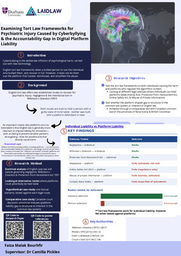
When I first planned this project, I assumed the ending would be recommendations on how the law could be adapted to address psychiatric harm caused by cyberbullying. That's what a 'serious' piece of legal research seemed to require: find the problem, then fix it. So I wrote 'Conclusion and Recommendations for reform'? at the bottom of my plan, question mark and all, without noticing the question mark was doing more work than I'd given it credit for.
My supervisors feedback asked one important question: is law reform actually the purpose of this project, or is the real contribution simply exposing a gap in the law for a group of victims the law wasn't built to see? Sometimes, she said, exposing a gap is enough.
I expected that comment to change my conclusion. It changed how I read everything above it.
Looked at again, my own research had already been telling me this. A cyberbullying victim can sue the individual bully under the Protection from Harassment Act and, on the right facts, recover full damages, this is proved by Green v DB Group. But the platform that hosted and amplified the abuse cannot be touched in tort at all, not because of some fixable technicality, but because negligence stalls at the 'fair, just, and reasonable' stage, and Wilkinson v Downton needs a subjective intent no platform can form. The asymmetry isn't a problem I need to solve. It's the finding.
What changed in my research up to now was that I stopped asking 'how do I fix this' and started asking 'what precisely is the imbalance, and why does it exist?' The second question turned out to be the one my research had actually been answering the whole time - I just hadn't recognised it, because I was still holding the plan in a reform-shaped frame.
Change doesn't always arrive as new information. Sometimes it arrives as permission to look at information you already had through a different lens, and once you've seen it that way, you cannot really go back to the old reading.
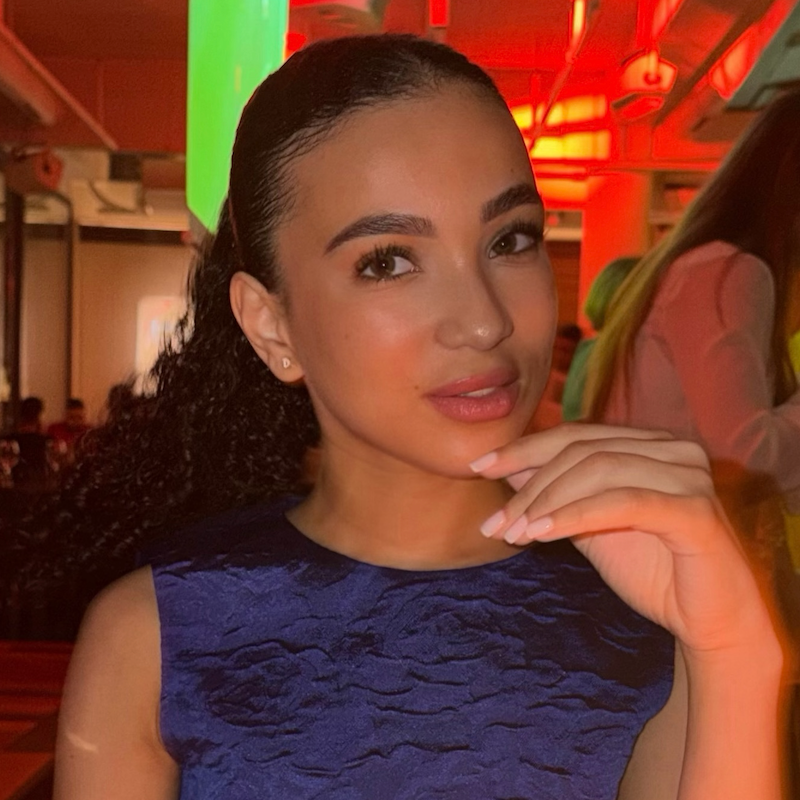
I am Faiza Malak, currently a law student at Durham University. I am excited to be commencing my research this summer and look forward to sharing updates with the network on both the breadth and depth of my work and experiences. Stay tuned!