Two things happened this week that had nothing to do with each other, and between them they took the week apart and put it back together differently.
The first is that I got sick. It started as a scratchy throat on Monday evening and by Tuesday I had a fever and could not read a paragraph without losing the thread. I lost the better part of three days. My plan for the week was interviews and data synthesis, which is the most people-dependent stretch of the whole project, and instead I was in bed watching a scheduling window close.
The second is that my visa for Malta came through. I refreshed the portal maybe four times before I believed it.
What went well
I sent the Week 1 progress note to Alex before I got sick, and we walked through it on our call. That turned out to matter, because it meant that even during the days I was useless, the work had a shared shape and Alex could push back on it in his own time. His comments were more useful than agreement would have been. The one that stuck: be careful about who this tool is actually for. It's a question I hadn't answered properly and I've been circling it ever since.
Once I could think again I got moving on outreach. I put together a short interview guide, wrote to analysts, and started aggregating the field material I'd gathered in Week 1 into something structured instead of a folder of PDFs. Fewer conversations happened than I'd planned, but the ones that did happen were better prepared than they would have been if I'd rushed into all of them on Monday.
What could have been done differently
I waited too long to tell Alex I was ill. I spent Wednesday convincing myself I'd be fine by Thursday and could quietly catch up, and I lost a day of his ability to plan around me. When I finally sent the message it took two lines and he was completely relaxed about it. The delay was entirely of my own making, and it came from wanting to look reliable rather than from anything practical.
I'd also planned the week with no slack at all. Six weeks feels long when you're writing the plan in February. It doesn't feel long when a virus takes three days of it.
What I learned about myself when working with others
I confuse reliability with never having problems. Those are different things, and the second one isn't available to anyone. The version of reliability that's actually useful to a collaborator is telling them early so they can move.
I also learned that being unable to work forced me to think, which I'd been substituting activity for. Some of the clearest thinking I've done on this project happened while I was too foggy to open my laptop.
What I learned about leadership
This is the part of the week I keep coming back to. Sitting with the Do No Harm reading and Alex's comments, I started to understand that this project is not really a technical problem with a cultural wrapper. The culture and the purpose are the problem.
GI-TOC's approach is field-first and harm-reduction-led rather than enforcement-led. That isn't a stylistic preference. It shapes what the tool is allowed to be. A system that ranks interventions by how much smuggling they suppress would be a straightforward thing to build and would fit neatly into an enforcement worldview, and it would be the wrong tool for this organisation, because suppression displaces activity rather than removing it and the displacement lands on people whose income is tied to those routes. The same output, handed to a different actor with different intentions, becomes something I would not want to have built.
So the purpose has to be decided before the architecture, not after. And the culture of the organisation you're building inside tells you what the honest defaults are. I don't think I understood that before this week. I think I would have built a technically competent and ethically careless thing.
What I want to focus on next
Turn all of this into a written requirements document so the constraints are on paper and not just in my head. Narrow the scope to a case we can actually evidence. Get a first prototype in front of a real analyst rather than in front of my own optimism.

The power of engineering to change the world using simple lines of code and circuit diagrams captivates me. Having invented India’s most economical 3D Printer, I’ve experienced firsthand its profound impact.
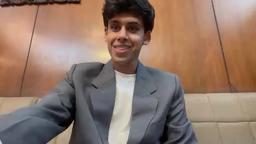
Namaste! I’m Vedant, born in Singapore and raised in the bustling city of Mumbai.
My journey started in 2020, when I needed a 3D printer for the rapid prototyping of projects but couldn’t afford one. Using recycled computer parts, a classmate and I managed to build one for under $100. Continuing my pursuit of frugal innovation, I developed an automatic hand sanitizer dispenser during the pandemic which I provided to local clinics and stores, despite supply chain shortages.
In a quest to spread the innovation culture, I began delivering technical guest lectures on ‘Innovating with Arduino’ at engineering colleges and high schools across India. I introduced them to my ‘5-step prototyping mantra’, and used conversational psychology techniques to connect with students from diverse social backgrounds. From initially facing apprehension, to leaving the classrooms with thundering applause, the experience has been a rollercoaster. Forward to 2024, these lectures have become an awaited event at these colleges!
My work has been featured in 30+ newspapers, journals, and media including platforms like TEDx and Josh Talks with a combined global reach of 50M+.
Apart from engineering and tech, I’m an avid cyclist. My weekends usually consist of 100–150 km of backcountry rides. In Mumbai, I’ve worked with the police and the Smart Commute Foundation to advocate for bike lanes, install parking stands, and conduct cyclothons which saw over 5000 participants.
I’m thrilled to join the 2025 cohort of Laidlaw Scholars — and I can’t wait to connect, learn, and build alongside all of you!
Warm Regards,