What went well
I built the MVP around the narrowed hero use case from last week. Orientation, not prediction. A researcher opening an unfamiliar case, in their first day or two, needing to know quickly what the archive already knows.
Here's roughly what it does. The report archive gets broken into passage-level chunks rather than whole documents, because "the answer is somewhere in this 60-page PDF" is not an answer. Search runs two ways at once — keyword matching for the times you remember the exact phrase, and semantic matching for the times you only remember the idea — and the results get merged. On top of that sit filters that match how people actually think about this material: country, year, actor, route, intervention type.
What comes back is not a summary with sources at the bottom. It's the passages themselves, each one clickable straight through to its place in the original report, with the surrounding context intact. Same one-click traceability principle as the main tool, applied to the archive. The analysts told me in Week 4 that if they can't see where something came from they can't use it, and that turned out to be the design constraint for everything I built afterwards.
The last piece was handover, and it's the thing I nearly got wrong. It would have been very easy to fly home with a working tool that nobody else could run. So the final two days went into a proper README, documentation of the data pipeline and the API dependencies, a short recorded walkthrough, notes on running costs and where the keys live, and a written list of the known weaknesses so that whoever picks it up inherits my problems along with my code. If this stops being useful the week after I leave, it wasn't a contribution, it was a demo.
What could have been done differently
I left handover to the end. It should have started in Week 4, alongside the build, and doing it under time pressure meant the documentation is adequate rather than good.
And the biggest one: six weeks is not enough time to test whether any of this improves outcomes for the people the reporting is about. I can tell you analysts found the orientation brief useful. I cannot tell you it led to a better decision, and I certainly cannot tell you it reduced harm to anyone in Libya or Niger. The Week 3 objective about surfacing second-order effects is measurable in principle and remains largely unproven in practice. Writing an honest limitation is not the same as solving it.
Goodbyes
I said goodbye to everyone at the office on Thursday, and I was more affected by it than I expected. Some of the warmest goodbyes I've had.
On the last afternoon I did the tourist things I'd been putting off. Shopping for the family in Mumbai, mostly — Mdina glass, a bit of silver filigree, some Maltese honey and nougat, which I am fairly sure will be eaten within a day of me walking through the door. My onward flight goes to India before term starts, which means I get to explain all of this in person to people who have been hearing about it in fragments over the phone all summer.
Then one last gelato at Balluta Bay, sitting by the water while the light went. I thought about the first week in Toronto, sitting on my floor with printed case studies and sticky notes, having no real idea what I was walking into.
What I learned about myself when working with others
I came into this thinking my contribution would be technical, because that's the thing I'm confident about. Almost everything valuable I produced came from a conversation I nearly didn't have. The tool changed direction three times, and every change came from someone else's sentence, not from my own code.
I also learned that I am worse at asking for help than at offering it, and that the imbalance is a form of pride rather than politeness.
What I learned about leadership
The thing I'll carry longest is that ambition and honesty pull in opposite directions, and you have to keep choosing. Almost every version of this project that looked more impressive was also less true. The five-year impact projection was the most impressive thing I built and the least defensible. Cutting it back was the right call and it made the final demo weaker. I don't think there's a way around that trade-off; there's only noticing it each time it comes up.
And the second is that leaving well is part of doing the work. A contribution that depends on you being in the room is not a contribution to the organisation, it's a contribution to your own summer.
What I want to develop or focus on next
Longer term, I want to keep working on the data-gathering problem I flagged to Alex, because it's the real ceiling on any of this. And I want to hold on to the habit that made this summer work, which was sending the uncomfortable email a week earlier than I wanted to.
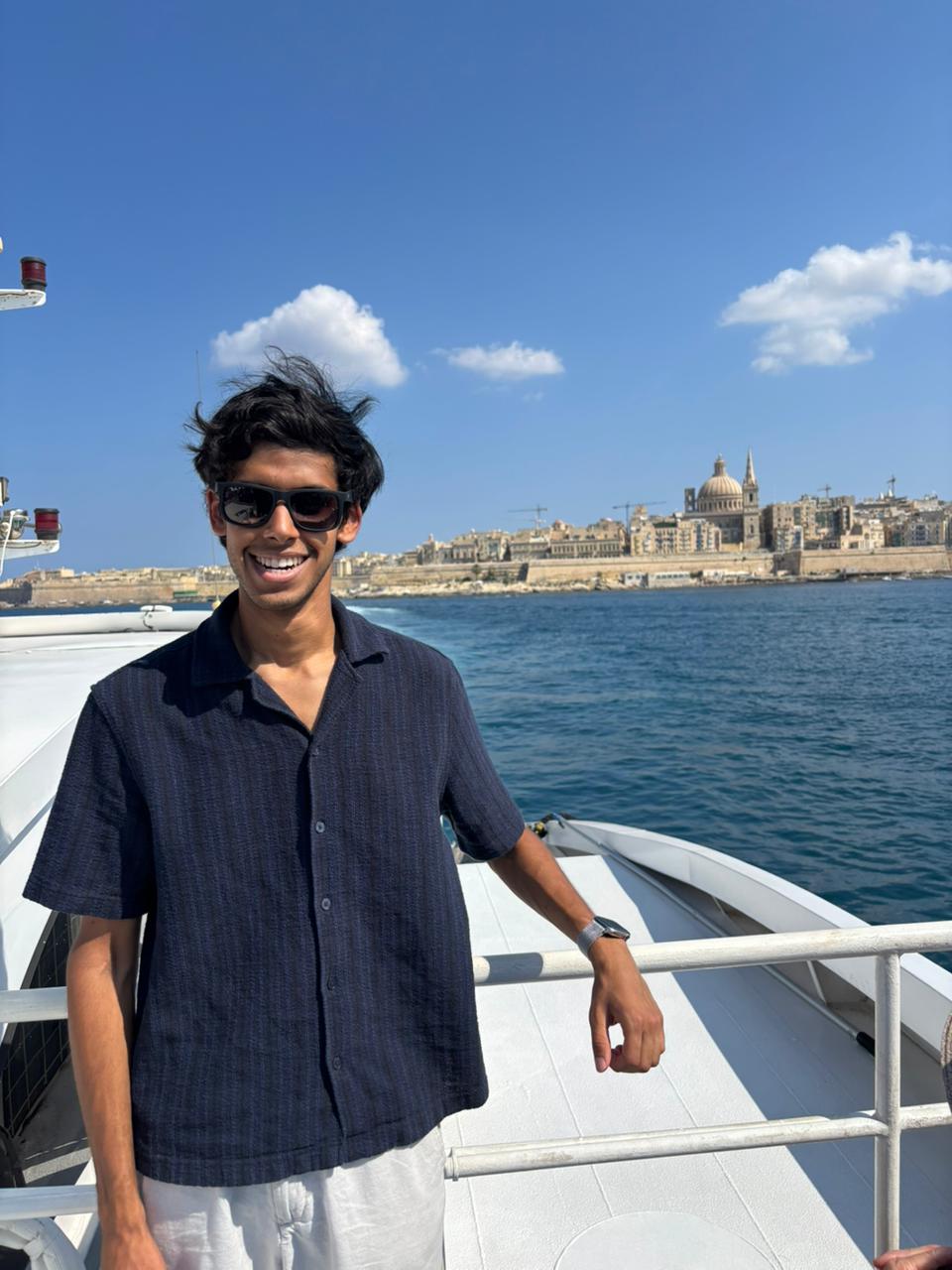

The power of engineering to change the world using simple lines of code and circuit diagrams captivates me. Having invented India’s most economical 3D Printer, I’ve experienced firsthand its profound impact.
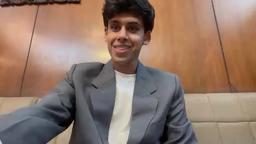
Namaste! I’m Vedant, born in Singapore and raised in the bustling city of Mumbai.
My journey started in 2020, when I needed a 3D printer for the rapid prototyping of projects but couldn’t afford one. Using recycled computer parts, a classmate and I managed to build one for under $100. Continuing my pursuit of frugal innovation, I developed an automatic hand sanitizer dispenser during the pandemic which I provided to local clinics and stores, despite supply chain shortages.
In a quest to spread the innovation culture, I began delivering technical guest lectures on ‘Innovating with Arduino’ at engineering colleges and high schools across India. I introduced them to my ‘5-step prototyping mantra’, and used conversational psychology techniques to connect with students from diverse social backgrounds. From initially facing apprehension, to leaving the classrooms with thundering applause, the experience has been a rollercoaster. Forward to 2024, these lectures have become an awaited event at these colleges!
My work has been featured in 30+ newspapers, journals, and media including platforms like TEDx and Josh Talks with a combined global reach of 50M+.
Apart from engineering and tech, I’m an avid cyclist. My weekends usually consist of 100–150 km of backcountry rides. In Mumbai, I’ve worked with the police and the Smart Commute Foundation to advocate for bike lanes, install parking stands, and conduct cyclothons which saw over 5000 participants.
I’m thrilled to join the 2025 cohort of Laidlaw Scholars — and I can’t wait to connect, learn, and build alongside all of you!
Warm Regards,