Urban Heritage Conservation and Sustainable Development in Bandung, Indonesia: A Reflective Report for my Laidlaw Research Component
1. Introduction
7 weeks of doing field-visits, policy reviews and routine breakfasts of tofu salads. Mind you, the tofu salads really helped me focus on my day-to-day tasks. I spent my summer researching in Bandung, a city that was both my field site and a place I'd long wanted to understand.
Prior to my visit, I was first introduced to the Bandung Heritage Society, a civil society group that championed heritage conservation in Bandung since the late 1980s. It has been instrumental in driving heritage policies within the city as well as in Indonesia and has played an important role in shaping the legal framework for heritage governance, including the 2004 and 2009 regulations that I analyzed in my policy review.
What I didn't understand yet was how (and to what extent) their work and the work of other community groups was entangled with a much broader question: what counts as heritage, and who gets to decide? This question gave me the direction to find the limitations and the potential of heritage conservation as a tool for sustainable development.
Bandung is often called an open-air museum due to its blend of multiple architectural styles, urban layouts, and green spaces. According to Regional Regulation No. 7 of 2018, the city contains at least 1,770 cultural heritage buildings, categorized into three classes across six distinct heritage areas. However, it was during my field visits that I began to notice what the list doesn't include: the green spaces in the form of urban forests and landscaped gardens, the kampungs and the vernacular architecture that don't fit into the state's classification system.
This report reflects my findings, the process of reaching them, and what it means for sustainability and the heritage governance of cities like Bandung. It will also shed light on the challenges and opportunities of being a non-Indonesian and a trans researcher who learned how to navigate trust and positionality across different stakeholders.
2. Fieldwork Methodology
My research rests on a mix of quantitative and (mostly) qualitative design to examine the governance of urban natural, cultural and built heritage in Bandung. I sourced data through multi-sited field visits, systematic content analysis of municipal policy documents, and a critical spatial review of historical and contemporary planning maps, zoning codes, and regulatory frameworks (RTRW/RDTR). Primary data was gathered through semi-structured interviews with key stakeholders across regional and municipal government departments, civil society organizations, local business operators, and residents across Bandung City and the broader West Java Province. The rationale behind the qualitative approach is that different stakeholders have different understandings of heritage, share some values in common and differ on the rest, and have a wide range of aspirations they advocate for. Conducting these interviews meant learning to hold multiple, sometimes contradictory, definitions of heritage at once.
Conducting research in two languages (Indonesian and English) gave me advantages on understanding nuance. Policy documents used terms like warisan cagar budaya that don’t necessarily translate into cultural heritage. As a non-Indonesian researcher, I was also aware that my presence shaped what people were willing to say.
3. The Case of Bandung
Bandung is Indonesia's second-largest metropolitan area. The city is circumscribed by Cekungan Bandung, a high-altitude geological basin formed on an ancient prehistoric lakebed that drained during the late Pleistocene era (Bachtiar & Syafriani, 2012). At an average elevation of 700 meters above sea level, the city experiences a humid tropical highland climate (Cfb/Am, Köppen) which is characterised by moderate diurnal temperature ranges, distinct seasons, high precipitation and cooler microclimates compared to low-altitude coastal plains.
The city was founded in 1488, but the settlement gained prominence following the construction of De Grote Postweg. The route was built in 1808 under Governor-General Daendels and improved transport connectivity between Batavia (modern-day Jakarta) and the West Java hinterlands. Today it serves as the getaway route for Jakartans seeking cooler weekends.
The Dutch Colonial Administration initiated plans to relocate the capital from Batavia to Bandung because of the region’s abundant hydrological resources and favourable climate (Abendroth et al, 2012). While the plans eventually failed due to the Great Depression, it boosted the city’s population and the administration paved way for several colonial buildings that now hold heritage status. This period also sparked an Art Deco boom with architects like Wolff Schoemaker (designer of Villa Isola and Grand Hotel Preanger) and Aalbers (designer of Savoy Homann Hotel) leaving an architectural legacy that makes Bandung home to one of the world’s largest collections of Art Deco buildings.
Beyond built heritage, the city and its peripheries are dotted with green landscapes that were either a remnant of the garden utopia planned by the Dutch, or valleys that have carried spiritual and ecological value for the locals of the city. Bandung today ranks high in domestic tourism but faces numerous ecological challenges such as land-use conversion, reduced water infiltration, increased surface runoff, flooding and landslides, as well as overtourism.
These ecological pressures are both a part and participle of the city's heritage story, for they are shaped by the land-use priorities and governance structures that influence the city’s heritage.
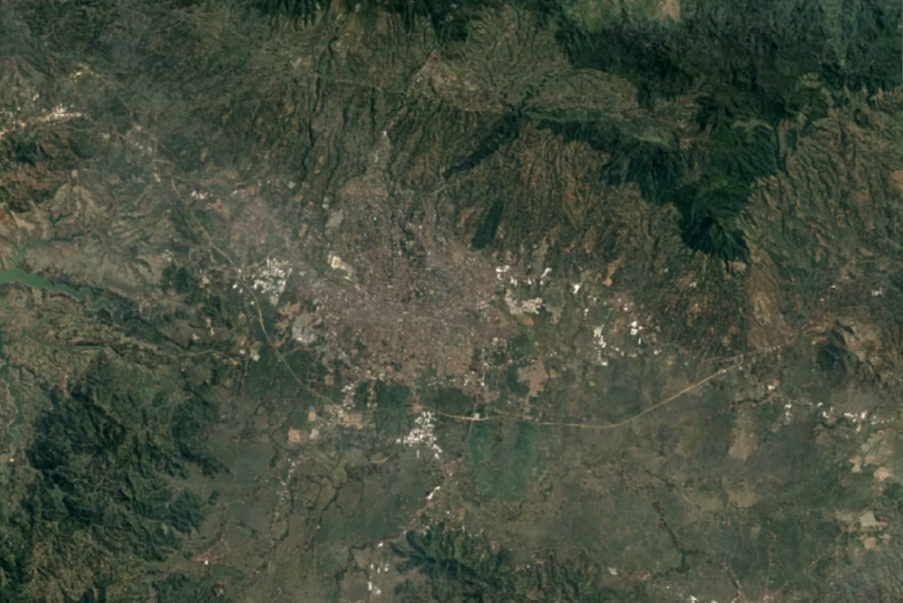
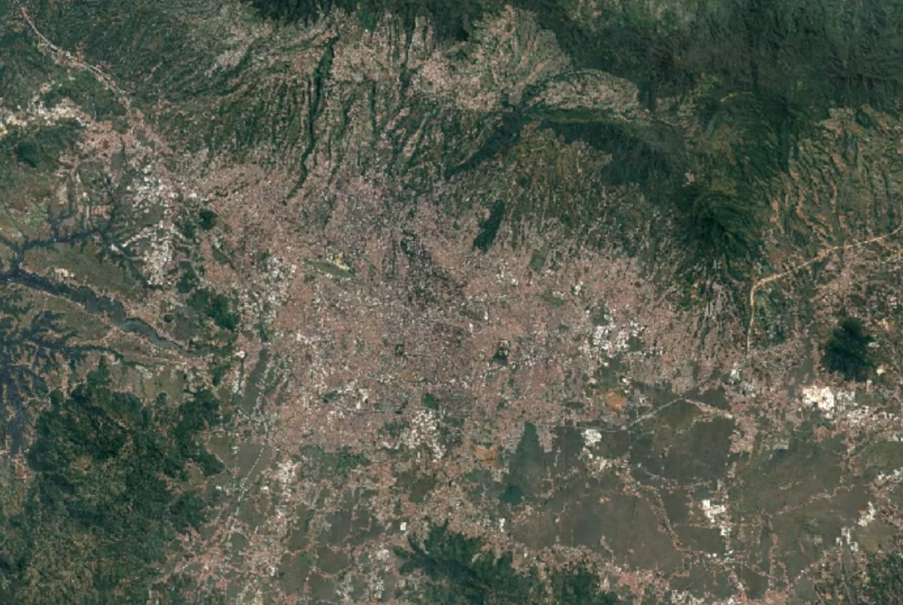
Notice how massive the urban agglomeration cluster has become. It is now the second largest urban area in Indonesia.
4. Theoretical foundations of Heritage
Theoretically, heritage has a variety of perspectives. The Burra Charter defines cultural heritage as the aesthetic, historic, scientific, and social value of a place, and it insists that significance is embodied in material, use, association, and meaning (ICOMOS Australia, 2013). Meanwhile the Historic Urban Landscape approach treats cities as layered deposits of culture, nature, and community life rather than as collections of monuments (UNESCO, 2011). The deep city concept argues that cultural heritage is a resource for sustainable urban transformation because it holds the memory that communities need to adapt (Lillevold & Haarstad, 2019). All of these theories treat heritage as a dynamic process, unlike the category-perspective employed in practice.
Indonesia’s legal framework renders Heritage as cagar budaya, or cultural property, and the Law No. 11 of 2010 defines it primarily through tangible objects, buildings, structures, sites, and areas. Warisan budaya suggests inheritance and continuity, while cagar budaya suggests protection of an object. The law reflects the latter. Natural heritage appears in the UNESCO Convention of 1972, yet Indonesian regulation offers no clarity on the inclusion of green spaces. Thus, in cities like Bandung, residents may treat their green spaces as heritage, but the state does not. What counts as heritage is therefore a decision about whose understanding the city is obliged to keep.
5. Findings
5.1 Heritage in Bandung
This section maps Bandung’s heritage into two broad categories: Built Heritage and Green and Vernacular Heritage. It then identifies where each intersects with sustainable development and green transitions. This distinction matters because the state recognizes one category far more readily than the other, and this asymmetry has led to governance and budgetary consequences.
5.1.1 Built Heritage
Bandung's built heritage comprises:
- The 1,770 designated sites under Perda No. 7 of 2018, classified A/B/C, most of which are now downgraded to Objek Diduga Cagar Budaya under Perda No. 6 of 2025.
- Colonial-era architecture: the Art Deco legacy of Wolff Schoemaker (Villa Isola, Grand Hotel Preanger) and Aalbers (Savoy Homann Hotel), alongside government buildings, churches, and civic structures from the Dutch Colonial Administration.
- The De Grote Postweg corridor: the 1808 highway and urban fabric associated with it.
- Commercial and residential buildings: shophouses, markets, and villas across the Jalan Asia Afrika, Pacinan, Military, Sundanese, Villa, and Industrial heritage zones.
- Religious and cultural structures: mosques, temples, and community buildings that carry social and spiritual significance.
These buildings match the Burra Charter's definition of cultural significance as aesthetic, historic, scientific, and social value embodied in material fabric, use, association, and meaning. The Charter's insistence that significance resides in the place also opens the door to reading streetscapes and precincts as heritage, which is how the six heritage areas are framed.
It took time for the government to recognise the built heritage of the city. Through the 1980s and 1990s, civil society groups, the Bandung Heritage Society being the leading force, were the primary advocates for built heritage. Pressure from these groups alongside changing political conditions after Reformasi pushed the state toward formal recognition. The Perda No. 19 of 2009 first gave authority to designate heritage areas and buildings; Perda No. 7 of 2018 replaced it with the A/B/C classification system and the 1,770-site list. By this point, most urban built heritage was legally recognized.
5.1.2 Green and Vernacular Heritage
This category covers heritage that falls largely outside the state's legal definition, even though residents and civil society often treat it as heritage. It includes:
- Human-made green spaces: landscaped city parks (such as Ganesha Park, Merdeka Park, Maluku Park, and Ade Irma Suryani Traffic Park) and the garden-city remnants of the Dutch colonial garden utopia plan.
- Spatial layouts: the urban morphology of heritage areas, including street grids, setbacks, and the relationship between built form and greenery.
- Urban forests: non-human-made green spaces such as the 3.8-hectare Babakan Siliwangi (Baksil) urban forest near Dago Valley.
- Vernacular architecture and kampungs: the colloquial building styles, traditions and settlement patterns of Bandung.
- Rivers, watersheds, and valleys: the Cikapundung River and Dago Valley, which carry spiritual and ecological value for local communities.
5.1.3 Intersections with Sustainable Development:
- Climate resilience: Urban forests and green corridors reduce surface runoff, mitigate flooding and landslides, and moderate the urban heat island effect. Bandung's ecological challenges are directly tied to the fate of these spaces.
- Hydrological function: The Cekungan Bandung basin's water systems, which originally attracted the Dutch colonial administration, depend on green spaces for infiltration and watershed health. BRIN researchers document that 98 springs in the region show declining discharge due to land-use conversion in recharge areas (Purwoarminta, 2026).
- Social sustainability: Kampungs and vernacular spaces often house lower-income residents and sustain community life; their unrecognized status makes them vulnerable to displacement and erasure (BBC Indonesia, 2025; Putra, 2022).
- Cultural continuity: The deep city concept (Lillevold & Haarstad, 2019) frames heritage as a resource for sustainable urban transformation; Bandung's green and vernacular heritage holds exactly this kind of memory, but the legal framework does not treat it as such (ICOMOS Australia, 2013; UNESCO, 2011).
Unlike built heritage, green and vernacular heritage has no equivalent legal pathway to designation. Forests fall under a separate national regime (state-controlled, not reclassifiable as heritage by regional governments). Green spaces and landscapes are managed as infrastructure or amenities by Distaru, subject to change. The kampungs and vernacular architecture also do not fit the cagar budaya categories of object, building, structure, site, and area as currently applied. What residents treat as heritage subject to be maintained, the state treats as land subject to development.
The Built/Green-Vernacular distinction is more visible through the legal and budgetary divide examined by Section 5.2. The question of what counts as heritage is therefore also a question of what counts as worth keeping, and that question has direct implications for Bandung's sustainable development trajectory.
5.2 State-led Heritage Governance in Bandung
Heritage governance in Bandung operates across a legal hierarchy. Undang-Undang No. 11 Tahun 2010 defines heritage (Cagar Budaya) in the form of objects, buildings, structures, sites, and areas. The definition emphasizes heritage must be tangible, has public significance, is at least fifty years old, and is formally designated. As a result, forests and green spaces fall under a separate national regime; all forest areas are state-controlled, and regional governments cannot reclassify them as heritage.
This jurisdictional divide shapes heritage governance priorities on district levels. In Bandung, the Perda No. 19 Tahun 2009 first gave authority to designate heritage areas and buildings. Perda No. 7 Tahun 2018 replaced it by establishing the A/B/C classification system and listing 1,770 sites as Cagar Budaya. While this latter was welcomed as a progressive change in Heritage Governance, the Perda No. 6 Tahun 2025 reversed its benefits by downgrading B and C listed sites to Objek Diduga Cagar Budaya (Suspected Heritage Objects).
Bandung's heritage governance is divided across authorities with separate mandates. Built heritage is managed by Disbudpar Kota Bandung (Culture and Tourism Office) in collaboration with the municipal government. Green spaces and landscape fall primarily under Distaru (Spatial Planning Office), with the provincial Disparbud occasionally involved. These mandates rarely overlap. The gap is not framed as a failure but as a matter of legal jurisdiction: green spaces are not heritage, so heritage authorities do not manage them. It is a missed opportunity rather than an acknowledged problem.
Interviews with Disbudpar and Disparbud revealed missed opportunities of collaboration. Each office pursues its own agenda despite all expressing willingness to work toward a better Bandung, particularly on sustainable development goals and shared challenges like overtourism. The silo is both legal and bureaucratic as no law mandates integration, and no mechanism exists for routine coordination. Whether the silo is a political concern remains less clear.
Unlike cities such as Penang, where the heritage-environment divide is openly debated, the silo in Bandung is largely unspoken. None of the interviewees named it as a problem. The practical consequences can be seen in the funding priorities. Built heritage receives funding and protection, while green spaces and landscapes are managed as infrastructure or amenities subject to change. In other words, what falls outside the legal definition falls outside the budget.
5.3 Role of Civil Society
The Civil Society is the backbone of all advocacies behind Heritage and Sustainable Development in Bandung. They play three important roles: first as cognitive praxis agents who translate environmental values into action, second as policy watchdogs who supply the state with the research and classification it relies on, and third as grassroots stewards who maintain the ecological basis of the city's heritage. This section elaborates the cases that justify the roles above with the help of my interviews and literature reviews.
Babakan Siliwangi (Baksil) is a 3.8-hectare remnant of tropical forest in central Bandung which was granted UN world urban forest status in 2011 (Alam and Nilan, 2018). Its status as a green living heritage was a successful result of community activism. In 2007, the municipality under Mayor Dada Rosada granted 20-year management rights to developer PT EGI to convert the forest land into restaurants and hotels. Activists across different generations formed Backsilmove in 2012 and employed long marches, pantomime, scientific reports, public engagement, and social media to reframe the forest as a heritage asset worth protecting. By late 2013, pressure and a new mayor reversed the development approval, thus revoking PT EGI's contract.
The Bandung Heritage Society was founded in the late 1980s to protect and manage Bandung's heritage at a time when the state offered no systematic protection (Affandy, 1999). It has acted as the government's eyes on built heritage through protection lists and technical consultation (Interview). This insider strategy has allowed the Society to inform Perda No. 7 of 2018 and the classification of 1,770 heritage buildings. However, it was not involved in the drafting of Perda No. 6 of 2025 which eliminated the list and weakened preservation requirements and owner incentives. When it cited resistance, the government doubled down, justifying exclusion on capacity concerns (Interview). The relations with the government are still a work in progress as the government has resumed technical consultations for prioritizing key built heritage sites in the city.
WALHI Jawa Barat is the provincial branch of Indonesia's largest environmental network. It works with citizens on educational campaigns and advocates for policy shifts in land-use governance across Bandung and West Java (Interview). It’s perspective on Green Heritage is on the lines of environmental justice, despite the fact that the watersheds and green corridors it defends are the material basis of Bandung’s garden-city heritage. Cikacika operates at a smaller scale as it is mostly based in the Dago Valley of Bandung. It operates on the Cikapundung River through clean-ups, tree planting, river tracing, and the Jembatan Cika-Cika public education space (Interview). While neither organisation frames its work as heritage conservation, Bandung's green heritage is maintained through continuous grassroots labour that remains unrecognized under the government’s heritage framework.
Despite their strong influence, civil actors cannot replace the state in granting legal protection. They may play a key role in successfully or unsuccessfully shaping them, but the ultimate decision lies in the hands of the state.
6. Discussion
6.1 Recommendations
According to the deep-city concept, cultural heritage holds the memory communities need to adapt to ecological and social challenges (Lillevold & Haarstad, 2019). Such adaptations bring out the best in developing the city’s infrastructure and can be further enhanced when the landscape is understood in the context of its urban history. Two recommendations follow from this, both of which point toward the same shift in how Bandung governs its heritage.
The first recommendation is to recognize natural and built heritage as vital urban infrastructure that is capable of stewarding social, economic, cultural, and ecological sustainability. The urban forests and green corridors mitigate flooding, and moderate the urban heat island effect, but are under threat due to land-use conversion (Purwoarminta, 2026). The kampungs that house lower-income residents sustain community life and hold vernacular knowledge of climate-adaptive building. When these spaces are treated as heritage, they gain legal weight; when they are not, they are treated as land awaiting development, as in the case of rising construction projects in the Dago Valley. Recognition of heritage needs to be revised at the policy level as it helps direct attention and funding towards their protection and integration into the city’s climate adaptation strategy. As my findings show, what falls outside the legal definition falls outside the budget.
The second recommendation concerns the state’s role in creating the conditions for common ground. My findings showed that the silo between built heritage and green space governance is a structural gap. No law mandates integration of green heritage, and no mechanism exists for coordination. Both Disbudpar and Distaru expressed willingness to collaborate on shared challenges like overtourism and sustainable development, but don’t have the incentives or the momentum to back that. The HUL approach calls for such integration by arguing that heritage management must be embedded in broader urban planning rather than treated as a separate sector (UNESCO, 2011). For Bandung, this means three concrete steps.
- First, a joint inventory of heritage and green spaces can be maintained by both offices so that decisions are made from shared data. Such inventory can be backed by the tried-and-tested mapping methods used by Disbudpar with reference of HUL theories.
- Second, a standing coordination body with a defined remit should meet on a routine schedule to review development proposals against both heritage and green space criteria before approval and escalate disputes to municipal leadership when departments cannot agree. This coordination body may represent state actors such as Disbudpar, Disparbud and Distaru, and Civil Society Actors such as Bandung Heritage, WALHI Jabar, and Cika-cika.
- Third, green heritage protection should be recognised in Bandung's spatial planning documents (RTRW/RDTR) as well as heritage regulations. Spatial plans operate on longer cycles and carry stronger legal standing than Perda, which my findings showed can be reversed within a single political term.
Creating opportunities for common ground or compromise is one of the many goals of policymaking. A successful case of such common ground can be found in Bruges (Belgium) when the city received the 2025 Terra Prize for connecting world heritage with sustainable tourism and climate adaptation. While Bruges is not Bandung, the principle of coordination is still applicable. When heritage is framed as infrastructure for adaptation, coordination stops being a burden and starts being a shared interest. For Bandung, the recommendations above are a translation of that principle into a context where the silo is not yet named, and where naming it is the first step.
6.2 Positionality and Limitations
Infographic of how my research began (the following text below will be converted into an infographic later):
Before the site visit: I got in touch with Bandung Heritage Society and studied the history and evolution of the city. I looked at the laws on Heritage Conservation and Sustainable Development in Indonesia.
Week 1: Settling in, learning more about my immediate surroundings and doing introductory meetings with Bandung Heritage, trying to understand and map who does what
Week 2: Requesting interviews with Disbudpar and Disparbud, doing site visits to key heritage sites of Bandung
Week 3: Outing to Tangkuban Perahu, visiting green spaces in and around the peripheries of Bandung
Week 4: Interviews with Disbudpar, Bandung Heritage Society
Week 5: Break-week, focusing mostly on document reviews and shadowing works of Bandung Heritage. Week 5's interruption mattered less than I expected because by then the relationships were already built, and the interviews could resume without rebuilding trust.
Week 6: Interview with Disparbud, Preparation of my draft outline
Week 7: Interview with WALHI Jabar, Cika-Cika, Follow ups in Academia
I arrived in Bandung with a faint familiarity with its heritage debates, but July and August 2025 changed a lot of things for me. Anti-LGBTQ rhetoric and reforms were escalating nationally, and as someone who does not pass as female, I had to factor my own safety into every decision about where I went, when, and with whom. The fieldwork itself was never directly affected. None of my interviewees raised the issue, and none of the organisations I worked with made it relevant to the research. But living was another matter. Catcalling and verbal harassment were routine, and some instances escalated. What made those months liveable was the queer community I found in Bandung. Staying in touch with them was my way of processing what was happening around me while continuing to work, and it helped me blossom a lot of good friendships.
A second layer of my positionality is my foreignness. I have been invested in Indonesian culture and politics since 2023, and I speak the language well enough that interviewees often relaxed into longer, less guarded answers. That fluency opened doors. It also meant I was sometimes read as more knowledgeable than I was, which created its own pressures.
If I had to name the values that carried me through this research, they would be curiosity, compassion, and ambition. Curiosity brought me to Indonesia in the first place, and it kept me asking questions long after my interviews were supposed to end. I learned enough of the language to follow the nuances of warisan versus cagar budaya, and that curiosity opened doors I did not expect. Compassion shaped how I navigated the field. Living in Bandung during a period of escalating anti-LGBTQ rhetoric meant that my own safety was a daily consideration, and the queer community I found there became essential to my ability to keep working. That experience taught me that research is not separate from the life you are living while you do it. Ambition, finally, pushed me to move beyond observation. Not only did I sought to map the silo between heritage and green space governance, I wanted to propose concrete steps toward closing it. The Laidlaw programme’s emphasis on values-based leadership helped me recognize that these three things, curiosity, compassion, and ambition, are what make research accountable to the people it touches. That being said, my research is a work in progress with imperfections I strive to understand.
Three limitations constrained the study. First, visa restrictions prevented me from extending the research to include focus group discussions or interviews with Distaru or the provincial and municipal governments. Second, time restrictions meant several threads that emerged from my interviews, including property and development rights, revitalisation of old heritage sites, and green heritage in the peripheries, could be initiated but not fully developed. Third, my reliance on only 10 interviews with stakeholders means the findings reflect those perspectives more than a comprehensive survey would.
6.3 Future Directions
The Laidlaw Leadership in Action project asks scholars to translate theory into real-world impact and to build cross-cultural understanding. I am not yet sure what shape that will take for me. I would like to return to Bandung and extend the fieldwork, partly to deepen the threads I could only initiate in seven weeks and partly to test whether my recommendations are workable on the ground. My supervisor, Dr. Creighton Connolly, has hinted at possible support for streamlining the project toward publication. I am holding that possibility lightly, but I would be lying if I said it did not excite me!
I am equally open to other directions. I would rather let the next project emerge from what I have learned than decide now. If I do return to Indonesia, it would probably be to advocate for green spaces to be recognised as heritage, sitting down with the very departments I interviewed, this time to see whether collaboration is possible. I am also curious about the questions my interviews opened but could not close.
For now, I am content to leave the door open. Bandung has become a place I want to keep returning to both for the tofu salads and the summer memories.
7. Conclusion
I began this project asking what counts as heritage and who gets to decide, and I leave it with a partial answer. In Bandung, heritage is decided by legal categories and budget lines and also decided by the people who keep tending what those categories overlook. This includes Urban Forests like Baksil, the river valleys such as Dago, and green landscapes that aren’t considered heritage according to the state. These are heritage in practice, even when they are not heritage on paper.
What changed in me is harder to name cleanly. I came in thinking the silo between green space and heritage governance was a bureaucratic oversight. I now see it as a political choice that may be reproduced by the state but sometimes by civil society itself. I also learned that being an outsider did not disqualify me, so long as I stayed accountable to what people told me and honest about what I could not see.
For my Laidlaw peers, and anyone who reads this, I hope this topic would have interested you enough to look and understand what functions can heritage take in your own cities and dwellings. May our heritage not just be a carrier of memory and honor, may they be what makes your places greener and happier. My findings may be special to this city but the questions that have led me here are the ones that I hope every city administration gets to understand.
8. References
Abendroth, S., Kowarik, I., Müller, N., & von der Lippe, M. (2012). The green colonial heritage: Woody plants in parks of Bandung, Indonesia. Landscape and Urban Planning, *106*(1), 12–22. https://doi.org/10.1016/j.landurbplan.2011.12.006
Affandy, F. B. (1999). Special opportunities. In F. B. Affandy & A. R. Soemardi (Eds.), Monuments and sites: Indonesia (pp. 186–192). ICOMOS Indonesia.
Alam, M., & Nilan, P. (2018). The campaign to save the Bandung city forest in Indonesia: A cognitive praxis analysis of protest repertoires. Indonesia and the Malay World, *46*(136), 343–359. https://doi.org/10.1080/13639811.2018.1496623
Bachtiar, T., & Syafriani, D. (2012). Bandung purba: Panduan wisata bumi (2nd ed.). Pustaka Jaya.
Bandung, P. K. (2009). Peraturan Daerah Kota Bandung Nomor 19 Tahun 2009 tentang Pengelolaan Kawasan dan Bangunan Cagar Budaya. Pemerintah Kota Bandung.
Bandung, P. K. (2018). Peraturan Daerah Kota Bandung Nomor 7 Tahun 2018 tentang Pengelolaan Cagar Budaya. Pemerintah Kota Bandung.
Bandung, P. K. (2022). Peraturan Daerah Kota Bandung Nomor 5 Tahun 2022 tentang Rencana Tata Ruang Wilayah Kota Bandung Tahun 2022–2042. Pemerintah Kota Bandung.
Bandung, P. K. (2024). Peraturan Daerah Kota Bandung Nomor 29 Tahun 2024 tentang Rencana Detail Tata Ruang Kota Bandung Tahun 2024–2044. Pemerintah Kota Bandung.
Bandung, P. K. (2025). Peraturan Daerah Kota Bandung Nomor 6 Tahun 2025 tentang Pengelolaan dan Pelestarian Cagar Budaya. Pemerintah Kota Bandung.
BBC News Indonesia. (2025, June 28). Konflik lahan Bandung: Kisah warga kampung di Kota Bandung yang melawan penggusuran. BBC. https://www.bbc.com/indonesia/articles/ckg7jly0gn8o
ICOMOS Australia. (2013). The Burra Charter: The Australia ICOMOS charter for places of cultural significance. Australia ICOMOS.
Indonesia. (2010). Undang-Undang Republik Indonesia Nomor 11 Tahun 2010 tentang Cagar Budaya. Pemerintah Republik Indonesia.
Lillevold, K., & Haarstad, H. (2019). The deep city: Cultural heritage as a resource for sustainable local transformation. Local Environment, *24*(4), 329–341. https://doi.org/10.1080/13549839.2019.1567481
Miftahudin, R., & Fadilah, M. D. (2026). The role of the Bandung Cultural Preservation Association in the preservation of cultural heritage buildings (2004–2025) [Unpublished manuscript translated from Indonesian]. Universitas Pendidikan Indonesia.
Purwoarminta, A. (2026, April 22). Hidrogeologi mata air endapan vulkanik [Webinar presentation]. Webinar DIGDAYA #21, Badan Riset dan Inovasi Nasional, Bandung, Indonesia.
Putra, E. A. (2022, November 18). Menyelamatkan yang hilang di Kota Tua Bandung. BandungBergerak.id. https://bandungbergerak.id/article/detail/14695/menyelamatkan-yang-hilang-di-kota-tua-bandung
Ripp, M., & Rodwell, D. (2015). The geography of urban heritage. The Historic Environment: Policy & Practice, *6*(3), 240–276. https://doi.org/10.1080/17567505.2015.1100362
UNESCO. (1972). Convention concerning the protection of the world cultural and natural heritage. United Nations Educational, Scientific and Cultural Organization.
UNESCO. (2011). Recommendation on the historic urban landscape, including a glossary of definitions. United Nations Educational, Scientific and Cultural Organization.
I'm entering my second year at HKU this fall. It wasn't until now that I have somewhat solidified my interests to be at the intersection of Sustainability, Conservation, and Urban Planning of Asian Cities.
Before joining uni, I took over three gap years working around the world and reflecting on my many identities. My work has spanned across Edtech, Heritage Conservation, Food Security, Nature Conservation, Policy Analysis, and Social Impact Sectors across the Global South.
Beyond my work and research, I love to listen to music produced during from the 60s to 80s in anywhere around the world. I also love doing crafts as it notoriously saves me from supposed doomscrolling on Instagram. Also, I am secretly considering to debut as a private chef someday... who knows!?