Assessing the Potential of Urban Heritage Conservation in Asia's Green Cities: Overseas Research in Bandung, Indonesia
Heritage Conservation is often seen as the conserver of society's honor and memory. However over the last decade (or two, actually) it has gained recognition for its role in the sustainable development of urban areas (Bandarin and van Oers, 2012). My research project studies the scope and extent to which Urban Heritage Conservation supports sustainable development, greener transitions to be specific, in urban areas. While the study is part of a broader research project undertaken by my Professor Dr. Creighton Connolly, I had the honour of leading a self-directed (but supervised) initiative to explore my project in Bandung, Indonesia.
The research asks whether heritage governance in Bandung enables coordination or reproduces fragmented planning. Through my fieldwork, it also tries to find any presence (or potential) of common ground between state authorities, civil society, and communities. Despite growing recognition of heritage's role in sustainability, municipal bodies have fallen short in integrating cultural conservation into environmental planning.

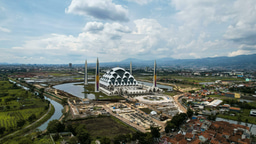
Bandung is the second largest metropolitan region in Indonesia. During the 1920s and 30s, it almost became a colonial capital under the Dutch had the Great Depression not happened. It is home to one of the world's largest collection of Art-Deco Buildings, and boasts an impressive history and presence of green heritage that circles and inhabits within.


(source: author's own photo)
My overseas research component lasted seven weeks of being intrigued in all directions, lost with Google Maps, and tested the limits of my supposedly fluent Indonesian. I spent my time doing policy studies, planning reviews, spatial analysis, and a whole lot of semi-structured interviews with state authorities like Disbudpar, Disparbud, BBKSDA, and Distaru, civil society groups like WALHI Jabar, Bandung Heritage Society, and Cika-Cika, plus locals and academic experts. Please don't worry about this (yet) as I'll share my findings and reflections later with (hopefully) decent illustrations.
My involvement with civil society groups, despite being slightly last minute, helped me think through how living heritage and community resilience actually connect. A well-conserved natural and historic environment (what scholars refer to as living heritage) can reduce risks from socio-ecological disasters and strengthen community resilience. However such potential is best realised through a synergy with stakeholders.
And hear me out!!! Before I went into this project I'd have no idea of the politics that would ensue the whole nation, so I will make sure to reflect on that in a separate post.
I'm entering my second year at HKU this fall. It wasn't until now that I have somewhat solidified my interests to be at the intersection of Sustainability, Conservation, and Urban Planning of Asian Cities.
Before joining uni, I took over three gap years working around the world and reflecting on my many identities. My work has spanned across Edtech, Heritage Conservation, Food Security, Nature Conservation, Policy Analysis, and Social Impact Sectors across the Global South.
Beyond my work and research, I love to listen to music produced during from the 60s to 80s in anywhere around the world. I also love doing crafts as it notoriously saves me from supposed doomscrolling on Instagram. Also, I am secretly considering to debut as a private chef someday... who knows!?