There can be an easier path and there can be a harder path, but the path you take has to be guided by your values and your commitments.
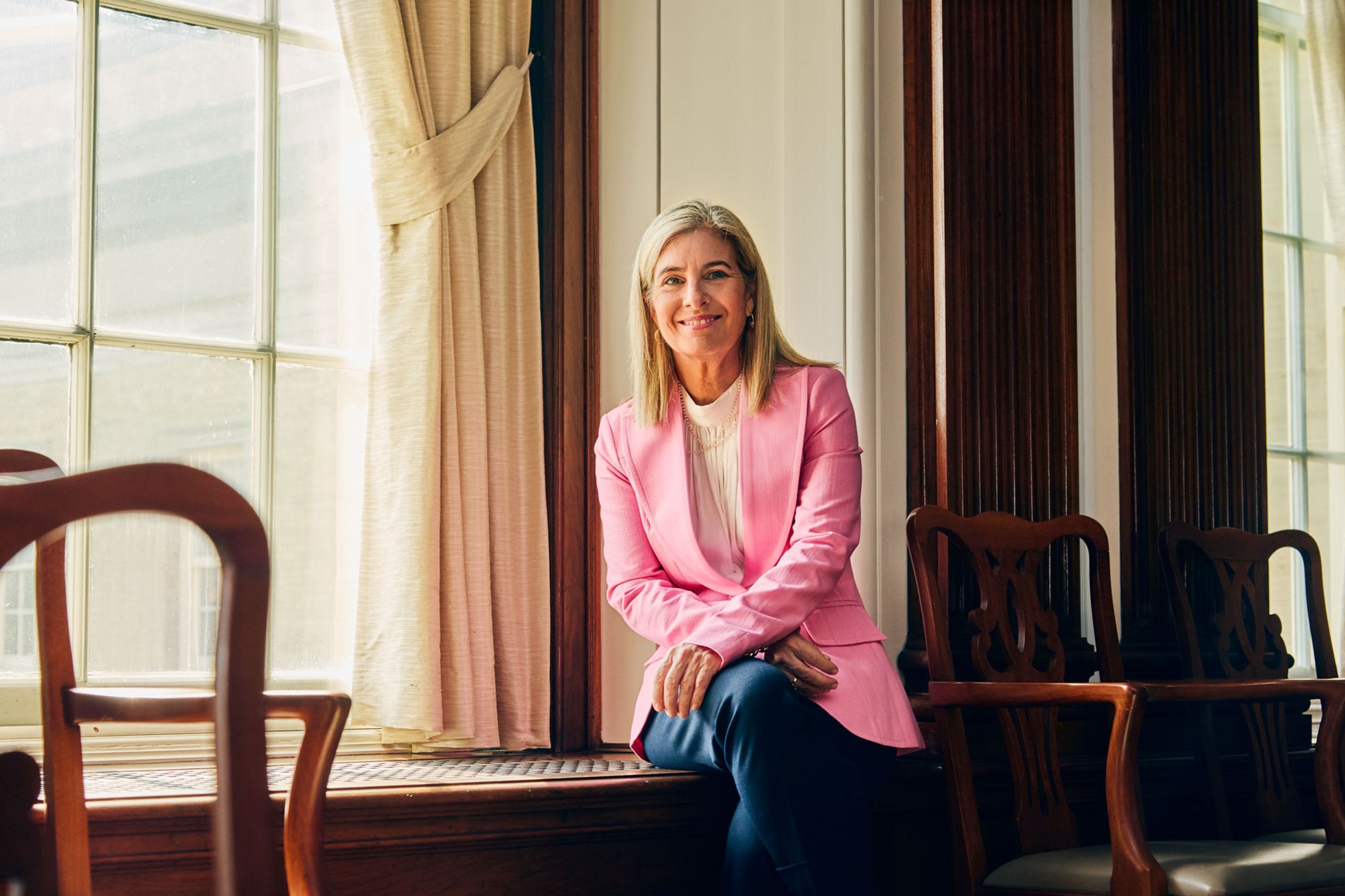


Melanie Woodin: The Path You Choose
Last month, Professor Melanie Woodin, President of the @University of Torontoand an internationally renowned neuroscientist, sat down with us for the Leadership Lab, the series where we ask the people running some of the world's great institutions how they actually lead. She spoke about the choices that have shaped her path to the top, and kept coming back to one of them, about what should guide you when the easy road and the right road are not the same:
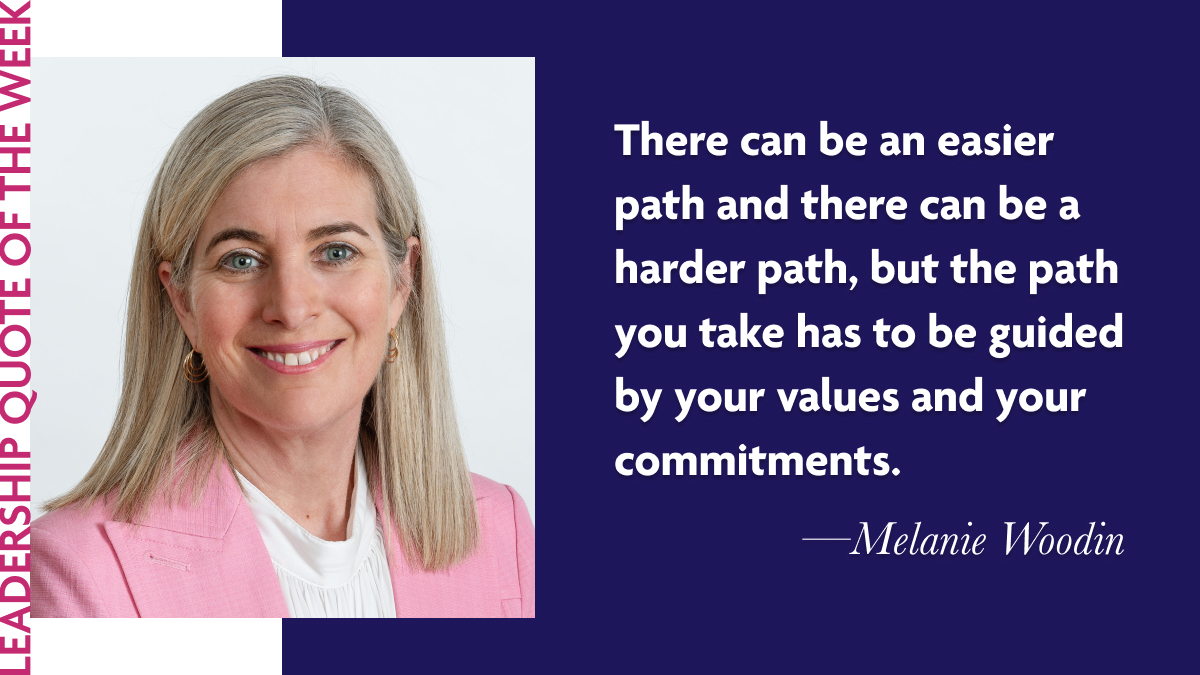
Melanie Woodin: "There can be an easier path and there can be a harder path, but the path you take has to be guided by your values and your commitments."
Choosing Wider Impact
Woodin has lived the choice she describes. She began as a neuroscientist, absorbed in the kind of work that measures a career one discovery at a time, competing, as she puts it, with scholars around the world to be the first to arrive at an answer. When the deanship of Toronto's largest faculty was offered to her, she understood that accepting it meant setting that work down, since the role would leave no room for a research programme of her own. She reasoned her way to the decision through a question about impact. The discoveries she might have made would in time be made by others if she stepped aside, whereas the leadership she could offer might advance a thousand research programmes and shape the lives of tens of thousands of students. So she gave up work she loved and had spent years becoming good at, and she did it because her sense of where she could matter most pointed her there.
When the Harder Path Has a Price
For scholars, the value of Woodin's words shows up at the points where doing the right thing costs something. It is easy to be guided by your values when they align with your interests. The test comes when the principled option is also the slower, lonelier, or more demanding one, when standing by a commitment means giving up something you wanted, or taking on difficulty you could have avoided. Woodin's suggestion is to let the values decide anyway, and to be open about the fact that you are doing so. She talks about explaining her reasoning to her community even when a decision is hard, so that people can see the principle behind it. A choice made that way is easier for others to trust, and easier to stand behind yourself when it proves difficult.
Values in Focus
Woodin's message speaks to the Laidlaw value of being #Good and the Oxford Character Project virtue of #Integrity. Being good means measuring a decision by more than what it does for you, letting your commitments to others carry real weight when the choice is hard. Integrity is what holds that together, the consistency between what you say you value and the path you actually take, especially when the harder path is the one your values point towards.
A Call to Reflect
As you consider Melanie Woodin's words, we invite you to reflect and share in the comments: when has choosing the harder path, because it was the one your values pointed to, led you somewhere you were glad to have reached?
More From Melanie Woodin!
Give it a listen to hear Woodin on the loneliness of leadership, why she still turns up unannounced to run with a student club on a Wednesday night, and her belief that universities exist to shape who you become.

Hi! I'm Amanda, a third year Neuroscience student and Laidlaw alum from UCL. I'm Swedish-Persian and grew up in Sweden before moving to London for uni. These days, alongside my studies, I work for the Foundation as a Marketing Assistant.
For my first year research project, I worked on optimising alginate hydrogels for 3D astrocyte culture systems. In simpler terms, I was figuring out the best way to prepare a jelly-like scaffolds so that star-shaped brain cells called astrocytes could grow in three dimensions rather than flat on a dish. This matters because 3D environments mimic the brain more realistically, which could help researchers develop better treatments for neurological disorders!
For my Leadership-in-Action project, I co-created Beyond the Books, a resource designed to help students from underrepresented backgrounds navigate the unwritten rules of university life, from internships and networking to professional opportunities that aren't always obvious if you're the first in your family to go to uni.
Always happy to connect, whether you want to chat about neuroscience, widening access, the Laidlaw experience, or just say hello! One of my favourite things about this community is getting to meet people from different universities and backgrounds, so please do reach out! 🌟