The Why Behind My Research
In the summer before my freshman year at Tufts, I was eager to gain experience in healthcare and eagerly accepted an opportunity to volunteer at Boston Healthcare for the Homeless. Before my first session I was warned the experience would be an uncomfortable immersion into the realities many people face. What I did not expect was how deeply I would connect with the patients I met.
Through countless conversations, I was entrusted with stories of homelessness, mental illness, financial hardship, and immigration-related challenges. These experiences opened my eyes to the many barriers that can shape a person’s healthcare journey long before they ever enter a clinic. As I took the time to understand each patient’s circumstances, I often observed patients becoming more engaged and receptive to care. In turn, I was able to approach their care with greater thoughtfulness and awareness of the obstacles they faced beyond their medical conditions.
But the truth is, this passion did not begin with my first healthcare experience. It began at home.
When my mother immigrated to the United States from Cameroon, her experiences with healthcare often felt impersonal. Medical professionals neglected to learn more about her–where she came from, how she communicated, or what healthcare meant within the context of her life and beliefs. Firm in her faith, she placed her trust in what had always sustained her and became hesitant to engage with a healthcare system that felt distant and impersonal. Looking back, I realize that the greatest barrier was not her faith, but the absence of human connection. Without trust or understanding, healthcare felt unfamiliar and unwelcoming.
Watching her navigate these experiences taught me effective care must be grounded in trust, empathy, and a willingness to understand the person behind the patient.
While the circumstances at Boston Healthcare for the Homeless were different, it was the first environment in which I could actively practice this kind of compassionate, person-centered care. There, I witnessed firsthand how empathy could transform interactions and improve patients’ willingness to engage with healthcare providers. Those experiences inspired me to pursue a deeper understanding of the relationship between physician empathy, patient trust, and health outcomes.
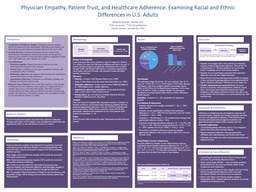
This research represents an opportunity to investigate a question that is deeply personal to me: how meaningful human connection influences patients' trust in healthcare and their willingness to follow medical recommendations. My hope is that the findings will contribute to a growing body of evidence demonstrating the value of empathy in clinical practice and encourage healthcare professionals and volunteers alike to prioritize patient connection as a means of improving both patient experiences and health outcomes. By identifying measurable links between empathy, trust, and adherence, I hope to contribute evidence that supports more patient-centered approaches to care.
I am incredibly grateful for the opportunity to pursue research that is both academically meaningful and personally significant. Ultimately, I hope this work will contribute to a healthcare culture in which empathy is recognized not only as a moral imperative, but as an evidence-based tool for improving patient outcomes and reducing disparities.

Hello! My name is Maiwenn, I am a rising junior at Tufts University studying Biopsychology. I am deeply interested in community health research, particularly strategies that help bridge gaps created by socioeconomic barriers. Through this interest, I hope to learn more about the factors that influence patient adherence and health outcomes. In my free time, I enjoy pursuing my faith, singing, spending time with friends and family, and exploring different facets of the medical field.