The Lessons of Laidlaw
I can describe with quite an unexpected amount of detail the first Laidlaw Launch event I attended with my cohort back in March of 2025. Having been offered a place on the programme exactly four weeks earlier, I had had a little time to imagine what starting the programme might be like.
During her introductory speech, our lovely Laidlaw Programme Manager Celina spoke quite vividly about the realities of imposter syndrome as a new Laidlaw Scholar. This was hardly a new topic for any of us - most people will remember a friendly mentor at some time or another - if not in school then certainly at university - telling us that these thoughts of self-doubt are completely normal and will soon pass. But Celina did something a bit more than this; she told us stories of past scholars, from those who confessed some anxiety about whether they were really capable of this position, to those who went as far as to tell their Laidlaw staff members they actually felt that they must have made a mistake in choosing them of all individuals for such a scholarship.
But we had been chosen, Celina told us, not by random, not by chance, but by a panel of experienced professionals who had done this all before, and we deserved these places.
This is a message that I feel I will take with me into every new role I enter. Celina very swiftly reminded us that day that thinking ourselves capable or incapable of succeeding in a task is not just about our own opinion of ourselves - a famously unreliable thing - but also about how much we trusted those members of the team who endorse us.
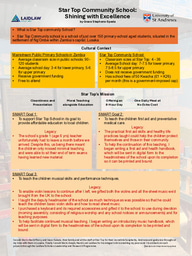
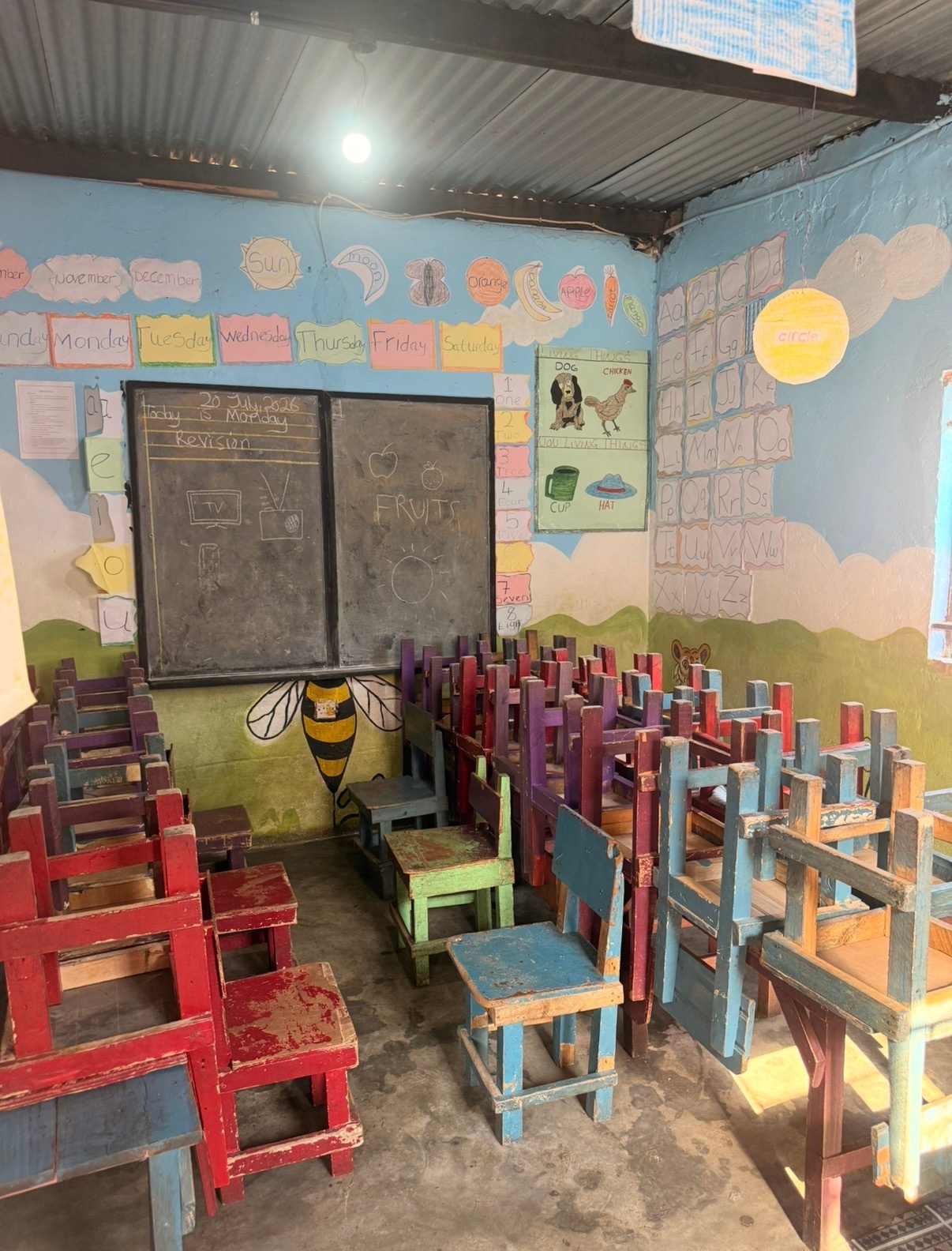
This account outlines just the very start of how the Laidlaw Programme would go on to evolve my character and capacity as a leader. It seems incredibly hard to directly teach character in a way that changes a person, although it is more possible to teach the structure of character and how it works. Similarly, it seems nigh on impossible to simply tell someone how to be leader. At our age, I have found that these can be quite hard facts to accept. While we pretend to be patient with our own development, deep down we seek to be changed in grand gestures by single stand-out events and instructions, suddenly and spectacularly moulded into the new leaders of our age. I will admit to feeling a similar way upon entering the Laidlaw programme. Sometimes this really does happen; I very clearly remember opening my phone as I was walking to a choir rehearsal in February 2025 to find my Laidlaw acceptance email and subsequently not being able to sing through the rehearsal with a straight face. So little had I believed I’d be accepted that the hit of confidence that being so gave me left me with a spark of courage that I carry with me still. But for the most part and in my own experience, the programme hasn’t been about providing us with one-off events to make us more courageous, to improve our collaboration skills, to teach us accountability or to solidify our sense of justice. Neither has it been about perfecting our communication, emotional intelligence, project management and critical thinking. For me, the programme has been about giving us rare access to the the processes which might one day result in the growth of these traits and surrounding us with people who are willing to help us nurture that. The process of undertaking your own research inevitably teaches you many things: certainly, when working in a lab with professionals much more versed in the premise of your research than you are, you won’t survive unless you quickly develop applicable skills of collaboration. Equally, if your judgement hasn’t developed enough to be able to (at least occasionally…) distinguish the moments in which you must first ask for advice from the more experienced and the moments where you must be willing to try yourself a few times even if it might mean failure first time around, then you risk not being able to see your project to completion within the time limit. Along this same vein, undertaking the process of a Leadership in Action (LiA) project, with its inherent element of public service, teaches you aspects of character such as accountability, temperance, justice and humanity, among others; accountability when you realise you need three lesson plans ready tonight which that will not write themselves. Temperance when yet again the room of six-year-olds - who you really thought were listening more today - still don’t seem to understand the danger of hitting each other with pencils. Justice and humanity when you leave your LiA hosts after six weeks, your new Zambian family, and seeing their efforts to help everyone around them despite little access to resources themselves, you understand more clearly the needs that so many communities face and the duty you have to do something about it.
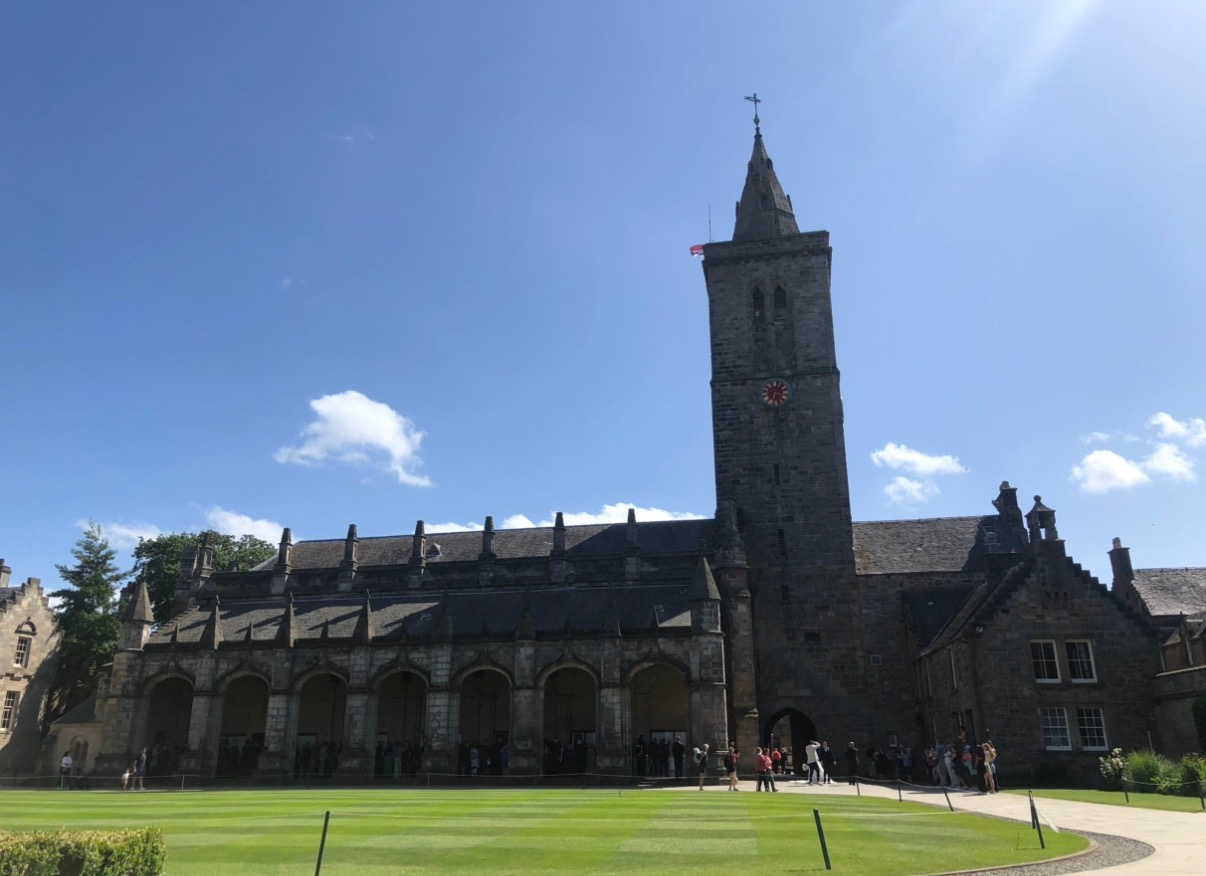
I would like to think that none of these traits are complete strangers to me, however as we’ve previously discussed, in order to sew these skills into who you are we must do more than simply remember the few childhood events we’ve lived through so far - however foundational they may have been. To cement in these traits, we must undergo the processes which lead us to them again and again. Many people seem to meet these processes randomly and unexpectedly throughout life, and slowly they develop (and occasionally forget) these traits, choosing which to make themselves known for and which to reserve for emergencies. I look forward to this uncertainty and enjoy imagining how my character will change as I live out the future events which await me. But I am sure that what the Laidlaw Programme has done is give me a head start; by giving me access to these processes - setting up and executing my own research, unpacking my own character and how it functions day to day during the Oxford Character Project, integrating myself into a small community school in Zambia - I have gained a template for coping with uncertainty, high emotional stakes and problems which I feel wildly unqualified for. Although when these processes are repeated and replayed in the future the specifics will be different, I will know that it is not new terrain. This is why I cannot easily speak on how the programme has changed my character, because I don’t believe it has finished doing so. Each time I live through similar experiences in the future, I will recall a tactic first tried out when dealing with the depths of my lab work in St Andrews, or my classroom of students in Zambia, and I might deploy it again; no doubt the results will change me - even minutely - as a person and a leader, and it is anyone’s guess how many times this will happen.
The beauty of the words “global citizen” is that the interpretation of their definition can be wonderfully wide. When people ask me about the Laidlaw Programme and I explain that we choose our own research and our own projects abroad, many of them respond with “What, you can choose anything?”. “Anything.” I reply. This is the joy and privilege we are given when we have access to a first-class education in any area that takes our fancy. The next part is knowing what to do with it.
As many people have discovered for themselves, I have found there are different aspects and stages to making a difference, and you need to develop all of them to achieve the end goal. To describe them fairly simplistically, I believe they go a little like this: the first is identifying the need, and in many instances this can be the first and final stumbling block; without some experience beyond your home town and university friends it can be hard to see where things really need to change. Conversely for some, they will have grown up in realities where the need is very obvious to them, but it is through gaining ulterior experiences and maturity that they begin to understand that this reality can in fact be changed for the better. When you begin to see the impact that things going on around you can have on those very far away and those completely unrelated to you, you start to understand how impossible it is to refute the fact that people all over the world are connected in ways you might not have expected, and you begin to see your actions not as isolated events but as segments within chains of actions and consequences; understanding these chains is what will lead you to identify need and direct you towards being able lead the way through them ethically, both close to home and on the other side of the world. Now, I’m not going to be THAT twenty-one-year-old who claims that they have indeed understood all there is to know about fixing the world’s problems, but it would be negligent of me not to address the fact that the Laidlaw Programme has hugely helped me tackle this stage by facilitating my gaining more experience in it; I have a lot to learn, but I’m very grateful for the head-start.
The second stage is planning what to do about the identified need. I find this one the hardest and most daunting. There are so many different ways of getting something done that there is always the fear that at the end of it all even if you have achieved your goal, someone will say, “But wouldn’t it have been better if you’d done it this way?”. What I have become even more certain about since joining the Laidlaw Programme is that to approach this stage, you must look for all the help you can find; your own perspective will very rarely be enough to tackle a problem. Not only that, but it is your ethical duty to gain different perspectives before actioning a plan all guns blazing to make sure that you are not going to end up hindering a situation rather than helping it due to not having considered a particular perspective just because it doesn’t happen to be your own and you are therefore unaware of it. The strength gained by joining forces with others who have also identified the same need as you is not worth missing out on, especially not for any misplaced idea that the difference you make will somehow be more valuable if you stick it out on your own and do it all by yourself.
The third and final stage is actioning your planned response to the need. I think this is probably the most variable stage, dependant entirely on the kind of need you’ve identified. For some, the hard work is done. All they have to do now is let the plan run its course and oversea the inevitable. For others, this may be the hardest part of all by far. I relate more to the second description; training as a medical student means that almost all versions of this final stage are centred around people - famously unpredictable beings. You can detail a plan within an inch of its life, but you can’t always account for how a person is going to take it. You can improve your chances of success through time and maturity - as many people will know you can often learn much more from a failure than a success. I had my fair share of small failures during my research and leadership in action project, and I hope that because of them I will be better at trouble shooting similar mistakes in the future.
The Laidlaw programme has become so a part of my university experience it seems odd now to have to say goodbye to it. I have made life-long friends because of it and learned a lot through taking part in it. But as discussed, I know the echoes of my time as a scholar will be heard for many years to come.
I would like to deeply thank Lord Laidlaw, without whom I would not have been able to gain these experiences and the subsequent lessons they have taught me.

Hi! I’m Grace and I’m a first year medical student at the University of St Andrews in Scotland. For some time now I’ve been interested in the mechanics of cancer and how the inner workings of a tumour affect a patient’s diagnosis, prognosis and treatment.
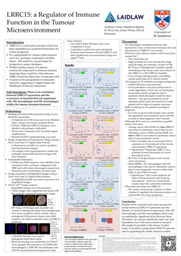
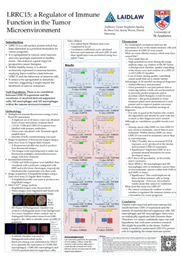
We are fortunate to live in a time of ever-growing research, and with as many as one in two people being diagnosed with some form of cancer in their lifetime, there’s an urgent need to bring this research into a clinical context so that patients can benefit from it. This interest is what has compelled me to look into the presence of certain biomarkers and their relation to immune cells within tumours, which I will start researching during my first summer as a Laidlaw scholar this year. In an effort to make this as relevant as possible to patient care, I will use this data to develop an AI algorithm which will aim to predict patient prognosis by analysing tumour samples.
Alongside my studies I’ve enjoyed being the President of our Oncology Society, which has allowed me to set up a number of awareness and fundraising events such as breast and blood cancer awareness evenings and MacMillan coffee mornings!
Outside of medicine I love to sing and spend every spare moment I have in chapel singing choral music with the university’s chapel choir, although I have been known to spend hours singing along to Les Mis whenever I get the chance.