Research Topic My research, initially titled "The impact of nuclear export inhibition on plasma proteomics in multiple myeloma patients," focuses on understanding the systemic physiological effects of selinexor, an anti-neoplastic agent. Exportin-1 (XPO1) is a nuclear transport protein whose expression is frequently elevated in multiple myeloma to support oncogenic pathways, and selinexor acts as a selective inhibitor of this protein. Specifically, I will be analysing systemic proteomic changes in the peripheral plasma of patients receiving selinexor combined with lenalidomide as a maintenance therapy following autologous stem cell transplantation (ASCT).
Initial Objectives
- Our primary, initial objective was to comprehensively profile circulating proteins in multiple myeloma patients before and after selinexor treatment using the Olink proteomics platform.
- We set out to identify broad pathways modulated by XPO1 inhibition, discover pharmacodynamic biomarkers of treatment response, and gain new insights into the systemic biological effects of nuclear export inhibition.
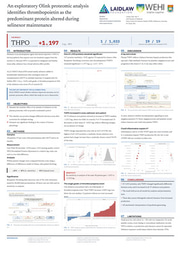
- This goal directly informed our methodology of screening 1,034 circulating plasma proteins using paired longitudinal samples from a sub-cohort of the ALLG MM23 phase 3 trial (n=19 per group) to see if six months of maintenance therapy left a measurable systemic footprint.
Anticipated Outcomes and Initial Findings
- While the initial goal was broad biomarker discovery, through analysis it was found that selinexor didint radically rewrite the plasma proteome. Instead, screening uniquely isolated thrombopoietin (THPO) as the sole statistically significant protein altered out of 1,034 assays, showing a distinct increase in all 19 patients within the selinexor arm.
- These results shifted my focus toward hypothesising mechanisms behind selinexor-associated toxicities, such as thrombocytopenia, suggesting the drug may disrupt THPO homeostasis through reduced c-Mpl-mediated clearance, increased hepatic production, or a combination of both.
- Ultimately, the research provides a foundational dataset that reveals numerous potential avenues for further investigation into cancer drug toxicity, particularly within the immune-inflammatory axis.

MBBS , The University of Hong Kong